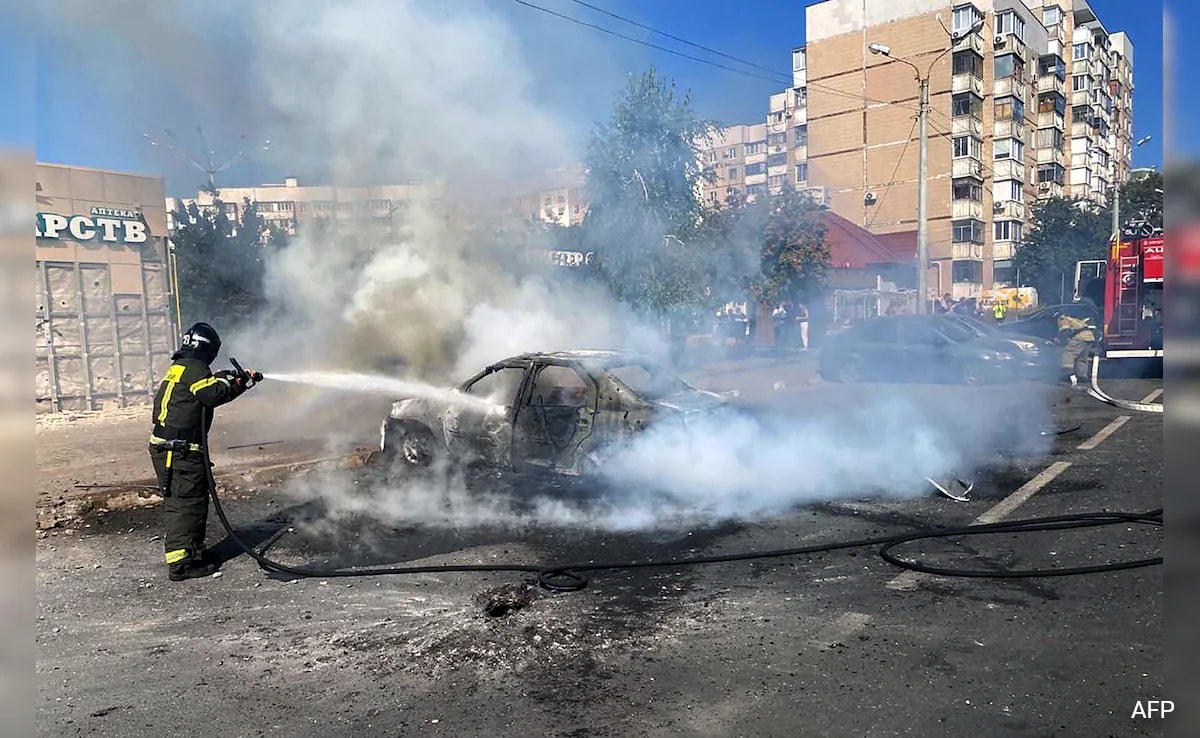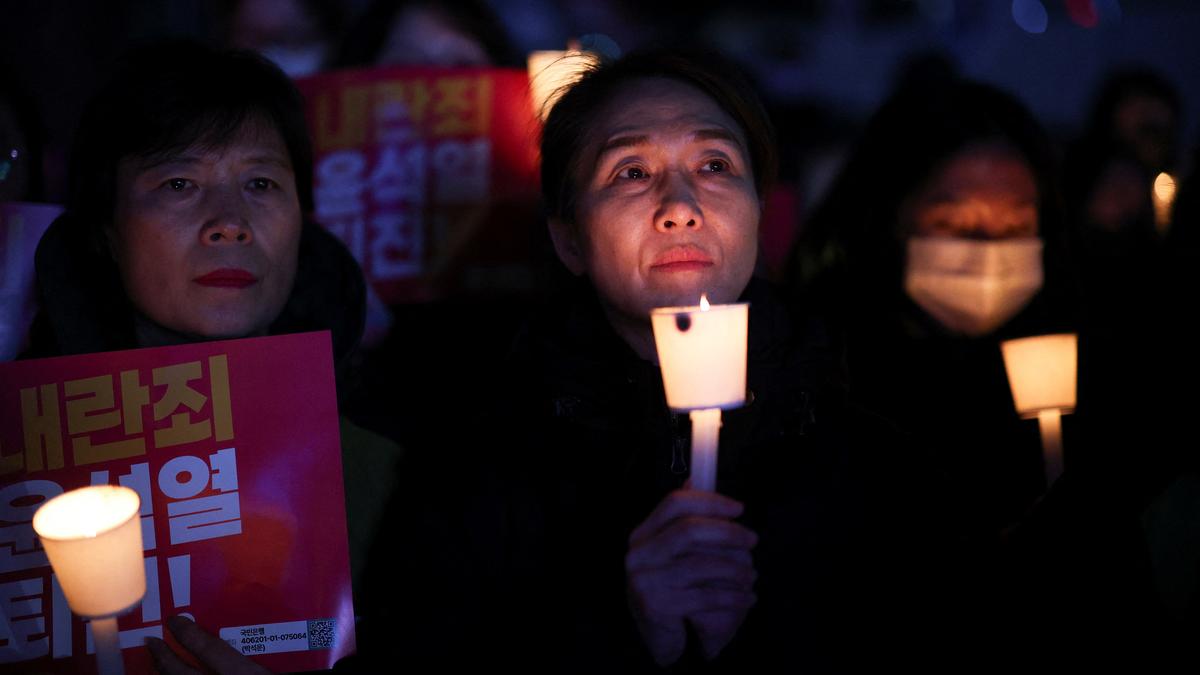



Kenya is roiled by protests against a new finance Bill introduced by the government of President William Ruto. As demonstrations spread across the country’s 47 counties, protesters in the capital Nairobi attempted to storm the Parliament. The government clamped down, with 30 people killed in police firing and over 200 injured. Mr. Ruto eventually bowed to public pressure and announced he would not sign the controversial Bill, which sought to raise taxes on essentials such as bread, cooking oil, sugar and diapers.
Despite Mr. Ruto backing down, the protesters have called for his resignation. They see him as more loyal to the International Monetary Fund (IMF) than to the people of Kenya. A sign from the protests seemed to reflect the public mood: ‘Kenya is not IMF’s lab rat,’ it read. Fed up with the burden of rising living costs, Kenyans are not only protesting against Mr. Ruto’s policies but also, explicitly, against the IMF meddling in their country’s affairs. But why are they angry with the IMF, and why is the IMF dictating policy to the Ruto regime?
In 2021, Kenya signed a four-year loan agreement with the IMF for $2.34 billion, and with another deal signed in May 2023, its loan volume rose to $3.6 billion. But IMF money for developing countries comes in tranches, and with conditions. It periodically reviews the country’s progress in implementing its conditions, and only if it is convinced the country is on track, does it release the next tranche of funds.
As part of the 2021 loan deal, the IMF forced a COVID-battered Kenya to agree to austerity measures that would raise its revenue collection to 25% of GDP. The lender’s demands included a combination of tax hikes and budget cuts, including elimination of subsidies on fuel and electricity and cuts in spending on education and health.
Mr. Ruto, when he came to power in September 2022, went about diligently following the IMF diktat. He cut subsidies on maize and fuel, with the latter sparking a surge in inflation. Massive protests ensued in March and July 2023, in which 30 people were killed by the police. Nonetheless, Mr. Ruto stayed the course on other fiscal consolidation measures, and earlier this month, his government reached a staff level agreement with the IMF. It was expected to open the tap on another $976 million, provided the finance Bill — projected to raise revenues of $2.68 billion — went through. But with Mr. Ruto forced to abandon it, the future flow of IMF funds is in doubt.
None of this, however, is new. Kenya has been through this before, as have much of Africa, whose governments often find themselves caught between the interests of their people and that of private investors and Western commercial banks, fronted by the IMF. The IMF describes itself as “being governed by and accountable to its member countries”. But its history and management structure tell a different story — of an organisation that has served as a tool of American foreign policy, and works to further the interests of Western financial elites.
In 1944, when the IMF was created at a conference of 44 nations in Bretton Woods, New Hampshire, the U.S., the global supremacy of American economic might was already a reality, with the rest of the world either devastated by the Second World War II or by colonial plunder, or both. This power dynamic got encoded into both the Bretton Woods twins — the IMF and the World Bank. For instance, the World Bank president is always an American citizen, while the IMF head is always from a European ally of the U.S.
Unwritten mandate
In theory, their function is to aid economic development and promote monetary cooperation and stability. But in practice, they have followed an unwritten mandate to foster the integration of newly independent former colonies into a global economic order on terms designed to serve the interests of American capital.
Against this background, it shouldn’t be surprising that voting rights at the IMF don’t follow the democratic logic of one-member country-one vote but are quota-driven, based on dollar contributions. The U.S. alone has a voting share of 16.5%, while the wealthy G-7 countries together command more than 40% of the voting power. This is more than that enjoyed by all the nations in Africa and Latin America put together, and populations most affected by decisions taken by IMF bureaucrats live precisely in these countries. Clearly, the group to which the IMF is accountable (wealthy Western nations) is different from the group that calls upon it in times of dire need (poor or middle income countries).
As of March 2024, among Africa’s 54 countries, 31 had outstanding loans with the IMF. But they have nothing remotely resembling a ‘say’ in how the IMF is run.
The Gist
The IMF was created in 1944, at a conference of 44 nations in Bretton Woods, New Hampshire, the U.S.
Voting rights at the IMF don’t follow the logic of one-member country-one vote but are quota-driven, based on dollar-contributions. The U.S. alone has a voting share of 16.5%, while the wealthy G-7 countries together command more than 40% of the voting power
As of March 2024, among Africa’s 54 countries, 31 had outstanding loans with the IMF, but they have nothing remotely resembling a ‘say’ in how the IMF is run
The UN Secretary-General Antonio Guterres flagged the bias in the IMF framework last year when he said that the Bretton Woods system reflected “the power relations of 1945”. He also underscored how the IMF favoured the rich in the context of its distribution of Special Drawing Rights (a reserve asset), observing, “The IMF allocated $650 billion in SDRs during the pandemic. The G7 countries, with a population of 772 million people, received $280 billion. The African continent, with $1.3 billion people, received only $34 billion.” It is debatable how many developing countries would have ended up rushing to the IMF in the aftermath of the pandemic had they received a greater share of the SDRs.
This unfairness, and the unequal relationship with the IMF, is partly why so many developing countries, from Kenya to Ghana, Zambia and Pakistan, have witnessed protests against the IMF and IMF-imposed economic policies — the infamous ‘Structural Adjustment Programs’ (SAPs).
SAPs, adopted by the IMF from 1986 onwards, typically require governments to cut public spending (including on food subsidies, health and education), privatise state enterprises, reduce import duties and tariffs, and implement other measures so that the country pursues export-led growth. The predictable outcome of these policies, documented in the IMF’s own internal research, is extreme inequality.
Impact of SAPs
A 2002 World Bank-funded study by the Structural Adjustment Participatory Review International Network (SAPRIN) tracked the impact of the IMF’s SAPs in nine countries across four continents.
Its report highlighted four ways in which they furthered “impoverishment and marginalisation of local populations”: one, by causing the demise of domestic manufacturing sectors and loss of employment for small producers; two, agricultural, trade and mining reforms decimated small farms and poor rural communities; three, they triggered job losses, lower wages and degraded terms of employment due to privatisation, budget cuts and labour market flexibilisation measures; and four, the reduced role of state in providing guaranteed access to essential services led to increase in poverty. Yet, the IMF, as the international lender of last resort, continues to impose SAP-like requirements. With many countries having already carried out much of the SAP agenda, the erstwhile ‘SAP’ conditionalities have morphed into generic austerity measures.
Faced with a backlash in dozens of countries, the IMF did introduce ‘social spending floors’ to protect public spending on education, health and social protection from being cut as part of its loan conditionalities. But an Oxfam analysis of 27 loan programmes negotiated with low- and middle-income countries found that “for every $1 the IMF encouraged governments to spend on public services, it has told them to cut six times more than that through austerity measures.”
In 1994, the New York Times described the IMF and the World Bank as the “overlords of Africa”. In the 30 years since, as Kenyans can testify, little seems to have changed. The overlords continue to influence economic policies in low and middle-income nations, with the fates of millions determined not in their own Parliaments but in the boardrooms of the IMF headquarters in Washington.