


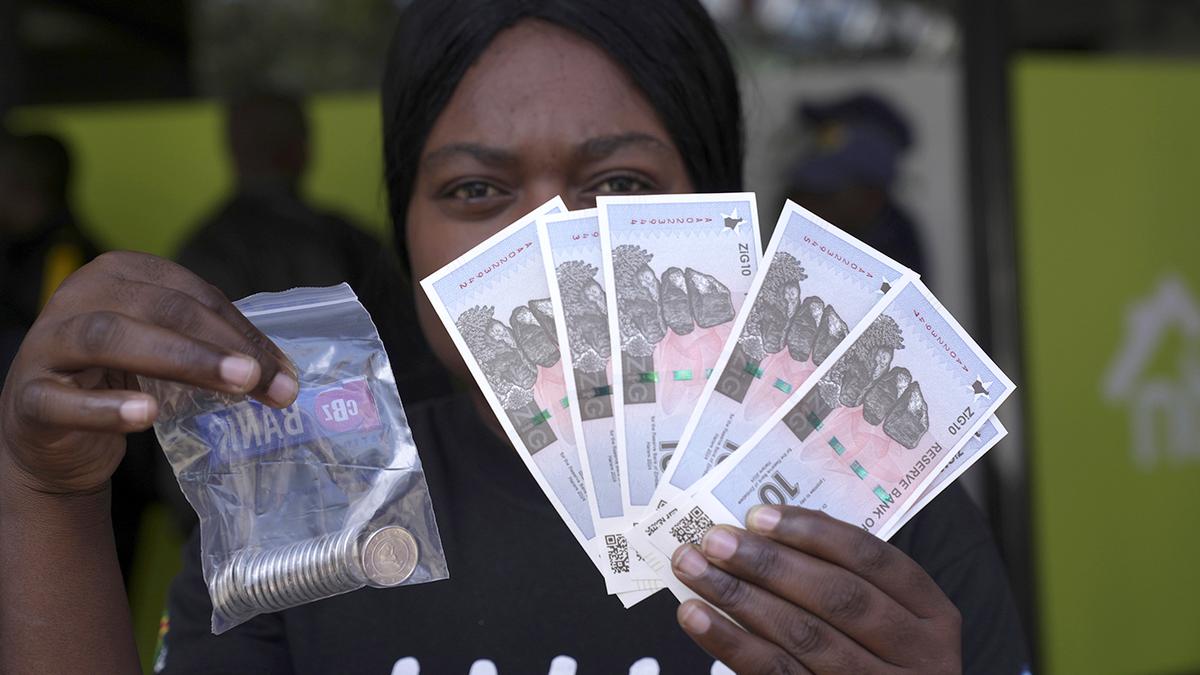
The introduction of the world’s newest currency in April inspired a reggae artist to record a song praising the ZiG, or Zimbabwe Gold.
The catchy tune, titled “Zig Mari,” received generous play on state television and radio. The musician, Ras Caleb, received a car and $2,000 — ironically paid in greenbacks, not the new ZiGs — from a businessman with close ties to Zimbabwe’s ruling party and President Emmerson Mnangagwa; he said he wanted to reward an act he considered “patriotic.”
Although money typically doesn’t require publicity, Zimbabwe’s sixth national currency in 15 years needs all the help it can get.
Desperate to halt a money crisis underlining the country’s economic troubles, the government launched the gold-backed ZiG, the latest attempt to replace the Zimbabwe dollar, which had been battered by depreciation and often outright rejection by people unwilling to put their faith in it.
Senior officials from the Reserve Bank of Zimbabwe and the ruling ZANU-PF party embarked on a flurry of public rallies and meetings to encourage the sceptical population to now embrace the ZiG ahead of the U.S. dollar — also legal tender in the southern African nation. Commercial jingles heralding the currency flooded the airwaves along with Caleb’s single.
Yet despite the charm offensive, the ZiG is facing a familiar problem: public mistrust and structural barriers that have people still clamouring for U.S. dollars. Although the ZiG has largely held its value on the official market, it has tumbled on the black market, where $1 can be exchanged for up to 17 ZiGs.
Authorities are also using force to prop up the new banknotes. They have packed jail cells with dozens of street currency dealers, and frozen the accounts of businesses accused of undermining the ZiG.
Law enforcement agents have arrested more than 200 street currency dealers on allegations of flouting foreign currency exchange regulations, national police spokesman Paul Nyathi said. The government accuses them of undermining and devaluing the new currency by using exchange rates higher than the official one.
Twin brothers Tapiwa and Justice Nyamadzawo, 24, were arrested two weeks after the launch of the new currency after allegedly selling undercover detectives cellphone airtime worth $10 at a rate of 15 ZiGs per dollar, according to court papers. The official exchange rate was just over 13 ZiGs per dollar. Like other currency traders, the twins were denied bail and remain in pretrial detention on charges that carry a maximum prison term of 10 years.
An elderly man waits to withdraw cash from a bank in Harare, Zimbabwe.
| Photo Credit:
AP
The crackdown is incongruous, because Zimbabwe has a long history of street currency dealers whose unofficial rates often carry the day. Many shops and merchants also ignore the official rate and only accept the local currency at their own rates. And many vendors, particularly in the unlicensed sector that employs more than 80% of adult Zimbabweans, still only accept the dollar.
What’s more, the government has allowed some businesses, such as gas stations, to refuse to accept the ZiG in favour of U.S. dollars. Some departments, like the office that issues and renews passports, also accept only greenbacks. Many others still list their fees in U.S. dollars, although they accept the equivalent in local currency.
The government has announced fines up to 200,000 ZiG or about $15,000, for businesses that fail to stick to the official exchange rate. Authorities have also frozen bank accounts of some businesses on accusations of rejecting the new currency or trading using exchange rates higher than the official rate. The Reserve Bank didn’t name the affected businesses.
Zimbabwe has a long and tumultuous history of monetary instability. The ZiG is the sixth currency used following the spectacular 2009 collapse of the Zimbabwe dollar amid hyperinflation of 5 billion per cent, one of the world’s worst currency crashes.
The government printed a 100-trillion Zimbabwe dollar banknote to keep up with spiralling prices that saw a loaf of bread going for more than 500 million Zimbabwe dollars.
John Mushayavanhu, the governor of Zimbabwe’s central bank, has hyped the ZiG as a first step toward eventual de-dollarisation. The U.S. dollar accounts for more than 80% of transactions in the country, according to Mr. Mushayavanhu, who wants the ratio to be 50% by 2026.
But for now, the allure of the almighty dollar remains. Across Zimbabwe, it is widely used for paying rent, school fees and to buy groceries. Many citizens, including government workers, take their local currency earnings to the black market to trade for dollars.
The government has said it is working on mechanisms that include opening bureau de changes for individuals to access dollars “for small transactions.” Economists and business groups have warned, meanwhile, that the use of force is unlikely to lead to more confidence in the ZiG or halt the black market traders.
“They will work to ensure that the police do not catch them,” Sekai Kuvarika, the chief executive of the Zimbabwe National Chamber of Commerce, told a hearing of parliament’s finance and industry committees.
Street currency dealers holding wads of money and openly soliciting for clients were a feature of Zimbabwe’s urban architecture for years. They have deserted their familiar spots since the crackdown began in April and appear to have taken their business underground.
Many now use social media and instant messaging platforms such as WhatsApp and Facebook to connect with customers.
Maxwell Chisanga, 28, a resident of the capital, Harare, said a shop where he works pays him in ZiGs, but he needs U.S. dollars for everyday transactions.
“My landlord needs her rent in dollars so I have no choice but to look for it on the black market,” Mr. Chisanga said.
Economist Prosper Chitambara said lack of faith in the local currency and demand for U.S. dollars will continue driving the black market despite the crackdown.
“The solution is to build public confidence in the local currency. Otherwise, arrests will not work as long as people are hungry for U.S. dollars, which they cannot get from official channels,” Mr. Chitambara said.