

Skip to content
  • Facebook
  • X
  • Linkedin
  • WhatsApp
  • Associate Journalism
  • About Us
  • Privacy Policy
  • 033-46046046
  • editor@artifex.news
Artifex.News

Artifex.News

Stay Connected. Stay Informed.

  • Breaking News
  • World
  • Nation
  • Sports
  • Business
  • Science
  • Entertainment
  • Lifestyle
  • Toggle search form
  • Cricket World Cup: The Science Behind Virat Kohli’s Acrobatic Catch vs Australia Revealed By Indian Cricket Team Coach Sports
  • Sensex snaps two-day rally – The Hindu Business
  • Solution cannot be found on battlefield, says Jaishankar on Russia-Ukraine conflict World
  • Jurgen Klopp, Pep Guardiola Set For Premier League Last Dance With Title At Stake Sports
  • AAP, Lt Governor At Loggerheads Over Funding For Delhi’s G20 Makeover Nation
  • Political Slugfest Over Sword Attack On Punjab Shiv Sena Leader Nation
  • UN calls for age limits for AI tools in schools World
  • 100 Notices Against Bhavesh Bhinde, Ghatkopar Hoarding Collapse Accused Nation

Can the newly discovered organelle help engineer plants to fix nitrogen?

Posted on May 4, 2024 By admin


As proposed by Charles Darwin in the nineteenth century, natural selection, the engine that drives evolution, is how species adapt to their environments. Unlike the Neo-Darwinist consensus, the American evolutionary biologist Lynn Margulis did not believe that random genetic mutations were the sole cause of inherited variation. She came up with a new theory called symbiogenesis. The endosymbiotic theory states that organelles like mitochondria and chloroplasts, the sites of cellular respiration and photosynthesis, were once free-living bacteria that were later ingested by the recipient cells. The theory of symbiogenesis was fiercely challenged, including Margulis’s manuscript, which was rejected by 15 academic journals before finally being published in The Journal of Theoretical Biology in 1967. It was not until many years later that mitochondria and chloroplasts were accepted as once being free-living bacteria before becoming endosymbionts inside eukaryotic cells.

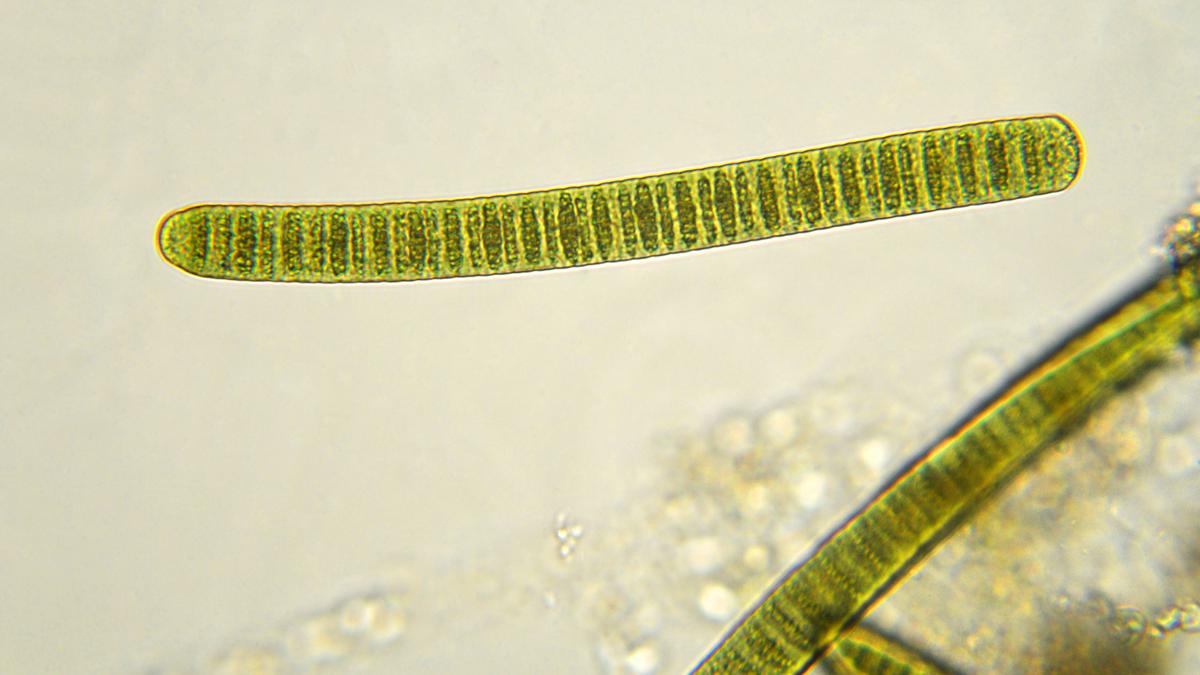
Two papers published recently, one in the journal Science and another in the Cell, have generated new interest in the endosymbiotic theory. The discovery concerns nitrogen fixation. Nitrogen is a key component in proteins and DNA of all living organisms. Although nitrogen gas makes up about 78% of the Earth’s atmosphere by volume, plants and animals lack a system that can utilise atmospheric nitrogen. Bacteria and archaea help convert atmospheric nitrogen gas to ammonia by nitrogen fixation (or ammonification) to make nitrogen usable for plants. Unlike many free-living nitrogen-fixing bacteria, legumes, a class of plants in the family Fabaceae, bear the nitrogen-fixing bacteria in their root nodules. Ammonia is converted to nitrites and nitrates (nitrification) and then back into atmospheric nitrogen (denitrification) with the help of bacteria to complete the cycle. In marine environments, like on Earth, bacteria and archaea are also involved in ammonification, nitrification, and denitrification. Beyond mitochondria and chloroplasts, the current discovery extends the earlier reports of a nitrogen-fixing cyanobacterium in marine algae and establishes it as a new organelle. The new organelle that the authors call nitroplast co-evolved with its host cell.

In 1998, Jonathan Zehr, at the University of California, Santa Cruz, U.S. discovered a cyanobacterium Candidatus Atelocyanobacterium thalassa or UCYN-A in the water of the Pacific Ocean capable of fixing nitrogen. Later, Kyoko Hagino at Kochi University, Japan, found the marine algae Braarudosphaera bigelowii as the host for UCYN-A and could successfully culture the host cells. Both teams had established UCYN-A as a symbiotic cyanobacterium for marine single-cell eukaryotic algae.

Bonafide organelles need to satisfy several criteria. First, the organelle must be integrated into the function and overall architecture of the host cell. Second, proteins must be imported to the organelle from the host cell to carry out some of its functions. Third, organelles must be in sync with the host cell’s growth. Last, organelles must be inherited in the newly dividing cells during host cell division. All these above criteria were satisfied by nitroplast, as presented by several lines of evidence by the authors. During a symbiont’s transformation into an organelle within a eukaryotic cell, its genome becomes frugal, encoding fewer proteins and utilizing the host cell’s proteins to perform some of its essential functions. In line with expectations, nearly half of the nitroplasts’ proteins are from the host cell. Although the reports present evidence of establishing nitroplasts as organelles, the loss of some of nitroplasts’ genetic material and migration to the host cell nucleus still needs to be established. Unlike mitochondria and chloroplast endosymbiosis, which happened nearly two billion years back, nitroplast’s evolution as an organelle is relatively recent (about 100 million years).

The discovery has revolutionary implications, especially in agriculture. Agriculture was transformed in the last century by the discovery of a method for synthesizing ammonia from nitrogen and hydrogen in the laboratory. Although the Haber-Bosch method of industrial-scale production revolutionised agriculture by introducing ammonia as a fertilizer that helped increase crop yield manifold, industrial ammonia production contributes to water and air pollution and climate change with its carbon dioxide emissions. The current discovery has the potential to play a vital role in getting rid of the harmful side effects of industrial ammonia production. Several novel biotechnological applications may use the result of the current discovery of nitroplasts as independent nitrogen-fixing organelles. They are: engineering host cells and their nitroplasts with minimal genomes sufficient to grow efficiently and fix nitrogen, making plant cells fix nitrogen by engineering them to include nitroplasts and organelle transformation in plant cells to introduce nitroplast and its host genes to fix nitrogen. Although promising and futuristic, all these are highly challenging and far from reality.

(Binay Panda is a Professor at JNU, New Delhi)


Source link

Science Tags:Endosymbiotic theory, Mitochondria and chloroplasts, Newly discovered organelle, Potential of nitroplasts, Symbiogenesis

Post navigation

Previous Post: IPL-17 | Mayank likely to miss rest of season: head coach Langer
Next Post: Leprosy spread between red squirrels and people in medieval England: study

Related Posts

  • Why are some people left-handed while most are righties? New study sheds light Science
  • ISRO shares video showing Pragyan rover roaming around Shiv Shakti point Science
  • X chromosome revival in older women ups autoimmune disease risk Science
  • Centre amends surrogacy rules, allows couples with medical conditions to use donor gametes Science
  • ISRO to hold more test Gaganyaan vehicle missions after maiden test flight on Oct 21: Chairman Somanath Science
  • Three new fish species spotted using tools in the Laccadive Sea Science

More Related Articles

What is the technology behind manufacturing a semiconductor chip? | Explained Science
Is it possible to remove microplastics from water? Science
Crown shyness: let our realms stay apart Science
What likely caused the extreme ice-age more than 700 million years ago? Science
ISRO successfully conducts third and final ‘Pushpak’ Reusable Launch Vehicle landing experiment Science
The Science Quiz | On Measuring Sound Science
SiteLock

Archives

  • July 2024
  • June 2024
  • May 2024
  • April 2024
  • March 2024
  • February 2024
  • January 2024
  • December 2023
  • November 2023
  • October 2023
  • September 2023
  • August 2023
  • July 2023
  • June 2023
  • May 2023
  • April 2023
  • March 2023
  • February 2023
  • January 2023
  • December 2022
  • November 2022
  • October 2022
  • September 2022
  • August 2022
  • July 2022
  • June 2022
  • May 2022

Categories

  • Business
  • Nation
  • Science
  • Sports
  • World

Recent Posts

  • Why is Imran Khan’s PTI facing a ban and what is its political future in Pakistan?
  • CrowdStrike shares plunge 20% in pre-market trading after IT outage
  • Delhi Cops Crack Kidney Sale Racket Operating Across 5 States
  • India’s Electricity Demand May Surge By 8% This Year: Report
  • Turkey, Niger agree to enhance energy, mining, defence cooperation

Recent Comments

  1. ywdVpqHiNZCtUDcl on UP Teacher Who Asked Students To Slap Muslim Classmate
  2. bRstIalYyjkCUJqm on UP Teacher Who Asked Students To Slap Muslim Classmate
  3. GkJwRWEAbS on UP Teacher Who Asked Students To Slap Muslim Classmate
  4. xreDavBVnbGqQA on UP Teacher Who Asked Students To Slap Muslim Classmate
  5. aANVRzfUdmyb on UP Teacher Who Asked Students To Slap Muslim Classmate
  • Assets Seized In Singapore’s Money Laundering Case Swell To $1.76 Billion World
  • India’s power consumption grows by over 16% to 151.66 billion units in August Business
  • Researchers call Australia carbon credit scheme a ‘catastrophe’ Science
  • The brightest object in the universe is a black hole that eats a star a day Science
  • Indian Premier League | Virat Kohli relished the time spent with family ahead of tournament Sports
  • Viral Video: RCB Fan Brutally Assaults CSK Supporters On Day When Virat Kohli And Co. Got Knocked Out Sports
  • Led By Elon Musk, Left-Dominated Silicon Valley Inches Towards Right World
  • RR vs RCB LIVE Score, IPL 2024: Virat Kohli Close To Massive First In Tournament’s History Sports

Editor-in-Chief:
Mohammad Ariff,
MSW, MAJMC, BSW, DTL, CTS, CNM, CCR, CAL, RSL, ASOC.
editor@artifex.news

Associate Editors:
1. Zenellis R. Tuba,
zenelis@artifex.news
2. Haris Daniyel
daniyel@artifex.news

Photograher:
Rohan Das
rohan@artifex.news

Artifex.News offers Online Paid Internships to college students from India and Abroad. Interns will get a PRESS CARD and other online offers.
Send your CV (Subjectline: Paid Internship) to internship@artifex.news

Links:
Associate Journalism
About Us
Privacy Policy

News Links:
Breaking News
World
Nation
Sports
Business
Entertainment
Lifestyle

Registered Office:
72/A, Elliot Road, Kolkata - 700016
Tel: 033-22277777, 033-22172217
Email: office@artifex.news

Editorial Office / News Desk:
No. 13, Mezzanine Floor, Esplanade Metro Rail Station,
12 J. L. Nehru Road, Kolkata - 700069.
(Entry from Gate No. 5)
Tel: 033-46011099, 033-46046046
Email: editor@artifex.news

Copyright © 2023 Artifex.News Newsportal designed by Artifex Infotech.