
This is the year of elections, with more than 60 countries, including some of the world’s most prominent democracies — India, U.S., Indonesia, U.K., South Africa — and others like Russia and Iran, all seeing polls in 2024. What stands out too, is that in none of these countries are women amongst the likely contenders for power. Mexico is an exception, with two women in leading positions for the Presidential election in June.
As a result, at the G20 in Brazil this November, Italian Prime Minister Giorgia Meloni could be the only other woman leader of a country, while European Commission president Ursula Von Der Leyen would be at the table depending on how she fares in the EU elections this summer. The previous decade actually fared better in terms of gender representation at the G20 high table: Germany’s Merkel, Argentina’s Kirchner, Australia’s Gillard, Brazil’s Rousseff and IMF Chief Lagarde all attended the G20 together in 2011 and 2012.
Also read: General Elections 2024 | The missing women in Indian politics
While the past century has seen a number of women occupying top positions, they make up only 23% of parliamentarians worldwide, leaving a whopping gender gap of over 50%. As of January 2024, there are only 26 countries where women serve as heads of state and/or government (in two countries they are in both positions). At this rate, UN Women calculates that “gender equality in the highest positions of power will not be reached for another 130 years”. It is not, however, the numbers of women in leadership roles, but the selective treatment they face when in positions of power that is possibly the most discouraging factor.
Tackling double standards
When she stood up to make her famous “misogyny speech” in parliament in 2012, Australian Prime Minister Julia Gillard couldn’t have been clearer, or angrier about the treatment. The parliament speaker at the time had been accused of sexually harassing a junior, but the attack by then opposition leader (subsequently Prime Minister) Tony Abott was focused on Gillard directly, admonishing her for covering up the speaker’s crimes, and even accusing her of sexism.
“The Leader of the Opposition says ‘do something’; well he could do something himself if he wants to deal with sexism in this Parliament. He could change his behaviour, he could apologise for all his past statements, he could apologise for standing next to signs describing me as a witch and a bi***,” Gillard said, detailing some of the abuse hurled at her.
The speech was hailed around the world, and even turned into a song. Gillard’s words resounded with women in public office everywhere, who face a double standard when it comes to how they are reported on, expected to behave and competed with. “For the three years and three days that Julia Gillard was prime minister of Australia, we debated the fit of her jackets, the size of her bottom, the exposure of her cleavage, the cut of her hair, the tone of her voice, the legitimacy of her rule and whether she had chosen, as one member of Parliament from the opposition Liberal Party put it, to be “deliberately barren”, wrote Julie Baird in The New York Times a year later, after Gillard, Australia’s first female Prime Minister (and only one thus far), resigned a year later.
General Elections 2024 | When campaign trails were carnivals
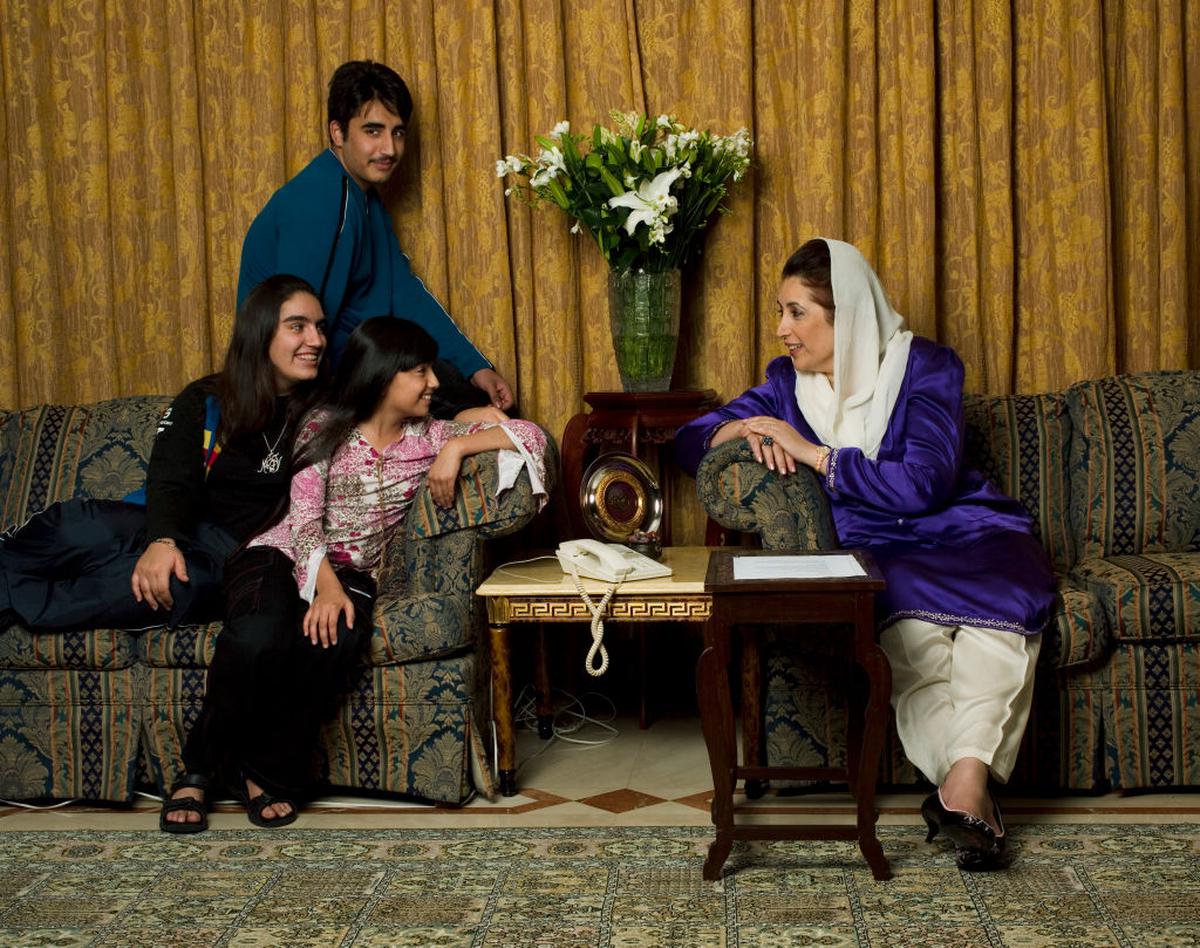
The selective manner of targeting women leaders in a manner their male counterparts don’t have to deal with, has echoed in global responses when other women leaders have stepped down. For instance, New Zealand Prime Minister Jacinda Ardern, just 37 when she assumed office in 2017, received much praise for her work on battling online extremist radicalisation with the ‘Christchurch Call’ after a deadly terror attack, but as her government faltered in its excessive lockdowns during the pandemic, the criticism of Ardern was harsh, with commentators and fellow politicians hinting that her role as PM required more time than the young mother, only the second leader in office globally to deliver a child (Pakistan’s Benazir Bhutto was the first), could offer. As she stepped down voluntarily in 2023, Ardern said, “I am human. Politicians are human. We give all that we can, for as long as we can, and then it’s time… I know what this job takes, and I know that I no longer have enough in the tank to do it justice.”
Former Pakistan prime minister Benazir Bhutto (right) with her children at their home in Dubai, 2004.
| Photo Credit:
Getty Images
When Finland’s Sanna Marin, the world’s youngest Prime Minister, who assumed office in 2019 at the age of 34, stepped down, also last year, it was clear that the “scandal” around a party she hosted, and videos of her dancing, played a big part in bringing her down, something a male leader may not have faced. That these are even issues in more open western societies raises questions about how women in traditional societies would fare.
Family connections
In South Asia, women have been at the helm of their countries at different times — yet many would dismiss their rise as the result of “tokenism” in nominated positions, or because of family connections that bring them into politics. Sri Lanka’s Sirimavo Bandaranaike may have been the world’s first woman prime minister in 1960, but she only took office after her husband S.W.R.D. Bandaranaike’s assassination in 1959, and her daughter Chandrika Kumaratunga became leader of her party and then PM after her husband was gunned down. Indira Gandhi, Benazir Bhutto and Bangladesh’s current PM Sheikh Hasina are all similar examples of leadership bred in the bone and pushed up the ladder due to personal tragedies. Their worries about sexism, however, remain the same as for women in other parts of the world. In interviews, Bhutto often described how she went secretly to a hospital to deliver her first child as she was worried that party rivals would put an interim government in place and replace her if she went on maternity leave. “The next day I was back on the job, reading government papers and signing government files,” she wrote in her memoirs.
With rising populism and masculine alpha leaders in vogue from the U.S. to India and Russia, women today have an even harder task convincing voters that they can be as good, and even better, at some aspects of leadership. At least two studies quoted in a CNN report found that female-led countries fared better during the pandemic, and tenures of women leaders co-related to a nearly 7% increase in GDP in comparison to male leaders.
The truth is, leadership is much more about individual qualities, rather than gender, but the obstacles in the paths of women leaders placed by their peers and society, make it necessary for the global community to put a greater premium on bringing more women into the political field and consequently into power. Their current predicament was summed up best by American Congresswoman Patricia Schroeder, who died in 2023 after a distinguished career in politics. When asked how she could be a mother and a Congresswoman, she famously said, “I have a brain and a uterus, and I use both.” When pressed further about whether she would run for Congress “as a woman”, she asked, “What choice do I have?”
suhasini.h@thehindu.co.in