




A study by researchers at the L.V. Prasad Eye Institute (LVPEI), Hyderabad, has found that around 70-80% of people who visit an eye hospital can benefit from teleconsultations because their problems aren’t serious enough to require attention at a hospital. The study was published in the journal Eye.
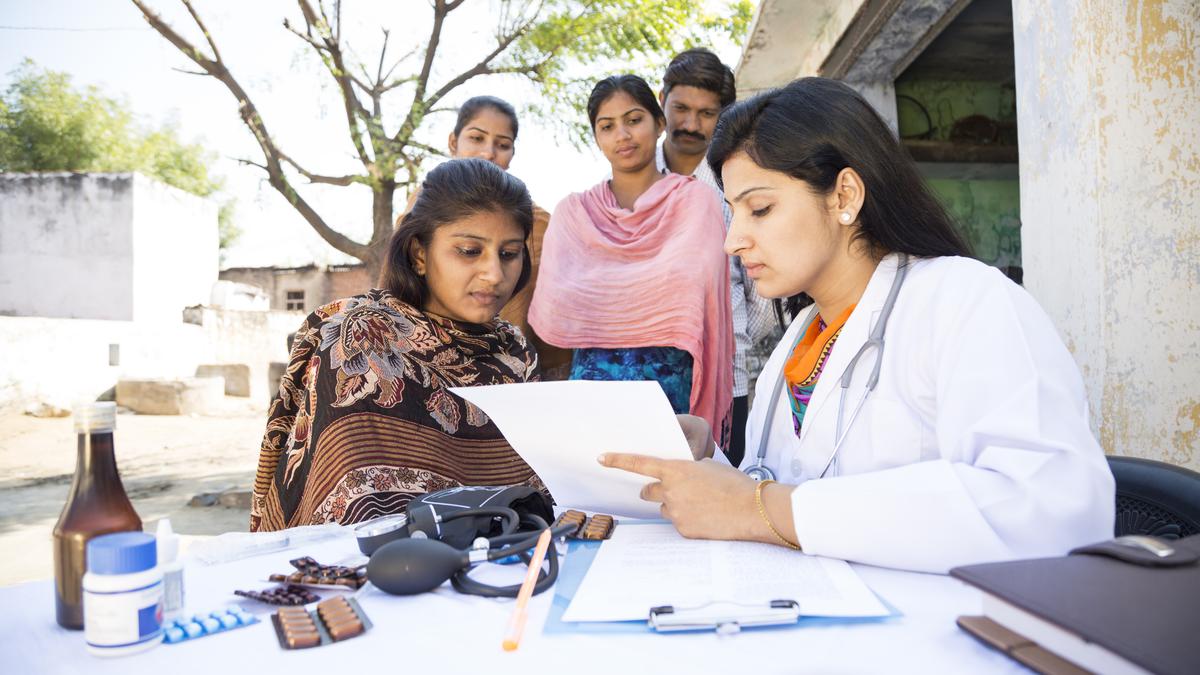
Telemedicine has emerged as a viable alternative to in-person consultations with doctors in many contexts because it saves patients time and expenses, which can be considerable if they are located in remote areas and/or are not well to do. But as more people pick this option, another advantage is coming to the fore: lower emissions.
Carbon footprint of healthcare delivery
Studies in high-income countries have shown that telemedicine is both a patient- and an environment-friendly means of healthcare service delivery. In India, where 70% of the population lives in villages, a hospital visit often requires expensive long-distance travel to urban centres, which imposes its own considerable carbon footprint.
Vehicular emissions are a major contributor to local pollution and global warming. In India, about 88% of the carbon dioxide emissions come from road traffic. Across cities alone, over a three-month period, the study found that teleconsultation led to 1,666 fewer kilometres of travel for patients and an average reduction of 176.6 kg of carbon dioxide emissions – figures the healthcare sector can’t afford to ignore.
According to one analysis, India’s healthcare sector emitted 74 million tonnes of carbon dioxide in 2014, around 3% of India’s total emissions of the gas that year. It is likely to have increased since: as the demand for health services increases, so too will the paradoxical harm to health due to their emissions.
“Every healthcare system should work towards carbon neutrality,” Padmaja Kumari Rani, the lead author of the study and network head of teleophthalmology at LVPEI, said. “Teleophthalmology is an efficient and effective tool that can help the eye health sector to achieve that goal.”
(Note: The author is affiliated with LVPEI.)
The teleophthalmology process
For the study, LVPEI researchers evaluated teleophthalmology, a specialised form of telemedicine that is customised for eye care.
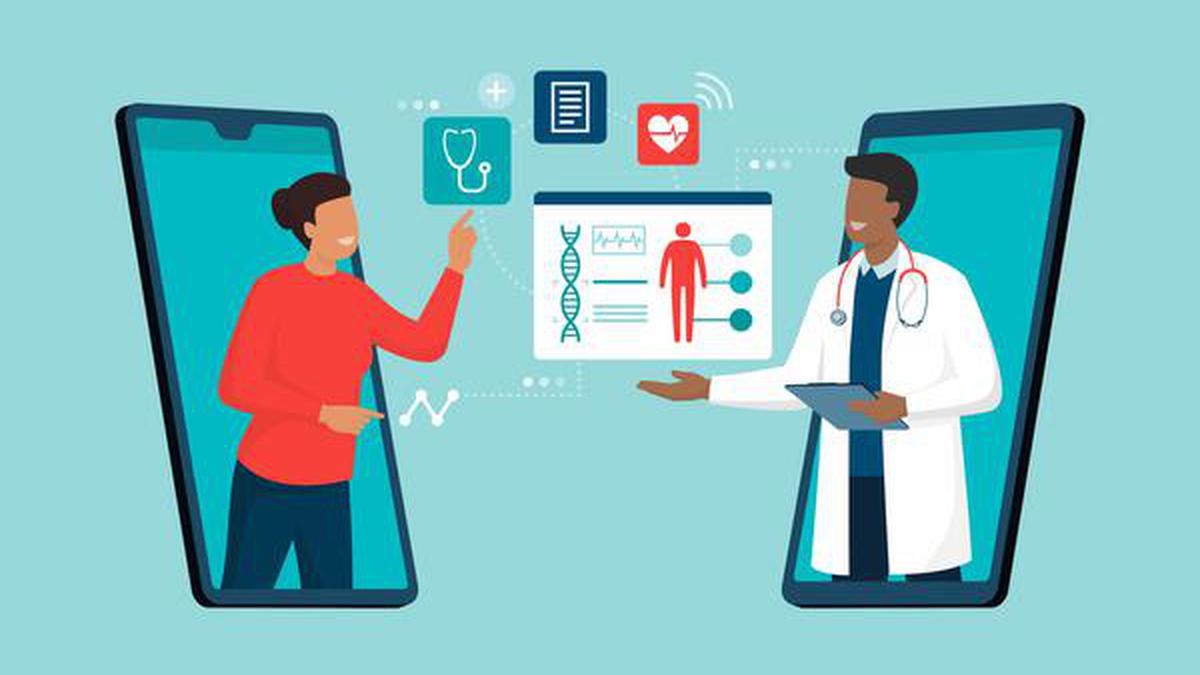
In a teleophthalmology session, a patient remotely consults with an ophthalmologist over internet-based video chat. The teleconsultation is mediated through a smartphone app or facilitated by a technician at a primary healthcare centre. If the patient uses an app, they can book an appointment with a doctor, have an online consultation, and receive an e-prescription through the app.
“This system is primarily designed for follow-up patients, so they do not have to travel to a tertiary hospital for subsequent visits after treatment,” Dr. Rani said. “A lot of new patients tend to use teleconsultations for a second opinion before committing to a treatment plan at a hospital.”
If the teleconsultation is facilitated by an eye-care technician, the technician will first perform a comprehensive examination and take good-quality pictures of the eye, and upload the data to a server in the cloud. Many kilometres away, a doctor will download the data from the server, study them, and prescribe treatment or refer the patient to a higher-level hospital for additional diagnostics or treatment.
“Most Indians live in rural areas while most doctors operate from urban locations. This leads to a gap in health care access. Teleconsultations bridge this gap,” Dr. Rani continued. “By helping to defer travel, we can also save a significant amount of carbon emissions. All we need is a stable internet connection.”
Economic impact of teleophthalmology
The study involved 324 patients who received teleconsultations within a three-month period. This included 173 patients who visited LVPEI’s rural primary eye centres and 151 that visited urban tertiary hospitals. The researchers assessed their carbon footprint based on the type of transport the patients used to commute to the clinic. They also evaluated the economic impact using estimated cost savings from travel, food, and lost wages.
Patients at rural centres were tagged ‘green,’ ‘yellow’ or ‘red’ based on the severity and urgency of medical intervention required. Around 70% of such patients were tagged ‘green’ because they could benefit from a teleconsultation alone. The remaining 30% travelled to a hospital. Their travel and emission costs were used to validate the emissions and costs avoided by those tagged ‘green’. Patients in urban centres were classified as ‘new’ or ‘follow-up’; their modes of travel and costs were also evaluated and included in the study.
Half of the patients in rural areas (49.5%) said they would have travelled by bus, while 38.7% would have used a two-wheeler to access care. The researchers estimated that teleophthalmology saved 80 km of travel and reduced 2.89 kg of carbon dioxide emissions per rural-area patient on average. That translated to around 1.2 litres of petrol saved per person over three months (with an emission factor of 0.1135 kg of carbon dioxide per passenger per km).
The numbers were more pronounced for urban tertiary-care hospitals. Care-seekers from around India came to LVPEI’s tertiary centres in four southern Indian cities. Some 41% of them travelled by train; 19% flew; and 11% took buses. Each deferred patient visit saved an average of 1,666 km of travel and reduced carbon dioxide emissions by 176.6 kg over three months. Each decision to defer also saved around 76 litres of fuel.
Similarly, on average, each rural patient saved Rs 370 and each urban patient Rs 8,339 on travel expenses alone. When the researchers factored in indirect costs like food and lost wages, total savings among rural patients ballooned to Rs 29,100 and Rs 3.45 lakh among their urban counterparts.
“Patients with minor eye problems like mild refractive errors or regular preventive eye check-ups are the target demographic for teleconsultations,” Dr. Rani said.
Sayantan Mitra is a science writer at the L.V. Prasad Eye Institute.