



Human activities have caused the earth to slowly heat up, and now it looks like war – another very human phenomenon – is preventing scientists from accurately measuring how rapidly our climate is changing.
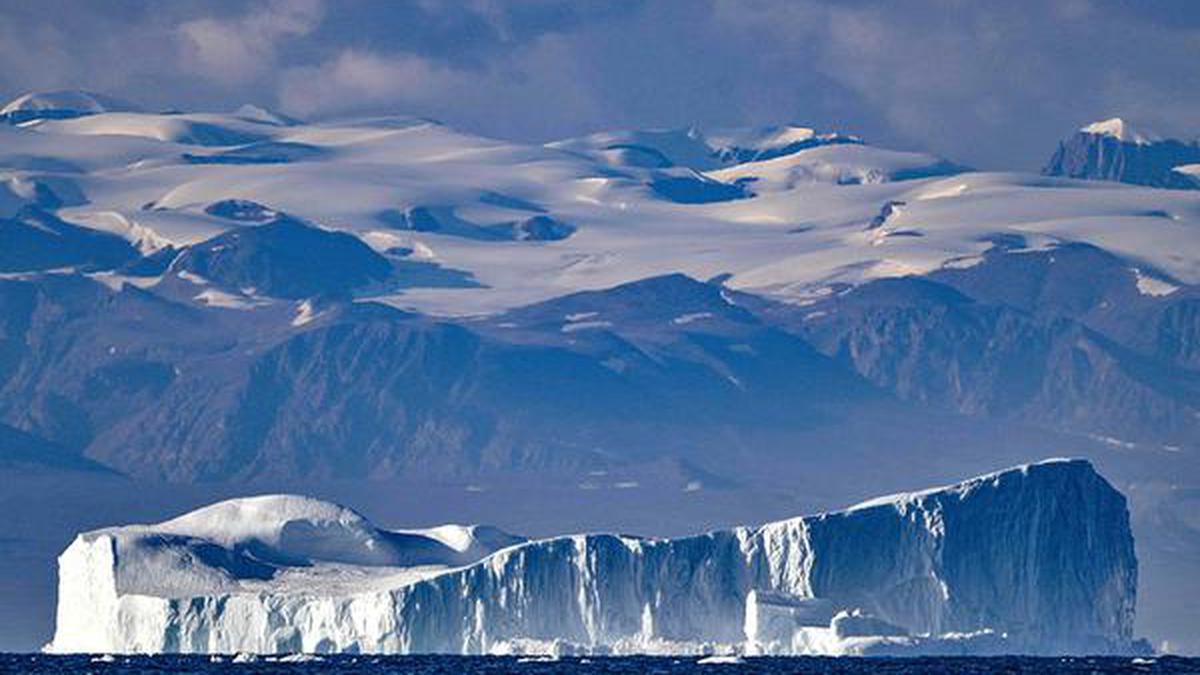
Global temperatures are rising, but temperatures in the Arctic region are rising even faster. Studies suggest a grim reality: that the Arctic is warming nearly four-times faster than the rest of the world. The consequences of this go way beyond just the Arctic. The melting permafrost and rising sea-levels can have devastating effects on local ecosystems as well as the climate.
Collaborations have collapsed
Many research stations in the Arctic are part of the International Network for Terrestrial Research and Monitoring in the Arctic (INTERACT). They continuously monitor environmental conditions in the different countries in the region. One country that makes up almost half of it is Russia – but since it invaded Ukraine, foreign scientists haven’t had access to data from Russian field stations.
Global collaborations with Russia have collapsed since the invasion and scientists from outside Russia who were earlier able to travel to field sites in the country to collect data can’t do so anymore. Climate projects that run on European funding also don’t allow them to officially collaborate with Russian partners, for now.
“We have to deal with this invisible wall, where there is no flow of data from the Russian side to our side. It is kind of like a blind spot,” said Efrén López-Blanco, an Arctic researcher at Aarhus University in Denmark. “And I want to believe that it is a temporary blind spot.”
Dr. López-Blanco and his colleagues recently reported that excluding data from Russia has heavily biased climate data. “When there is an increase in bias, there is a decrease in our ability to either describe or track Arctic changes,” he said.
A hidden difference
The researchers used multiple earth-system models (ESMs) to understand ecosystem conditions across the Arctic region. They focused on eight “essential variables” of the Arctic ecosystem, including temperature, vegetation, precipitation, and snow depth. ESMs are fully coupled climate, land, and ocean computational models that can be used to generate data for the entire planet. Those used in the study were the same ones the U.N. Intergovernmental Panel on Climate Change uses to assess the world’s changing climate.
First, the researchers wanted to use the models to find out if INTERACT stations in the Arctic, including the Russian ones, are able to potentially collect data representative of the pan-Arctic region. They examined 60 of the 94 INTERACT stations, including only those above 59 degrees N latitude. “Monitoring across the Arctic is not standardised,” Dr. López-Blanco said. So he and his colleagues primarily used model-generated data.
When they compared all the INTERACT stations’ data with the pan-Arctic data on the eight ecosystem variables, they realised there was already a difference in what INTERACT sites could estimate about the changes in the pan-Arctic region. These differences lead to a bias in the representation of ecosystem conditions in the Arctic.
Problem with excluding Russia
It so happens that INTERACT sites are located in warmer and wetter parts of the Arctic and regions of lesser biomass and soil carbon, which could be contributing to this bias.
Once the 17 Russian stations in Siberia were excluded, they found the differences – and thus the biases – increased further, and the ability to accurately describe changes in the Arctic decreased further.
Specifically, when the researchers used the ESMs to predict the state of ecosystem variables in 2100, they found current biases in the estimation of ecosystem variables after excluding Russian data showed a change similar to what is expected after 80 years of climate change.
Countering the bias
The result, Dr. López-Blanco said, is a decline in “our ability to inform management and conservation strategies and … our chances to properly mitigate the negative consequences of climate change”.
With Russian data continuing to stay out of reach, Dr. López-Blanco suggested looking for other regions in the Arctic with similar environments to Siberia – such as parts of northern Scandinavia and Canada – and collecting data from there to partially counter the bias, “at least in the short term until the war is over”.
“In the climate change research field, there is already a very good tendency to share data, as we are working together on something that affects us all,” according to Dr. López-Blanco. “We still need more coordination between the stations, standardisation in terms of using similar sensors and methods, and more open-source data sharing. These elements are key to gain a better understanding of current Arctic conditions and prepare effectively for the future changes.”
‘Already an uphill battle’
Hrishikesh Chandanpurkar, a fellow at the Centre for Sustainability, Environment, and Climate Change at FLAME University, Pune, and a World Bank consultant, said research stations should be as well distributed across a region as possible. Bearing in mind the spatial variability of the data and not just the logistical ease of setting up and maintaining the stations will help mitigate biases.
“‘Don’t stop sharing critical scientific data’ is also something that could be worked into the protocols of activities that are permitted to go on even during a war,” Dr. Chandanpurkar said. “Each country is co-dependent on other countries because of the causes and the impacts of climate change. So it makes sense to have a system in place where we are safeguarding a continuous observation network and its sharing.”
Scientists collecting data in the Arctic already face an uphill battle, with the unforgiving weather and polar bears that sometimes accidentally destroy instruments. But lack of data because of war is an additional, and exacerbating, variable. “We people of science care about collecting our data, filling knowledge gaps, and understanding the ecosystem processes that we are interested in,” Dr. López-Blanco said. What they quantified in the paper “is collateral damage of something that is happening elsewhere”.
Rohini Subrahmanyam is a freelance journalist.