






The story so far: On June 21, the U.S. Supreme Court upheld a federal gun control law intended to protect victims of domestic violence, in a landmark 8-1 ruling. In United States vs Rahimi, the Court was tasked with deciding whether a statute prohibiting a person subject to domestic violence restraining orders is violative of the Second Amendment to the Constitution.
The Second Amendment reads as follows: “A well regulated Militia, being necessary to the security of a free State, the right of the people to keep and bear Arms, shall not be infringed.”
In the present case, Texas man Zackey Rahimi had threatened to shoot his ex-girlfriend, who had also obtained a restraining order against him, and also engaged in six shooting incidents (with no fatalities) Mr. Rahimi’s case reached the Supreme Court after prosecutors appealed a ruling that threw out his conviction for possessing guns while subject to a restraining order. A federal appeals court in New Orleans had struck down the 1994 law.

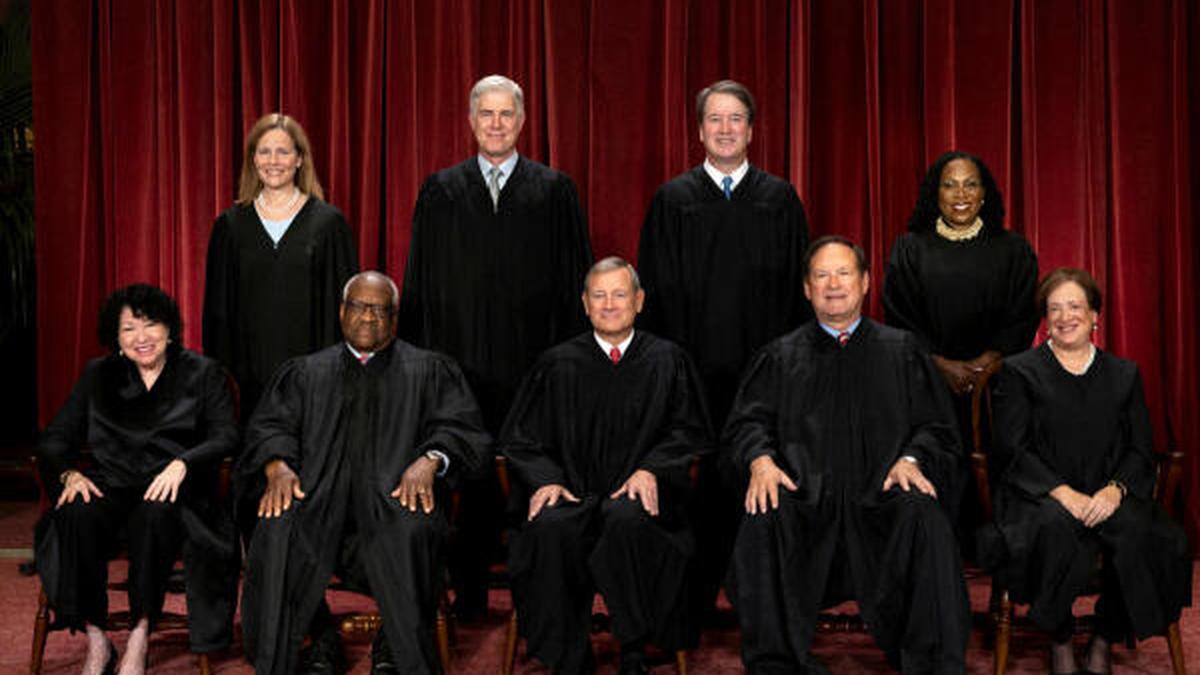
In an 8-1 decison, the Court held that a law may impose criminal penalties for gun possession without violating the Second Amendment if the person is considered a danger to others by the judge. Authoring the Court’s opinion, Chief Justice John Roberts wrote, “When an individual poses a clear threat of physical violence to another, the threatening individual may be disarmed.”
This decision, while welcome by gun rights advocates, did little to clarify the Second Amendment jurisprudence in the nation. This was the Court’s first major Second Amendment case since 2022, when its decision in Bruen expanded gun rights and proposed a historical analogue test to guide decisions about laws restricting guns.
Gun rights and control is a contentious, often litigated issue in the United States. And gun violence in a growing public menace. Recently, U.S Surgeon General Vivek Murthy declared gun violence a public health crisis in the U.S, due to the increasing number of injuries and deaths caused by firearms.

Against the backdrop of the increasing gun violence and a growing jurisprudence (and confusion) over the status of gun laws in the country, we examine the Second Amendment, a few recent cases and what guides decision-making about this issue in the U.S.
Recent cases: Cargill and Rahimi
The Supreme Court started its present session on October 3, 2023, and is expected to rule on several important cases dealing with different constitutional matters— including the First and Second Amendment— by the end of June 2024.
Last week, in Garland vs. Cargill, the Court had overturned a Trump-era ban on bump stocks, rapid-fire gun accessories which were used in the 2017 Las Vegas shooting— the deadliest mass shooting in modern U.S. history. The Court held that the Justice Department had overstepped its authority in imposing the ban. The Senate also voted down a bill that proposed to outlaw stocks, which was intoduced after the Court’s decision.
However, the decision in Rahimi unfolded in a different manner.
In November 7, the Court heard arguments in United States v. Rahimi, a gun control case centering on a Texas man named Zackey Rahimi. Rahimi was convicted under a 1994 federal law [18 U.S Code Section 922(g)(8)] that prevents a person subject to a domestic violence restraining order from possessing a firearm— he had assaulted his girlfriend, and she filed for restraining order post the end of their relationship. Rahimi is now serving a six-year prison sentence and challenged his conviction, saying it violated his Second Amendment right to keep and bear arms. While the U.S 5th Circuit Court ruled in his favour, the Biden administration appealed and the case made its way to the Supreme Court.
The U.S Circuit Judge Cory Wilson had noted that Rahimi was involved in several shootings in Arlington, Texas over the course of two months. When police showed up with a warrant to search Rahimi’s house as a possible suspect, he admitted to possessing guns, despite being subject to the domestic violence restraining order which disallowed him from owning them. The appeals court had initially upheld the conviction under a balancing test which also considered whether the restriction enhances public safety. But the panel altered course after the decision in Bruen.
During hearings in the Supreme Court in November, some judges expressed concerns that a ruling favouring Rahimi may also call into question a background check system based on domestic violence protective orders. According to the Biden government, this system has helped stop more than 75,000 gun sales over the last 25 years.

Gun control groups and advocacy groups supporting domestic violence victims had urged the Court to uphold the law. Meanwhile, gun rights groups supported the previous ruling in Rahimi’s favour, saying that the appeals court was right in looking at history and finding no restriction which could justify the firearms ban today.
The Court eventually found against Rahimi, in an 8-1 ruling. Justice Clarence Thomas was the sole dissenting judge.
Post the judgement, U.S Attorney General Merrick B. Garland issued a statement, saying that the law “protects victims by keeping firearms out of the hands of dangerous individuals who pose a threat to their intimate partners and children.”
“As the Justice Department argued, and as the Court reaffirmed today, that commonsense prohibition is entirely consistent with the Court’s precedent and the text and history of the Second Amendment.,” it noted. “The Justice Department will continue to enforce this important statute, which for nearly 30 years has helped to protect victims and survivors of domestic violence from their abusers.”
Bruen and the historical analogue test
Friday’s case stemme directly from the Bruen decision in June 2022, which not only expanded Americans’ gun rights under the Constitution but also changed the way courts are supposed to evaluate restrictions on firearms.
In June 2022, the Court, which has a 6-3 conservative majority, expanded gun rights inNew York State Rifle & Pistol Association v. Bruen. In this case, the Court invalidated New York State’s limits on carrying concealed handguns outside the home. In doing so, it created a new test for assessing firearms laws, saying restrictions must be “consistent with this nation’s historical tradition of firearm regulation,” not simply advance an important government interest. In Bruen, Justice Clarence Thomas ordered courts to assess the constitutionality of modern-day gun restrictions by searching for “historical analogues” from 1791, when the Second Amendment was ratified.

What constitutes a historical analogue has, however, not been defined. In an interesting turn of events, Judge Carlton Reeves of the Southern District of Mississippi Court proposed appointing a historian to help him “identify and sift through authoritative sources on founding-era firearms restrictions” to decide the constitutionality of a federal law barring felons from possessing firearms. Scholars have also questioned the premise that the Second Amendment created an individual right to bear arms, saying that the right was first established in 2008 in District of Columbia v. Heller
Bruen had a major impact. Lower courts overturned thirty-one gun laws in the eight months following the Bruen decision, a study by gun-safety organisation Giffords found.
The decision in Rahimi however, saw the majority in the Supreme Court state that the lower courts did not have to identify exact replicas of historic laws to uphold modern-day gun restrictions. The opinion, authored by Chief Justice John G. Roberts Jr., said that a law can impose criminal penalties for gun possession without violating the Second Amendment as long as a judge finds the person to be a danger to others.
Authoring a concurrence, Justice Ketanji Brown Jackson, a member of the court’s liberal wing, highlighted that Bruen had created uncertainty, suggesting that it was the high court’s fault for not providing clarity for lower courts to follow.
Justice Amy Coney Barrett, a conservative, wrote a concurrence where she questioned how lower courts were seeking quasi-parallel historic laws while considering a modern law. “Imposing a test that demands overly specific analogues has serious problems….It forces 21st-century regulations to follow late-18th-century policy choices, giving us ‘a law trapped in amber.’” she wrote.
The Court’s sole dissenting member, Justice Clarence Thomas maintained that the Supreme Court’s decision in Bruen was straightforward. Modern gun laws needed to be “consistent with the nation’s historical tradition of firearm regulation” to ensure they did not violate the Second Amendment.
Other gun cases: recent and pending
The Supreme Court has been facing a slew of gun rights cases, and is likely to face more.
In last October, the US Supreme Court refused to revive a controversial Missouri law that prohibits local law enforcement from helping federal officials enforce federal gun regulations. It also sided with the Biden administration on ghost guns, blocking a Texas federal judge’s ruling that would have prevented the government from enforcing a rule by the Bureau of Alcohol, Tobacco, Firearms and Explosives against two manufacturers of gun parts. (Ghost guns are firearms without serial numbers that virtually anyone can assemble from parts, often purchased in a kit.) In both cases, the Court’s conservative justices dissented.
Now Rahimi is expected to influence outcomes in several other pending cases.
One important case centres on the prosecution of Hunter Biden, President Joe Biden’s son, who was convicted for three felonies pertaining to the purchase of a revolver in 2018, when he allegedly lied about his drug addiction on a federally-mandated gun-purchase form. His lawyers have indicated that they will appeal his conviction.

Another case that bears relevance to Hunter Biden’s and has been appealed to the Supreme Court is one where a Mississippi man challenged a federal law which criminalises owning a weapon while being an “unlawful user of or addicted to” drugs. The 5th Circuit ruled in the man’s favour. A similar challenge was raised in U.S vs. Daniels, which was decided by the 10th Circuit Court of Appeals. In another case, a Pennsylvania man challenged a federal law prohibiting felons, including non-violent ones, from possessing guns; the man had been convicted of welfare fraud for lying on a form to obtain food stamps.
Other cases waiting in the wings deal with challenges to Illinois’ ban on “assault weapons” and New York’s regulations on carrying concealed firearms.
Besides gun rights, the Court has also handed down a slew of decisions on constitutional matters in June. One such case, Vidal v. Elster, was a trademark case centring around the phrase “Trump too small,” inspired by a debate joke in 2016.
Interestingly, the case saw Amy Coney Barrett break with fellow Conservative justice Clarence Thomas, on the question of historical analogues and precedent, albeit in a case related to the First Amendment instead of the Second. She wrote, in a part concurrence, that the Court in its opinion, “never explains why hunting for historical forebears on a restriction-by-restriction basis is the right way to analyze the constitutional question.”
“Relying exclusively on history and tradition may seem like a way of avoiding judge-made tests. But a rule rendering tradition dispositive is itself a judge-made test,” she wrote, “And I do not see a good reason to resolve this case using that approach rather than by adopting a generally applicable principle.”
Public attitudes towards guns
As gun control cases play out in the Courts, guns remain a sensitive issue in politics and the public domain. In the U.S, conservatives largely tend to favour protection and expansion of rights to own guns, while liberals tend to argue for gun control.
According to a Pew Research Center survey, around eight-in-ten Biden supporters (83%) say the increase in guns in the U.S. is at least somewhat bad for society. Only 21 % of Trump voters hold this position; 40% believe it is good, while 13% believe it is neither good nor bad.
Meanwhile, 85% of Trump supporters say it is more important to protect the right of Americans to own guns as compared to 19% of Biden supporters.
This is amid a rising tide of gun violence, with mass shootings in publics spaces and schools remaining a major safety concern.
In another Pew Research Center study, a majority of public school teachers- 59%- say they are at least somewhat worried about shootings taking place at their school, including 18% who say they are extremely or very worried. About a quarter (23%) say that they experienced a lockdown in 2022-23 related to a gun or the suspicion of a gun in their school.
The impact of gun violence is also unevenly distributed across demograpgics. In her concerrence in Rahimi, Justice Sonia Sotomayor highlighted that women living domestic abusers are five times more likely to be killed if there is access to a gun. A U.S-based study also noted that more than 70 people are shot and killed each month by a partner.
Also read:Explained | Gun laws in countries outside the U.S.
Interpreting the Constitution
Much of the judicial debate surrounding the Second Amendment boils down to varying theories of interpreting the American Constitution, authored in 1787. The Second Amendment itself was ratified in 1791.
There are several theories of statutory interpretation, used to better understand the bare text of the law— including Constitutions. Former Associate Justice of the U.S Supreme Court Oliver Wendell Holmes Jr. said, “A word is not a crystal, transparent and unchanged; it is the skin of a living thought and may vary greatly in color and content according to the circumstances and time in which it is used.” Justice Holmes, Jr. is one of the key names associated with legal realism; this quote summarises the core tenet at the heart of this theory. Legal realism is defined as a theory that all law derives from prevailing social interests and public policy. In legal realism, judges are expected to consider not merely the rules, but also social interests and public policy to decide a case.
Legal realism can be contrasted with legal formalism, which postulates that “legal rules stand separate from other social and political institutions.” Thus once laws have been created, judges are to apply them to the facts of a case, without taking into account matters relating to social interests or public policy.
A specific theory that has been subject of much discussion in the context of the US Supreme Court is originalism, which postulates that the text in the law, particularly in the United States Constitution, should be interpreted as it was understood at the time of adoption of the Constitution. This original meaning is to be gauged from the ideas of the framers of the constitution, or the Founding Fathers, or from public events, debates, dictionaries and documents belonging to that time. One of the key proponents of originalism was Supreme Court Justice Antonin Scalia.
Originalism itself can be contrasted with the living constitutionalism theory, which asserts that the Constitution is living and can evolve with society, and that the meaning of constitutional texts changes over time.
Legal experts and essayists have drawn out threads and highlighted the jurisprudence and legal philosophies underpinning the individual decision-making of judges. Further, judges themselves have revealed the principles that guide their judging during confirmation hearings, or speeches and articles in various public fora. It is these principles that can be gleaned from their current decisions in Constitutional cases as well.