




On October 7, 2023, Hamas militants entered Israel in a surprise offensive, killing around 1400 people. Israel has retaliated in a continuing series of ferocious air strikes targeting the Gaza Strip, including areas it earlier designated as safe zones for Palestinians. It is also reportedly amassing troops and tanks for a ground invasion; residents of certain towns along the border with Lebanon border have reportedly been asked to evacuate.
The conflict is unfurling in the Gaza Strip, one of two territories where Palestinians live, the second being the West Bank. These are the two Palestinian enclaves that Israel lays claim to, beyond the borders of the Green Line— the boundary of Israel as determined by the Arab-Israeli Armstice Agreement of 1949. While not officially annexing these areas, Israel has engaged in settlement building in the two, leading to outcry from Palestinians and the international community.
The Hindu examines the embattled land in the Levant where the bloody Israel-Palestine face-off has been underway for decades.
Also see:Worldview with Suhasini Haidar | The Israel-Gaza conflict | What line is India taking?
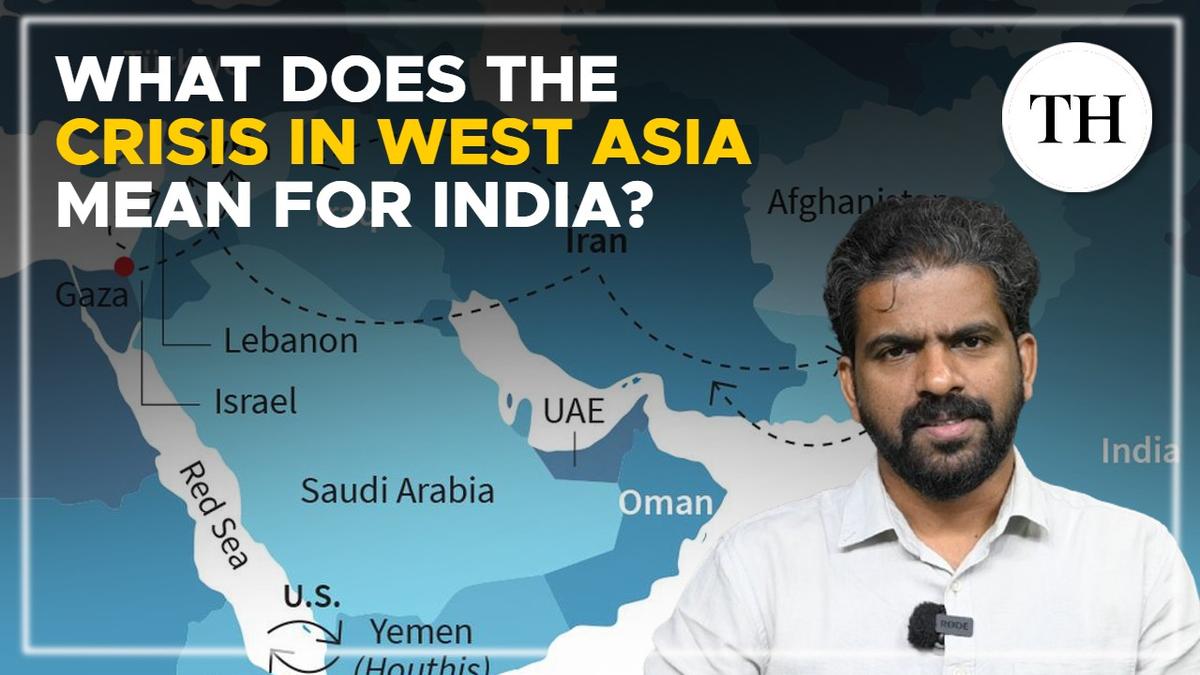
The broader region
Two terms familiar to the historian can be used to describe the general area where Israel and Palestine are located— the Levant and the Fertile Crescent. The Levant is the historical region in West Asia bordering the Mediterranean Sea which contains present-day Syria, Lebanon, Israel, Jordan, and Palestine. The Fertile Crescent is the broader area, fed by the Tigris, the Euphrates and the Nile, consisting of modern-day Syria, Lebanon, Jordan, Palestine, Israel, Egypt, and parts of Turkey, Iran and Iraq. Once the cradle of civilisation, known for rich soil and hospitable conditions, the region has seen deterioration due to the demands of urbanisation and growing population.
Israel itself lies to the west of the Mediterranean Sea, with Lebanon to the north, Syria to the northeast, Jordan to the east and southeast, and Egypt to the southwest. It claims Jerusalem as its principal seat, although this is not widely recognised in the the international community.
A trickle of Jewish migration to this region increased during World War 2, further intensified by the Holocaust and persecution of Jews in Nazi Germany. The Jewish nation of Israel came into being on May 14, 1948.
The Gaza Strip
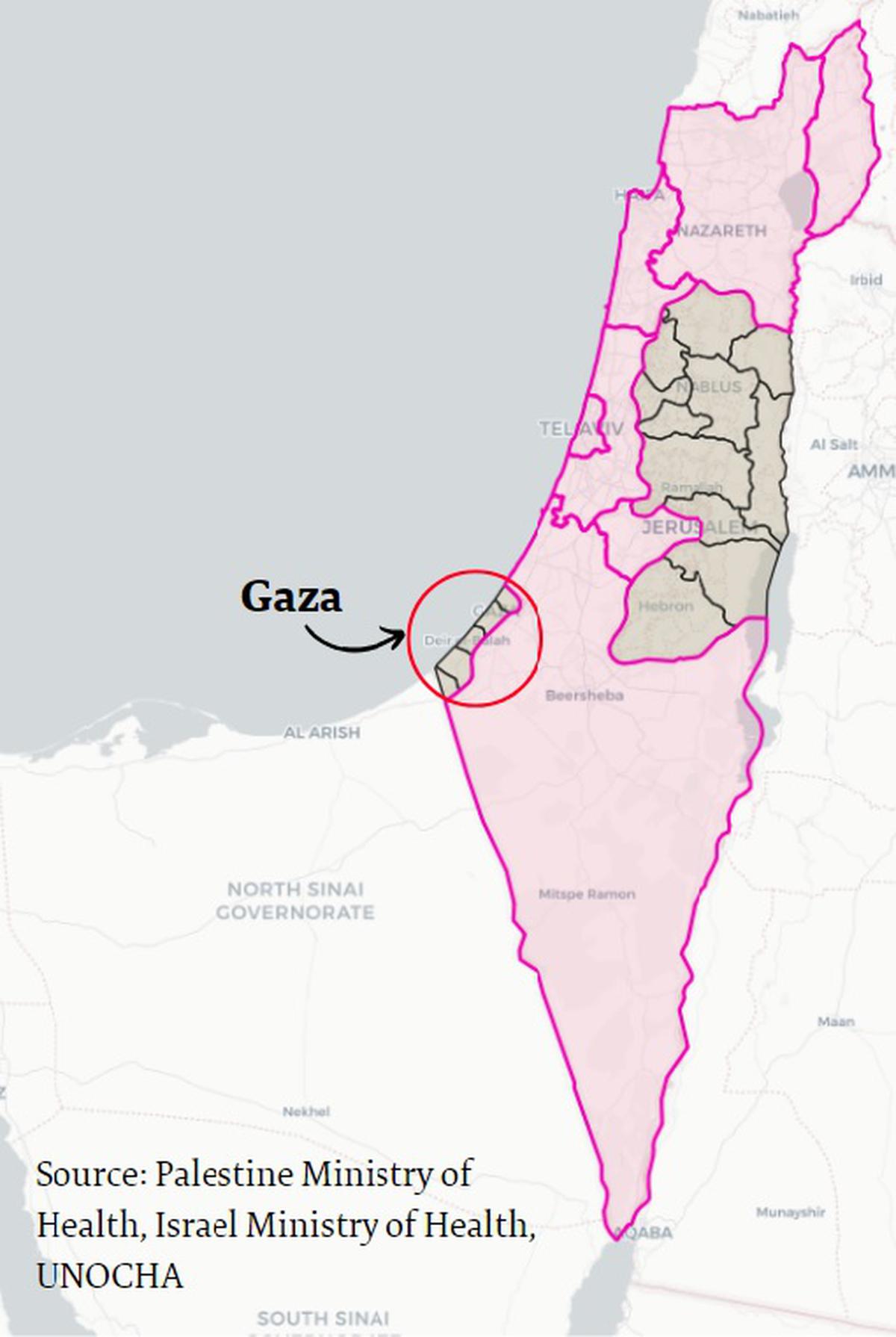
The Gaza Strip is a small sliver of land to the northeast of Egypt’s Sinai Peninsula— which connects Asia and Africa— in the eastern basin of the Mediterranean Sea. Its size has been described as around twice that of Washington D.C— a total of around 363 square kilometres (140 sq miles); the boundaries of the Gaza Strip were demarcated in the Egyptian-Israeli armistice of February 24, 1949, to 40 km long and 6-8 km wide.
Surrounded by Egypt to the southwest, the Mediterranean Sea to the west, and Israel to the north and east, the Strip is mostly comprised of flat coastal plain. It is a primarily agricultural zone, with three-fourths of its area under cultivation. Average temperatures range from around 13 degrees in the winter to the upper 20s in the summer.
The chief crop grown here is citrus, cultivated on irrigated land and exported to Europe and other nations via Israel. Other crops include truck crops, wheat and olive. Some light industry is situated in Gaza, the chief city in the area. Per some accounts, a tenth of Gaza Strip residents travel to Israel for work; they are not allowed to stay overnight. There is high unemployment among the inhabitants of Gaza.
The Gaza Strip is densely populated, with a high growth rate. As of 2023, the estimated population of the region is approximately 2.23 million. The population is predominantly Sunni Muslim, with a Christian minority.
The Strip has regularly been referred to as an open-air prison. Living conditions are poor, with a lack of access to adequate water, sewage and electrical facilities. 95% of the population reportedly cannot access clean drinking water, and half do not have enough food. An onerous Israeli permitting system also prevents several Gazans from obtaining medical care.
Many of the Gaza Strip’s inhabitants live in refugee camps—nearly half the populace of Palestinian Arabs is in extreme poverty, and is largely maintained through aid from the UN Relief and Works Agency for Palestine Refugees in the Near East (UNRWA). As much as 80% of Gazans rely on aid to survive.
At present, the region is not de jure recognised as part of any country. It has a complicated political past; it was ruled by the Ottoman Empire till World War I, post which it was part of the League of Nations mandate of Palestine under British rule. In November 1947, before this mandate ended, the UN General Assembly accepted a plan for the Arab-Jewish separation of Palestine — under this Gaza and surrounding areas were to be allotted to the Arabs. After the British mandate ended on May 15, 1948, the Arab- Israeli war began. It was during this time that Egypt occupied the small territory of land now known as the Gaza Strip.
The Palestinian Authority under Fatah had control of Gaza till 2006. In 2006, the Palestinian Islamist organisation Hamas rose to power, defeating Fatah in an election; this caused a civil war between the two. Hamas took over Gaza in 2007 and continues to govern the Gaza Strip.
Hamas was founded in 1987 during the First Intifada. Notably, Hamas, unlike Fatah, rejects Israel as a “Zionist entity.”
After the Hamas takeover, Israel designated the Gaza Strip a hostile entity and blockaded the Strip with Egyptian support. Sanctions, blockades and border closures continue in the Strip till today.
West Bank
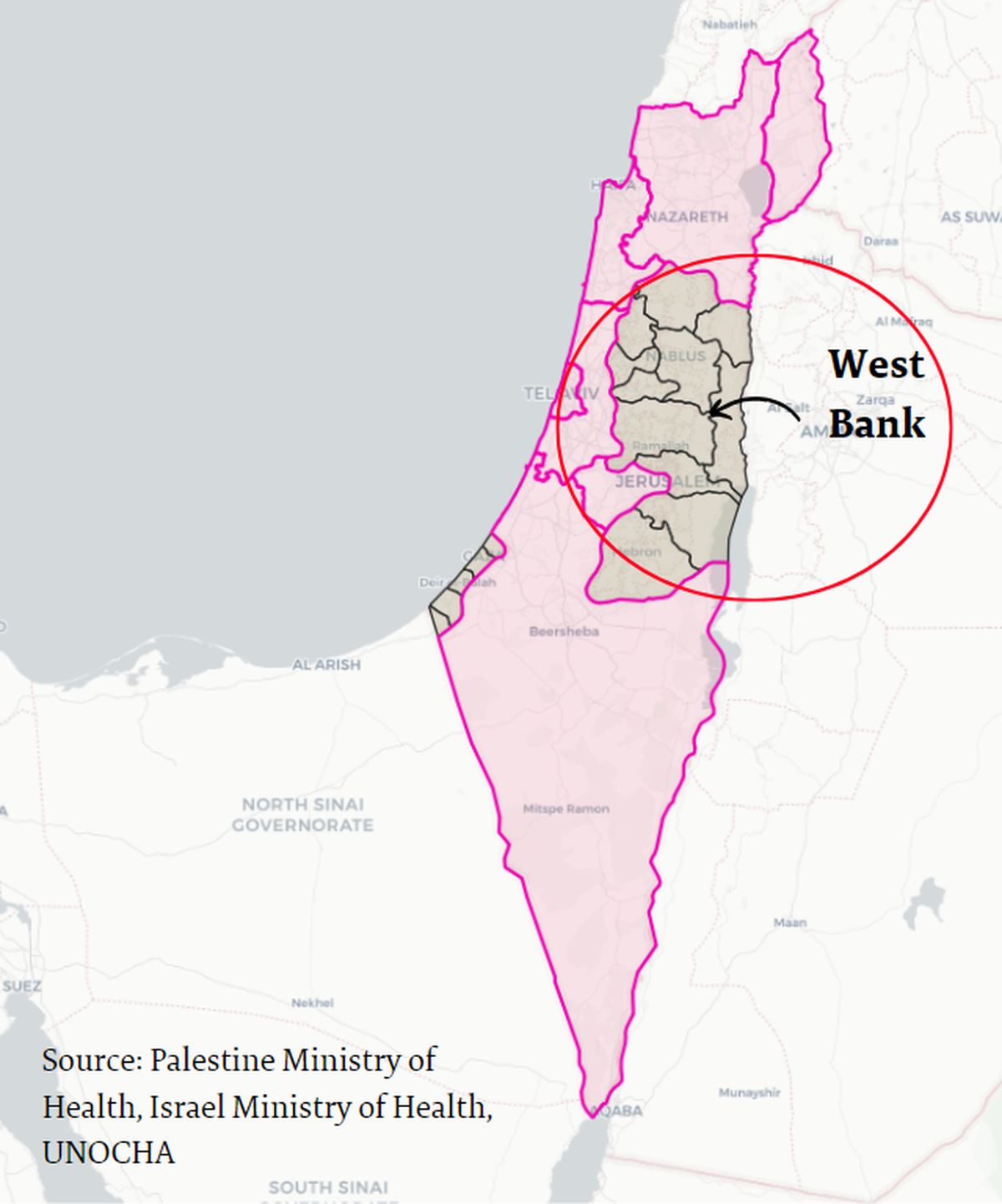
Much like the Gaza Strip, the West Bank was part of the mandated former British territory of Palestine.
The 5650 sq km (2180 sq mile) landlocked territory is located to the west of the Jordan River, with Jordan and the Dead Sea to the east and Israel to the north, south, and west. The land hosts north-south oriented limestone hills, past which it slopes down into the Great Rift Valley of the Jordan River and the Dead Sea. The area lies partly within the drainage of the Jordan River; some streams flow westward to the Mediterranean Sea.
The West Bank has more hospitable terrain than the Gaza Strip. Annual rainfall ranges from 27 inches in the high elevations to 4 inches near the Dead Sea. There is variable land use, with well-watered hill patches used for sheep grazing and cultivation of cereals, olives and melons, and irrigated hill and Jordan River valley zones used for fruit and vegetable cultivation. There is not a lot of industry here as well; Israeli occupation has resulted in constraints. Several small universities (founded circa the 1970s) enrol mostly Palestinian students. The one constant developmental improvement in the region has been transportation—mainly to aid military movement.
The principal cities in this area include Jenin, Nablus, Ramallah, Bethlehem, Hebron (al-Khalil), and Jericho, which lies in the Jordan River valley. This is the area where the holy city of Jerusalem is located. The territory, excluding east Jerusalem, is known in Israel by the biblical names Judaea and Samaria. The estimated population of the West Bank as of 2017 was 2.8 million.
A brief history: the West Bank was a part of the portion retained by Arab forces entering during the Arab-Israeli war of 1949, after the exit of the British. From 1949 to 1988 it was claimed as part of the (Hashemite) Kingdom of Jordan. The borders and status of this area too were demarcated by the Jordanian-Israeli armistice on April 3, 1949.
There have been waves of migration of Palestinian Arabs from the West Bank, notably after the war of 1948, and then the Six-Day War of 1967. Between 1967 and 1977, more than 6000 Palestinians were evicted from East Jerusalem to be replaced by Jewish immigrants. Several Palestinians also have lost residency under Prime Minister Benjamin Netanyahu’s first government from 1992 to 1996. Displacement continues today.
Before the current conflagration in the Gaza Strip, Palestinians and Israel Defence Forces have also faced off in the West Bank, with loss of life on both sides; disproportionately higher on the Palestinian side.
A changing geography
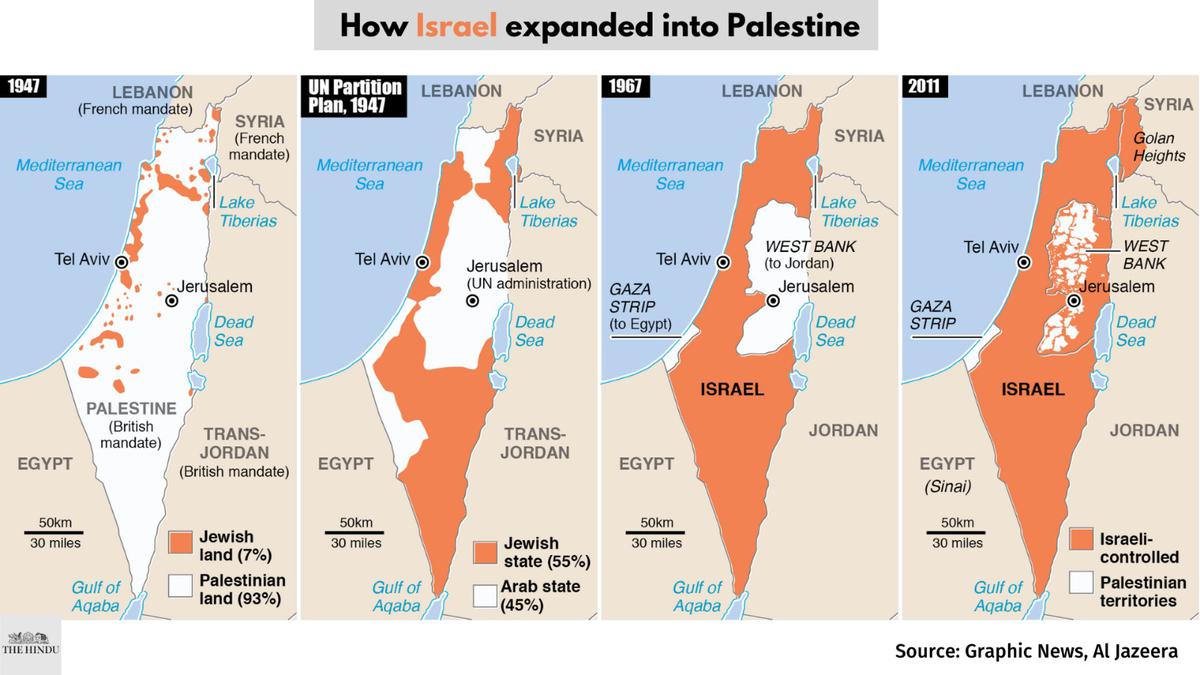
The physical geography of the land is somewhat inextricably linked to its political geography, with borderlines, town layouts and demographic distribution seeing change. The influx of Jewish immigrants and the attrition of Palestinian Arab has changed the makeup of certain cities; Jerusalem has grown and been altered. In addition to this, constant conflict, terrorism, air strikes and bombings have also altered the face of the land.
Since the 1970s, parcels of land have been subject to de facto annexation by the Israeli army, being declared state property or abandoned land. Many of the changes have taken place largely outside the official Green Line borders, in the occupied territories of the Gaza Strip and the West Bank. Israelis settled in this land have been given a special civilian status in territory officially under military control.
In 1947, the UN intervened vide UN resolution 181 to partition Palestine and Israel. The intervention came amid growing strife between Palestinian and Zionist militia; moreover, memories of the Holocaust still hung over the world’s Jewish population. The intervention also aimed to stall Israeli settlement building (“Kibbutzim” and “Moshavim”). The partition reportedly saw 55% of the erstwhile territory being earmarked for Israel, while the rest was carved out for the Palestinian Arabs. The city of Jerusalem was to be under international control.
While the plan saw the approval of Jewish groups, it was rejected by Arabian states and peoples. “The UN blueprint as envisaged was never implemented,” an article in Foreign Policy noted.
While Israel formally annexed East Jerusalem in 1980, it has not officially taken over West Bank or Gaza. But it has been gradually building settlements in both areas, deemed illegal by most of the world. While it reportedly withdrew from settlements in Gaza in 2005, it has expanded them in the West Bank, and continues to do so.