



(This is the latest edition of the Political Line newsletter curated by Varghese K. George. The Political Line newsletter is India’s political landscape explained every week. You can subscribe here to get the newsletter in your inbox.)
Diplomacy has been democratised. But there is a little trouble — the grand plans of strategic elites are increasingly constrained by public opinion, in India and all democracies, as the world stares into a new abyss.
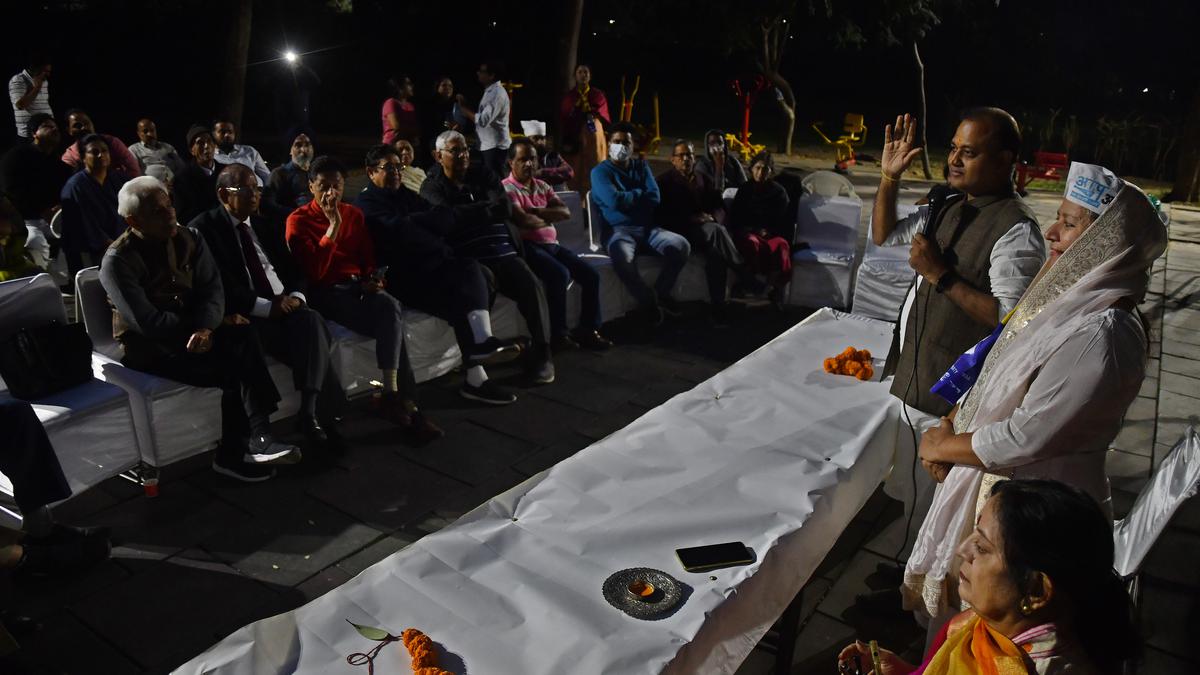
The biggest insurrectionist of our time and the founder of the Aam Aadmi Party, Arvind Kejriwal, used to campaign for empowered mohalla sabhas, or neighbourhood assemblies. The claim was that if such neighbourhood assemblies were taking governance decisions, efficiency would increase and corruption would cease. These days, mohalla sabhas, real and virtual, are flooded with the wisdom of the common man on strategic affairs — what is national interest, how to prosecute war, and who might be the enemies lurking in the midst. And it is not looking all that pleasant.
Contradictory calls for more centralisation through global bodies (on climate, for instance), and decentralisation through empowerment of local self-governance were two parallel streams in governance prescriptions until populist revolts across the globe upended the entire debate. The populist call for more power to the people, premised on the very justifiable charge that the elites were perpetuating their own interests in the name of national interest, brought national sovereignty at the centre of governance. The notion that this sovereignty is to be commanded by a central government that yields neither to global institutions nor to internal claimants of sovereign power now reigns supreme in India. In the West though, the story is more complicated, because unlike in India, the populist insurrection and the state/security apparatus have diverging interests.
Populism had made discussions on strategy a mohalla sabha event. In India, according to handouts that proclaimed how the current government democratised diplomacy, this year’s G-20 summit was preceded by 220 meetings across 60 cities, involving 1.5 crore people. Diplomacy and policymaking used to be the preserve of the elite across the world. Now everyone has a say in it, and indeed they are saying a lot.
The fundamental difference between populism in India and the West is in their respective approaches to the rest of the world and wars. Indian populism wants India to be a superpower and bays for war, bloodshed, and decimation of enemy countries and disloyal residents. It calls for more military spending, policing, encounter killings, and is dismissive of concerns about human rights. This way, Indian populism aligns with its deep state, military and security apparatus.
Western populism is primarily a revolt against its national security apparatus that runs unending wars on the basis of shifting theories. The truth is so simple for everyone to see what the U.S. strategy has achieved against its own declared goals, American populists point out. Afghanistan, Iraq, Syria, China, and Russia are all failures of western military and trade strategies, according to its own admission subsequently. Populism in the U.S. labels the country’s strategy as a con job of the elites to swindle the public by constantly conducting wars. Populist leaders cite the immense wealth that traditional elites amass, in the process. The same strategic thinkers who have been at the helm continue to claim foreign policy expertise, and populists reject that claim. In this way, western populism opposes militarism, global wars, and calls for limited involvement of their countries in international affairs. People in the West are rising against wars; sadly, in India, people — as in the supporters of Indian majoritarianism — are crying for more wars.
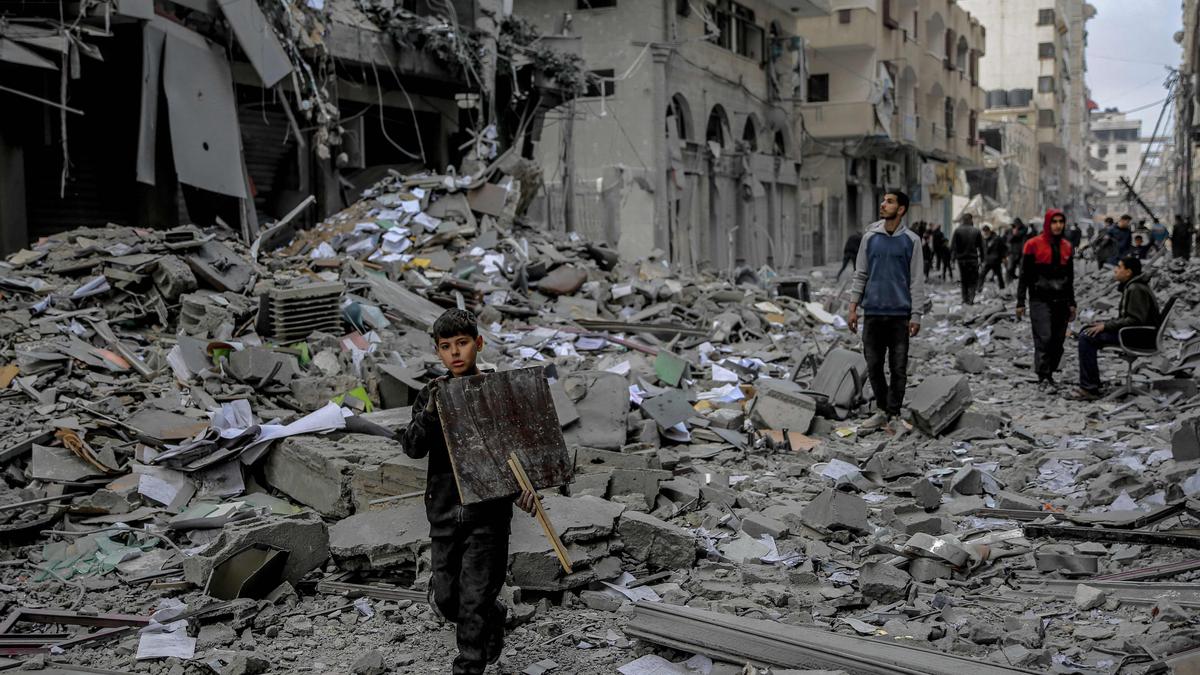
That difference aside, the strategists in India and other democracies face the shared problem of dealing with assertive and boisterous public opinion regarding international relations. The government of Prime Minister Narendra Modi is trying to nuance and balance its positions in conflicts that threaten to entangle India in them, but his supporters are not making it easy for him. They think India must offer unqualified support to Israel and show no concern for Palestinians. They want people from other countries to respect India, but they also harass cricketers and fans from other countries, weakening India’s claims in the field of sports.
The U.S. responses to current conflicts around the world are all drawn from what former President Barack Obama had called the ‘Washington playbook’, which prescribes a new war as a solution to any problem, but the public is questioning that logic. In Israel, Prime Minister Benjamin Netanyahu is facing a massive blowback from the public, even as he vowed to “reshape” West Asia. People’s power takes many different shapes.
Federalism Tract – Notes on Indian Diversity
Kannada Chief Minister
Karnataka Chief Minister Siddaramaiah is a champion of Kannada nationalism. Twice in recent weeks, he has called for creating an ‘ambience of Kannada’ in the State. “Everyone living in Karnataka should also learn to speak Kannada. In the States of Tamil Nadu, Kerala, Telangana, or Uttar Pradesh, it is impossible to live by speaking just Kannada, without learning the local language. But you can live in Karnataka even if you don’t speak Kannada. That is the difference between our State and other States,” he said, adding that this should change.
Create a ‘Kannada atmosphere’ in Karnataka, says Siddaramaiah
Letter from the South
Tamil Nadu Chief Minister M.K. Stalin has written a letter to Prime Minister Narendra Modi on Saturday, requesting his personal intervention to integrate a caste census with the proposed national decadal census.
The Sanatana Debate
In this fine piece, B. Jeyamohan points out that conflating Hinduism with Vedic religion is a dangerous distortion. Sanatana is best used for the Vedic religion, which is not the same as the various versions of popular Hinduism that we have today.