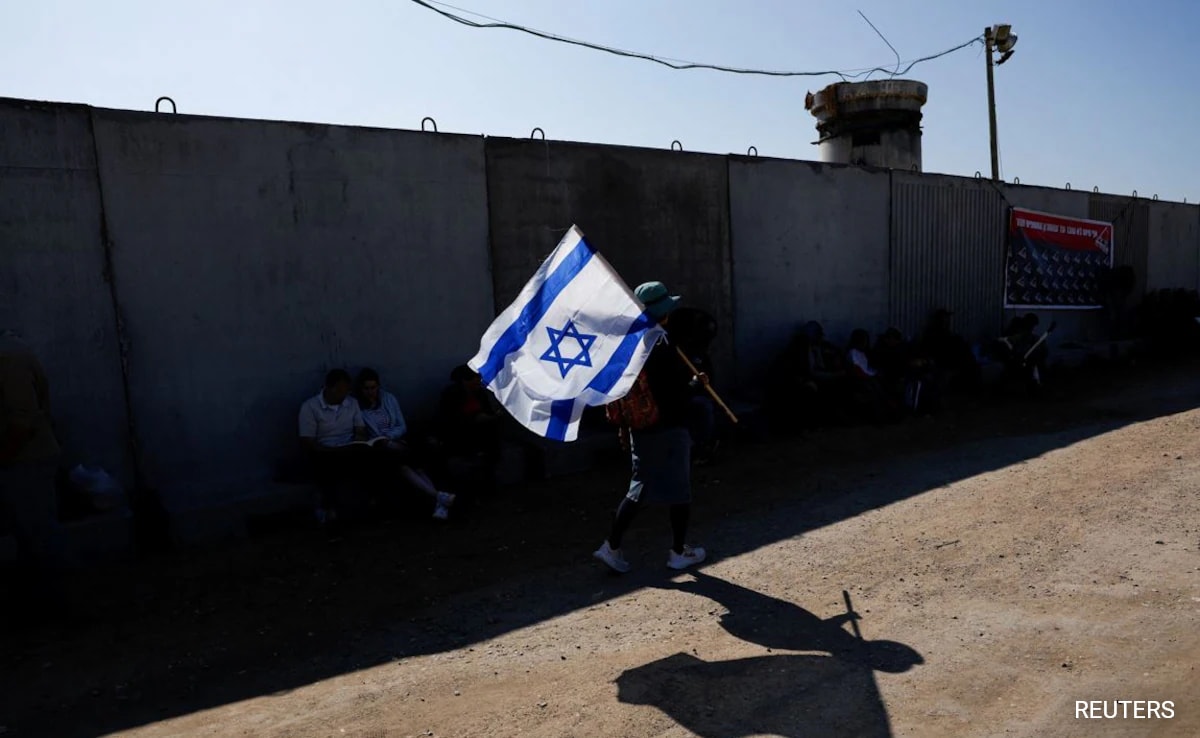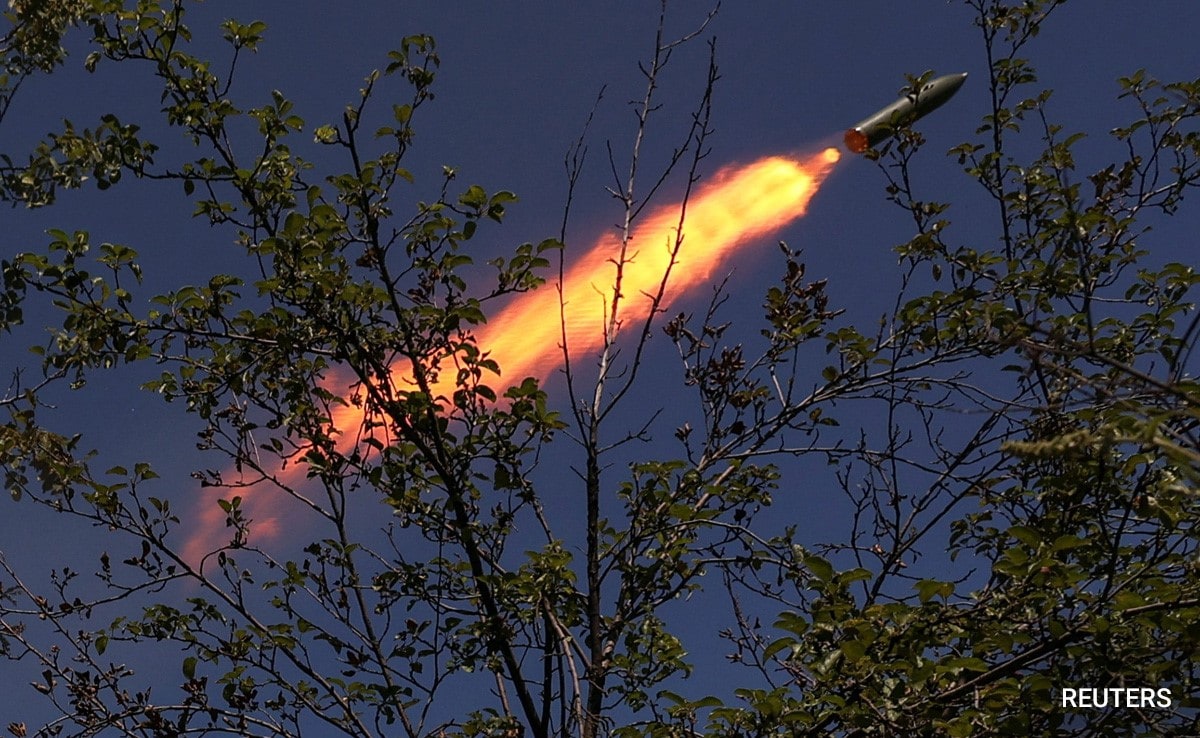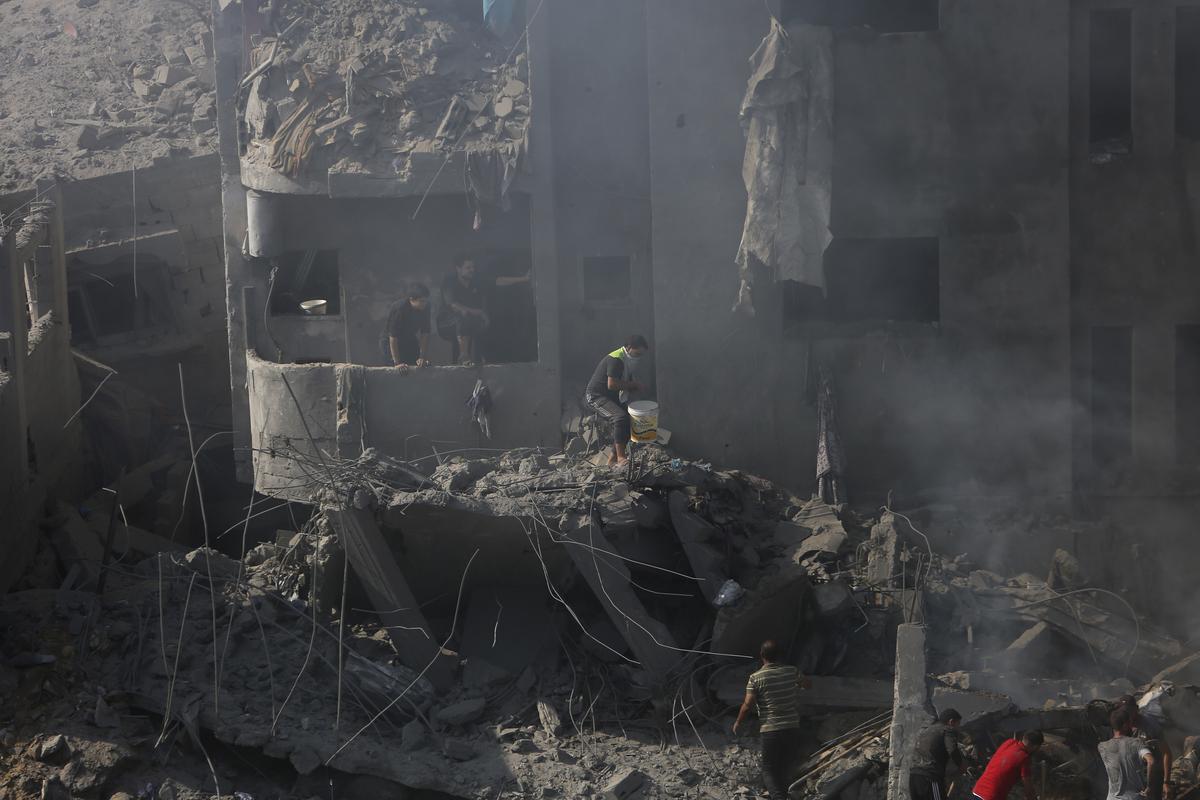



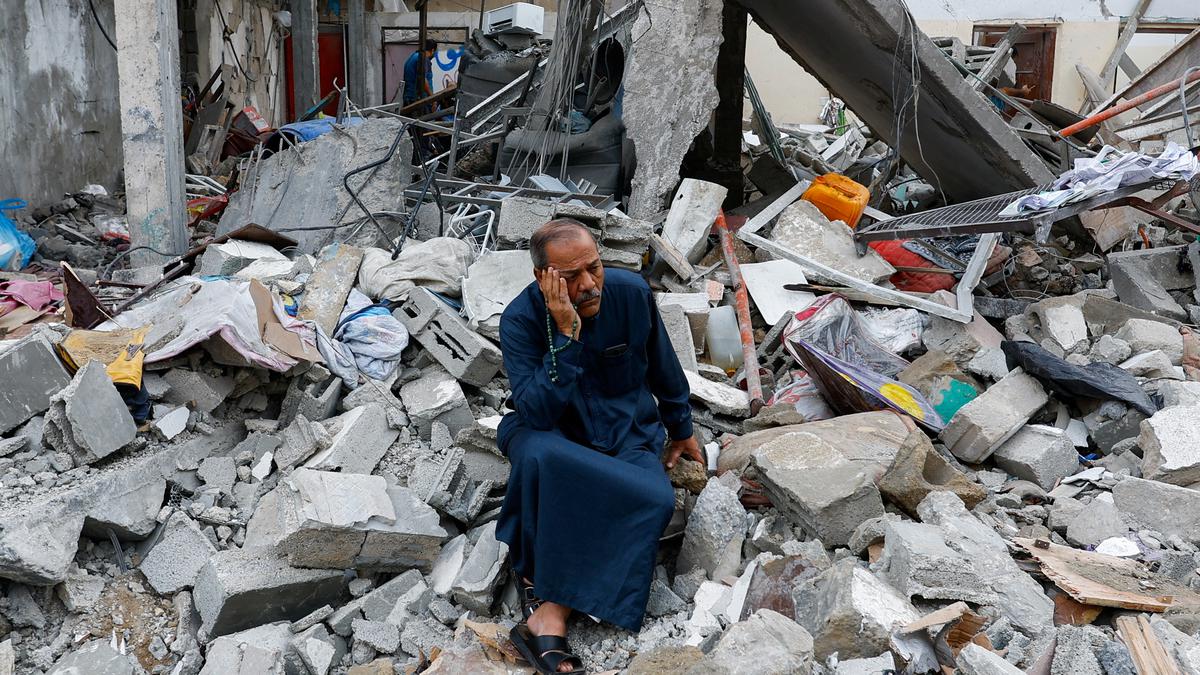
“We have decided to put an end to all of the occupation’s crimes. The time is over for them [Israel] to [continue to] act without accountability,” said Mohammad Deif, the secretive commander of al-Qassam Brigades, Hamas’s military wing, on October 7. His audio statement was telecast on TV after Hamas launched an unprecedented attack that caught Israel by surprise. “Thus, we announce the ‘al-Aqsa Flood’ operation, and in the first strike within 20 minutes, more than 5,000 rockets were launched,” he said. The rest is history. Hamas carried out its largest attack on Israel from Gaza, killing at least 900 people and leaving the bloodiest blow to Israel in decades. In response, Israel has declared war on the outfit, killed over 500 Gazans in air strike and is preparing for a major ground offensive. The Palestine issue is back to the fore of the West Asian cauldron.
Click here for more updates on Israel-Hamas war day 4
Ever since Hamas took over Gaza in 2007, there were several conflicts between Israel and the group, in which thousands of Palestinians and hundreds of Israelis were killed. But this time, given the magnitude of Israel’s losses, it is going to be different. What is unfolding now is the most serious conflict between the two sides ever since Hamas was born. It is an irony that Hamas, whose founding members were encouraged by Israel in the 1970s and 1980s against Yasser Arafat’s secular national movement, has turned out to be Israel’s biggest rival in the Palestinian territories.
Editorial |Original sin: on the attack on Israel and the occupation of Palestine
The roots
The roots of Hamas go back to the Muslim Brotherhood. The Brotherhood, established by Egyptian Islamist Hasan al-Banna in 1928, made a presence in the British-ruled Palestine in the 1930s. In 1935, Banna sent his brother Abd al-Rahman al-Banna to Palestine to build contacts. Its focus had been on reorienting Muslim society, while the Palestine Liberation Organisation (PLO), founded in 1964, championed the Palestinian nationalist sentiments. After Israel captured the West Bank and East Jerusalem from Jordan, and Gaza Strip from Egypt in 1967, the PLO, vowing to liberate the whole of Palestine, would start a guerilla war against Israel. The Muslim Brotherhood would still stay away from politics, but their leadership was increasingly critical of the PLO’s secular nationalism.
The Brotherhood’s approach was that time for “jihad” had not come yet and they should first rebuild a stronger, pious Islamic society — they called it “the upbringing of an Islamic generation”. During this time, Israel established contacts with the Brotherhood leadership in the occupied territories. Sheikh Ahmed Yassin, the physically challenged, half-blind cleric of the Brotherhood, established al-Mujamma’ al-Islam (The Islamic Centre) in 1973. Israel recognised the Centre first as a charity and then as an association. This allowed Yassin to raise funds, build mosques and set up educational institutions, including the Islamic University of Gaza. But the 1979 Islamic Revolution in Iran would change the landscape of Islamist politics across West Asia. Islamist organisations, having witnessed the political success of the Mullahs in Iran, started becoming politically more ambitious and active. The 1980s saw repeated clashes between the left-wing supporters of the PLO and the Islamists in the occupied territories.
The rise
Hamas was established after the first intifada broke out in 1987. On December 8, 1987, several Palestinians were killed in a traffic incident in Gaza, involving an Israeli driver, leading to a wave of protests. This incident led to an explosion of pent-up anger of the Palestinians, who, despite the PLO’s fighting and activism, were not seeing any end to the occupation. The occupied territories were swept by a mass uprising. The PLO called on its supporters to join the intifada. The Brotherhood also found it an opportunity to enter the struggle against the occupation. On December 14, the Brotherhood, under the leadership of Yassin, issued a leaflet, asking Palestinians to stand up to the Israeli occupation. In January, they issued another leaflet under the name Harakat al-Muqawamah al-Islamiyyah (the Islamic Resistance Movement) — in short, Hamas, which means “zeal” in Arabic. In 1989, Hamas launched its first attack, abducting and killing two Israeli soldiers. Israel cracked down on the group, arresting Yassin and jailing him for life.
Unlike the PLO, which was modelled around the leftist guerilla national movements in the third world, Hamas had a completely different vision. The charter it issued on August 19, 1988 was studded with anti-Semitic remarks. According to the charter, Palestine is “an Islamic Waqf land consecrated for Moslem generations until Judgement Day”; “there is no solution to the Palestine problem except jihad” and all peace initiatives are a “waste of time and acts of absurdity”. When the PLO moved to join peace efforts seeking a solution to the Palestinian issue, Hamas hardened its position. It opposed the Oslo agreement, which allowed the formation of the Palestinian Authority with limited powers within the occupied territories. When the PLO recognised Israel, Hamas rejected the two-state solution and vowed to liberate the whole of Palestine “from the [Jordan] River to the [Mediterranean] Sea”. It has built an organisation with several branches — the social wing is involved in Islamic education and charity works, while Izz ad-Din al-Qassam Brigades, the military wing, is in charge of military planning and weapons acquisitions. It also has a political bureau. In October 1994, a year after the Oslo Accord was signed, Hamas carried out its first suicide attack, killing 22 in Tel Aviv.
The evolution
In the 1990s and early 2000s, Hamas conducted several suicide attacks, targeting Israelis. In 2000, when the second intifada broke out, Hamas was in the driving seat. Hamas supporters fought pitched street battles with Israeli troops, who used brute force to crush the protests. Israel had also taken a policy of targeted assassinations. In March 2004, Israel killed Sheikh Yassin with a helicopter-fired missile in Gaza city. Abdel Aziz al-Rantisi, Yassin’s successor, was killed in April 2004. Khaled Meshal, another top leader survived an attempt on his life by Mossad in Jordan. Hamas continued to remain defiant, targeting Israeli troops and settlers. In 2005, faced with Hamas’s violent resistance, Israel unilaterally decided to pull out of Gaza.
Hamas’s violent tactics and Israel’s collective punishment of Palestinians in return seemed to have helped the Islamists gain popularity. In the 2006 legislative elections in the Palestinian territory, Hamas won 74 out of the 132 seats, while the Fatah party, the PLO’s backbone, got only 45 seats. In its election manifesto, Hamas showed, for the first time, signs of moderation. It dropped the call for the destruction of Israel, which was mentioned in the 1988 charter, and said its first priority was to change the situation for Palestinians. Hamas formed the government, but faced opposition from Israel and most international powers. Like Israel, the U.S. and several European countries have designated Hamas as a terrorist organisation. As tensions rose between Fatah and Hamas in the West Bank, Palestinian Authority President Mahmoud Abbas dissolved the Hamas government and declared a state of emergency. This led to violent clashes between Fatah and Hamas. Fatah ousted Hamas from the West Bank and Hamas ousted the former from Gaza in 2007. Since then, Hamas is the government in Gaza. Following Hamas’s capture of Gaza, Israel has imposed a blockade on the strip, which practically turned the territory into an open prison.
The tactics
While Hamas never gave up its right to armed resistance, the organisation signalled changes in its outlook over the years. It still refuses to recognise Israel but has offered hudna (a lasting ceasefire) if Israel returned to the 1967 border. In 2017, it adopted a new charter from which the anti-Semitic remarks of the original charter were expunged. The new document stated Hamas is not seeking war with the Jewish people — only with Zionism that drives the occupation of Palestine. “Hamas advocates the liberation of all of Palestine but is ready to support the state on 1967 borders without recognising Israel or ceding any rights,” it said. The new charter also doesn’t have a mention of the group’s parent organisation, the Muslim Brotherhood. But Saturday’s attack, which indiscriminately targeted both Israeli troops and civilians, suggests that Hamas has returned to its original tactics—fight the Israelis using any means available to them.
Israel Prime Minister Benjamin Netanyahu has vowed to destroy the enemy. Israeli retaliation would “reverberate” across West Asia, he thunders. But Israel will have to factor in two realities when it sets the goals of its anti-Hamas military operation. Hamas may not have the capability to push Israel back to the 1967 border. But the Islamist group has emerged as the main pillar of Palestine’s political landscape, which in the past had largely been driven by secular nationalism. A solution to the Israel-Palestine problem cannot be reached without taking Hamas into consideration — unless Hamas is totally destroyed. Two, it survives. Over the years, Hamas has lost most of its founding leaders, it has been categorised as a terrorist outfit and faced Israeli attacks frequently. Every time it bombs Gaza, Israel vows to destroy Hamas’s militant infrastructure. But Hamas survives, to fight another day. This is Mr. Netanyahu’s biggest test this time.