





Nearly a year after the Union government decided to cut the number of prizes annually awarded by its science-affiliated Ministries, it has instituted the Rashtriya Vigyan Puraskar (RVP) — 56 prizes to felicitate scientists, technologists and innovators. However, like the Padma awards, these awards will no longer have a cash component. Does removing money reduce the prestige of awards? Shekhar Mande and Dinesh Sharma discuss this in a conversation moderated by Jacob Koshy. Edited excerpts:
The RVP subsumes the existing Shanti Swarup Bhatnagar (SSB) awards that the Council of Scientific and Industrial Research (CSIR) has been awarding since the 1960s. However, it seems that the awardees will no longer get prize money. Will this not be a disappointment for scientists?
Shekhar Mande: The ultimate motivation for a scientist is not really an award; it is to make a substantial contribution to the world of knowledge and (hope that) our discoveries or scientific contributions will one day appear in textbooks. Several scientists aspire that subsequent generations learn about their findings. Those who do good work automatically earn recognition, which could also be annoying at times. Having talked to several Nobel Laureates, I’ve heard that winning the prize takes their time away from science. This is because of greater involvement in public speaking and trying to get people motivated to [choose] careers in science. That is not bad in itself; it is, in fact, desirable.
Nonetheless, the primary motivation is not an award or money. There is the famous story of Grigori Perelman, the Russian mathematician, who solved the Poincare conjecture (a math problem unsolved for over a century). He was awarded the Fields Medal (considered the Nobel Prize for mathematics) but refused it (saying he is ‘not interested in money or fame’). Awards and money aren’t the only motivations for scientists.
Dinesh Sharma: It is a welcome decision to have a new set of awards for scientists and engineers. In a country with such with a large science and technology infrastructure, we need many more science awards because they act as incentives for researchers and scientists.
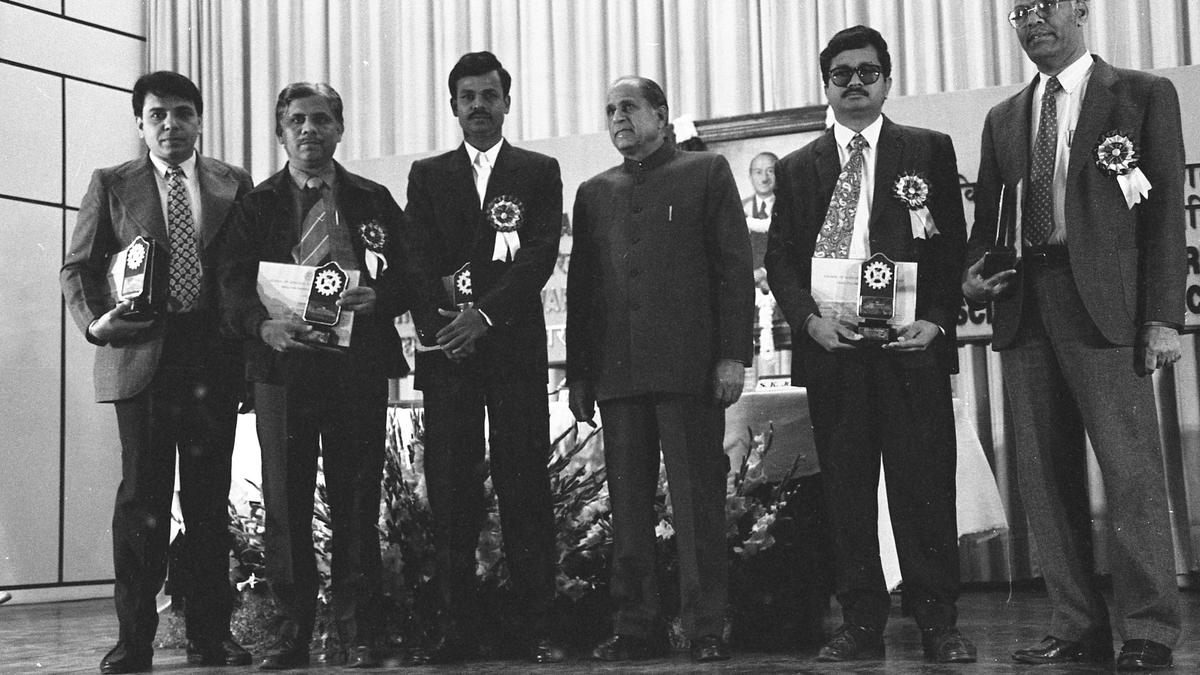
What is disappointing is that the RVP subsumes existing awards, including the SSB awards. And of course, there will be no cash component. But what makes an award truly prestigious? Is it only the money? If you take away money [from the] SSB, does it lose prestige? Who confers the award matters. The SSB combines all these attributes and that’s what makes it important because, as we know, S.S. Bhatnagar was one of the founding fathers of Indian science. So, although it was given by CSIR, it had a pan-India reach and anybody could apply for it. Dr. M.S. Swaminathan, who passed away last week, was awarded the SSB in 1961 when he was a young scientist at IARI (Indian Agricultural Research Institute); he was not famous at the time. And maybe that propelled him to do more. So, all this brings prestige to this award. By abolishing the SSB awards or by diluting its character, you are taking away the heritage and prestige built over time.
Dr. Mande, you are an SSB awardee and a former head of CSIR. Do we know when cash began to be given along with the awards?
Shekhar Mande: The awards were instituted in the 1960s to recognise those who contributed not only to Indian science but science in general. I’m not sure when money was added to the prize. Today, many awards which have been instituted by private organisations give far more money than the SSB awards, but I think they are yet to reach the same level of acceptability.
We know that Indian scientists are not the best paid in the world. For decades now, the natural sciences have not been able to attract more and more of the brightest people. And despite a large scientific pool, India hasn’t been able to allocate even 1% of its GDP to research and development (R&D), whereas technologically advanced nations contribute close to 2%. So, is there a signal being sent that money isn’t important to nurture Indian science? Moreover, the most prestigious sports, literature, and film awards come with money.
Shekhar Mande: The new structure announced tries to reward a larger number of scientists and removes many of the difficulties we have had with the SSB awards. Five awards were given only in seven disciplines and at most two people (per award). During my tenure (as Director General), we were debating whether we should add more disciplines. That problem seems to have been addressed. (The Vigyan Yuva-SSB will be awarded to at least 25 recipients spanning 13 disciplines.) Money in science is an issue that all of us have been debating time and again. However, a substantial part of the 2% GDP in other countries also comes from private organisations. Unfortunately in India, the contribution from private industry to R&D is not heavy. There are exceptions, but a large number of industries still do not put in the money that they should (in R&D).
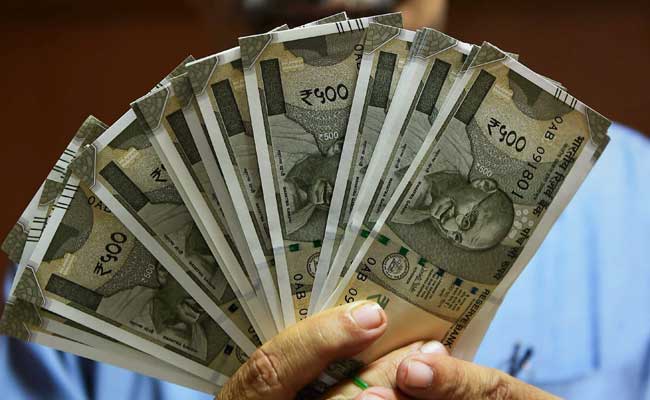
Dinesh Sharma: I think it is unfair to compare scientists with sportsperson or actors because scientists aren’t primarily motivated by money and fame. However, being popular is important for actors and sportspersons as they become brands and, after winning medals, make more money. China tried to do the same thing (provide cash incentives to scientists) a few years ago and it became very controversial. In other countries too, they started giving cash incentives to scientists who get published in top-ranking journals, such as Nature, Science and Cell. It became a race among scientists to publish a paper in one of these top journals rather than pursue their rational line of research. When the Infosys Prize was launched with ₹50,00,000 as prize money, there was a fear that it will undermine the [prestige of] SSB. But it did not do so. Although the Infosys Prize has gone to some fantastic people, it hasn’t replaced the brand value of the SSB, which is so strong, but is undermined by removing the cash component. The CSIR has constantly evolved these awards, starting by awarding ₹10,000 (in the 1960s) to ₹5 lakh (for the prize winners of 2022). Money brings prestige and incentive to the scientists to work. If doing away with money was an independent decision of the CSIR council, that would have been acceptable, but this is a decision imposed by the government and clearly undermines the autonomy of scientific institutions. That’s a larger issue apart from the money component.
How do you make careers in science more attractive to the young beyond mega prizes?
Dinesh Sharma: There is a crisis across disciplines and professions, not just science, with notable exceptions. There was a time when people came to journalism to serve society,. That was in the early years following Independence. Dr. Swaminathan qualified to become an IPS (Indian Police Service) officer, which he rejected because he wanted to work in science. Then he went on to do his PhD and came back and joined the Agricultural Research Institute. People chose professions for the love of that subject or because they wanted to serve society since those were the days of nation building. Dr. Swaminathan was moved by the Bengal famine in the 1940s. Such motivations may be lacking now.
But yes, there are several youngsters who would like to take up a career in science. And for that they need a reasonable salary. Scientists are human beings. With youngsters, there is an urge to do something, achieve something, get published in a research journal, but they also want to have decent money to lead their life. Unless we give them an attractive package, this crisis will continue. We need role models. And we need good money.
Shekhar Mande: I don’t think the romanticism for science has died down. I know several young people who secured the top ranks in the Joint Entrance Examination (for slots at the Indian Institutes of Technology) but have come to areas such as mathematics or physics. Many scientists in our labs are among the brightest in the world. Some may go abroad, but they are not lost to the world of science. They have made some fantastic contributions over the years. While many of the Central universities continue to attract the best to science, there is a real concern that many who choose science in State universities have chosen it for lack of other options.
Shekhar Mande is former Director General, Council of Scientific and Industrial Research; Dinesh Sharma is a science journalist and author