

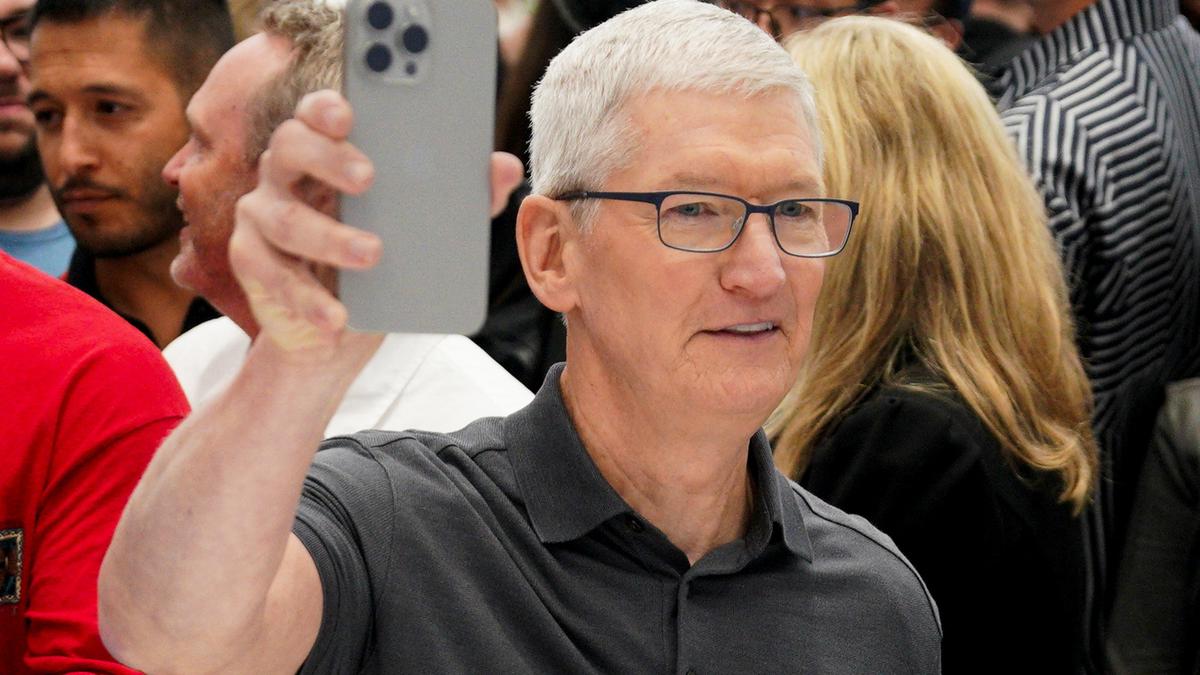
In the colosseum of corporate accomplishments, Apple, through its viral ‘Mother Nature’ campaign, has bestowed upon itself the mantle of an environmental steward – a green titan etched into the public consciousness. Such audacious reinventions are hardly novel for Apple, a company that, for more than three decades, has sculpted its identity as a trailblazer. Apple’s creations, marketing wizardry, and operational acumen have consistently bedazzled its audience: from devoted customers to astute shareholders and discerning critics.
Apple began its environmental efforts earlier and more earnestly than the other four of the Big Five technology companies: Microsoft, Alphabet, Amazon, and Meta. Like most companies, the Big Five excused their inaction stating that it was not mandated by policies of the relevant local government policy. Only increasing consumer and shareholder pressure forced companies towards better compliance. Consumers of their goods in the West no longer want to buy products made under toxic or tortured conditions. But as a result, Apple did more and better than its rivals in this regard.
The ‘Mother Nature’ campaign has also set social media abuzz with high praise. But while Apple’s reinvention is commendable, its campaign will fall short if the company’s mitigation efforts take only its present and future carbon footprint into account, and ignore its past environmental transgressions.
Has Apple always been ‘green’?
The first two decades of Apple were not so responsible. The company faced recurrent allegations from eco-groups for its environmental transgressions. Chiefly, Apple’s supply chain practices were linked to pollution from small Chinese component manufacturing facilities. To its credit, each time such incidents got reported, Apple was quick to mitigate the problem. This is additionally commendable because others rarely acknowledged it, let alone take concrete measures to address it.
Since 1994, Apple has operated a ‘green’ gadget-recycling programme. In 2005, the programme offered a discount on new iPods when customers swapped an old one at an Apple retail store. It incentivised Apple customers to send their products to them rather than sell them to third-party retailers. The motive may not have been completely altruistic: after all, selling it in an open market would create a grey economy and would hurt its business.
According to a study by IDC, the global market for used computers was worth $26 billion in 2022 (or $32 billion by 2025); by offering a trade-in programme, Apple tapped into it. The buyback policy helps reprocess material (gold, silver, copper, tin, cobalt, etc.) from components.
While this hedges its production costs from price volatility, gives Apple greater control over its inventory, and creates a closed loop of production and recycling, it also cuts Apple’s environmental costs. This places Apple head and shoulders above its competitors.
Does financial truancy affect green goals?
But Apple has also made some bad choices. In October 2018, Italy’s competition authority fined Apple €10 million for allegedly engaging in “planned obsolescence” with its smartphones. The software updates had a detrimental effect on the devices’ performance, forcing millions of users to exchange or buy new phones. This obviously affected the environment, apart from causing inconvenience and costs to customers.
In 2015, Apple was accused of setting up two bogus companies with no employees in Ireland to avoid bigger tax bills in the U.S. According to the Financial Times, about 90% of Apple’s foreign profits were reported by the Irish subsidiaries. These were highly profitable but paid little tax because they were not tax-resident anywhere. It is estimated that Apple paid only 0.005% tax on its European profits in 2014.
Capital flight affects the environment. Parking money elsewhere diverts public funds that could be used for social good, such as reducing water or electricity bills. It also makes undeserving tax havens and consumers of resources from other countries richer, creating a global imbalance between private wealth and public money.
Corporations legitimise such truancy by simply paying fines, whereas chasing evaders diverts resources from public offices, which costs public money. Apple’s outsourcing also avoided meeting its environmental obligations in California, allowing it to evade U.S. standards for its products and not pay for the cost of compliance in the U.S.
What are the gaps in Apple’s campaign?
This is not to take away from Apple’s achievement. It is commendable that Apple has met its water, energy, and material targets sooner than it had planned. But as a company that loves to innovate and overcome intractable challenges, if it wants to heal the wounds of ‘Mother Nature’, it will have to address its historical emissions, environmental ills, and financial truancy. As a trillion-dollar company, it needs to do this honestly and transparently.
It needs to go back to mines from where the minerals were extracted, where its components were produced, and where toxic and hazardous wastes were disposed. It needs to go back to the communities and villages from where the minerals came or where the waste was recycled. Toxins released during manufacturing or recycling elsewhere can’t be mitigated by planting trees in South America or using renewable energy to run its offices in California.
Environmental justice demands corporate and public policy based on mutual respect for all peoples, species, and landscapes. Apple must affirm the transgenerational fundamental rights and self-determination of peoples and species and natural processes. It demands the cessation of the production of all toxins, and making past and current producers accountable to communities, and responsible for detoxification and containment beyond the point of production.
What more can Apple do?
Apple should, therefore, honestly assess not only its present but its past sourcing of materials and energy. How much of these were from conflict zones, through forced labour, or made by companies with unethical practices? It needs to calculate how much energy and water it extracted, how its operations affected air, soil, water, and life-forms, and how far the emissions travelled.
Mitigating for environmental damage is not only for what you do now, but also for what was done in the past. Past processes to extract minerals were more energy-intensive, wasteful, and toxic than they are today. Manufacturing has become somewhat more efficient now but the toxic scars from past processes and products haven’t been erased.
Just as there are conversations developing around issues like the rights of Black, Indigenous people, and LGBTQ+ people, around the repatriation of stolen artefacts from museums, and the toppling of statues of slave-traders, environmental justice demands a conversation and an acknowledgement of historical damage. Apple’s campaign speaks of the beginning of its environment mitigation journey, but the destination is a long way away.
Pranay Lal is a biochemist, a public health specialist, a natural history writer, and currently a senior advisor, Health Systems Transformation Platform, New Delhi.