



There has been a series of disruptive weather and climate phenomena in India this year, demonstrating the complexity of our precipitation system.
There was the Western disturbance, which usually brings much-needed moisture from European seas to the western Himalaya and parts of northern India in the winter and spring. But this year, the Western disturbance lived up to its name and remained active late into the summer, snapping at the heels of the southwest monsoon.
An El Niño phase
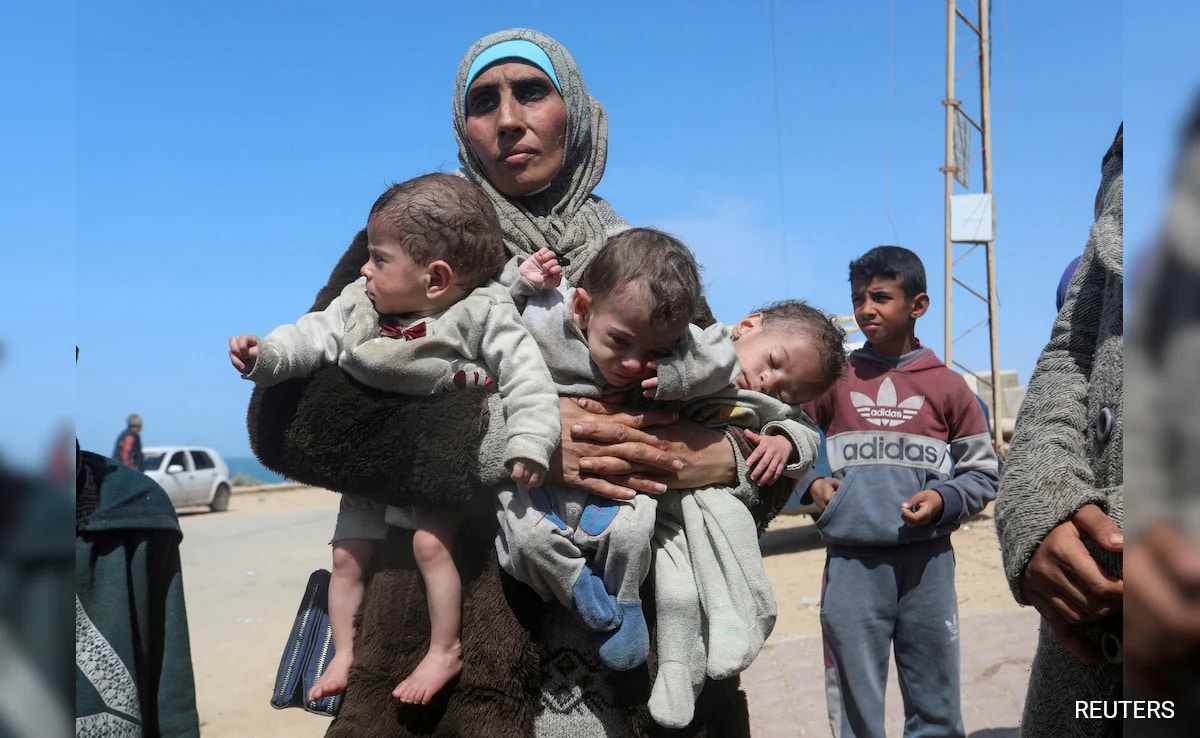
The widespread destruction of infrastructure and loss of life due to landslides and flooding in the western Himalaya and northern India raised concerns about the sustainability and resilience of our development projects in the mountains and floodplains. Between July 5 and July 20, the affected area was estimated to be between 2,124 and 7,362 sq. km. The population affected was potentially more than 25 lakh.
Climate-linked warming is likely to weaken winter precipitation from the Western disturbance and shift it to more intense rain events. If this happens later into the summer, its consequences will be of great concern.
Soon after this came evidence that an El Niño phase of the quasi-periodic El Niño Southern Oscillation (ENSO) – a phenomenon in the eastern and central tropical Pacific Ocean – was intensifying and likely to affect the southwest monsoon.
Not all El Niño events have adverse effects on the southwest monsoon because the latter is driven by many ocean-atmosphere-land processes. But the relationship between the two entities has been changing over time. When an El Niño affects the southwest monsoon, another ocean-atmosphere phenomenon in the Indian Ocean – called the positive-phase Indian Ocean Dipole (IOD) – could balance the consequences.
Dynamic regression models have suggested that 65% of the inter-annual variability of the southwest monsoon, over many decades, can be attributed to the combined effects of ENSO and the IOD.
El Niño and food security
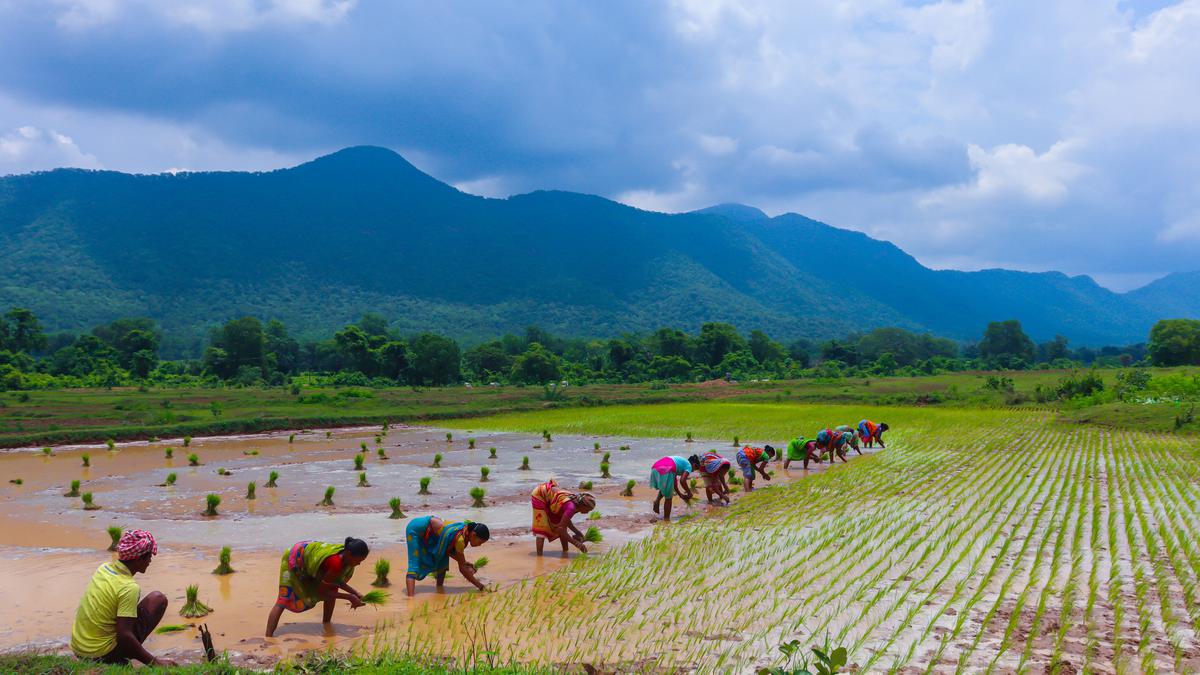
Agriculture depends on two types of water. Green water is rain-fed soil moisture tapped by food and cash crops, eventually transpiring into the atmosphere. Blue water is the water in rivers, lakes, reservoirs, and groundwater, which is the basis for irrigation in agriculture, apart from drinking and industry use supply, and to maintain ecological flows in rivers.
The El Niño and other climate phenomena affect rainfed agriculture in many ways, from delaying the start of rains, and affecting sowing, to hot temperatures that may negatively influence plant growth and soil moisture.
Despite investments in dams, reservoirs, and irrigation systems, around half of the cultivated area in India depends on green water, not blue water. Our daily diet in India – from cooking oil to diverse foods – also requires 3,268 litres of water per person per day on average, subject to regional variability. Some 75% of this footprint is green water, demonstrating the importance of rainfed agriculture to our food and nutritional security.
Even in irrigated areas, many dominant crops require green water to different extents. For example, in kharif season, rice paddy under irrigation uses green water to the tune of 35%. Many staple crops like tur dal, soybean, groundnut, and maize also rely considerably on green water at this time. In the 2015-2016 El Niño year, soybean production in India declined by 28% from the 2013-2022 average.
We have just emerged from one of the warmest and driest Augusts in many decades, and hope that the IOD or other phenomena will help reduce the impact of the El Niño on India’s agriculture, farmers, food security, food inflation, and conflicts over water-sharing between States.
El Niño and the northeast monsoon
At the end of the southwest monsoon, the blue water stock in our reservoirs and groundwater will partially determine the fate of the rabi crops sown in winter and the overall water security. Contributions of green water from the northeast monsoon in southeast India and the Western disturbance in the north will play significant roles as well.
Studies have found that 43% of heavy rainfall events in the northeast monsoon (including the 2015 Chennai floods that caused widespread devastation) coincided with an El Niño. We will be closely watching the rabi crops in 2024, which bank heavily on blue water or irrigation during the summer months, along with our overall water security.
Consider Central India’s highlands, encompassing 36 districts in the states of Madhya Pradesh, Chhattisgarh, and Maharashtra, which are emerging as climate change hotspots critical for our water, food and ecological security. It includes 17 urban centres with populations over a lakh and the headwaters for five of India’s 10 major river basins. The basin precipitation ranges from 699 mm in the west to 1,380 mm in the east, with an average of 987 mm per annum.
This region experiences significant and perennial water stress, driven largely by rabi irrigation with blue water. As a result, some 70-78% of the landscape experiences water stress for four or more months in a year.
Of the 17 urban centres, 11 face water stress for six to eight months, with Nagpur enduring water stress for the longest duration.
Persistent uncertainties
The amount of monsoon precipitation has been declining since the 1950s, attributed by some climate scientists to the reduction in land-sea thermal gradient, in turn due to warming of the seas. However, indications of increased frequency of intense rain events and greater heat and moisture stress for people and ecosystems align with predictions of warming’s impact on the atmosphere’s water-holding capacity and acceleration of the hydrological cycle. These events increasingly interact with hydrologically incompatible land-use and built infrastructure, resulting in high exposure and vulnerability to disasters.
Global climate models and their regional equivalents have failed to simulate these observed trends in precipitation, increasing the uncertainty in future projections. However, climate modellers are trying hard to improve the models. Given the persistent uncertainties, we should base our adaptation plans on the idea that current trends will continue: more-frequent intense rain, summer heat and moisture stress, and declining monsoon precipitation in some parts of the country. It is possible that as warming continues, total rainfall in parts of India may increase but the share of extreme rain events may go up. When this tipping point will transpire is uncertain.
Attributing specific extreme rain events to climate change or natural dynamics in our complex climate systems, or both, is challenging for climate scientists. But mounting evidence suggests that a warming atmosphere is amplifying many natural dynamics within our complex climate systems.
How we respond
In terms of agriculture and food security, there is now an emphasis on reducing dependence on water-intensive crops, with millets being the crops of choice. Shifting to less water-intensive crops may reduce vulnerability of our food systems to phenomena like El Niño. One estimate suggests that more than 30% of blue water savings from such shifts, with some gains in protein and micronutrients but a slight reduction in calories. However, water saved in this manner may not necessarily help recharge our depleted aquifers or restore ecological flows in our rivers: new demands for the saved water quickly emerge unless appropriate policies are in place.
There are several adaptations and alternative crop strategies available now, thanks to the work of our farmers and agricultural scientists. They include shifting to millets and alternative varieties of dominant cereals and advisories to farmers to switch to crops with shorter growing cycles. The government, both at the Centre and in States, along with farmers, now benefit from forecasts of phenomena like El Niño and their impact on the monsoon and improvements in short-term weather forecasts and early warning systems for both intense rain and dry spells.
Based on decades of experience, it is clear that alternative short-term and long-term management of our dams and reservoirs is required to reduce the risk of dam-based flood disasters and ecological damage to aquatic ecosystems.
How we respond as a society and in terms of governance to the water and climate change crisis, which links food, water, and ecological security through diversifying our agro-food systems, a lower dependence on blue water, rejuvenating our rivers, and sustainable water-sharing between humans and nature will to a great extent determine the well-being of 1.4 billion people.
Jagdish Krishnaswamy is dean, School of Environment and Sustainability, Indian Institute for Human Settlements (IIHS), Bengaluru. The author acknowledges Kiran M.C., Geospatial Lab, IIHS for his contribution to this article.