


Skip to content
  • Facebook
  • X
  • Linkedin
  • WhatsApp
  • Associate Journalism
  • About Us
  • Privacy Policy
  • 033-46046046
  • editor@artifex.news
Artifex.News

Artifex.News

Stay Connected. Stay Informed.

  • Breaking News
  • World
  • Nation
  • Sports
  • Business
  • Science
  • Entertainment
  • Lifestyle
  • Toggle search form
  • Indian Navy ships free hijacked Iranian fishing vessel off Somalia, rescue Pakistani nationals World
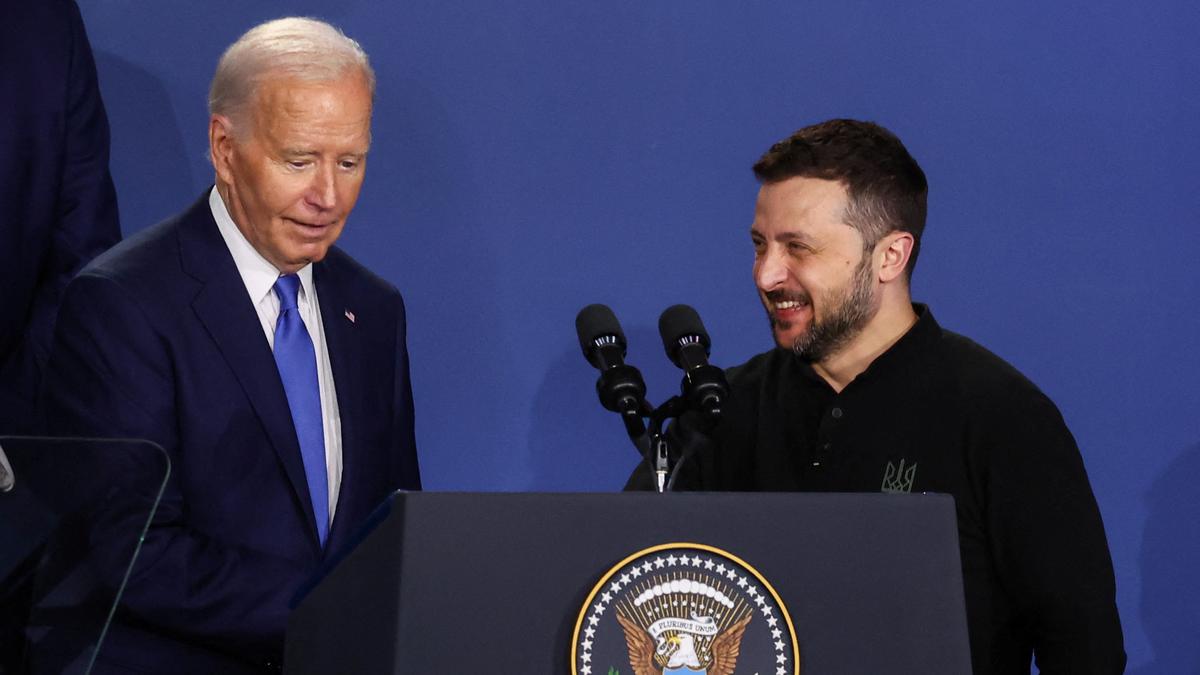
  • Joe Biden’s defiant press conference falls flat as he introduces Ukraine President Zelensky as ‘President Putin’ World
  • Colombia Into Copa America Quarter Finals After Romp While Brazil Rolls Sports
  • How a Bronze Age rock became a ‘treasure map’ for researchers Science
  • India vs Bangladesh: Ravindra Jadeja Pulls Off Stunner, Makes Hilarious Gesture Towards Teammates During Cricket World Cup 2023 – Watch Sports
  • Shoaib Bashir Becomes Second Youngest For England To Grab Maiden Five-For In Tests Sports
  • LPG Subsidy For Ujjwala Beneficiaries Hiked To Rs 300 Business
  • Chief Justice’s Vote Of Conscience Remark On Marriage Equality Judgment Nation

Bernard and the discovery of glycogen

Posted on September 23, 2023 By admin


Bernard with his pupils.
| Photo Credit: Wellcome Collection gallery Wikimedia Commons

Do you know what glycogen is? The stored form of a simple sugar called glucose, glycogen is a multibranched polysaccharide that serves as a form of energy storage among animals, fungi, and bacteria. The principal form in which carbohydrates are stored in higher animals, glycogen is white, amorphous, and tasteless.

Glycogen was first isolated only in the 1850s. French physiologist Claude Bernard, who made important discoveries in a number of areas, was involved both in the discovery of glycogen and its isolation.

Little formal education

Born in France on July 12, 1813, much of Bernard’s childhood saw his family in debt following a failed venture by his father. With little opportunity for education, Bernard learnt what he could and had no formal training in science.

By the time he turned 18, Bernard apprenticed at an apothecary and his days were filled with mundane tasks. He tried his hand writing a playlet and a historical drama, before turning to medicine in the mid-1830s when a literary critic advised him to do that instead of playwriting.
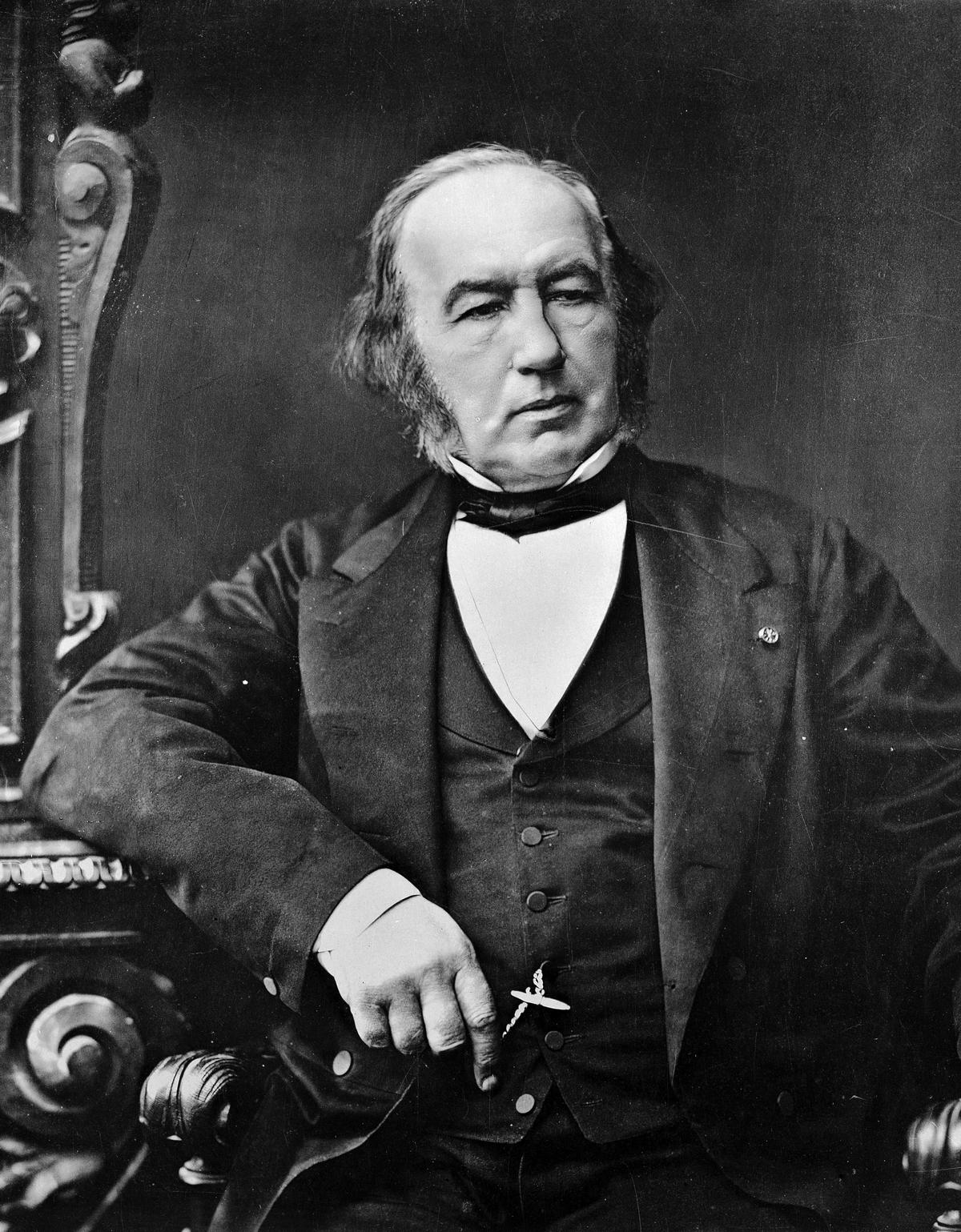
Portrait of Claude Bernard (1813-1878).

Portrait of Claude Bernard (1813-1878).
| Photo Credit:
WELLCOME LIBRARY, LONDON

After enrolling in the Faculty of Medicine in Paris, he was admitted as an extern in the hospitals. He studied under celebrated doctor Francois Magendie and passed the examination for the internship. Noticing Bernard’s meticulous dissections, Magendie took him on as a research assistant.

Having become involved in Magendie’s research, Bernard’s first publications served as a harbinger of sorts as much of his future research revolved around similar subjects. By 1847, Bernard became Magendie’s deputy at the College de France.

Crucial discoveries

Beginning in 1846, Bernard made a number of crucial discoveries himself. Having observed by chance that few rabbits passed clear – not cloudy – urine like meat-eating animals, he deduced that they were not fed and were subsisting on their own tissues. He was able to confirm his hypothesis and came up with a major discovery about the role of pancreas in digestion. Bernard realised that secretion of pancreas broke down fat molecules and that the main processes of digestion took place in the small intestine, and not in the stomach as was formerly believed.

One led to another and Bernard was soon researching the liver, which led him to his second big discovery. Bernard discovered a white starchy substance – glycogen – in the liver and he announced his discovery to the Academie des Sciences on September 24, 1855.

Bernard showed that glycogen was built up by the body from sugar and that it served as a storage reserve of carbohydrates. This glycogen could then be broken down to sugars when needed, ensuring that the sugar level in the blood remained constant.

Breaks down and builds

This discovery by Bernard conveyed that the digestive system is not only capable of breaking down complex molecules into simple ones, but can also build complex molecules from simple ones. Bernard was able to isolate and extract glycogen in a relatively pure state by 1857, at about the same time German physiologist Victor Hensen also independently isolated glycogen using a different process.

Bernard’s third important contribution concerned an explanation of the regulation of the blood supply by the vasomotor nerves. He discovered that based on surrounding temperature changes, the vasomotor nerves controlled the dilation and constriction of blood vessels. This control mechanism shows how the body maintains stability while adjusting to changing external conditions – a phenomenon called homeostasis.

From being an unknown in the shadow of Magendie, Bernard rose to prominence in less than a decade. Following Magendie’s death in 1855, Bernard succeeded him as full professor at the College de France.

Bernard’s scientific interest, however, soon shifted due to a number of reasons. As a result of this change, the diligent researcher turned into a philosopher of science. His reflections resulted in a masterpiece in 1865, An Introduction to the Study of Experimental Medicine.

While this was supposed to be a preface of a much greater work, the latter was never completed. The Introduction, however, helped Bernard, who died in 1878, to get across the point that for medicine to progress, it must be founded on experimental physiology.



Source link

Science

Post navigation

Previous Post: Ten-man Manchester City Show Silk And Steel To Extend Premier League Lead
Next Post: What are the reasons for rise in global debt? | Explained

Related Posts

  • Galactic tides: Pushing and pulling the heavens Science
  • How an Indian can go to space for just $2.50 Science
  • Deep-learning helps classification of tumours during surgery Science
  • Study of polyglots offers insight on brain’s language processing Science
  • Microneedle patch reverses hair loss caused by autoimmune disease Science
  • ‘Multi-omics’ is changing how India spots and treats TB, cancers Science

More Related Articles

Can the tongue taste only sweet, salty, sour, bitter and umami? Science
Why north central India facing severe heatwave Explained Science
Quantum gates: Devices that translate quantum effects to computing awesomeness Science
Global rise in the incidence of IBD a cause for concern, say experts Science
Bottleneck in human evolution explained using a novel genomic analysis technique Science
Sci-Five | The Hindu Science Quiz: On Eusociality Science
SiteLock

Archives

  • July 2024
  • June 2024
  • May 2024
  • April 2024
  • March 2024
  • February 2024
  • January 2024
  • December 2023
  • November 2023
  • October 2023
  • September 2023
  • August 2023
  • July 2023
  • June 2023
  • May 2023
  • April 2023
  • March 2023
  • February 2023
  • January 2023
  • December 2022
  • November 2022
  • October 2022
  • September 2022
  • August 2022
  • July 2022
  • June 2022
  • May 2022

Categories

  • Business
  • Nation
  • Science
  • Sports
  • World

Recent Posts

  • Donald Trump Close Aide Shalabh Kumar To NDTV
  • Top Democrat Adam Schiff calls on U.S. President Joe Biden to exit presidential race
  • Jyothi Yarraji Wants To Learn From Her Mother’s Struggles And Shine At Olympics 2024
  • Prime Accused In INDIA’s Bihar Ally’s Brutal Murder Arrested
  • China-Tibet back channel talks ongoing with the help of a ‘third country’: Sikyong Penpa Tsering

Recent Comments

  1. ywdVpqHiNZCtUDcl on UP Teacher Who Asked Students To Slap Muslim Classmate
  2. bRstIalYyjkCUJqm on UP Teacher Who Asked Students To Slap Muslim Classmate
  3. GkJwRWEAbS on UP Teacher Who Asked Students To Slap Muslim Classmate
  4. xreDavBVnbGqQA on UP Teacher Who Asked Students To Slap Muslim Classmate
  5. aANVRzfUdmyb on UP Teacher Who Asked Students To Slap Muslim Classmate
  • Markets climb on buying in Reliance, Infosys Business
  • “Had A Fair Time Out Of The Game”: Delhi Capitals Coach Defends Anrich Nortje After 25-Run Over Sports
  • 100-Year-Old World War II Veteran To Marry Fiance, 96, In Normandy World
  • “Made Impossible Possible”: Faf du Plessis On RCB’s Heroic IPL 2024 Playoffs Qualification Sports
  • How Global Biofuels Alliance Will Help India Nation
  • Congress’ Adhir Ranjan On INDIA Olive Branch Nation
  • Dog Mauls 5-Month-Old Baby To Death In Telangana Home Nation
  • SEBI asks mutual fund houses to protect investors in small, midcap schemes amid surging inflow Business

Editor-in-Chief:
Mohammad Ariff,
MSW, MAJMC, BSW, DTL, CTS, CNM, CCR, CAL, RSL, ASOC.
editor@artifex.news

Associate Editors:
1. Zenellis R. Tuba,
zenelis@artifex.news
2. Haris Daniyel
daniyel@artifex.news

Photograher:
Rohan Das
rohan@artifex.news

Artifex.News offers Online Paid Internships to college students from India and Abroad. Interns will get a PRESS CARD and other online offers.
Send your CV (Subjectline: Paid Internship) to internship@artifex.news

Links:
Associate Journalism
About Us
Privacy Policy

News Links:
Breaking News
World
Nation
Sports
Business
Entertainment
Lifestyle

Registered Office:
72/A, Elliot Road, Kolkata - 700016
Tel: 033-22277777, 033-22172217
Email: office@artifex.news

Editorial Office / News Desk:
No. 13, Mezzanine Floor, Esplanade Metro Rail Station,
12 J. L. Nehru Road, Kolkata - 700069.
(Entry from Gate No. 5)
Tel: 033-46011099, 033-46046046
Email: editor@artifex.news

Copyright © 2023 Artifex.News Newsportal designed by Artifex Infotech.