





Skip to content
  • Facebook
  • X
  • Linkedin
  • WhatsApp
  • YouTube
  • Associate Journalism
  • About Us
  • Privacy Policy
  • 033-46046046
  • editor@artifex.news
Artifex.News

Artifex.News

Stay Connected. Stay Informed.

  • Breaking News
  • World
  • Nation
  • Sports
  • Business
  • Science
  • Entertainment
  • Lifestyle
  • Toggle search form
  • Yogi Adityanath, UP Ministers Take Holy Dip In Sangam At Maha Kumbh
    Yogi Adityanath, UP Ministers Take Holy Dip In Sangam At Maha Kumbh Nation
  • Commonwealth Games Decision To Drop Badminton, Hockey Aimed To ‘Stunt’ India: Pullela Gopichand
    Commonwealth Games Decision To Drop Badminton, Hockey Aimed To ‘Stunt’ India: Pullela Gopichand Sports
  • Petrol, diesel prices to fall only after cheaper crude oil reaches Indian refiners: Hardeep Puri
    Petrol, diesel prices to fall only after cheaper crude oil reaches Indian refiners: Hardeep Puri Business
  • Tasmac cracks down on overcharging, suspends 67 employees
    Tasmac cracks down on overcharging, suspends 67 employees Nation
  • Youth assaulted over TVK party song ringtone in Chennai’s government hospital
    Youth assaulted over TVK party song ringtone in Chennai’s government hospital Nation
  • 5 ISIS Bombs Found Hidden In Iconic Iraq Mosque: UN Agency
    5 ISIS Bombs Found Hidden In Iconic Iraq Mosque: UN Agency World
  • Supreme Court rules on Trump immunity, delaying trial
    Supreme Court rules on Trump immunity, delaying trial World
  • Hunters, Conservationists Design Safer Traps To Protect Formosan Bears
    Hunters, Conservationists Design Safer Traps To Protect Formosan Bears World
Loanable funds theory: how interest rates are determined in the loan market 

Loanable funds theory: how interest rates are determined in the loan market 

Posted on August 29, 2023 By admin


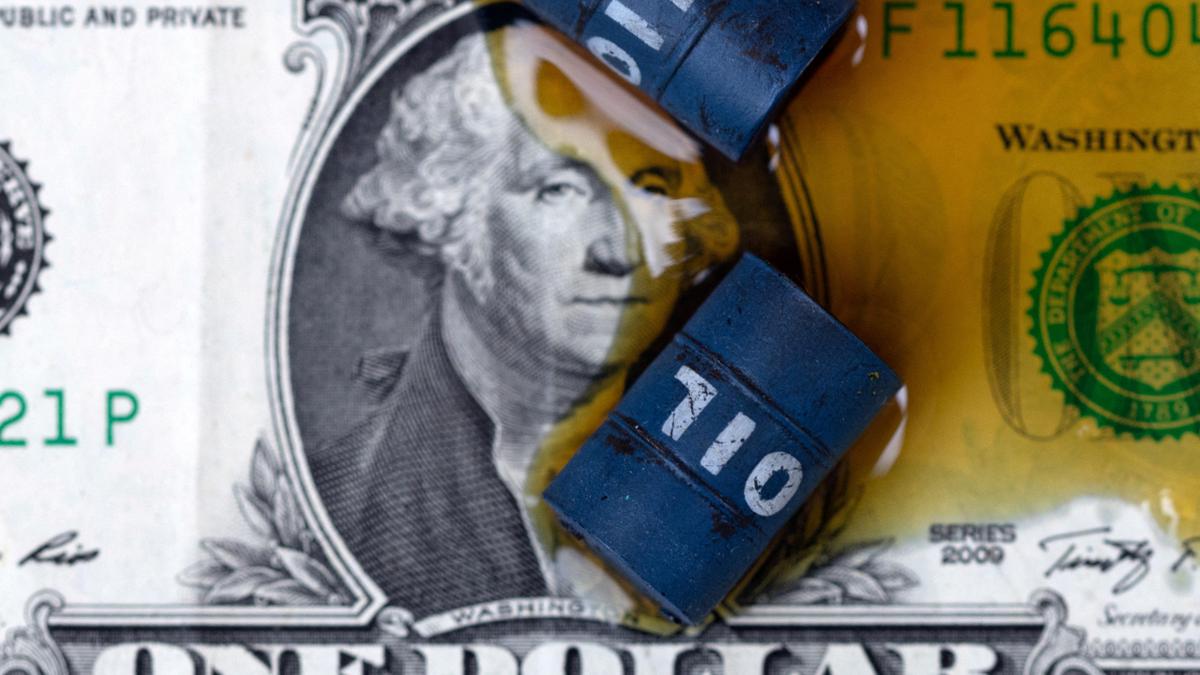
For representative purposes.
| Photo Credit: Getty Images

Also known as the neo-classical theory of interest, this theory argues that the interest rates on loans are determined by the supply of and demand for loans in the market for loanable funds. In other words, the market interest rate is seen as the price of loans and it is thought to be determined just the way the price of any other good or service is determined in the market. So, a rise in the supply of loanable funds from savers such as households is believed to cause the market interest rate to drop while a drop in the supply of loanable funds is seen as causing a rise in market interest rates. On the other hand, a rise in the demand for funds from borrowers such as businesses and governments is supposed to cause a rise in interest rates while a drop in their demand for funds is expected to cause a fall in interest rates. In short, the supply of funds from lenders and the demand for funds from borrowers are seen as influencing the market interest rate.

Interest as compensation

Loanable funds theorists argue that the interest paid on loans offers an incentive for savers to lend their money since they need to wait a certain period of time before they can get their original investment back. In other words, interest is seen as fair compensation paid to savers for waiting.

On the other hand, the rate that borrowers are willing to pay on loans is said to be determined by the return that these borrowers expect to earn by investing the borrowed funds, or the marginal efficiency of capital. Finally, the market interest rate is seen as the equilibrium price that equals the supply of savings with the demand for loans in the market and which is mutually beneficial to savers and borrowers.

The loanable funds theory, which is attributed to Swedish economist Knut Wicksell, is seen as applying not just to the interest rates charged on loans. It is also said to apply to other credit transactions such as those in the bond market where businesses and governments issue bonds to borrow money from savers.

A critique

Not all economists, however, agree with the loanable funds theory of interest rates. Economists who believe in the pure time preference theory of interest, for instance, argue that the interest rate is not the price paid by borrowers for a loan but rather the price that savers actually pay for future goods or money. While this claim is quite counterintuitive, the fact that the interest rate is determined not by borrowers, but by what savers or lenders are willing to pay for future goods or money, is more obvious in the bond market than in the loan market. In the bond market, borrowers issue bonds that promise to pay a certain amount of cash over the future, and the interest rates on these bonds are determined by what lenders are willing to pay for these bonds that offer future cash flow. If the price of a bond is set too high by the bond issuers (thus yielding very little interest to lenders), then a part of the issue may be left unsold. On the other hand, if the price of a bond is set too low then the bonds may be oversold with lenders unable to buy as many bonds as they had wanted. Similarly, interest rates on bank loans are also ultimately determined by what lenders are willing to pay for future money rather than by borrowers.

It is common for many economists to believe that a high rate of interest offers more incentive for lenders to part with their money. Pure time preference theorists, however, note that strictly speaking the interest rate is not an incentive or reward for people to save and lend more. In fact, the direction of causation runs the other way round: interest rates are the result, not the cause, of the preference of people to save and invest. Hence, it would be erroneous to argue that a high rate of interest encourages people to save and lend more; a high rate of interest in a country could actually even be a sign of low confidence among people to lend their money.

It is also common to hear in the popular press that low interest rates would induce borrowers to borrow more money and thus increase demand for loans. The problem with this impression, as the pure time preference theorists argue, is that strictly speaking there really is no such thing as a demand for loans from borrowers.

As clarified earlier, what is really being sold in the market for loanable funds is the right to future money for which lenders, not borrowers, bid.

Source link

Business Tags:how do bonds work?, how do interest rates work?, how do loans work?, loanable funds, what about interest rates?, what is the function of loans?

Post navigation

Previous Post: Asia Cup 2023: Indian Cricket Team’s Strength, Weakness, Opportunity, Threats Revealed Ahead of Pakistan Clash
Next Post: IMF managing director to attend G20 summit in Delhi after trips to China and Indonesia

Related Posts

  • Tata Motors to reskill 50% staff to transition to EV manufacturing by 2027
    Tata Motors to reskill 50% staff to transition to EV manufacturing by 2027 Business
  • Access Denied Business
  • Investment in PET recycling industry to double
    Investment in PET recycling industry to double Business
  • RBI Monetary Policy 2025 key highlights: Repo rate cut to 6.25%, GDP likely to be 6.4%
    RBI Monetary Policy 2025 key highlights: Repo rate cut to 6.25%, GDP likely to be 6.4% Business
  • Stock markets decline on selling in blue-chips amid fresh tariff hike threat by U.S.
    Stock markets decline on selling in blue-chips amid fresh tariff hike threat by U.S. Business
  • Top global energy traders face multi-billion cash quandary
    Top global energy traders face multi-billion cash quandary Business

More Related Articles

Access Denied Business
Tata Capital unveils pan-India phygital expansion Tata Capital unveils pan-India phygital expansion Business
Access Denied Business
SEBI accuses executives at EY, PwC of insider trading in Yes Bank share sale SEBI accuses executives at EY, PwC of insider trading in Yes Bank share sale Business
SBI pegs India’s Q3FY25 GDP growth at 6.2%-6.3% SBI pegs India’s Q3FY25 GDP growth at 6.2%-6.3% Business
Access Denied Business
SiteLock

Archives

  • September 2026
  • August 2026
  • July 2026
  • June 2026
  • May 2026
  • April 2026
  • March 2026
  • February 2026
  • January 2026
  • December 2025
  • November 2025
  • October 2025
  • September 2025
  • August 2025
  • July 2025
  • June 2025
  • May 2025
  • April 2025
  • March 2025
  • February 2025
  • January 2025
  • December 2024
  • November 2024
  • October 2024
  • September 2024
  • August 2024
  • July 2024
  • June 2024
  • May 2024
  • April 2024
  • March 2024
  • February 2024
  • January 2024
  • December 2023
  • November 2023
  • October 2023
  • September 2023
  • August 2023
  • July 2023
  • June 2023
  • May 2023
  • April 2023
  • March 2023
  • February 2023
  • January 2023
  • December 2022
  • November 2022
  • October 2022
  • September 2022
  • August 2022
  • July 2022
  • June 2022
  • May 2022

Categories

  • Business
  • Nation
  • Science
  • Sports
  • World

Recent Posts

  • Odisha government plans 870-Acre Silicon Valley hub in Cuttack’s Naraj for semiconductor, IT projects
  • Bihar announces OTS scheme for brick kilns, waives ₹90 crore interest on outstanding dues
  • North Korea says nuclear status ‘irreversible’ after UN atomic agency rebuke
  • Bombay High Court permits BMC to cut over 1,200 mangroves for Versova-Madh Island bridge
  • U.S. appeals court rejects Trump policy allowing swift deportations to third countries

Recent Comments

  1. AlvinNet on UP Teacher Who Asked Students To Slap Muslim Classmate
  2. Jamesslits on UP Teacher Who Asked Students To Slap Muslim Classmate
  3. MichaelClear on UP Teacher Who Asked Students To Slap Muslim Classmate
  4. Jamesslits on UP Teacher Who Asked Students To Slap Muslim Classmate
  5. Jamesslits on UP Teacher Who Asked Students To Slap Muslim Classmate
  • Access Denied
    Access Denied Nation
  • Ex-Pakistan Star Slams Jos Buttler For IPL Remark, Gets Stunning Reply From Michael Vaughan
    Ex-Pakistan Star Slams Jos Buttler For IPL Remark, Gets Stunning Reply From Michael Vaughan Sports
  • Rupee falls 47 paise to close at 95.73 against U.S. dollar
    Rupee falls 47 paise to close at 95.73 against U.S. dollar Business
  • On Night Before Election Day, Kamala Harris Brings In Celebrities. Donald Trump Is Unimpressed
    On Night Before Election Day, Kamala Harris Brings In Celebrities. Donald Trump Is Unimpressed World
  • New tests confirm antiquity of ancient human footprints in New Mexico
    New tests confirm antiquity of ancient human footprints in New Mexico Science
  • IOC allows Ukrainian athlete to wear black armband at Olympics for war dead
    IOC allows Ukrainian athlete to wear black armband at Olympics for war dead World
  • Access Denied
    Access Denied Nation
  • Angela Merkel to deliver first Manmohan Memorial Lecture
    Angela Merkel to deliver first Manmohan Memorial Lecture World

Editor-in-Chief:
Mohammad Ariff,
MSW, MAJMC, BSW, DTL, CTS, CNM, CCR, CAL, RSL, ASOC.
editor@artifex.news

Associate Editors:
1. Zenellis R. Tuba,
zenelis@artifex.news
2. Haris Daniyel
daniyel@artifex.news

Photograher:
Rohan Das
rohan@artifex.news

Artifex.News offers Online Paid Internships to college students from India and Abroad. Interns will get a PRESS CARD and other online offers.
Send your CV (Subjectline: Paid Internship) to internship@artifex.news

Links:
Associate Journalism
About Us
Privacy Policy

News Links:
Breaking News
World
Nation
Sports
Business
Entertainment
Lifestyle

Registered Office:
72/A, Elliot Road, Kolkata - 700016
Tel: 033-22277777, 033-22172217
Email: office@artifex.news

Editorial Office / News Desk:
No. 13, Mezzanine Floor, Esplanade Metro Rail Station,
12 J. L. Nehru Road, Kolkata - 700069.
(Entry from Gate No. 5)
Tel: 033-46011099, 033-46046046
Email: editor@artifex.news

Copyright © 2023 Artifex.News Newsportal designed by Artifex Infotech.