




In the rich tapestry of human ancestry and history, there is one genomic thread that weaves a particularly complex narrative. It connects our lineage through the many generations across our existence on the earth, and also defines our genetic vulnerabilities. This thread is none other than consanguinity: the practice of marrying close relatives, an age-old tradition that is still practised widely in several human societies worldwide.
According to one estimate, approximately 15-20% of the world’s population practises inbreeding, especially in Asia and West Africa.
Consanguinity has both shaped our cultural landscapes and left an indelible mark on our genetic destiny. It is a social as well as genetic construct. In the social context, it means marriage between individuals related by blood; in the genetic context, it means marriage between genetically related individuals, otherwise called inbreeding.
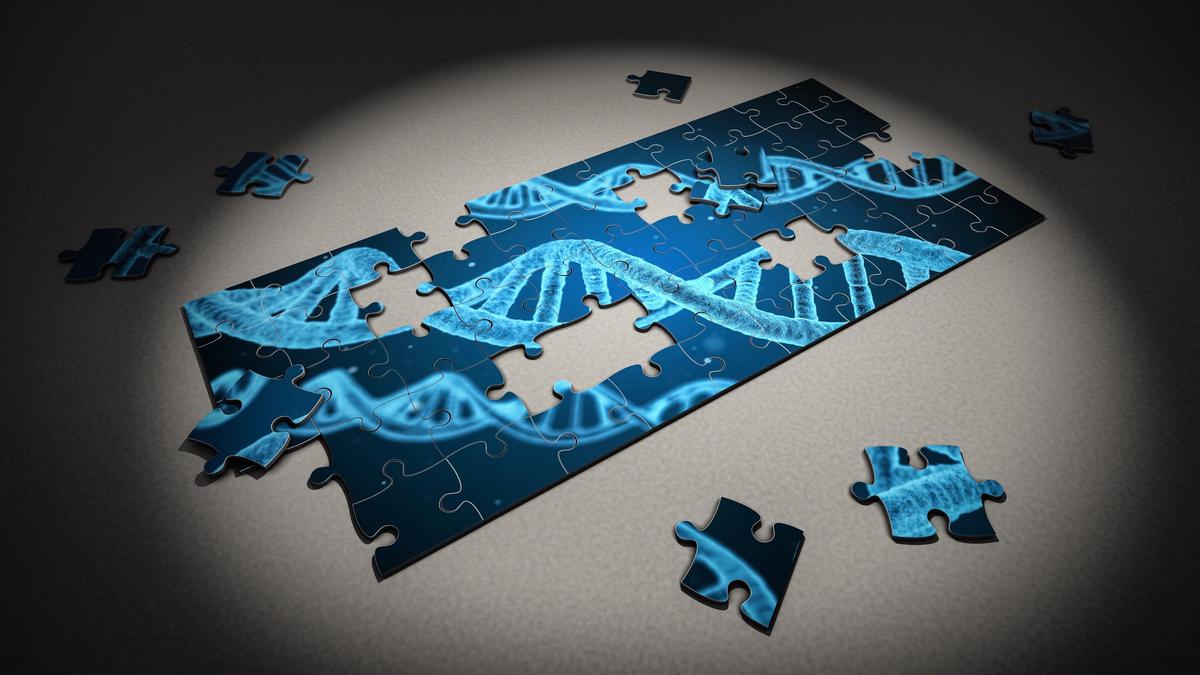
Using modern genomic tools, scientists can quantify the relatedness between two individuals as a percentage of the genetic material shared between them (identity by state) or by the genetic material in stretches of a chromosome that are identical to each other and are inherited from parents (identity by descent).
The misfortunes of royal marriages
There is evidence to suggest that ancient human civilisations, like those of the Egyptians and Incas, among others, could have practised inbreeding or consanguinity. In particular, a body of historical and genetic evidence suggests that King Tutankhamun of Egypt was born to parents who were blood relatives.
We are still understanding the genetic and population effects of these practices. So it isn’t surprising that many key insights that are biomedically relevant – including discovery of new genes and genetic correlates – have been unearthed by looking through the lens of consanguinity. Many genetic concepts were found by studying the intricate tapestry of royal marriages in Europe and the diseases the individuals have. But since the democratisation of genetics and genomics, scientists have been able to study the general population in the same way, on a larger scale.
Scientists have extensively studied the level of inbreeding in various populations around the world. Some of the most well-studied populations in this regard include the Ashkenazi Jews and the Amish. With more than 4,000 endogamous groups – i.e. people marrying within the same caste/tribe or group – India has been a fertile ground for consanguinity.
Researchers at the CSIR-Centre for Cellular and Molecular Biology, in Hyderabad, have also identified several endogamous populations in India with very high levels of geneticrelatedness, and have identified many populations in India with a very high level of inbreeding – some more so than the Ashkenazi Jews.
Studies have found that a significant fraction of the global population practises consanguinity and that that has increased the mortality and the rate of recessive genetic diseases in these peoples.
Benefits of consanguinity
While consanguinity is undesirable among humans, scientists widely wield the principle of mating between related offspring to breed plants and animals. With such efforts in experimental settings, they have been able to eliminate deleterious genetic alleles in populations. (Alleles are different versions of the same gene.)
Taking cues from these efforts, it is possible to anticipate evolutionary ‘bottleneck’ events in the past that could have resulted, similarly, in the removal of deleterious alleles from humans.
There is some evidence suggesting that ancient populations in which bottlenecks restricted mating choices would have resulted in consanguinity. In turn, such evolutionary or natural bottleneck events and consanguinity could have provided a chance to eliminate deleterious alleles while outbreeding would have created opportunities for heterozygotes (individuals with two alleles for a gene) with advantageous traits.
This said, precisely how such inbreeding and bottlenecks have contributed to human traits and diseases remains an open question.
Molecular measures of inbreeding, consanguinity
We inherit one copy of each chromosome from our parents. When the gametes – i.e. the reproductive cells – form, the chromosomes recombine. That is, genetic information, as blocks of genomic regions in the chromosomes, are exchanged.
In an event when the parents are related to each other, there is a chance that there will be identical blocks of genetic information in both chromosomes. These blocks are called ‘runs of homozygosity’, and the subsequent exchange is said to be autozygous.
The percentage of autozygosity in an individual’s genome thus creates a unique way to understand the genetic history of the population: in terms of sexual unions between related individuals over many generations. Other measures have also been developed to measure the stretches of chromosomes that are identical to each other. This is in part due to the genome-scale data now available to scientists, with which they can estimate the kinship between any two individuals.
Consanguinity and disease
Many modern consanguineous societies, like the Amish population in the U.S., have been studied for recessive diseases. In fact, scientists have extensively used autozygosity as an approach to identify new genetic diseases in populations where consanguineous marriage practices is the norm.
The results of these studies have helped us uncover previously unknown genetic diseases as well as estimate different populations’ genetic predisposition to common diseases.
At the same time, we are still to uncover the relationship of consanguinity with common yet complex diseases like type-2 diabetes, obesity, and hypertension. They will have to be investigated in greater detail.
One recent study, published on September 26 this year in the journal Cell, suggested that consanguinity could increase the risk and the rate of diseases like type-2 diabetes.
In the coming years, advances in genomics research indicate that we can expect innovative solutions to mitigate the risks associated with consanguinity on genetic diseases. This in turn could usher in a future where personalised medicine, genetic diagnostics, and genetic counselling can play a pivotal role in improving the health outcomes of affected individuals and their families.
The authors are senior consultants at the Vishwanath Cancer Care Foundation.