Doha:
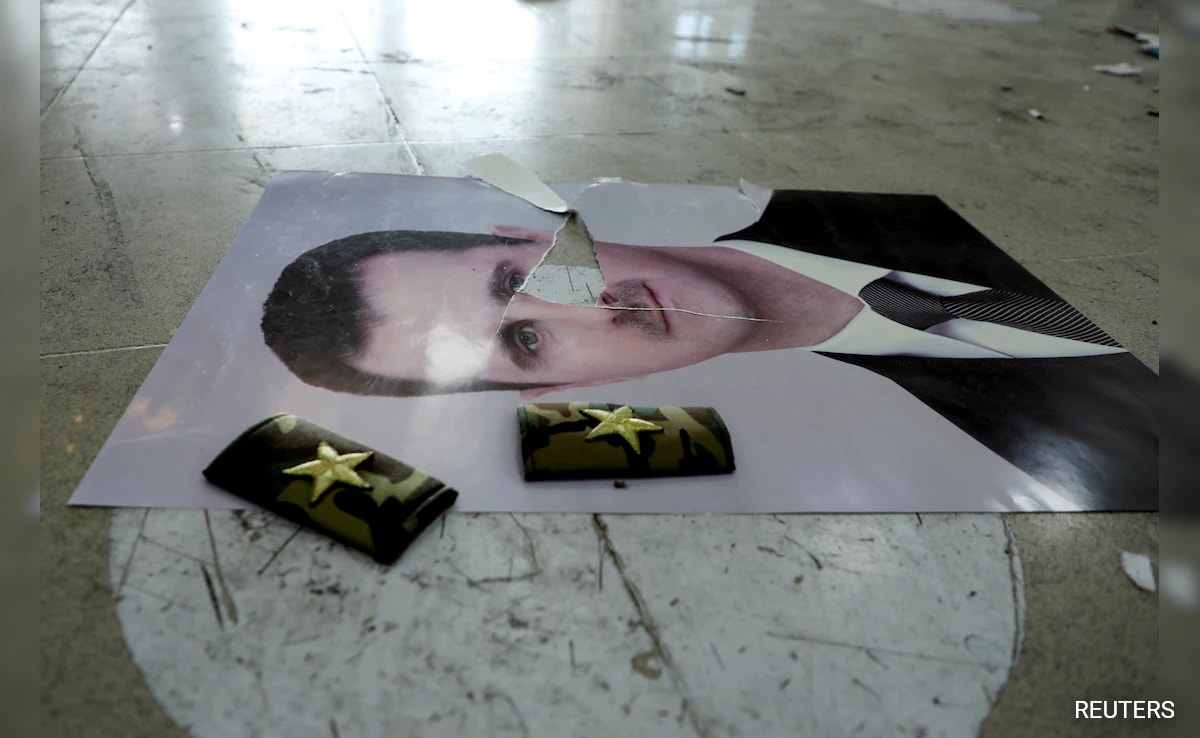
The ouster of Syrian President Bashar al-Assad, after rebel forces swept into Damascus this weekend, shattered Iran’s network of influence in the Middle East but Israel, the United States and Arab powers must now deal with the risk of instability and extremism from the mosaic of forces that replaces him.
Chief among the rebel forces that ended 50 years of brutal dynastic rule by Assad and his father was Hayat Tahrir al-Sham (HTS), a Sunni Muslim group previously affiliated with Al Qaeda that is designated as a terrorist organization by the US and the UN.
Western and Arab nations fear that the HTS-led rebel coalition may seek to replace Assad’s regime with a hardline Islamist government, or one less able or inclined to prevent the resurgence of radical forces, three diplomats and three analysts told Reuters.
“There is strong fear inside and outside the region of the power vacuum that Assad’s sudden collapse may cause,” said Abdelaziz al-Sager, director of the Gulf Research Center, a think tank focused on the Middle East. He cited the civil wars that followed the toppling of Iraqi president Saddam Hussein in 2003 and Libyan dictator Muammar Gaddafi in 2011.
One senior Western diplomat in the region, who spoke on condition of anonymity, told Reuters that – with the rebel forces fragmented – there was no plan for how to rule Syria, a complex nation divided into various sects and ethnic groups, each with its own regional power base.
The senior diplomat expressed fears that lawlessness in Syria could allow the flourishing of extremist groups like Islamic State (IS), which in 2014 swept through large swathes of Syria and Iraq and established an Islamic Caliphate before it was driven out by a US-led coalition by 2019.
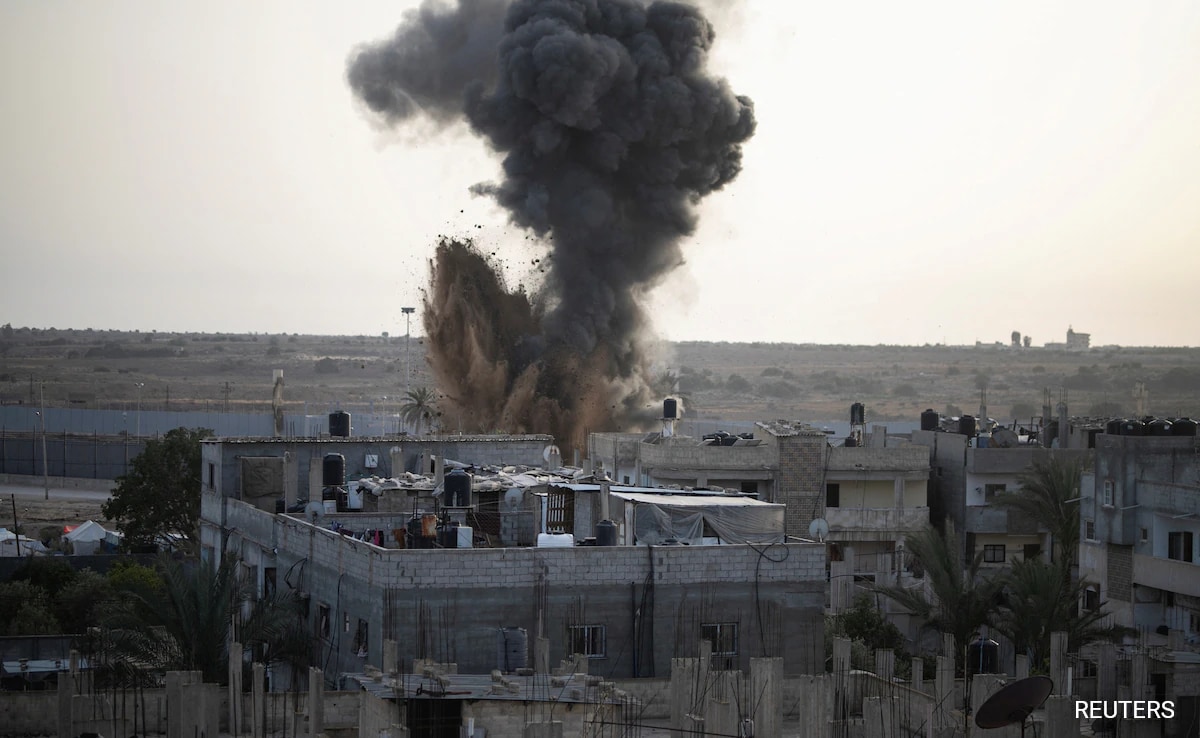
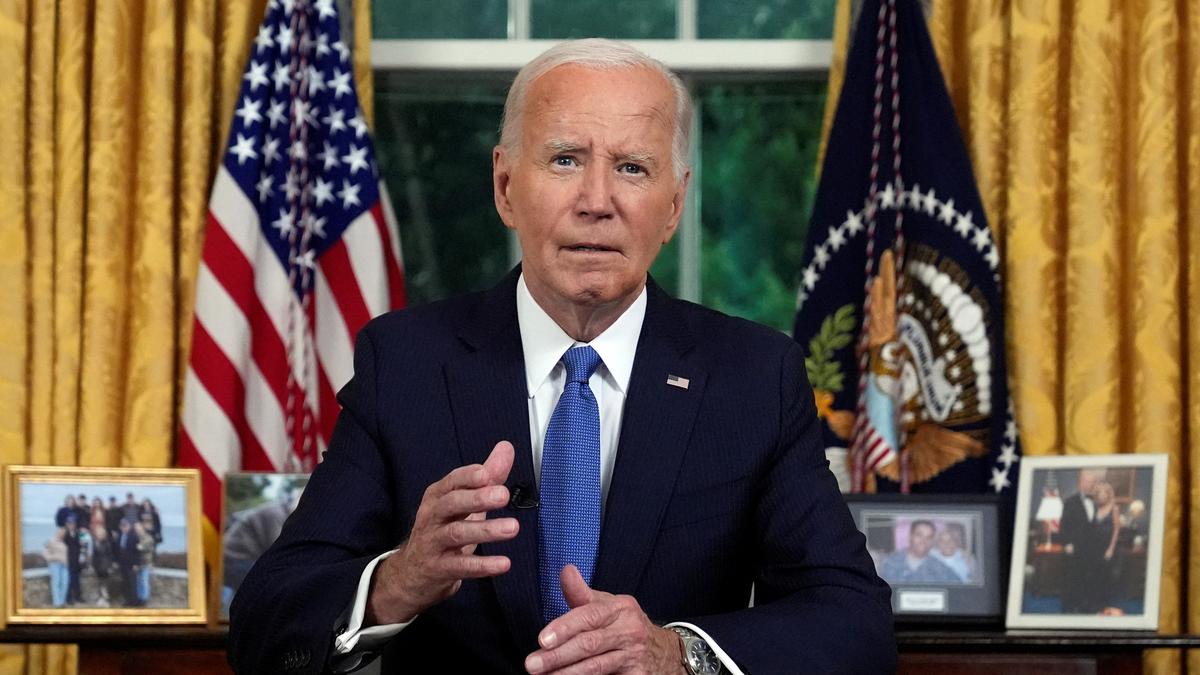
US President Joe Biden on Sunday welcomed Assad’s toppling and said he should be “held accountable” for his despotic rule but he warned that his departure was a moment of “risk and uncertainty”. US forces on Sunday conducted dozens of strikes within Syria against IS to prevent it reasserting itself.
The speed of Assad’s ouster, just two weeks since the rebel offensive began, took many in the White House by surprise. A senior US official said Washington was now seeking ways to communicate with all the rebel groups, not just HTS.
So far, Washington had mostly thrown its support behind Syrian Kurdish groups, such as the Syrian Democratic Forces (SDF), whose areas of control are in northeast Syria. These groups, however, are in conflict with one of the main victorious rebels factions, the Syrian National Army (SNA), backed by regional power broker, Turkey, which opposes Kurdish influence.
Assad’s allies, Tehran and Moscow, who propped up his rule for 13 years with military support, men and airpower, also face far-reaching implications from his precipitous downfall.
Moscow – which has given Assad and his family asylum – has two major military bases in Syria, its main footprint in the Middle East. Its naval base in Tartous on the Mediterranean has been a staging post to fly military contractors in and out of Africa.
For Tehran, its alliance with Assad – a member of the minority Alawite sect, an offshoot of Shi’ite Islam – was a cornerstone of its powerbase in a predominantly Sunni region wary of Shi’ite Iran.
Assad’s departure shattered a pivotal axis of influence, eroding Tehran’s ability to project power and sustain its network of militia groups across the Middle East, particularly to its ally Hezbollah in Lebanon. A senior Iranian official told Reuters on Monday it had opened a direct line of communication with the rebels in an attempt to “prevent a hostile trajectory”.
Israel’s year-long military campaign has already severely weakened the military power of Hezbollah and Palestinian group Hamas in Gaza.
Assad offered Iran a vital conduit for arms shipments to rebuild Hezbollah. Jonathan Panikoff, a former US deputy national intelligence officer for the Middle East, said his ouster could make it more difficult for Hezbollah to rearm, increasing the prospects that a ceasefire with Israel agreed last month would hold.
Israeli Prime Minister Benjamin Netanyahu hailed the ousting of Assad as an “historic day” that followed the blows delivered by Israel against Iran and Hezbollah. He said he had ordered Israeli forces to seize areas along the bordering buffer zone to ensure Israel’s security.
Israeli forces carried out air strikes against suspected chemical weapons and missile sites on Monday to prevent them from falling into the hands of hostile actors, the foreign minister said.
Carmit Valensi, a senior researcher at the Institute for National Security Studies (INSS), a think tank for Israeli security policy based in Tel Aviv, said that – despite the risk of a prolonged period of chaos and violence in Syria – Assad’s fall could benefit Israel.
“Despite concerns over the rise of extremist elements near the border and the lack of a clear authority in charge, the military capabilities of the rebels, in their various forms, aren’t comparable to those of Iran and its proxies,” she said.
CALLS FOR NEW CONSTITUTION, ELECTIONS
Marwan al-Muasher, vice president for studies at the US-based Carnegie Endowment for International Peace, said Assad’s exit could provide an opportunity for Syrians to establish an inclusive political governance through an orderly transition that avoided a power vacuum that would allow extremist groups to gain ascendancy.
Hadi Al-Bahra, the head of Syria’s main opposition abroad, told Reuters on the sidelines of the Doha Forum on Sunday that Syria should have an 18-month transition period to establish “a safe, neutral, and quiet environment” for free elections.
Al-Bahra, President of the Syrian National Coalition, said Syria should draft a constitution within six months, on which the first election would be a referendum. He said the opposition had asked state employees to report to work until the power transition, and assured them that they would not be harmed.
But Syria’s political opposition has little influence on the ground in Damascus, where armed groups hold sway, and many Syria watchers remain skeptic.
HTS’ leader, Abu Mohammed al-Golani, addressed huge crowds at the medieval Umayyad Mosque in central Damascus on Sunday, promising a new chapter for the region and that Syria would become “a beacon for the Islamic nation”.
There are, however, questions about whether Golani’s form of strict Islamist ideology would be accepted throughout Syria, a country where a moderate and liberal form of Islam prevails and with a mixed Christian, Alawite, Druze and Kurdish population.
Both Western and Middle Eastern officials expressed concern about the unity of Syria, with key territories, including those along borders with Iraq and Turkey, under the control of different sects and ethnic groups: these divisions, which were entrenched by a bloody 2011 uprising, present a growing threat to national stability.
The analysts and diplomats who spoke to Reuters warned of the risk of a free-for-all conflict – akin to the wake of the toppling of Gaddafi in Libya or Saddam in Iraq – in which armed groups from different Islamist, ethnic and ideological shades fight for supremacy over territory. Such a failed state in Syria would have a major impact on neighbors Lebanon, Turkey, Iraq and Jordan, they said.
RIVALRY AMONG REBELS
Syria’s opposition comprises a broad spectrum from moderate groups such as the SNA to jihadi elements within the HTS, each with its own vision for Syria’s future, ranging from secular democracy to Islamic governance.
“Each one of these rebel group is vying for supremacy; each one wants to be in charge. Each one thinks they can be Bashar al-Assad, and each one has allegiance to a foreign party funding his group,” said al-Sager. “They will clash unless there is an effort by the UN and some regional countries with influence to unify them.”
Turkish-backed forces dominate in the north, while US-aligned Kurdish groups, such as the Syrian Democratic Forces (SDF), hold sway in northeastern Syria.
In a sign of the tensions between the groups, the Turkey-backed SNA seized swathes of territory, including the city of Tel Refaat, from US-backed Kurdish forces at the start of the recent offensive. On Sunday, a Turkish security source said the rebels entered the northern city of Manbij after pushing the Kurds back again.
Still, some analysts say that an orderly transition is possible, arguing that well-established government institutions in Damascus remain capable of carrying out duties.
They also point to the rebels’ experience of governing in enclaves across Syria that they have managed in some cases for more than a decade. The rebel alliance, led by HTS, made a point of offering clemency for members of the security forces when it seized Aleppo, Syria’s second-largest city, late last month and promised the sizeable minority populations that it would preserve their way of life.
But Hassan Hassan, an expert on Islamist groups in the Middle East based in Washington, said that concerns persisted among these minority groups now that the rebels had captured Damascus.
“There is uncertainty about what will happen next, particularly about religious influence and how (Islamic) laws may evolve,” he said.
(This story has not been edited by NDTV staff and is auto-generated from a syndicated feed.)