


Skip to content
  • Facebook
  • X
  • Linkedin
  • WhatsApp
  • YouTube
  • Associate Journalism
  • About Us
  • Privacy Policy
  • 033-46046046
  • editor@artifex.news
Artifex.News

Artifex.News

Stay Connected. Stay Informed.

  • Breaking News
  • World
  • Nation
  • Sports
  • Business
  • Science
  • Entertainment
  • Lifestyle
  • Toggle search form
  • “Makes No Sense”: Rohit Sharma, Gautam Gambhir Blasted For Absurd Sarfaraz Khan Gamble
    “Makes No Sense”: Rohit Sharma, Gautam Gambhir Blasted For Absurd Sarfaraz Khan Gamble Sports
  • Access Denied Business
  • Vladimir Putin orders government to soften trade imbalance with India
    Vladimir Putin orders government to soften trade imbalance with India World
  • Nifty Resistance At 25,500 Ahead Of Budget, Volatility Stays High, Say Analysts Business
  • Hans Niemann takes a dig at D Gukesh
    Hans Niemann takes a dig at D Gukesh Sports
  • Mumbai, Delhi luxury real estate among top 5 globally: Knight Frank
    Mumbai, Delhi luxury real estate among top 5 globally: Knight Frank Business
  • CSK’s Full Statement On Ruturaj Gaikwad Replacing MS Dhoni As Captain For IPL 2024
    CSK’s Full Statement On Ruturaj Gaikwad Replacing MS Dhoni As Captain For IPL 2024 Sports
  • Access Denied
    Access Denied Nation
Study ups oft-smuggled Indian star tortoise’s conservation prospects

Study ups oft-smuggled Indian star tortoise’s conservation prospects

Posted on December 9, 2024 By admin


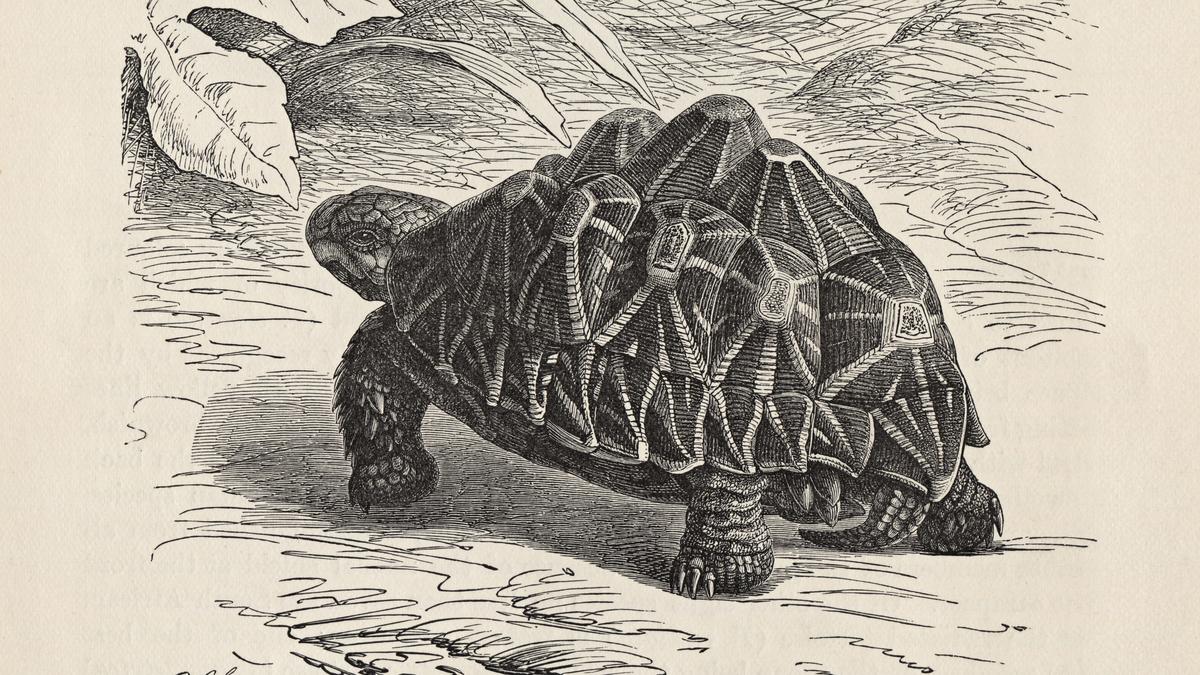
The Indian star tortoise (Geochelone elegans) is a sight to behold, with its obsidian shell and the striking Sun-yellow star patterns adorning it. These tortoises are hardy herbivores and are popular as exotic house pets — but they shouldn’t be. It’s illegal to own one in India but also unethical since they are vulnerable in the wild.

Endemic to the subcontinent, Indian star tortoises reside in arid pockets of northwest India (bordering Pakistan), South India, and Sri Lanka. However, members of the species have also been found in people’s homes as far afield as Canada and the U.S. The increasing demand for them as pets has entangled them in one of the largest global wildlife trafficking networks.

The Indian star tortoise is listed in Appendix I of the Convention on International Trade in Endangered Species of Wild Fauna and Flora (CITES) and in Schedule I of the Wildlife (Protection) Act 1972, which provides the highest level of protection to animals in Indian law. Despite this, officials have already seized hundreds of tortoises being smuggled through the Chennai and Singapore airports and across the India-Bangladesh border this year.

Wildlife biologist Sneha Dharwadkar, cofounder of an NGO called Freshwater Turtles and Tortoises of India, is worried unscientific releases of the seized tortoises could worsen their fate. “We can no longer simply take confiscated tortoises and release them in nearby forests,” Dharwadkar wrote in an email.

To find an alternative, researchers from the Wildlife Institute of India and Panjab University explored the diversity and natural distribution in India by sequencing the genomes of Indian star tortoise in zoos, wildlife reserves, and protected areas.

The study identified two genetically distinct groups of Indian star tortoises: northwestern and southern.

The genetic divergences showed up as differences in physical features that could inform strategies on where and how to release and conserve rescued tortoises, Subhasree Sahoo, a PhD student at the Wildlife Institute of India, Dehradun, and first author of the study, said.

Same but different

Millions of years ago, Geochelone, the group that includes the Indian star tortoise, spread across the Indian subcontinent after the latter split from the Gondwana supercontinent and collided with Eurasia.

Over time, parts of the subcontinent became arid and encouraged the growth of savannahs and open grasslands in northwestern and peninsular India, which are now the tortoises’ natural habitats.

But the creation and expansion of savannahs came at the expense of humid forests: the increasingly seasonal nature of the monsoons restricted them to parts of southwest India and Sri Lanka. This separation of humid and dry areas paralleled the splitting of the tortoises into northern and southern groups about 2 million years ago.

To find genetic evidence of this split, the researchers of the new study collected tortoise tissue samples from 14 locations.

“These tortoises are very rare to encounter, so I chose the rainy season because that’s the breeding season. They’re the most active. That’s also what poachers do,” Sahoo said. With the help of frontline forest staff and local communities living near the tortoises’ natural range, she was able to collect 38 samples from northwestern India and 44 from southern India.

Researchers prefer tortoises’ blood samples for genetic testing but even small mistakes when drawing blood can cause profuse bleeding. This is manageable in controlled environments like zoos or wildlife reserves, and less so in the wild.

“When I was in Kakatiya Zoo in Telangana, a zookeeper told me, ‘Madam, why do you want to take blood? You can take the scutes, right? They come off very easily’,” Sahoo said. Scutes are keratin layers found on the tortoises’ limbs, neck, and shell. “I peeled off some scute from the zoo in Kakatiya and tested [it] in the lab, and it worked just fine.”

Once collected, the researchers extracted DNA from the tissue samples. Then they sequenced the mitochondrial genes cytochrome B and NADH dehydrogenase 4. The gene for cytochrome B is highly conserved and used to identify subspecies-level differentiation and later to detect smaller genetic variations between the samples.

The searchers also screened 10 microsatellite markers: short DNA sequences that repeat in a particular location in the genome. They serve as a genome’s fingerprint and are helpful to identify how individuals of the same species are related, how they mate, and recent changes in their population.

The results revealed that even after illegal poaching and unscientific releases, the northwestern group remains largely genetically unchanged whereas the southern group is highly diverse.

“For a long time, on-ground practitioners have suspected the presence of at least two evolutionarily significant units, or ESUs — populations of organisms considered distinct for conservation purposes,” Dharwadkar said. “This paper provides a reliable confirmation of that.”

Restoring natural order

Sandeep Kumar Gupta, nodal officer at the Wildlife Institute of India, Dehradun, and corresponding author of the study said that since different Indian star tortoises are found in different areas, it’s crucial to not mix the populations during release. Doing so might lower their genetic diversity and depress breeding rates.

Sahoo also raised the concern of shell-pyramiding in captive-bred star tortoises. These tortoises develop pyramid-shaped shells instead of the dome-like shells in the wild due to nutritional deficiencies, and can further complicate mating and breeding issues.

Gupta also emphasised greater public awareness of the legality of keeping certain species as pets and the importance of adhering to national laws on this front. Overall, the team expressed belief in its paper that the findings could benefit both national and international agencies with evidence-based conservation of the Indian star tortoise.

Sanjukta Mondal is a chemist-turned-science-writer with experience in writing popular science articles and scripts for STEM YouTube channels.

Published – December 09, 2024 05:30 am IST


Source link

Nation

Post navigation

Previous Post: Syrians explore ousted Assad’s Damascus home
Next Post: Study ups oft-smuggled Indian star tortoise’s conservation prospects

Related Posts

  • Access Denied
    Access Denied Nation
  • India Abstains From Voting On UN Resolution On Islamophobia. Here’s Why
    India Abstains From Voting On UN Resolution On Islamophobia. Here’s Why Nation
  • Access Denied
    Access Denied Nation
  • Mukhtar Ansari’s Funeral Today, To Be Buried In Family Graveyard In UP
    Mukhtar Ansari’s Funeral Today, To Be Buried In Family Graveyard In UP Nation
  • Medians needed at sharp bends in Guindy – The Hindu
    Medians needed at sharp bends in Guindy – The Hindu Nation
  • Insisting On Belagavi’s Merger With Maharashtra “Foolishness”: Siddaramaiah
    Insisting On Belagavi’s Merger With Maharashtra “Foolishness”: Siddaramaiah Nation

More Related Articles

Sajad Lone Joins Scuffle In House To Shield Kashmir MLA Sajad Lone Joins Scuffle In House To Shield Kashmir MLA Nation
Will Action Be Taken Against Coaching Centre Mafia? Centre’s Reply Will Action Be Taken Against Coaching Centre Mafia? Centre’s Reply Nation
Access Denied Access Denied Nation
Satellite Images Indicate Huge Architectural Wealth Under Bodh Gaya’s Mahabodhi Temple: Report Satellite Images Indicate Huge Architectural Wealth Under Bodh Gaya’s Mahabodhi Temple: Report Nation
Tamil Nadu cancels DFR tender for 12 ULBs, cites ‘confusion’ over waste management privatisation Tamil Nadu cancels DFR tender for 12 ULBs, cites ‘confusion’ over waste management privatisation Nation
Supreme Court allows Vinesh Phogat to participate in Asian Games 2026 selection trials Supreme Court allows Vinesh Phogat to participate in Asian Games 2026 selection trials Nation
SiteLock

Archives

  • October 2026
  • September 2026
  • August 2026
  • July 2026
  • June 2026
  • May 2026
  • April 2026
  • March 2026
  • February 2026
  • January 2026
  • December 2025
  • November 2025
  • October 2025
  • September 2025
  • August 2025
  • July 2025
  • June 2025
  • May 2025
  • April 2025
  • March 2025
  • February 2025
  • January 2025
  • December 2024
  • November 2024
  • October 2024
  • September 2024
  • August 2024
  • July 2024
  • June 2024
  • May 2024
  • April 2024
  • March 2024
  • February 2024
  • January 2024
  • December 2023
  • November 2023
  • October 2023
  • September 2023
  • August 2023
  • July 2023
  • June 2023
  • May 2023
  • April 2023
  • March 2023
  • February 2023
  • January 2023
  • December 2022
  • November 2022
  • October 2022
  • September 2022
  • August 2022
  • July 2022
  • June 2022
  • May 2022

Categories

  • Business
  • Nation
  • Science
  • Sports
  • World

Recent Posts

  • AIADMK, BJP leaders slam TVK-led Tamil Nadu government over electricity purchase at high rate
  • Women stage silent demonstration at Kathipara against police action on anti-CEC protesters in Delhi
  • DGCA bans specific power banks on flights
  • Saudi Supreme Court sets aside Sri Lankan migrant worker’s death penalty
  • Nedumbassery accident: CPI(M) stages protest march to police station over ‘indifference’ in handling of case

Recent Comments

  1. RobertTes on UP Teacher Who Asked Students To Slap Muslim Classmate
  2. Manuelret on UP Teacher Who Asked Students To Slap Muslim Classmate
  3. RobertTes on UP Teacher Who Asked Students To Slap Muslim Classmate
  4. RobertTes on UP Teacher Who Asked Students To Slap Muslim Classmate
  5. BrentWes on UP Teacher Who Asked Students To Slap Muslim Classmate
  • RBI issues data governance guidance framework for banks to strengthen data quality, security and accountability
    RBI issues data governance guidance framework for banks to strengthen data quality, security and accountability Business
  • Trump’s White House media ban faces long odds in court, legal experts say
    Trump’s White House media ban faces long odds in court, legal experts say World
  • Access Denied Business
  • Access Denied Sports
  • Israel-Hamas War Rages In Besieged Gaza On Ramadan Eve
    Israel-Hamas War Rages In Besieged Gaza On Ramadan Eve World
  • Iran Guards chief warns Israel of ‘bitter consequences’ after attack: Media reports
    Iran Guards chief warns Israel of ‘bitter consequences’ after attack: Media reports World
  • Access Denied
    Access Denied Nation
  • “Decision To Name Rohit Sharma Captain Hampered Team India”: Ex-KKR Team Director
    “Decision To Name Rohit Sharma Captain Hampered Team India”: Ex-KKR Team Director Sports

Editor-in-Chief:
Mohammad Ariff,
MSW, MAJMC, BSW, DTL, CTS, CNM, CCR, CAL, RSL, ASOC.
editor@artifex.news

Associate Editors:
1. Zenellis R. Tuba,
zenelis@artifex.news
2. Haris Daniyel
daniyel@artifex.news

Photograher:
Rohan Das
rohan@artifex.news

Associate Journalists
1. Subrata Paul - AN/2020/01
2. Quamruz Zaman - AN/2021/22
3. Ahmed Sha - AN/2021/035
4. Ajay Kumar Shaw - AN/2021/39
5. Tahqiqul Hoda - AN/2021/21

Artifex.News offers Online Paid Internships to college students from India and Abroad. Interns will get a PRESS CARD and other online offers.
Send your CV (Subjectline: Paid Internship) to internship@artifex.news

Links:
Associate Journalism
About Us
Privacy Policy

News Links:
Breaking News
World
Nation
Sports
Business
Entertainment
Lifestyle

Registered Office:
72/A, Elliot Road, Kolkata - 700016
Tel: 033-22277777, 033-22172217
Email: office@artifex.news

Editorial Office / News Desk:
No. 13, Mezzanine Floor, Esplanade Metro Rail Station,
12 J. L. Nehru Road, Kolkata - 700069.
(Entry from Gate No. 5)
Tel: 033-46011099, 033-46046046
Email: editor@artifex.news

Copyright © 2023 Artifex.News Newsportal designed by Artifex Infotech.