




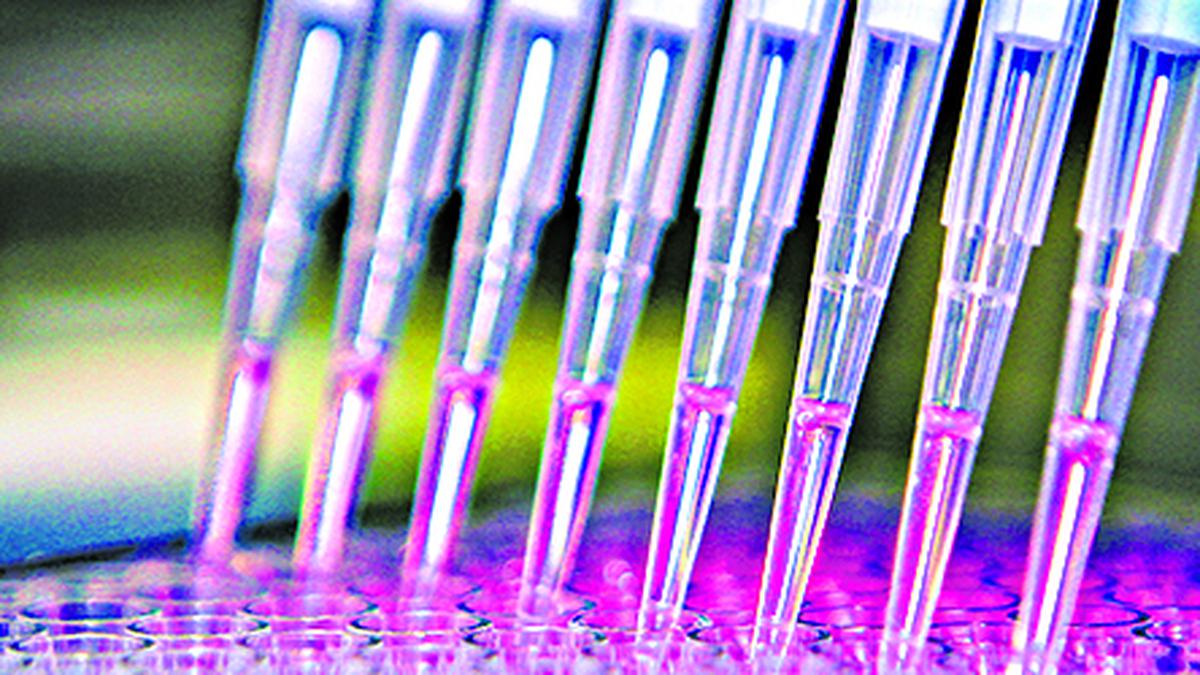
A biobank is a repository of biological samples, such as blood, DNA, cells, tissues, and/or organs alongside their genetic data.
| Photo Credit: Getty Images/iStockphoto
Precision medicine is bringing in a new era of personalised healthcare. The field began to take concrete shape when scientists were wrapping up the Human Genome Project. Since then, genomics has played a major role in the diagnosis and treatment of various cancers, chronic diseases, and immunological, cardiovascular, and liver diseases.
Other emerging technologies such as gene-editing and mRNA therapeutics also contribute to precision medicine. In a recent success story, researchers were able to restore vision in people who had lost it due to a genetic mutation using gene therapy. In a more recent and more notable example, researchers in the U.K. reversed an individual’s diabetes by transplanting reengineered stem cells. During the COVID-19 pandemic, researchers were able to use the mRNA platform to develop new vaccines in record time, winning the technology a Nobel Prize last year.

Organ-on-chips is another area that promises precision medical solutions. These small microfluidic devices containing human cells can replicate the microenvironment of a tumour or an organ in a laboratory setting. They are expected to allow researchers to test drugs in settings more similar to the drugs’ eventual user.
Precision medicine in India
The Indian precision medicine market is estimated to be growing at a CAGR of 16% and is expected to be worth more than $5 billion by 2030, according to industry estimates. Currently, it contributes 36% of the national bioeconomy, alongside cancer immunotherapy, gene editing, biologics, etc. The development of precision therapeutics is also part of the new ‘BioE3’ policy.
In October 2023, the Central Drugs Standard Control Organization approved NexCAR19, India’s domestically developed CAR-T cell therapy, and earlier this year the government opened a dedicated centre for it. Recently, the Apollo Cancer Centre and a collaboration between Siemens Healthineers and the Indian Institute of Science, Bengaluru, opened new facilities to deploy artificial intelligence for precision medicine.
Biobanks in precision medicine
A biobank is a repository of biological samples, such as blood, DNA, cells, tissues, and/or organs alongside their genetic data. These samples are collected from consenting individuals and intended for use in research. For precision medicine to succeed, biobanks need to be large and diverse. Otherwise only a small section of society will benefit from the findings of precision medicine.
Recently, researchers identified people with an undiagnosed rare genetic disorder using data from a biobank and comparing it to people who were already diagnosed with it. Their findings were published in Nature Communications on August 29.
In another study published in Cell on October 3, health researchers created the largest biobank of sarcoma patient-derived organoids to date. Organoids are miniaturised, synthetic versions of organs that can replicate tumours; the researchers used it to understand the sarcoma and identify potential therapies using high-throughput drug-screening.

Biobanks in India
There are 19 registered biobanks in India host to many biological specimens, including cancer cell lines and tissues. Earlier this year, the ‘Genome India‘ programme finished sequencing 10,000 genomes from 99 ethnic groups, to identify treatments for rare genetic diseases, among others.
The pan-India ‘Phenome India’ project has collected 10,000 samples to create better prediction models for cardio-metabolic diseases. The Paediatric Rare Genetic Disorders (PRaGeD) mission could help identify new genes or variants to develop targeted therapies for genetic diseases that affect children.
However, biobank regulations in India are a significant hurdle to realising the full potential of precision medicine.
India’s biobanking regulations
The U.K., the U.S., Japan, China, and many European countries have laws or comprehensive regulations that address several biobanking issues, including informed consent, withdrawal rights, privacy, and data protection. At present, India’s regulation of biobanks is inconsistent, with gaps that could undermine public trust and limit the potential of precision medicine. In particular, there is no law to protect the rights of individuals.
The Indian Council for Medical Research handbook on ‘National Ethical Guidelines For Biomedical And Health Research Involving Human Participants’ and the Department of Biotechnology’s (DBT) practices for data storage and analysis have many gaps. For instance, participants are expected to consent to providing samples without knowing how their data will be used, who will have access to it, for how long they will be stored, and when they will be used. Genetic information can provide details about a person, including their family, that also could result in discrimination.
Next, in the absence of a single authority to regulate biobanks and no penalty for misconduct, the risk of inconsistencies arising from sample mishandling and ethical violations like data or sample sharing for non-consenting purposes is nontrivial.
Without proper regulations, many pharmaceutical companies, including those abroad, will have access to samples from India. Research projects often require researchers and pharmaceutical companies to collaborate with biobanks during drug discovery and development.

In the absence of an overarching law, Indians could be deprived of the ownership of biological samples and/or the data thereof, and the profits from the resulting research findings.
A leadership opportunity
Taken together, strong data and privacy protections and regulatory oversight by an expert committee will encourage more people to share samples and participate without worry. It will also allow research to happen on the right foundations instead of the findings becoming fruits of a poisoned tree.
India is a part of international groups like the Quad and BRICS, and an important plank of its soft diplomatic efforts has been pharmaceuticals. It is a major supplier of generic drugs and is a hub of vaccine manufacturing, and it has plans to expand leadership to include next-generation therapeutics. To do this, it will have to align its biobanking laws with global standards to encourage public participation and trust.
Manjeera Gowravaram has a PhD in RNA biochemistry and is a freelance science writer.
Published – October 14, 2024 05:30 am IST