




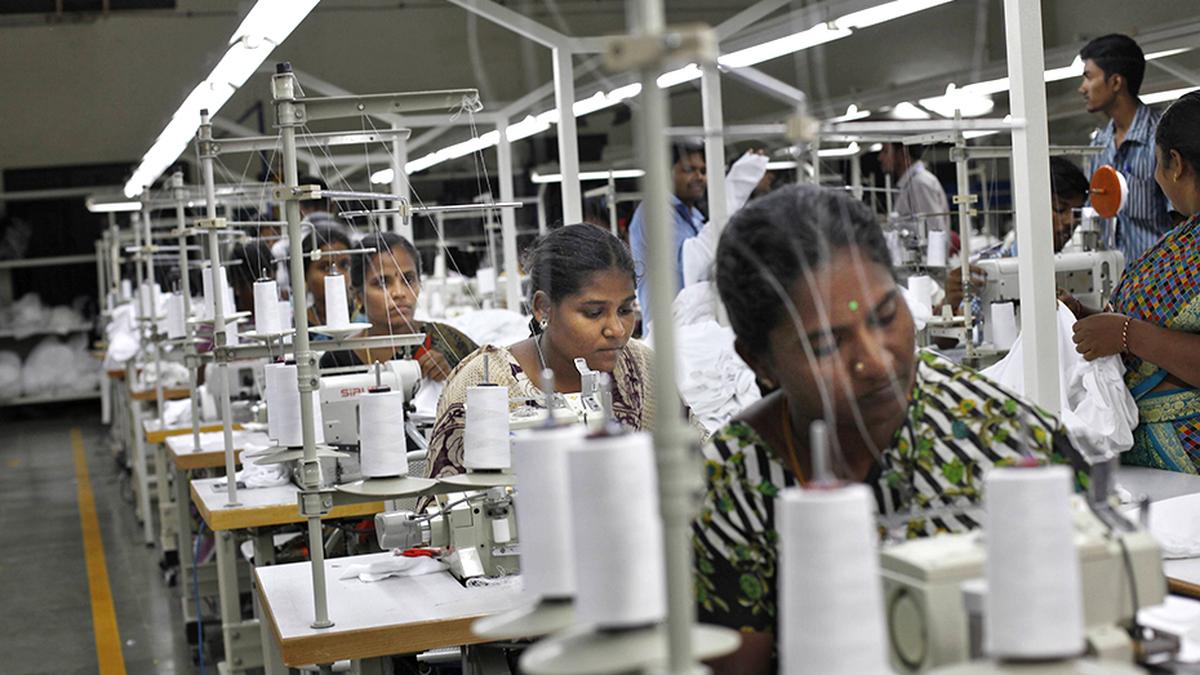
Employees sew clothes at the Estee garment factory in Tirupur, in the southern Indian state of Tamil Nadu June 19, 2013. With knitwear exports of over $2 billion a year, India’s garment manufacturing hub Tirupur has earned the nickname “Dollar City,” but its allure for price-conscious global retailers obsessed by discounts of as little as one U.S. cent pales before Bangladesh. Picture taken June 19, 2013.
| Photo Credit: Reuters
Questions:
1. In the weaving process, when strands skip several threads before crossing over, the resulting fabric acquires a glossy finish as a result of ________ light reflection, which occurs due to the variations in the surface texture. Fill in the blank.
2. Apart from their aesthetic appeal, what specific purpose do velvet panels serve in enhancing the acoustic clarity in spaces like theatres and recording studios? They achieve this by their soft texture and their thick, dense build.
3. Name the action by which moisture-wicking clothing draws moisture away from the skin. The result is that sweat evaporates faster and the body’s temperature is easier to maintain during intense physical activity, rendering a comfortable wear. Hint: Many plants use this action to move water to their branches from their stem.
4. Which material was discovered accidentally in 1965 by Stephanie Kwolek while researching synthetic materials for tyres and was eventually used in bulletproof vests, thanks to its durability and strength?
5. How are the cellulose molecules oriented with respect to each other within the fibrils of cotton fibre? This particular alignment contributes to the strength and durability of the cotton material but also causes it to wrinkle.
Visual:
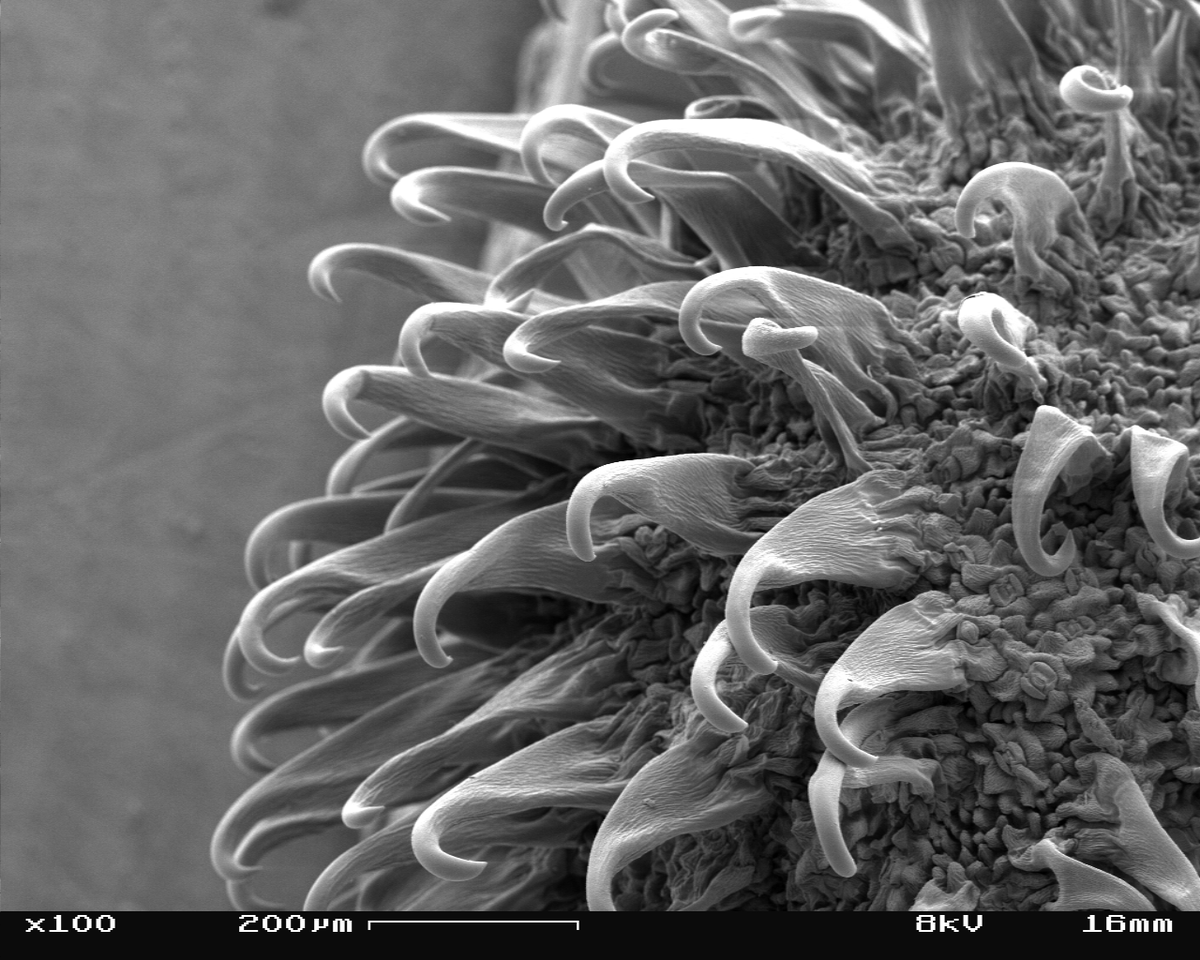
This is an image of burrs of the Burdock plant under a microscope. It inspired Swiss electrical engineer George de Mestral to design a fastening system popularly called what?
Answers:
Diffuse
Reduce echoes
Capillary action
Kevlar
Parallel
Visual: Velcro