



Skip to content
  • Facebook
  • X
  • Linkedin
  • WhatsApp
  • Associate Journalism
  • About Us
  • Privacy Policy
  • 033-46046046
  • editor@artifex.news
Artifex.News

Artifex.News

Stay Connected. Stay Informed.

  • Breaking News
  • World
  • Nation
  • Sports
  • Business
  • Science
  • Entertainment
  • Lifestyle
  • Toggle search form
  • Seine swimming: Parisian tradition revived at Olympics World
  • Moscow concert hall attack | Russian Embassy in India opens online book of condolences for victims World
  • Over 6 Lakh Flowerpots, Foliage To Adorn Delhi Roads, Venue For G20 Summit Nation
  • Wrong Interpretation Of Signals Led To Kanchanjunga Express Collision: Report Nation
  • Does seeking social proximity improve flight routes among pigeons? Science
  • Virat Kohli Or Cristiano Ronaldo? India Great’s Football Skills Leave Fans Stunned. Watch Sports
  • UK Elections: Huge Win For Labour, Historic Loss For Rishi Sunak’s Party: Exit Poll World
  • Sirens sound in Tel Aviv for the first time in months as Hamas says it fired rockets from Gaza World

Earth’s oldest, tiniest creatures are poised to be climate change winners

Posted on August 14, 2024 By admin


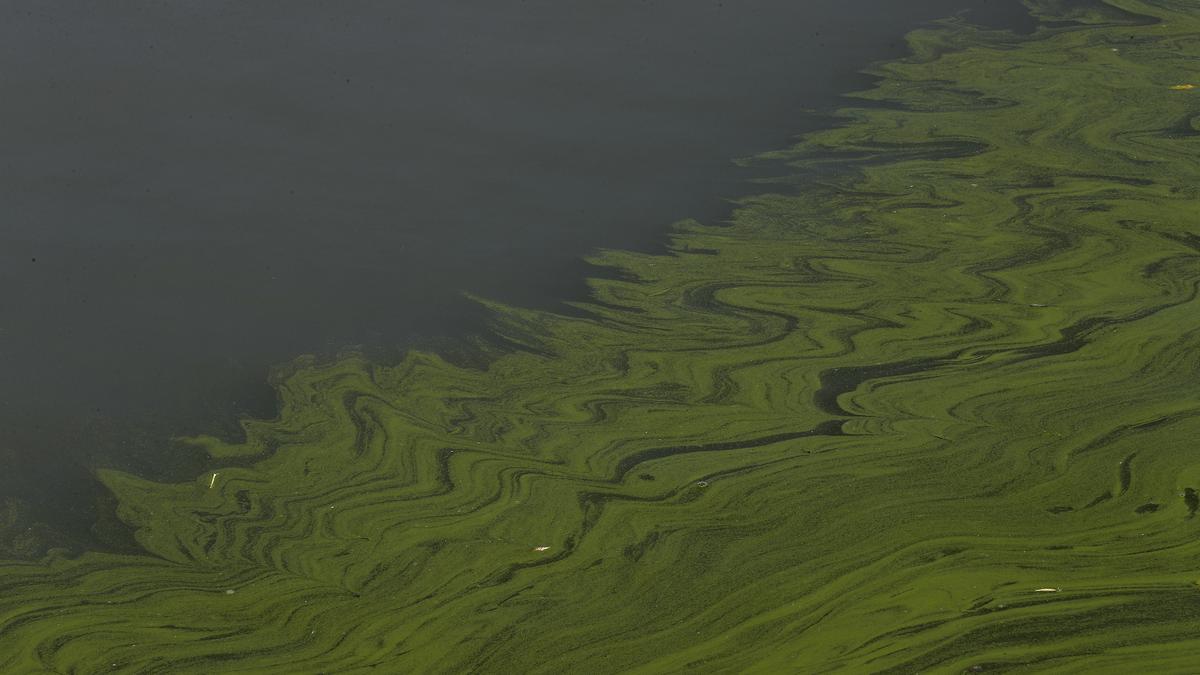
Algae floats on the surface of Lake Erie’s Maumee Bay in Oregon, Ohio, on Friday, September 15, 2017. Scientists found prokaryotes are remarkably resilient to climate change – and as a result, could increasingly dominate marine environments.
| Photo Credit: AP

The world’s oceans are home to microscopic organisms invisible to the human eye. The tiny creatures, known as “prokaryotes”, comprise 30% of life in the world’s oceans.

These organisms play an important role in keeping the oceans in balance. But new research by myself and colleagues shows this balance is at risk.

We found prokaryotes are remarkably resilient to climate change – and as a result, could increasingly dominate marine environments.

This could reduce the availability of fish humans rely on for food, and hamper the ocean’s ability to absorb carbon emissions.

A fine balance

Prokaryotes include both bacteria and “archaea”, another type of single-celled organism.

These organisms are thought to be the oldest cell-based lifeforms on Earth. They thrive across the entire planet – on land and in water, from the tropics to the poles.

What prokaryotes lack in size they make up in sheer abundance. Globally, about two tonnes of marine prokaryotes exist for every human on the planet.

They play a crucial role in the world’s food chains, helping support the nutrient needs of fish humans catch and eat.

Marine prokaryotes grow extremely fast – a process that emits a lot of carbon. In fact, prokaryotes to an ocean depth of 200 metres produce about 20 billion tonnes of carbon a year: double that of humans.

This massive carbon output is balanced by phytoplankton – another type of microscopic organism which turns sunlight and carbon dioxide into energy, through photosynthesis.

Phytoplankton and other ocean processes also absorb up to one-third of the carbon humans release into the atmosphere each year. This helps limit the pace of global warming.

How prokaryotes respond to warming is key to understanding how the fine balance of the world’s oceans may change in a warmer world. This was the focus of our research.

What we found

We wanted to predict how climate change would affect the “biomass”, or total global weight, of marine prokaryotes. We also wanted to examine how it would affect their carbon output.

To do this, we built computer models that integrated decades of observations from dozens of scientific surveys across the world’s oceans.

So what did we find? Prokaryotes are likely to be climate change winners, relative to other marine life.

For each degree of ocean warming, their biomass will decline by about 1.5%. This is less than half the projected 3–5% decline we predicted for larger plankton, fish and mammals.

It means future marine ecosystems will have lower overall biomass, and will increasingly be dominated by prokaryotes. This could divert a greater share of available nutrients and energy toward prokaryotes and away from fish, reducing the supply of fish humans eat.

We discovered another important change. For every degree of warming, we predict prokaryotes in the top 200 metres of the world’s oceans would produce an additional 800 million tonnes of carbon per year.

This is equivalent to the present-day emissions of the entire European Union (after converting CO₂ to carbon).

What does all this mean?

Due to human-caused climate change, Earth’s oceans are expected to warm by between 1°C and 3°C by the end of this century, unless humanity changes course.

If the amount of carbon produced by prokaryotes does increase as predicted, it could reduce the potential of oceans to absorb human emissions. This means achieving global net-zero emissions will become even more difficult.

What’s more, present projections of declines in global fish stocks under climate change generally do not consider how warming may restructure marine food webs by favouring prokaryotes. This means the predicted declines are likely to be underestimated.

Declines in fish populations present a major problem for global food supply, because the oceans are a major source of protein for about 3 billion people.

What should happen now

Our analysis is an important step in uncovering the changing role of marine prokaryotes. But significant uncertainties remain.

Our analysis is built with existing observations. Climate change is already changing conditions in marine ecosystems in ways our models may not have captured.

We also don’t know how quickly prokaryotes will adapt and evolve to new environments. But existing research shows that in a matter of weeks, bacteria can develop new traits that make it easier for them to survive.

Clearly, scientists must continue to improve their understanding of prokaryotes, and how they may be affected by climate change.

This article is republished from The Conversation under a Creative Commons license. Read the original article.


Source link

Science Tags:Climate change, climate change resilience, climate crisis, prokaryotes in the ocean

Post navigation

Previous Post: Thailand Prime Minister Srettha removed from office by court order over ethics violation
Next Post: Watch: PR Sreejesh: Like Rahul Dravid, I wanted to start coaching juniors

Related Posts

  • What is ‘Net Zero’, anyway? A short history of a monumental concept Science
  • As ISRO gears up to launch Aditya-L1, a glimpse into India’s Space Achievements | Data newsletter Science
  • How do they get all that shaving cream into an aerosol can? Science
  • Chandrayaan-3 | Centre asks universities to organise special assemblies to watch Moon landing Science
  • New tests confirm antiquity of ancient human footprints in New Mexico Science
  • Boeing counts down again to its first astronaut launch on a long-delayed test flight for NASA Science

More Related Articles

How much salt should you take every day? Science
Budget 2024: Finance Minister Nirmala Sitharaman announces exemption of custom duties on critical minerals Science
NIMHANS to arrange first-in-the-world mind and thoughts museum Science
IISc designs device to make infrared light visible, with diverse applications in defence and optical communications Science
What are the Lagrange points and why is Aditya-L1 headed to one? | Explained Science
Scientists solve Manipur salamander ‘puzzle’ Science
SiteLock

Archives

  • August 2024
  • July 2024
  • June 2024
  • May 2024
  • April 2024
  • March 2024
  • February 2024
  • January 2024
  • December 2023
  • November 2023
  • October 2023
  • September 2023
  • August 2023
  • July 2023
  • June 2023
  • May 2023
  • April 2023
  • March 2023
  • February 2023
  • January 2023
  • December 2022
  • November 2022
  • October 2022
  • September 2022
  • August 2022
  • July 2022
  • June 2022
  • May 2022

Categories

  • Business
  • Nation
  • Science
  • Sports
  • World

Recent Posts

  • The Science Quiz | Underwater tunnels
  • Gunmen ambush and kill 11 police officers in eastern Pakistan, officials say
  • Dinesh Karthik Snubs MS Dhoni From His All Time India XI, Later Explains “Blunder”
  • Supreme Court On Difficult Conditions For Release
  • Rupee rises 5 paise against US dollar in early trade

Recent Comments

  1. TpeEoPQa on UP Teacher Who Asked Students To Slap Muslim Classmate
  2. xULDsgPuBe on UP Teacher Who Asked Students To Slap Muslim Classmate
  3. KyJtkhneiLmcq on UP Teacher Who Asked Students To Slap Muslim Classmate
  4. mOyehudovB on UP Teacher Who Asked Students To Slap Muslim Classmate
  5. GFBvgSrWPcsp on UP Teacher Who Asked Students To Slap Muslim Classmate
  • Can India Withdraw From ICC Champions Trophy? This Happens If They Do Sports
  • Quad Summit: India Is Turning Up The Heat On China World
  • $20,000 Per Seat For India vs Pakistan Game At T20 World Cup? Lalit Modi Blasts ICC Sports
  • MTNL deposits bond interest payout after government guarantee invocation Business
  • The Hindu Daily Quiz, November 1, 2023 | On Titanic World
  • India vs Afghanistan live score over Match 9 ODI 11 15 updates Sports
  • Budget 2024 | Road sector budget sees a nominal hike of 2.7% Business
  • PM Modi To Voters As Polling Begins In Phase 6 Nation

Editor-in-Chief:
Mohammad Ariff,
MSW, MAJMC, BSW, DTL, CTS, CNM, CCR, CAL, RSL, ASOC.
editor@artifex.news

Associate Editors:
1. Zenellis R. Tuba,
zenelis@artifex.news
2. Haris Daniyel
daniyel@artifex.news

Photograher:
Rohan Das
rohan@artifex.news

Artifex.News offers Online Paid Internships to college students from India and Abroad. Interns will get a PRESS CARD and other online offers.
Send your CV (Subjectline: Paid Internship) to internship@artifex.news

Links:
Associate Journalism
About Us
Privacy Policy

News Links:
Breaking News
World
Nation
Sports
Business
Entertainment
Lifestyle

Registered Office:
72/A, Elliot Road, Kolkata - 700016
Tel: 033-22277777, 033-22172217
Email: office@artifex.news

Editorial Office / News Desk:
No. 13, Mezzanine Floor, Esplanade Metro Rail Station,
12 J. L. Nehru Road, Kolkata - 700069.
(Entry from Gate No. 5)
Tel: 033-46011099, 033-46046046
Email: editor@artifex.news

Copyright © 2023 Artifex.News Newsportal designed by Artifex Infotech.