
Skip to content
  • Facebook
  • X
  • Linkedin
  • WhatsApp
  • Associate Journalism
  • About Us
  • Privacy Policy
  • 033-46046046
  • editor@artifex.news
Artifex.News

Artifex.News

Stay Connected. Stay Informed.

  • Breaking News
  • World
  • Nation
  • Sports
  • Business
  • Science
  • Entertainment
  • Lifestyle
  • Toggle search form
  • Tamil Nadu Governor After Petrol Bomb Thrown At House Nation
  • The magpies of the Himalayas Science
  • “Not A Team That…”: Virat Kohli, Rohit Sharma Sum Up New Zealand Side Ahead Of World Cup Clash Sports
  • Hamburg police fire shots at axe-wielding person at Euro 2024 fan parade World
  • Boxing World Qualifiers: Perfect Day For India As 4 Pugilists Advance Sports
  • “Probably The Best To Ever Play The Game”: Nathan Lyon On James Anderson Sports
  • BJP MLAs Protest Outside Delhi Assembly Nation
  • Indian Team Management Holds Brief Meeting With Skipper Rohit Sharma, Head Coach Ahead Of Asia Cup Final: Report Sports

Could groundbreaking CAR-T cancer therapy trigger more cancer?

Posted on July 3, 2024 By admin


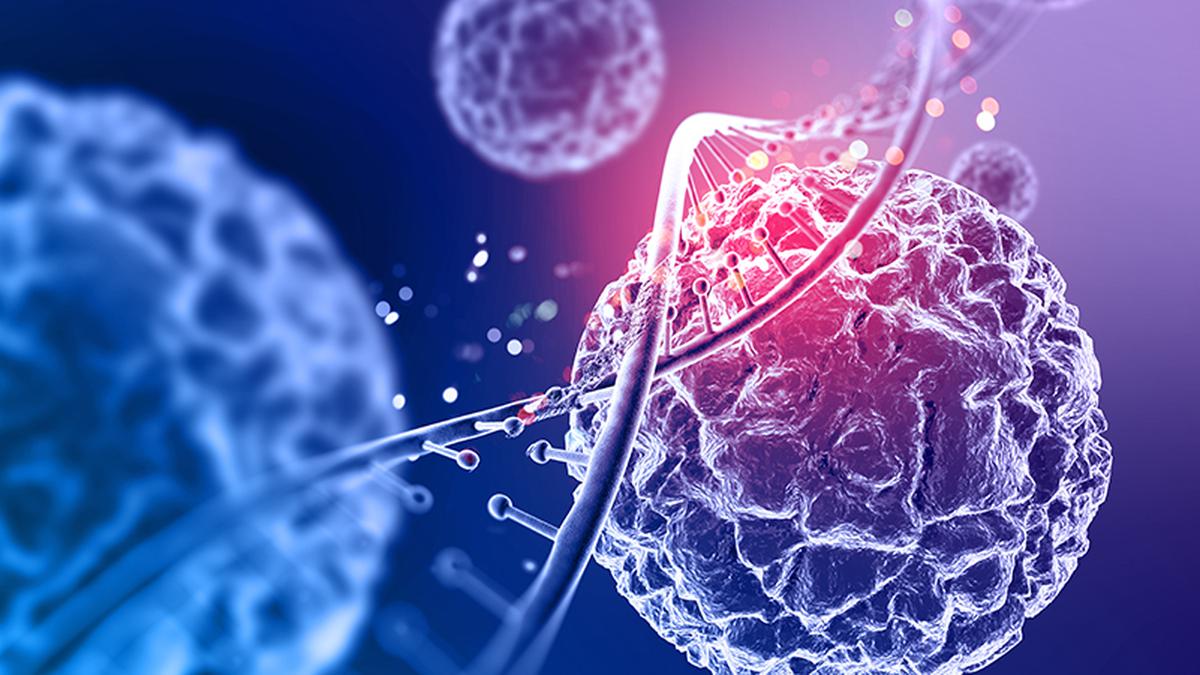
In the last few decades, scientists have finally learned to harness the immune system to successfully treat cancer. Image for Representation.
| Photo Credit: Freepik

In the last few decades, scientists have finally learned to harness the immune system to successfully treat cancer. Although doctors often use immunotherapy drugs, another type of treatment uses patient’s cells to treat their own cancers.

Car-T therapy, short for “chimeric antigen receptor T-cell”, is a cutting-edge treatment that reprogrammes a patient’s immune cells to fight their cancer. This innovative approach involves taking T-cells, a type of white blood cell that plays a crucial role in the immune system, from a patient and modifying them in a laboratory to better recognise and attack cancer cells.

These enhanced T-cells are then multiplied and infused back into the patient, where they seek out and destroy cancer cells. Lots of data shows that in difficult-to-treat lymphomas, a type of cancer, patients can do so well.

In November 2023, the US Food and Drug Administration (FDA) announced an investigation into this celebrated cancer treatment. They were looking into whether Car-T therapy might be causing new cancers in some patients who had undergone the treatment. This was a significant concern given the therapy’s reputation as a revolutionary cancer-fighting strategy.

Initially, the FDA mentioned that it had observed 20 cases where patients developed new immune-cell cancers, such as lymphomas or leukaemias, which are types of blood cell cancer, after receiving Car-T therapy. This prompted questions about who these patients were, how many such cases existed and what other treatments they might have received before Car-T therapy.

By March 2024, the FDA had documented 33 such cases among around 30,000 treated patients. Consequently, all Car-T therapies now carry a boxed warning about the potential risk of developing secondary cancers. The European Medicines Agency also started its own investigation into the matter.

Despite these concerns, it is still unclear whether the new cancers are directly caused by the Car-T cells or whether other factors are involved. It is also important to note that these cancers are very rare – as data published this month shows.

Many cancer treatments come with a risk of secondary malignancies and, of course, the cancer returning. And patients receiving Car-T therapy often have had several other treatments that could also contribute to the risk. Researchers are now working to determine if Car-T therapy is a contributing factor or the primary cause of these new cancers.

Car-T therapy was initially used for patients with no other treatment options, but it has since been approved as a second-line treatment for certain types of blood cancers, like lymphoma and multiple myeloma. Scientists are also exploring its potential for treating solid tumours including hard to treat brain cancers, autoimmune diseases, ageing, HIV and other conditions.

The process of creating Car-T cells involves using viruses to insert new genetic material into T-cells. These viruses, called retroviruses, are engineered to carry the gene for a chimeric antigen receptor (Car) into the T-cells.

Massive benefits

While these retroviruses are modified to be safe, there is always a risk that the new genetic material could disrupt other important genes and potentially lead to cancer – a phenomenon known as “insertional mutagenesis”. This means new genetic material is added to a cell.

This risk isn’t new. About 20 years ago, gene therapy treatments for severe combined immunodeficiency syndrome using similar retroviruses led to leukaemia in some patients. As a result, scientists have worked to improve the safety of these viral vectors. The FDA now requires thorough testing to ensure that the viruses used in Car-T therapy cannot replicate and cause harm.

Despite these findings, the most important thing to emphasise is that secondary cancers remain rare and these cell therapies can have massive benefits in very sick people.

The new review of patients treated with Car-T therapies at various centres found that only a small percentage developed secondary cancers, and most were not the type directly linked to the Car-T treatment. This suggests that while there is a risk, it is relatively low compared to the immediate threat posed by the patient’s existing cancer.

Medical professionals now inform patients about the potential but rare risk of secondary cancers when discussing Car-T therapy. For most patients, especially those with advanced cancers, the potential benefits of Car-T therapy far outweigh these risks.

As mentioned, Car-T therapy is also being investigated for other applications beyond cancer. For instance, it has shown promise in treating autoimmune diseases such as lupus and even in preventing organ transplant rejection. The potential uses for Car-T cells are continually expanding, offering hope for treating a wide range of diseases.

Ultimately, while the risk of secondary cancers from Car-T therapy is a serious consideration, the benefits for many patients are significant and far outweigh this small risk. Research will continue to refine these treatments and improve their safety.

This article is republished from The Conversation under a Creative Commons license. Read the original article.


Source link

Science Tags:Cancer, CAR-T cancer therapy, health, science news

Post navigation

Previous Post: Rush to return humans to the moon could threaten opportunities for astronomy
Next Post: Rupee falls 4 paise to close at 83.52 against U.S. dollar

Related Posts

  • General, central obesities linked to higher risk of colorectal cancer Science
  • Sprouting a sandalwood sapling – The Hindu Science
  • Platelets ‘can replicate benefits of exercise in brain’, shows study Science
  • Bird flu strain raises alarm as virus kills South American wildlife Science
  • New species of damselfly discovered in Kerala’s Ponmudi hills Science
  • Post-surgical infections more likely due to skin bacteria than hospital bugs, study finds Science

More Related Articles

Dogs understand more than they let on, create mental images of known words: Study Science
As the summer sun cranks up the temperature, it increases the risk of heatstroke. It’s not just about feeling uncomfortable; it’s about staying safe. Heatstroke can sneak up on anyone, but it poses a particular threat to kids and parents hustling through their summer adventures. Science
Science Quiz | The obscure mathematics of string theory Science
Why cooling earth by reflecting sunlight back isn’t a bright idea Science
Partial lunar eclipse to take place tonight Science
Agni-Prime Missile: New generation ballistic missile Agni-Prime successfully flight-tested Science
SiteLock

Archives

  • July 2024
  • June 2024
  • May 2024
  • April 2024
  • March 2024
  • February 2024
  • January 2024
  • December 2023
  • November 2023
  • October 2023
  • September 2023
  • August 2023
  • July 2023
  • June 2023
  • May 2023
  • April 2023
  • March 2023
  • February 2023
  • January 2023
  • December 2022
  • November 2022
  • October 2022
  • September 2022
  • August 2022
  • July 2022
  • June 2022
  • May 2022

Categories

  • Business
  • Nation
  • Science
  • Sports
  • World

Recent Posts

  • Saudi congratulates Iran’s new reformist President
  • Putin congratulates Iran’s new president, hopes for closer ties
  • Israeli Strike Kills 16 At UN School In Gaza Ahead Of Truce Talks
  • England Beat Switzerland On Penalties To Keep Euro 2024 Dream Alive
  • Char Dham Yatra Temporarily Halted Due To Heavy Rain Forecast In Uttarakhand

Recent Comments

  1. GkJwRWEAbS on UP Teacher Who Asked Students To Slap Muslim Classmate
  2. xreDavBVnbGqQA on UP Teacher Who Asked Students To Slap Muslim Classmate
  3. aANVRzfUdmyb on UP Teacher Who Asked Students To Slap Muslim Classmate
  4. YQCyszVBmIP on UP Teacher Who Asked Students To Slap Muslim Classmate
  5. aiXothgwe on UP Teacher Who Asked Students To Slap Muslim Classmate
  • “Did They Line It Up? Taking Longer Than…”: David Warner Reignites Cricket World Cup 2023 DRS Row Sports
  • IPL 2024: Will the fickle Bengaluru weather spoil the Kohli-Dhoni shoot-out? Sports
  • India Has Never Seen Wars On Issues Israel, Hamas Are Fighting: RSS Chief Mohan Bhagwat Nation
  • Hamas Fighters Comprise Almost Half Gaza’s Death Count: Benjamin Netanyahu World
  • Former Trump Aide Hope Hicks Testifies At Criminal Hush Money Trial World
  • 141 Cases Registered, 168 Arrested For Violence During Maratha Quota Protests Nation
  • Women’s Reservation Bill Incomplete Without OBC Quota: Ashok Gehlot Nation
  • 62-Year-Old Who Received First-Ever Pig Kidney Transplant Dies Nearly 2 Months Later World

Editor-in-Chief:
Mohammad Ariff,
MSW, MAJMC, BSW, DTL, CTS, CNM, CCR, CAL, RSL, ASOC.
editor@artifex.news

Associate Editors:
1. Zenellis R. Tuba,
zenelis@artifex.news
2. Haris Daniyel
daniyel@artifex.news

Photograher:
Rohan Das
rohan@artifex.news

Artifex.News offers Online Paid Internships to college students from India and Abroad. Interns will get a PRESS CARD and other online offers.
Send your CV (Subjectline: Paid Internship) to internship@artifex.news

Links:
Associate Journalism
About Us
Privacy Policy

News Links:
Breaking News
World
Nation
Sports
Business
Entertainment
Lifestyle

Registered Office:
72/A, Elliot Road, Kolkata - 700016
Tel: 033-22277777, 033-22172217
Email: office@artifex.news

Editorial Office / News Desk:
No. 13, Mezzanine Floor, Esplanade Metro Rail Station,
12 J. L. Nehru Road, Kolkata - 700069.
(Entry from Gate No. 5)
Tel: 033-46011099, 033-46046046
Email: editor@artifex.news

Copyright © 2023 Artifex.News Newsportal designed by Artifex Infotech.