



Skip to content
  • Facebook
  • X
  • Linkedin
  • WhatsApp
  • Associate Journalism
  • About Us
  • Privacy Policy
  • 033-46046046
  • editor@artifex.news
Artifex.News

Artifex.News

Stay Connected. Stay Informed.

  • Breaking News
  • World
  • Nation
  • Sports
  • Business
  • Science
  • Entertainment
  • Lifestyle
  • Toggle search form
  • He’s A Property Developer, For God’s Sake: Ex Advisor Jabs Trump World
  • Myanmar clashes stretch into second day World
  • The value of attributing extreme events to climate change | Explained Science
  • Convicted Of Rape, Ex-Brazil Star Dani Alves Freed On Bail For 1 Million Euros Sports
  • The Hindu Morning Digest, March 17, 2024 World
  • Akali Dal Faction Talks of Change, Wants Sukhbir Badal Out Nation
  • US Processes Record One Million Visa Applications In India This Year Nation
  • Man Strangles Business Partner In Delhi, Then Kills Self Nation

Does inequality lead to growth? | Explained

Posted on June 2, 2024 By admin


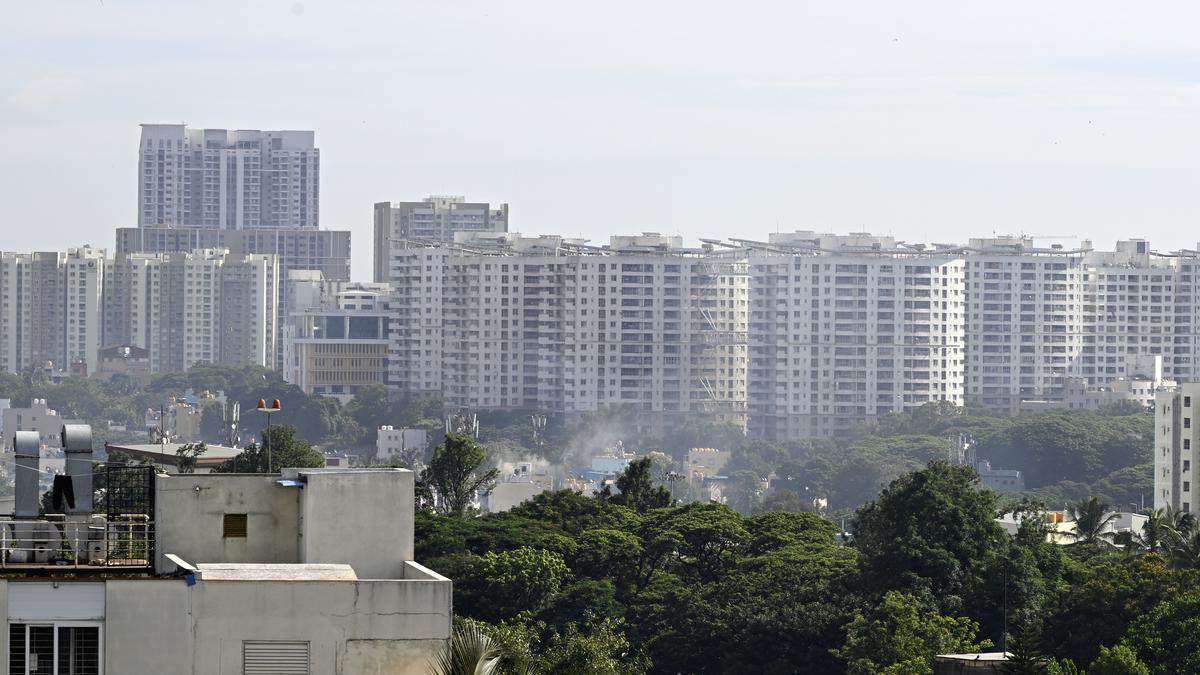
For representative purposes.
| Photo Credit: iStockphoto

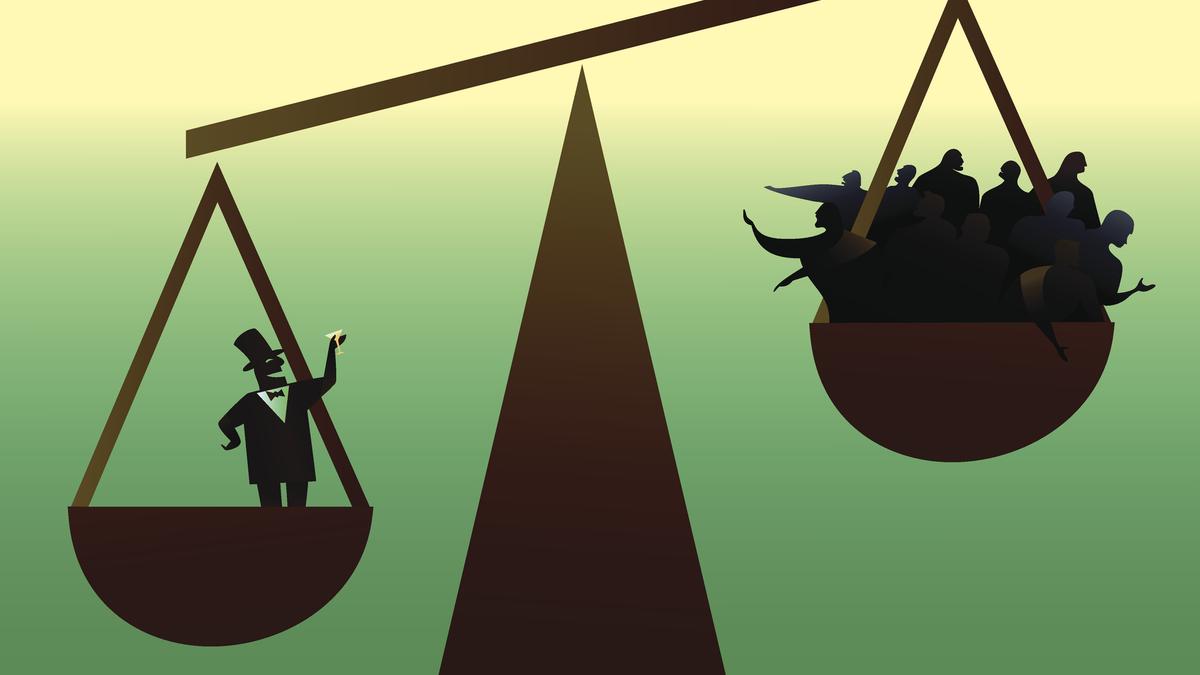
Rahul Gandhi’s statements regarding redistribution — and the polarising rebuttal of Prime Minister Narendra Modi — have brought the topic of inequality to the forefront. Researchers from the Paris School of Economics have shown inequality in modern India to be greater than colonial times.

Several argue that inequality harms democratic processes. Some inequality, others argue, is actually beneficial, since it acts as an incentive to entrepreneurs to start businesses, thereby increasing employment and welfare for others.

This view is mistaken, for inequality can have deleterious economic effects as well. Consider one form of inequality, that of concentration of monopoly power amongst capital relative to labour. This can have negative effects on consumption, welfare, and growth. If done properly, wealth taxes and distribution can have positive effects.

Monopoly power and consumption

Billionaires draw their wealth from monopoly. Their business groups are dominant players in their specific market. This allows them to set prices instead of being determined by the market. The extent of mark-ups above the cost of production is determined by their monopoly power. Thus, for any given level of money wages, real wages — which determine purchasing power — are lower in economies with strong monopolies.

These monopoly effects are currently being experienced as the cost-of-living crises affecting the developed economies. The phenomenon of “greedflation”, or companies raising prices to increase profit margins in the wake of multiple demand-and-supply shocks due to the pandemic, has been pointed to as contributing to high rates of inflation in the West. Textbook economics shows us that the profit-maximising level of output under a monopoly is less than under a competitive economy, implying a welfare loss. Thus, the presence of monopolies can lead to lower real wages and lower levels of output and investment.

Inequality and growth

Assume that a company decides to set up a new factory. Before the new capital stock is created, wages are paid out to workers to build it. The income of the workers is spent on purchasing goods, which increases the income of goods-sellers, whose increased income results in purchases of other goods, and so on. The total increase in the income of workers and goods-sellers is greater than the initial investment. This process is called the ‘multiplier’ effect, wherein investment raises incomes by a greater proportion than the initial investment.

When companies exercise market power, mark-ups and prices will be higher. Real wages of workers are lower, and they can only purchase lesser items. However companies, because of higher margins, will enjoy the same amount of profits from the sale of a lesser amount of goods. The increase in income from a given amount of investment will be lesser under monopoly because of reduced consumption power. Thus, investment will have a weaker effect on growth under monopoly while not affecting profits.

One can argue that consumption of the rich can help boost growth. While the absolute amount of consumption of the rich is more, they consume a smaller proportion of their incomes. The multiplier process depends on the proportion of consumption from incomes. An unequal economy will put lesser incomes in the hands of those with a greater propensity to consume, leading to weaker expansion in the economy.

Redistribution and growth

Some argue that the ‘cure’ of redistribution can prove more harmful than the disease of inequality by affecting job creation. Entrepreneurs would see reduced incentives for amassing wealth under a high-tax regime, resulting in a scale-back of investment and jobs.

One must make a distinction between wealth and profits. Investment occurs under the influence of future profit expectations, while wealth is accumulated past profits. As the Polish economist Michal Kalecki argued, taxes on wealth would not affect investment since it leaves expectations of future profits unchanged. For example, taxing Gautam Adani’s wealth will not affect investment since expected profits from airports depends on the demand for air-travel which is independent of the value of his wealth.

No doubt, the difficulty in converting profits into wealth may deter some business-owners from undertaking investment. But an economy with high expectations of profit would ensure businesses invest even if wealth is taxed. Redistribution can generate forces to spur growth even if some billionaires pull back on investment. For one, if wealth is redistributed and increases income, the multiplier process would become stronger. Businesses would be more willing to invest where purchasing power is strong. If monopolies are curtailed, then prices would be lower and real wages higher, leading to greater demand.

Consider Thomas Piketty’s proposal of taxing billionaire wealth and providing basic income. This might cause some to exit the economy, but can create a new class of entrepreneurs who can create start-ups, freed from the necessity of working for wages. Redistribution is not a silver bullet, and too high a rate of taxation can become a net drain on an economy. Used in conjunction with other policy measures, curtailing inequality can lead to a healthier economy.

Source link

Business Tags:Inequality, inequality monopoly power, inequality report Paris School of Economics, redistribution rahul gandhi

Post navigation

Previous Post: On Camera, Two Planes Collide At Portugal Beja Air Show, Pilot Dead: Report
Next Post: Tonga volcano could cause unusual weather for rest of decade: study

Related Posts

  • Petrol, diesel sales fall in August as rains ebb demand Business
  • Vijay Shekhar Sharma steps down as Paytm Payments Bank Limited chairman, bank’s board reconstituted Business
  • Air India Express To Induct 50 New Boeing 737 MAX Planes By December 2024 Business
  • Spectrum auction to start from May 20 Business
  • Debt, fiscal challenges facing low-income countries worry IMF Business
  • Markets tumble in early trade on weak trends from global equities, fresh foreign fund outflows Business

More Related Articles

Markets bounce back on fag-end buying in RIL, ITC Business
Stock markets snap six-day rally; Sensex slumps over 400 points Business
Ambuja Cements Sees Q2 Profit Of Nearly Rs 1,000 Crore Business
The Competition Regulator’s latest addition to the ‘whisteblower’ mechanism to trace cartels | Explained Business
Rupee falls 3 paise to 83.48 against U.S. dollar in early trade Business
PM’s Economic Advisory Council chief Bibek Debroy pitches for a review of India’s official poverty line Business
SiteLock

Archives

  • July 2024
  • June 2024
  • May 2024
  • April 2024
  • March 2024
  • February 2024
  • January 2024
  • December 2023
  • November 2023
  • October 2023
  • September 2023
  • August 2023
  • July 2023
  • June 2023
  • May 2023
  • April 2023
  • March 2023
  • February 2023
  • January 2023
  • December 2022
  • November 2022
  • October 2022
  • September 2022
  • August 2022
  • July 2022
  • June 2022
  • May 2022

Categories

  • Business
  • Nation
  • Science
  • Sports
  • World

Recent Posts

  • In Mongolia, young leaders seek to usher in new dawn of democracy
  • MK Stalin Reacts To BSP Tamil Nadu Chief’s Murder, Cops Arrest 8 Suspects
  • Telugu Actor Raj Tarun Accused Of Cheating By Live-In Partner, Drugs Angle In His Defence
  • “Was It Yuzvendra Chahal’s Idea?”: PM Narendra Modi’s Quip On T20 World Cup Final Celebration Goes Viral – Watch
  • PCB Chief Mohsin Naqvi’s Huge Remark On Chances Of India-Pakistan Series

Recent Comments

  1. GkJwRWEAbS on UP Teacher Who Asked Students To Slap Muslim Classmate
  2. xreDavBVnbGqQA on UP Teacher Who Asked Students To Slap Muslim Classmate
  3. aANVRzfUdmyb on UP Teacher Who Asked Students To Slap Muslim Classmate
  4. YQCyszVBmIP on UP Teacher Who Asked Students To Slap Muslim Classmate
  5. aiXothgwe on UP Teacher Who Asked Students To Slap Muslim Classmate
  • U.S., U.K. accuse China of state-backed cyberattacks, voter data theft World
  • Chinese police detain wealth management staff at the heavily indebted developer Evergrande World
  • Shaheen Afridi Sets World Record With Fiery Spell In Cricket World Cup Match vs Bangladesh. Watch Sports
  • How a climate-proofed MSME sector can drive Tamil Nadu’s EV leadership Business
  • Kerala Catholic Priest Suspended From Vicar Duty Hours After Joining BJP Nation
  • Top US Doctor Calls For “Warning Labels” On Social Media. Here’s Why World
  • Chinese woman arrested at Nepal border for illegal entry World
  • Ireland To Tour Pakistan For White-Ball Series In 2025 For First Time Sports

Editor-in-Chief:
Mohammad Ariff,
MSW, MAJMC, BSW, DTL, CTS, CNM, CCR, CAL, RSL, ASOC.
editor@artifex.news

Associate Editors:
1. Zenellis R. Tuba,
zenelis@artifex.news
2. Haris Daniyel
daniyel@artifex.news

Photograher:
Rohan Das
rohan@artifex.news

Artifex.News offers Online Paid Internships to college students from India and Abroad. Interns will get a PRESS CARD and other online offers.
Send your CV (Subjectline: Paid Internship) to internship@artifex.news

Links:
Associate Journalism
About Us
Privacy Policy

News Links:
Breaking News
World
Nation
Sports
Business
Entertainment
Lifestyle

Registered Office:
72/A, Elliot Road, Kolkata - 700016
Tel: 033-22277777, 033-22172217
Email: office@artifex.news

Editorial Office / News Desk:
No. 13, Mezzanine Floor, Esplanade Metro Rail Station,
12 J. L. Nehru Road, Kolkata - 700069.
(Entry from Gate No. 5)
Tel: 033-46011099, 033-46046046
Email: editor@artifex.news

Copyright © 2023 Artifex.News Newsportal designed by Artifex Infotech.