





Skip to content
  • Facebook
  • X
  • Linkedin
  • WhatsApp
  • Associate Journalism
  • About Us
  • Privacy Policy
  • 033-46046046
  • editor@artifex.news
Artifex.News

Artifex.News

Stay Connected. Stay Informed.

  • Breaking News
  • World
  • Nation
  • Sports
  • Business
  • Science
  • Entertainment
  • Lifestyle
  • Toggle search form
  • Kicked Doors, Dragged His Wife, Kuki Group ITLF Condemns Attack On Key Member Muan Tombing House In Manipur Nation
  • Rahul Gandhi To Get Police Summons Over Clash During Yatra: Himanta Biswa Sarma Nation
  • Israel’s “Most Intense” Strikes On Gaza, Hamas Says Fired Rockets: 10 Facts World
  • EU plans to fast-track some financial aid to Egypt, without the usual safeguards World
  • Hamas Hardening Hostage Deal Stance To “Inflame Region” In Ramadan: Israel World
  • “I’ve Been On The Opposition When He…”: Steve Smith On Virat Kohli’s T20 World Cup Selection Sports
  • IPL-17 countdown | Dhawan’s Punjab Kings will be eager to shrug off ‘underachiever’ tag this time around Sports
  • France imposes emergency in Pacific territory of New Caledonia as violent unrest turns deadly World

How does water get inside a coconut?

Posted on May 23, 2024 By admin


Coconut trees (like many other plants) get water from the ground through their roots.
| Photo Credit: Freepik

Water is a fundamental element for the sustenance of life, and in the case of coconuts, it plays a vital role in their growth and development.

Anatomy of coconut

Designed to thrive in harsh environments, the coconut has a structure that safeguards its precious cargo – the seed – and facilitates its growth under varying conditions.
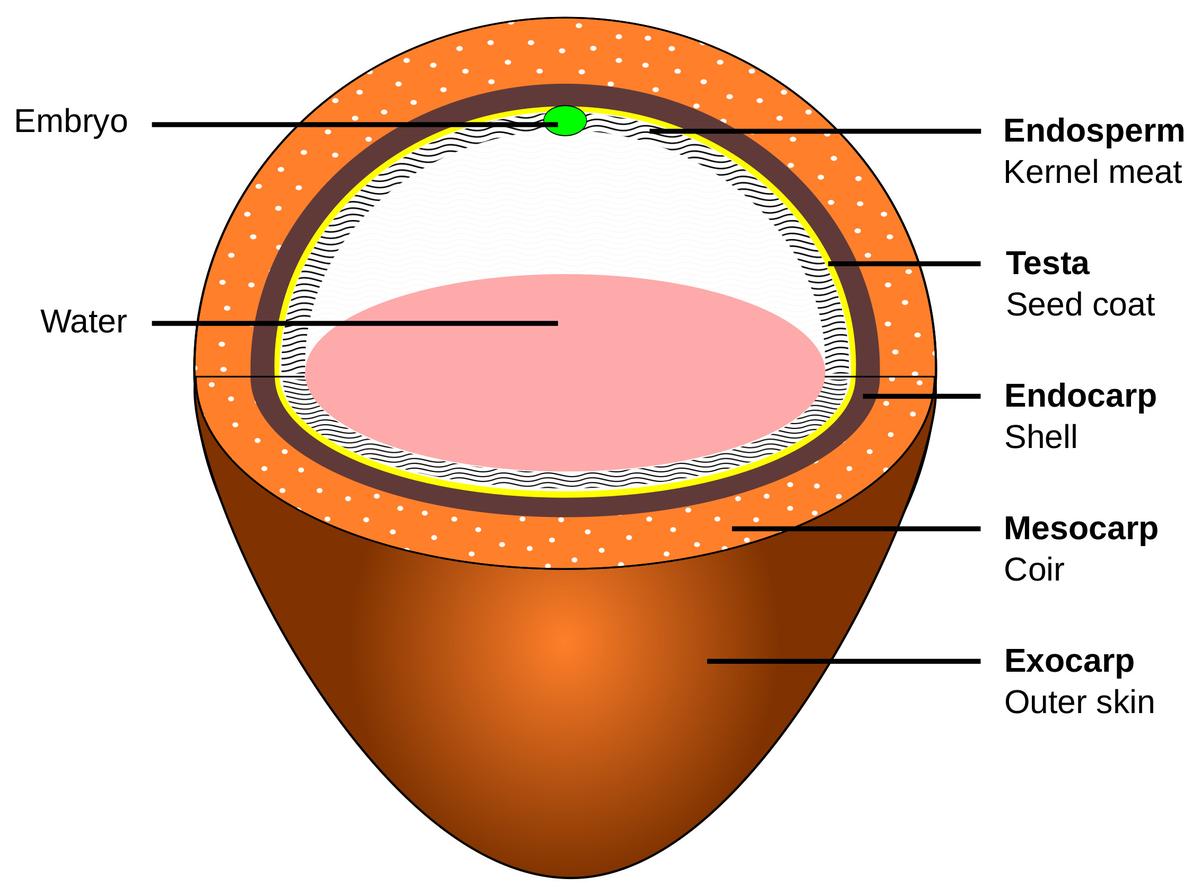
Coconut’s tough exterior: The coconut has a strong outer layer called the husk. It protects the coconut from damage and stops water from evaporating.

Layers inside: Beneath the husk, there are three layers. The outer layer, called the exocarp, is tough and keeps the coconut safe from the weather. It also stops water from escaping.

Natural water storage: Below the exocarp is the mesocarp, which is fleshy and fibrous. It stores water like a sponge, keeping the coconut hydrated.

Protection for the seed: The innermost layer, called the endocarp, is hard and keeps the seed safe. It makes sure the seed doesn’t lose too much water, so it can grow into a coconut tree.

These layers work together to protect the coconut. The husk guards against damage, the exocarp gives structure, the mesocarp stores water, and the endocarp keeps the seed safe. This teamwork helps the coconut survive in different environments.

The roots of the coconut tree function like a vast network of tiny straws, penetrating deep into the soil to absorb water and essential minerals. This process resembles millions of efficient sponges, ensuring a continuous and reliable water supply to sustain the entire palm, even as it grows to towering heights.

But how does this absorbed water travel all the way up?

It is facilitated by a process called osmosis. It is like a microscopic tug-of-war between water molecules and dissolved substances.

Within the roots, water molecules move from areas with more dissolved substances (outside, in the soil) to areas with less (inside the roots). This creates a gentle pressure that pushes the water upwards, defying gravity and reaching the upper parts of the palm.

Tiny gateways

The coconut’s surface also plays a vital role

Microscopic gateways: Scattered across the shell are tiny pores invisible to the naked eye. These pores act as crucial gateways for water entry and exchange.

Osmosis: These pores allow for osmosis to occur on the coconut’s exterior. Water vapour or moisture in the environment diffuses through these pores, entering the coconut’s interior.

More than just water: The pores also allow rainwater and dew to seep into the fruit, further supplementing its water reserves.

Breathing easy: These pores aren’t just for water. They also facilitate gas exchange, ensuring oxygen enters the coconut and allowing for essential respiration processes for the developing embryo within. This gas exchange helps maintain optimal conditions for the coconut’s growth and development.

Adapting to survive

Through this combination of a powerful root system, the magic of osmosis, and the presence of tiny pores, the coconut thrives even in environments with fluctuating water availability. These features work together to ensure the coconut’s continued growth and vitality.

Highway to the husk

Imagine a water elevator powered by sunshine! Tiny tubes called xylem act like this, defying gravity to transport water absorbed by the roots all the way up the tall palm tree.

Transformation station

Inside a developing coconut, a special liquid called the endosperm provides vital nourishment for the growing embryo.

From liquid to refreshment

As the coconut matures, the endosperm transforms. Part of it hardens into the white coconut flesh (copra), while the remaining liquid becomes the refreshing coconut water we enjoy.




Source link

Science

Post navigation

Previous Post: Disney strikes deal to sell stake in India’s Tata Play: report
Next Post: IPL Eliminator | RCB’s Dinesh Karthik receives guard of honour after defeat to RR, hinting it could be his last IPL game

Related Posts

  • How will AlphaFold 3 change life sciences research? Science
  • Starless and forever alone: more ‘rogue’ planets discovered Science
  • Blue whales make comeback near the Seychelles after 60 years Science
  • ISRO chief Somnath says space agency prefers woman fighter test pilots for its crewed mission, possible in future Science
  • VELC payload aboard Aditya-L1 will send 1,440 images of sun in a day Science
  • The Science Quiz | The solar cycle Science

More Related Articles

In snake genes, study finds they evolved 3x faster than other reptiles Science
Academics warn new science papers are being generated with AI chatbots Science
The price of Kim Kardashian’s Met Gala corset look? Guts, lungs, heart Science
What will Gaganyaan change for India? | Explained Science
New fabric makes urban heat islands more bearable Science
Sci-Five | The Hindu Science Quiz: On Penguins Science
SiteLock

Archives

  • July 2024
  • June 2024
  • May 2024
  • April 2024
  • March 2024
  • February 2024
  • January 2024
  • December 2023
  • November 2023
  • October 2023
  • September 2023
  • August 2023
  • July 2023
  • June 2023
  • May 2023
  • April 2023
  • March 2023
  • February 2023
  • January 2023
  • December 2022
  • November 2022
  • October 2022
  • September 2022
  • August 2022
  • July 2022
  • June 2022
  • May 2022

Categories

  • Business
  • Nation
  • Science
  • Sports
  • World

Recent Posts

  • Saudi Airlines flight catches fire during landing at Peshawar airport; 297 escape unhurt
  • Chief Justice DY Chandrachud To Centre
  • Fliers Slide Down Plane After Its Landing Gear Catches Fire In Pak
  • CBI Arrests ‘Rocky’, Alleged Mastermind In NEET-UG Paper Leak Case
  • First Time In History: India Achieve Mammoth Feat With Win Over Zimbabwe

Recent Comments

  1. ywdVpqHiNZCtUDcl on UP Teacher Who Asked Students To Slap Muslim Classmate
  2. bRstIalYyjkCUJqm on UP Teacher Who Asked Students To Slap Muslim Classmate
  3. GkJwRWEAbS on UP Teacher Who Asked Students To Slap Muslim Classmate
  4. xreDavBVnbGqQA on UP Teacher Who Asked Students To Slap Muslim Classmate
  5. aANVRzfUdmyb on UP Teacher Who Asked Students To Slap Muslim Classmate
  • “It’s Not Just Cricket That Guys Are Playing For”: Afghanistan Coach Jonathan Trott After Win Over England Sports
  • 10 Migrants Killed, 17 Injured After Speeding Truck Overturns In Mexico World
  • Feature: The Storyline Behind Lewis Hamilton’s Romantic British Grand Prix Win Sports
  • IPL-17 | After twin defeats, Ruturaj Gaikwad faces first real test as Chennai Super Kings skipper Sports
  • Player Gives Tribute To Shikhar Dhawan After Taking Sensational Catch In Bengal Pro League. Watch Sports
  • “Couldn’t Get Many Games At SRH”: Shashank Singh After Match-Winning Knock For PBKS Sports
  • Afghanistan vs Bangladesh LIVE Streaming T20 World Cup 2024 Super Eight Live Telecast: Where To Watch Match Live Sports
  • People don’t think commentators can be good cricketers, but I’ve done what I have done, says Dinesh Karthik Sports

Editor-in-Chief:
Mohammad Ariff,
MSW, MAJMC, BSW, DTL, CTS, CNM, CCR, CAL, RSL, ASOC.
editor@artifex.news

Associate Editors:
1. Zenellis R. Tuba,
zenelis@artifex.news
2. Haris Daniyel
daniyel@artifex.news

Photograher:
Rohan Das
rohan@artifex.news

Artifex.News offers Online Paid Internships to college students from India and Abroad. Interns will get a PRESS CARD and other online offers.
Send your CV (Subjectline: Paid Internship) to internship@artifex.news

Links:
Associate Journalism
About Us
Privacy Policy

News Links:
Breaking News
World
Nation
Sports
Business
Entertainment
Lifestyle

Registered Office:
72/A, Elliot Road, Kolkata - 700016
Tel: 033-22277777, 033-22172217
Email: office@artifex.news

Editorial Office / News Desk:
No. 13, Mezzanine Floor, Esplanade Metro Rail Station,
12 J. L. Nehru Road, Kolkata - 700069.
(Entry from Gate No. 5)
Tel: 033-46011099, 033-46046046
Email: editor@artifex.news

Copyright © 2023 Artifex.News Newsportal designed by Artifex Infotech.