






The story so far: Over centuries, treaties, agreements and handshakes have been used by leaders globally to create ties. However, amid serious world politics, there is an odd yet effective diplomatic tool known as animal diplomacy. In a recent development, Malaysia, the world’s second-largest palm oil producer is aiming to improve its environmental image by putting forward the “orangutan diplomacy”.
They plan to give orangutans to the countries that purchase their palm oil. This gesture aims to show Malaysia’s concern for the endangered apes, whose habitats are often destroyed by palm oil plantations. Inspired by China’s “panda diplomacy,” Malaysia hopes this move will ease global concerns about the environmental impact of palm oil production. This unconventional yet effective strategy speaks volumes about the power of cultural exchange in shaping global politics.
What is animal diplomacy and how does it work?
Animal diplomacy involves giving or lending animals as a sign of friendship or goodwill between countries. These creatures possess cultural significance or are indigenous to the country that gifts them, hence making them influential instruments for diplomacy. For example, China’s panda diplomacy can be traced back to the Tang Dynasty when emperors gave away pandas to foreign rulers as symbols of peace and cooperation. Consequently, the receiving state usually agrees to protect such species beside this thereby furthering harmonisation between nations.
What does history say about animal diplomacy?
The first recorded instances of animal diplomacy can be traced to ancient civilisations. In exchange, pharaohs gave other rulers rare animals to show off their wealth and power. Notable among these was Pharaoh Hatshepsut who sent a giraffe as a present to the King of Syria around 1500 BC.
Read | A case of animal diplomacy
During the middle ages and renaissance periods, European kings frequently exchanged animals such as lions and tigers in order to show their authority over nature. These majestic beasts were symbols of mightiness and grandeur, which could only be preserved for the wealthy class.
In old times, a lion as a gift was regarded as both an emblem of royal favour and strength. Monarchs would give lions away to foreign leaders as a display of friendship and loyalty; this showed how powerful they were. Preserved in menagerie or belonging to royal collections, these regal creatures demonstrated diplomatic success; hence, they were viewed with respect as trophies living that embodied honorifics symbols for esteem or authoritativeness.
As a matter of fact, for many years now, elephants were given the highest recognition levels in Asia for their wisdom, strength and good luck. The mighty creatures were presented by kings to their foreign counterparts as a sign of deference and solidarity, during which time the elephants would act as messengers between these countries.
Why is China famous for its animal diplomacy?
Animal diplomacy originated from China back then and it was majorly associated with the giant panda. This was when they started giving these cute animals to other countries during the Tang Dynasty (618-907 AD). China has retained giving them away as gifts which are deemed to symbolise peace and friendship.
In November 2023, after a key meeting held between President Xi Jinping and his U.S. counterpart Joe Biden, signs emerged of a significant diplomatic move: the revival of China’s famed panda diplomacy. Mr. Xi hinted at the possibility of resuming panda exchanges with the United States, marking a potential thaw in bilateral relations.
China is gearing up to renew its panda diplomacy efforts, with plans to loan a pair of giant pandas to the San Diego Zoo. The China Wildlife Conservation Authority has signed cooperation agreements not only with San Diego but also with Madrid, Spain. Discussions are ongoing with zoos in Washington D.C. and Vienna, Austria, signalling broader outreach in China’s diplomatic animal exchange programme, according to China’s Xinhua News Agency. If the permits are approved, the pandas could be in the San Diego Zoo before the end of summer.
What is the orangutan diplomacy in Malaysia?
Following the Chinese model of “panda diplomacy,” Malaysia has come up with its own approach to the soft power which it describes as “orangutan diplomacy.” The goal of this strategy is to link other countries together by using orangutan conservation efforts for environmental issues.
Malaysia, the second largest producer of palm oil in the world, receives criticism due to deforestation caused by palm oil plantations that are a major threat to endangered orangutans. Orangutan diplomacy seeks to reverse this trend. In an attempt to project itself as a pacesetter on wildlife protection, Malaysia aims to meet at least three objectives: It wants to enhance its image by becoming a champion of various things connected with wild animal protection; it wants to encourage sustainable production of palm oil and it wants to work jointly with other countries on saving orangutans.
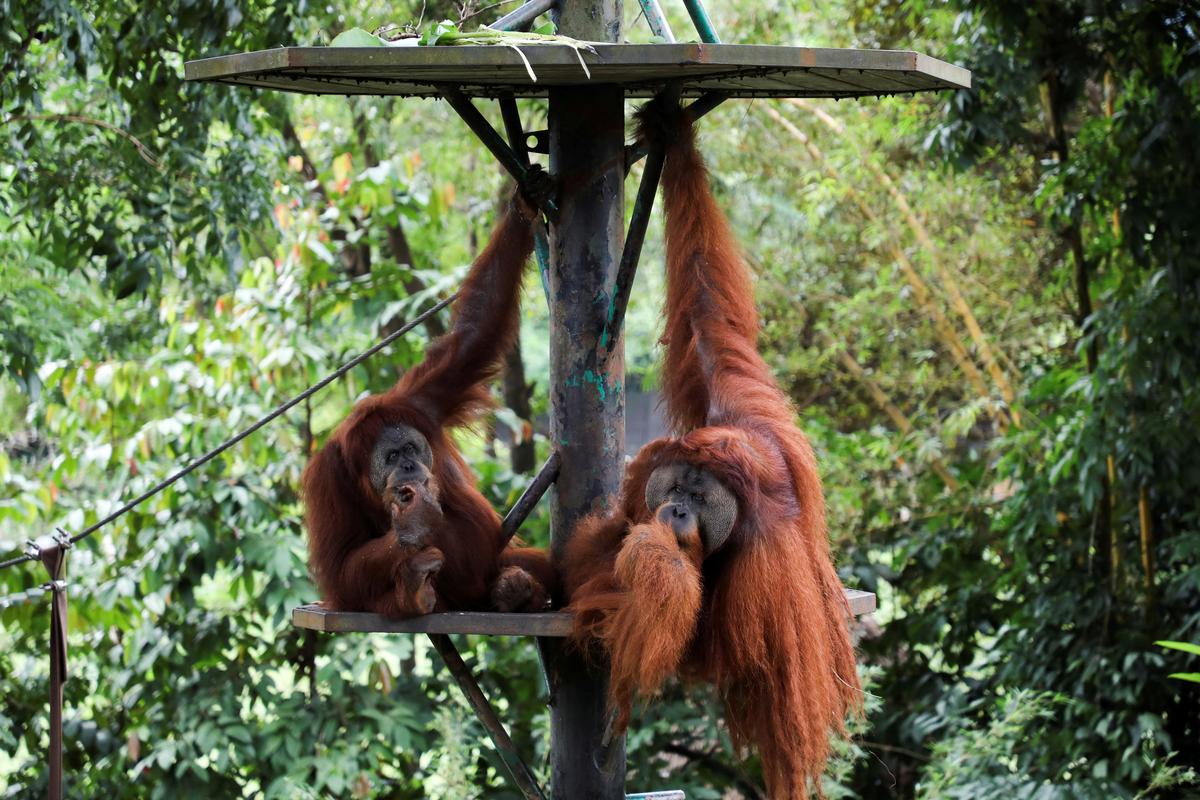
Orangutans are pictured at the National Zoo in Kuala Lumpur, Malaysia.
| Photo Credit:
REUTERS
This plan suggests allocating orangutans from main importers of palm oil like China, India and the EU. This approach therefore rests upon two basic factors: its endearing character and symbolic significance as to how orangutans represent the rich biodiversity of Malaysia’s rainforests, highlighting the environmental damage caused by unsustainable practices.
Which other countries are involved?
In the year 2014, when heads of various countries met in Brisbane, Australia, for a G20 Summit, a different kind of diplomacy took place. The kangaroo diplomacy made use of Australia’s natural environment that is full of diverse species of flora and fauna including koalas.
As the summit’s host nation, Australia ensured that it left a lasting impression on the visiting dignitaries and delegates by deploying its irresistible attraction; koalas. These cuddly animal ambassadors became unexpected symbols of the country’s warm welcome to guests as well as good stewards of nature in whom they were embodying its commitment to conservation and sustainability.
Read |Down to its last panda, Mexico ponders what could come next
Throughout the conference period, there was a flood of images showing leaders from across the world holding koalas, while interacting with other Australian iconic creatures saturated media capturing both attention and headlines. It was amazing to see Barack Obama, the then President of the U.S. or Vladimir Putin of Russia couldn’t resist touching these cute creatures from Down Under.
However, koala diplomacy can be considered more than just an opportunity for photo shoots therefore it functioned as an instrumentality for power projection through soft means. By flaunting its unique wildlife coupled with environmental policies, which are globally oriented, this country revealed its solidarity in any worldwide partnership on environmental matters
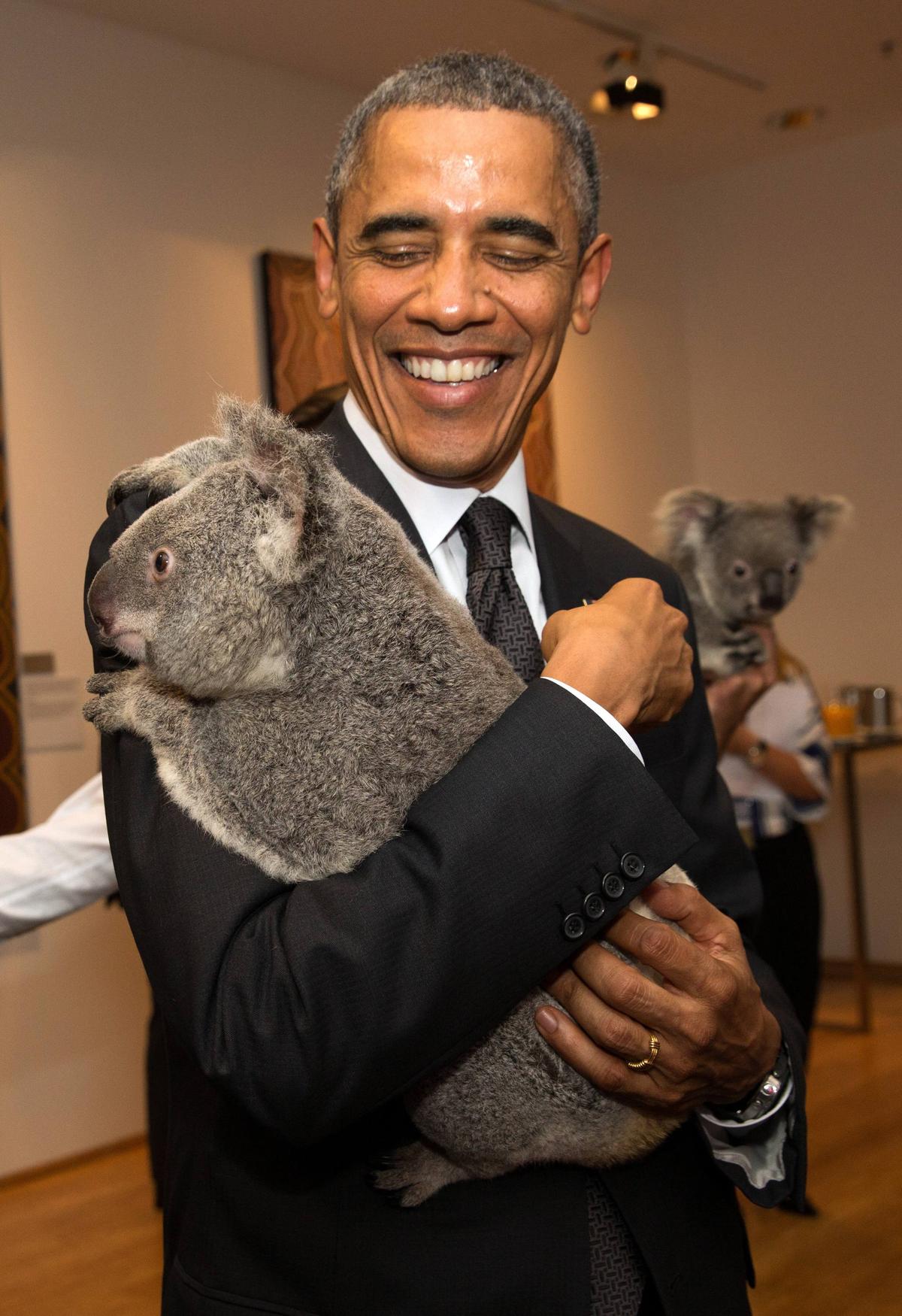
U.S. President Barack Obama holds a koala before the G20 Leaders’ Summit in Brisbane.
| Photo Credit:
REUTERS
The koala’s presence at the G20 summit has sparked debates about conservation of biodiversity and the need to safeguard vulnerable ecosystems. Koalas were helpful in raising discussions on pertinent environmental issues, thus emphasising the urgency of united efforts aimed at securing tomorrow’s world. Ultimately, the 2014 G20 Summit was a practical example that proved how animal ambassadors can change international relations towards sustainable development and cooperation.
Also Read: As wildlife diplomacy takes wing, government considers Sri Lankan proposal for translocating gaurs
There were other examples as well. The gifting of elephants, which are majestic creatures representing strength and loyalty, has remained part of Thai diplomacy for ages. Turkmenistan uses its invaluable Akhal-Teke horses known for being fast as diplomatic gifts.
What the future might hold?
There are prospects for future collaboration and cooperation between countries in animal diplomacy that can rise above the traditional geopolitical borders with a purpose to protect nature and enhance international understanding.
These nations could work together on conservation projects related to their ambassador animals. This brings about a shared responsibility for the welfare of the creatures and strengthens the diplomatic bonds formed around them. It is not only traditional players who can use animal diplomacy. Some small countries having unique endangered species might maybe use this method as well. For example, a poor country having critically endangered primates may collaborate with richer ones’ zoos so as to create breeding programs and research, which will help educate people internationally.
Animal diplomacy has the potential to move beyond feel-good tactics by focusing on collaborative efforts in conservation while at the same time allowing room for new players thus becoming an instrument of fostering international cooperation on pressing environmental concerns.