


Skip to content
  • Facebook
  • X
  • Linkedin
  • WhatsApp
  • YouTube
  • Associate Journalism
  • About Us
  • Privacy Policy
  • 033-46046046
  • editor@artifex.news
Artifex.News

Artifex.News

Stay Connected. Stay Informed.

  • Breaking News
  • World
  • Nation
  • Sports
  • Business
  • Science
  • Entertainment
  • Lifestyle
  • Toggle search form
  • Cricketers to get best rooms at Asian Games, says Japan chief
    Cricketers to get best rooms at Asian Games, says Japan chief Sports
  • NSCN-IM using Naga-Kuki tensions to divert attention, say Kuki-Zo insurgent groups
    NSCN-IM using Naga-Kuki tensions to divert attention, say Kuki-Zo insurgent groups Nation
  • Rafael Nadal Won’t ‘100 Per Cent Close Door’ On ‘Magical’ French Open
    Rafael Nadal Won’t ‘100 Per Cent Close Door’ On ‘Magical’ French Open Sports
  • What New Proposals Did Trump Make During His Economic Speech?
    What New Proposals Did Trump Make During His Economic Speech? World
  • AI, ChatGPT, Social Media Can Worsen The Climate Crisis, Researchers Say
    AI, ChatGPT, Social Media Can Worsen The Climate Crisis, Researchers Say World
  • Greenland issue LIVE: Trump says Europe will not ‘push back too much’ on his bid
    Greenland issue LIVE: Trump says Europe will not ‘push back too much’ on his bid World
  • Watch: Japan’s PM Takaichi in India: Indo-Pacific Ties in Focus | Above the Fold | 01.07.2026
    Watch: Japan’s PM Takaichi in India: Indo-Pacific Ties in Focus | Above the Fold | 01.07.2026 World
  • “Congress Ruled For A Long Time But…”: JP Nadda In Rajasthan
    “Congress Ruled For A Long Time But…”: JP Nadda In Rajasthan Nation
Climate change is causing marine ‘coldwaves’ too, killing wildlife

Climate change is causing marine ‘coldwaves’ too, killing wildlife

Posted on April 16, 2024 By admin


The effects of ocean warming are profound and well-documented. But sometimes changes in the patterns of winds and ocean currents cause seawater to suddenly cool, instead.

Surface temperatures can plummet rapidly — by 10ºC or more over a day or two. When these conditions persist for several days or weeks, the area experiences a “coldwave”, which is the opposite of more familiar marine heatwaves.

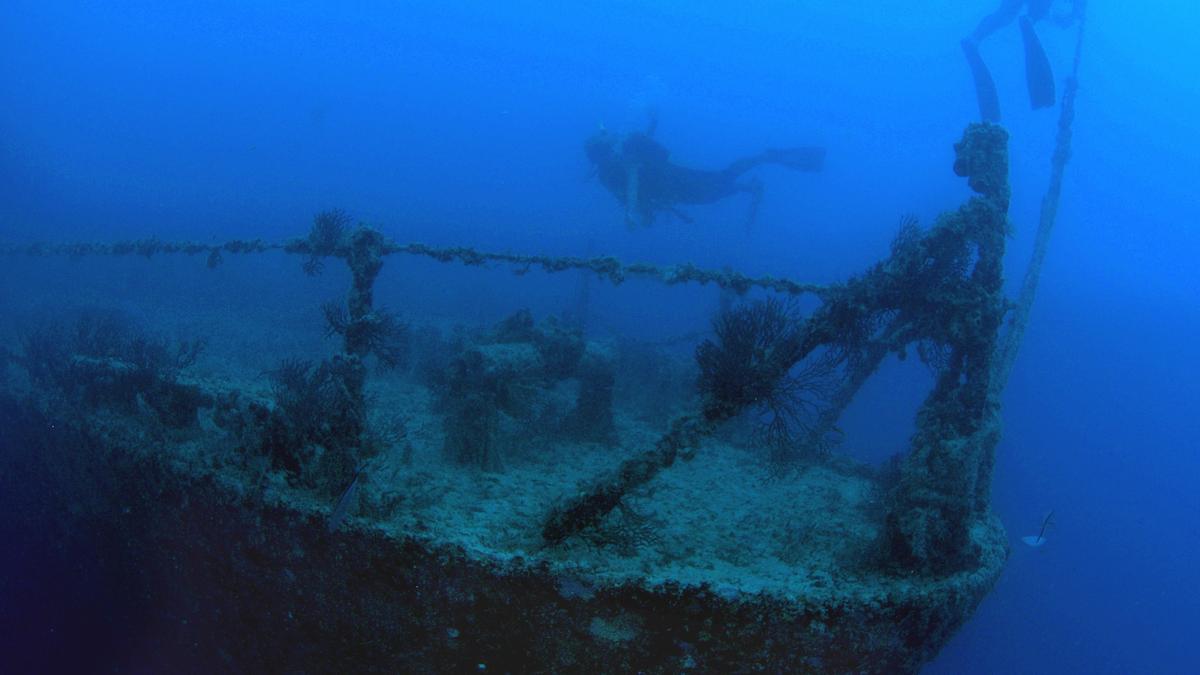
When a “killer coldwave” manifested along South Africa’s southeast coast in March 2021, it killed hundreds of animals across at least 81 species. More worrying still was the fact these deaths included vulnerable manta rays and even specimens of notoriously robust migratory bull sharks. In southern Africa, bull sharks, whale sharks and manta rays have previously washed up dead following such sudden cold events, especially over the past 15 years.

As we report in Nature Climate Change, the conditions that can drive these killer coldwaves have grown increasingly common over the past four decades. Ironically, strengthening winds and currents as a result of climate change can also make these deadly localised coldwaves more likely in places such as the east coasts of South Africa and Australia, potentially putting even highly mobile species such as sharks in harm’s way.

What’s going on?

Certain wind and current conditions can cause the sea surface to cool, rather than warm. This happens when winds and currents force coastal waters to move offshore, which are then replaced from below by cold water from the deep ocean. This process is known as upwelling.

In some places, such as California on the US west coast, upwelling happens regularly along hundreds of kilometres of coastline. But localised upwelling can occur seasonally on a smaller scale, too, often at the edges of bays on the east coasts of continents due to interactions of wind, current and coastline.

Previous research had shown climate change induced changes in global wind and current patterns. So we investigated the potential consequences at particular locations, by analysing long-term wind and temperature data along the south-eastern coast of South Africa and the Australian east coast.

This revealed an increasing trend in the number of annual upwelling events over the past 40 years. We also found an increase in the intensity of such upwelling events and the extent to which temperatures dropped on the first day of each event – in other words, how severe and sudden these cold snaps were.

Mass deaths warrant investigation

During the extreme upwelling event along the southeast coast of South Africa in March 2021, at least 260 animals from 81 species died. These included tropical fish, sharks and rays.

To investigate the ramifications for marine fauna, we took a closer look at bull sharks. We tagged sharks with tracking devices that also record depth and temperature.

Bull sharks are a highly migratory, tropical species that only tend to travel to upwelling regions during the warmer months. With the onset of winter, they migrate back to warm, tropical waters.

Being mobile, they should have been able to avoid the local, cold temperatures. So why were bull sharks among the dead in this extreme upwelling event?

When running and hiding isn’t enough

Bull sharks survive environmental conditions that would kill most other marine life. For example, they’re often found several hundred kilometres up rivers, where other marine life would not venture.

Our shark tracking data from both South Africa and Australia showed bull sharks actively avoid areas of upwelling during their seasonal migrations up and down the coast, even when upwelling isn’t too intense. Some sharks take shelter in warm, shallow bays until the water warms again. Others stick close to the surface where the water is warmest, and swim as fast as they can to get out of the upwelling.

But if marine coldwaves continue to become more sudden and intense, fleeing or hiding may no longer be enough even for these tough beasts. For example, in the event in South Africa that caused the death of manta rays and bull sharks water temperatures dropped from 21°C to 11.8°C in under 24 hours while the overall event lasted seven days.

This sudden, severe drop paired with the long duration made this event particularly deadly. If future events will continue to become more severe, mass deaths of marine life could become a more common sight – especially along the world’s mid-latitude east coasts.

Still learning how climate change will play out

Overall, our oceans are warming. The ranges of tropical and subtropical species are extending towards the poles. But along some major current systems, sudden short-term cooling can make life difficult for these climate migrants, or even kill them. Especially if events like the one in South Africa become more common. Tropical migrants would increasingly be living on the edge of what they are comfortable with in these areas.

Our work emphasises that climate impacts can be unexpected or even counterintuitive. Even the most resilient life forms can be vulnerable to its effects. While we do see an overall warming, changes in weather and current patterns can cause extreme cold events as well.

This really shows the complexity of climate change, as tropical species would expand into higher-latitude areas as overall warming continues, which then places them at risk of exposure to sudden extreme cold events. In this way, species such as bull sharks and whale sharks may very well be running the gauntlet on their seasonal migrations.

The need to limit our impacts on the planet by reducing greenhouse-gas emissions has never been more urgent, nor has been the need for research into what our future might hold.

The Conversation

Nicolas Benjamin Lubitz, Researcher in marine ecology, James Cook University and David Schoeman, Professor of Global-Change Ecology, University of the Sunshine Coast

This article is republished from The Conversation under a Creative Commons license. Read the original article.



Source link

Science Tags:Climate change, climate crisis, coldwave, heatwave, marine coldwaves, marine wildlife, what is a coldwave?

Post navigation

Previous Post: NZ treaty may allow people to sue on ‘behalf of whales’
Next Post: Great Barrier Reef suffering ‘one of the most severe’ coral bleaching events on record

Related Posts

  • Early prediction of preeclampsia using a blood-derived biomarker
    Early prediction of preeclampsia using a blood-derived biomarker Science
  • IIT Guwahati researchers turn tea factory waste to pharma products
    IIT Guwahati researchers turn tea factory waste to pharma products Science
  • Scientists test Fukushima fish after nuclear plant water release
    Scientists test Fukushima fish after nuclear plant water release Science
  • Polluting shipwrecks are a ticking time-bomb at the bottom of our oceans
    Polluting shipwrecks are a ticking time-bomb at the bottom of our oceans Science
  • Trump asks Musk to bring back stranded NASA astronauts Sunita Williams and Butch Wilmore home
    Trump asks Musk to bring back stranded NASA astronauts Sunita Williams and Butch Wilmore home Science
  • How is global warming affecting sea breeze?
    How is global warming affecting sea breeze? Science

More Related Articles

Does research strengthen teaching? – The Hindu Does research strengthen teaching? – The Hindu Science
Why are earthquakes frequent in Afghanistan? | Explained Why are earthquakes frequent in Afghanistan? | Explained Science
ISRO will take all precautions before manned Gaganyaan mission: Somanath ISRO will take all precautions before manned Gaganyaan mission: Somanath Science
Chandrayaan’s Pragyan rover offers evidence of magma ocean on young moon Science
Neuralink implanted second trial patient with brain chip, Musk says Neuralink implanted second trial patient with brain chip, Musk says Science
The Science Quiz: Rovers on the moon and Mars The Science Quiz: Rovers on the moon and Mars Science
SiteLock

Archives

  • October 2026
  • September 2026
  • August 2026
  • July 2026
  • June 2026
  • May 2026
  • April 2026
  • March 2026
  • February 2026
  • January 2026
  • December 2025
  • November 2025
  • October 2025
  • September 2025
  • August 2025
  • July 2025
  • June 2025
  • May 2025
  • April 2025
  • March 2025
  • February 2025
  • January 2025
  • December 2024
  • November 2024
  • October 2024
  • September 2024
  • August 2024
  • July 2024
  • June 2024
  • May 2024
  • April 2024
  • March 2024
  • February 2024
  • January 2024
  • December 2023
  • November 2023
  • October 2023
  • September 2023
  • August 2023
  • July 2023
  • June 2023
  • May 2023
  • April 2023
  • March 2023
  • February 2023
  • January 2023
  • December 2022
  • November 2022
  • October 2022
  • September 2022
  • August 2022
  • July 2022
  • June 2022
  • May 2022

Categories

  • Business
  • Nation
  • Science
  • Sports
  • World

Recent Posts

  • BJP party worker killed in Bengaluru as high-end car rams gas tanker near Devanahalli; three injured
  • Ranji Trophy: Bengal picks up Delhi’s gauntlet to win by nine wickets
  • Victory Flair, Exuma and Shamara catch the eye
  • Stock markets close lower amid elevated crude oil, rising inflation
  • C.Ve. Shanmugam wants AIADMK leadership to consult with functionaries over party’s bypoll loss

Recent Comments

  1. RobertTes on UP Teacher Who Asked Students To Slap Muslim Classmate
  2. Manuelret on UP Teacher Who Asked Students To Slap Muslim Classmate
  3. RobertTes on UP Teacher Who Asked Students To Slap Muslim Classmate
  4. RobertTes on UP Teacher Who Asked Students To Slap Muslim Classmate
  5. BrentWes on UP Teacher Who Asked Students To Slap Muslim Classmate
  • First Ambulances Carrying Wounded Palestinians From Gaza Enter Egypt Through Rafah Crossing
    First Ambulances Carrying Wounded Palestinians From Gaza Enter Egypt Through Rafah Crossing World
  • Access Denied
    Access Denied Nation
  • IPL – The Hindu
    IPL – The Hindu Sports
  • Cyclone Ditwah: International Monetary Fund explores recovery support for Sri Lanka
    Cyclone Ditwah: International Monetary Fund explores recovery support for Sri Lanka World
  • Is Congress’ Opposition To Adani A Form Of Extortion, Asks BJP MP
    Is Congress’ Opposition To Adani A Form Of Extortion, Asks BJP MP Nation
  • Profession: Conman | Exp: 25 years | Status: Arrested
    Profession: Conman | Exp: 25 years | Status: Arrested Nation
  • Access Denied
    Access Denied Nation
  • Access Denied Sports

Editor-in-Chief:
Mohammad Ariff,
MSW, MAJMC, BSW, DTL, CTS, CNM, CCR, CAL, RSL, ASOC.
editor@artifex.news

Associate Editors:
1. Zenellis R. Tuba,
zenelis@artifex.news
2. Haris Daniyel
daniyel@artifex.news

Photograher:
Rohan Das
rohan@artifex.news

Associate Journalists
1. Subrata Paul - AN/2020/01
2. Quamruz Zaman - AN/2021/22
3. Ahmed Sha - AN/2021/035
4. Ajay Kumar Shaw - AN/2021/39
5. Tahqiqul Hoda - AN/2021/21

Artifex.News offers Online Paid Internships to college students from India and Abroad. Interns will get a PRESS CARD and other online offers.
Send your CV (Subjectline: Paid Internship) to internship@artifex.news

Links:
Associate Journalism
About Us
Privacy Policy

News Links:
Breaking News
World
Nation
Sports
Business
Entertainment
Lifestyle

Registered Office:
72/A, Elliot Road, Kolkata - 700016
Tel: 033-22277777, 033-22172217
Email: office@artifex.news

Editorial Office / News Desk:
No. 13, Mezzanine Floor, Esplanade Metro Rail Station,
12 J. L. Nehru Road, Kolkata - 700069.
(Entry from Gate No. 5)
Tel: 033-46011099, 033-46046046
Email: editor@artifex.news

Copyright © 2023 Artifex.News Newsportal designed by Artifex Infotech.