

Skip to content
  • Facebook
  • X
  • Linkedin
  • WhatsApp
  • Associate Journalism
  • About Us
  • Privacy Policy
  • 033-46046046
  • editor@artifex.news
Artifex.News

Artifex.News

Stay Connected. Stay Informed.

  • Breaking News
  • World
  • Nation
  • Sports
  • Business
  • Science
  • Entertainment
  • Lifestyle
  • Toggle search form
  • North Korea’s Kim Rides In Car Given By Putin As He Oversees Air Drills World
  • 6.1 magnitude earthquake hits Nepal’s capital Kathmandu World
  • Ishan Kishan Flops On Finally Returning To Action, Gets Dismissed By Maxwell For… – Watch Sports
  • Auto Dealers Should Also Have Vehicle Scrapping Facilities: Nitin Gadkari Nation
  • Rapper Sean ‘Diddy’ Combs Responds To Viral Assualt Video World
  • Watch: ‘Freak’ Run-Out Or Fake Fielding? Bizarre Dismissal Splits Internet Sports
  • Rajapaksas to launch political comeback bid in Sri Lanka World
  • Noida Court Grants Bail To YouTuber Elvish Yadav In Suspected Drugs Case Nation

Increasing tropical cyclones of higher intensity necessitates a new category

Posted on March 30, 2024 By admin


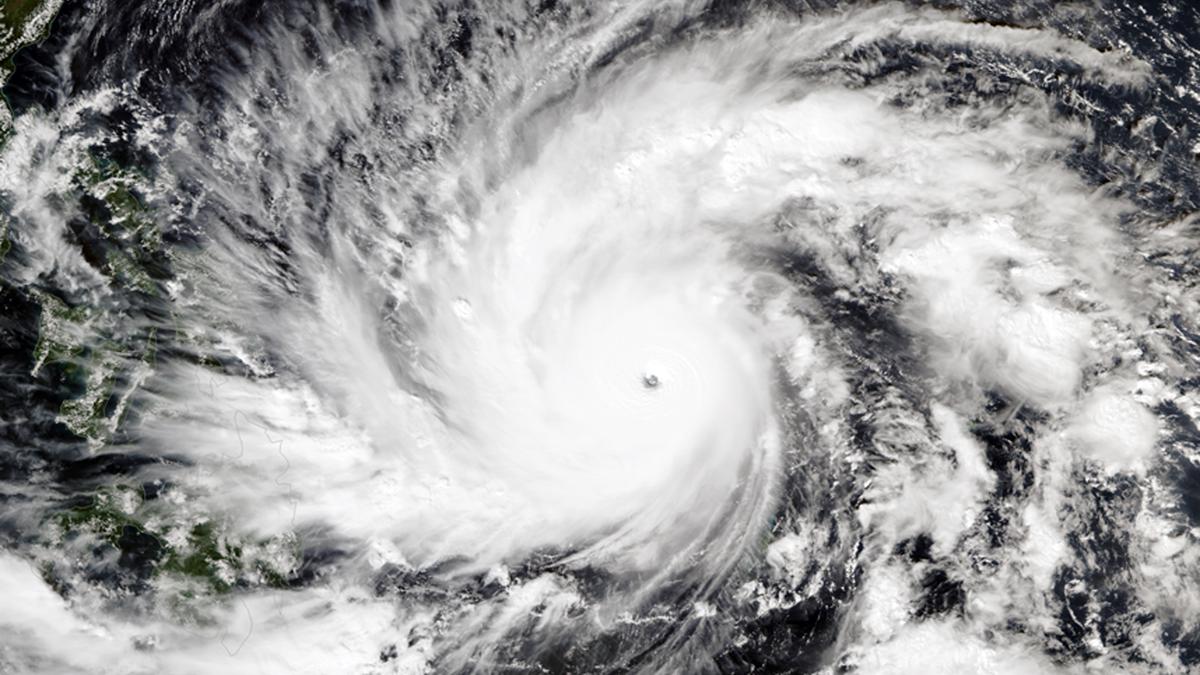
Tropical cyclones are powerful and destructive weather systems that form over warm tropical ocean basins. where sea surface temperatures are above 26.5 degree C. These storms are characterised by strong winds, heavy precipitation and storm surges and can cause significant damage to coastal communities and infrastructure.

Climatologically, tropical cyclones form mainly in the North Atlantic, East Pacific, West Pacific, South Pacific and the Indian Ocean. Out of 85 tropical storms that develop annually over the warm tropical oceans, more than half (45) of them intensify into tropical cyclones. The Western Pacific basin is the most active region for tropical cyclones and accounts for about a third of the world’s tropical cyclones. The North Indian basin accounts for only about 4% of the global total, although it is one of the most vulnerable regions in the world to the effects of such cyclones.

The Saffir-Simpson (SS) hurricane wind scale, introduced in the early 1970s, is the most widely used metric for warning the public about the dangers of tropical cyclones. The SS hurricane wind scales are categorised by the maximum sustained wind speed at a height of 10 metres. Although most tropical cyclone-related deaths are caused by storm surge and heavy rainfall, wind hazard remains an important metric for communicating risk to the public and a critical metric for measuring the impact of these cyclones. There are five categories on the SS hurricane wind scale — category 1 to category 5 — with category 5 wind speed exceeding 252 km/hour. The combined effects of wind, storm surge, and rainfall in a category 5 impact would completely raze any structure.

The sharp rise in man-made greenhouse gas emissions has led to global warming of the order of 1.10 degree C since pre-industrial times. The warming can be observed not only at the sea surface, but also in the depths of the ocean, which increases the heat content of the ocean and thus favours the intensification of tropical cyclones. Long-term data indicate that the frequency of intense tropical cyclones is increasing in the large ocean basins. For every degree of warming, an increase in wind speed of 12% is observed in the strongest cyclones, which corresponds to a 40% increase in destructive potential. As warm waters extend further poleward, cyclones are shifting poleward, with more storms forming at higher latitudes than in the past. A warmer atmosphere can hold more moisture, leading to heavier rainfall when tropical cyclones make landfall. As the oceans warm, cyclones also strengthen faster and spend more lifetime over the oceans. In 2023, tropical cyclone Freddy spent 37 days over the oceans, making it the longest-lived cyclones ever recorded.

As global warming continues unabated, can we expect tropical cyclones with an intensity of more than category 5? In a recent research paper published in the Proceedings of National Academy of Sciences, the authors document that storms are occurring at intensities well above Category 5 and that record wind speeds are likely to continue as the planet continues to warm. At the time of its introduction, the SS wind scale did not foresee the need for a tropical cyclone-beyond category 5. However, due to global warming, there is now a need to define a category 6 cyclone. The authors therefore proposed to introduce a hypothetical modification of the SS wind scale to tie category 5 to peak wind speeds between 252-309 km/hour and to include an additional category 6 above 309 km/hour.

Observations indicate that of the 197 tropical cyclones categorised as category 5 in the 42-year period from 1980 to 2021, half occurred in the last 17 years of the period. Five of these storms (Haiyan, Patricia, Meranti, Typhoon Goni and Surigae), which occurred in the last nine years of the record, exceeded the hypothetical category 6 (with wind speeds of over 309 km/hour). Simulations of future climate change suggest that the annual exceedance of the category 6 threshold will increase even more in the regions where intense tropical cyclones currently occur. It is expected that the proposed 6th category of the SS wind scale could raise awareness of the dangers of the increased risk of large cyclones due to global warming.

At present, the North Indian Ocean is not as vulnerable to category 6 storms. However, as global warming continues unabated, there is a good chance that a category 6 storm with maximum wind speeds of over 309 km/hour may occur over the North Indian Ocean in near future. Therefore, there is a need to revisit India’s disaster management strategy for tropical cyclones and the early warning systems. Many lives are at stake.

(Madhavan Nair Rajeevan was former secretary to the Government of India and presently the Vice Chancellor, Atria University, Bengaluru)
Source link

Science

Post navigation

Previous Post: Iranian TV Journalist Stabbed Outside Home In London
Next Post: Naturally occurring bile acid can blunt statin-induced diabetes

Related Posts

  • Astronomers finally detect a rocky planet with an atmosphere Science
  • What does World Thrift Day have to do with physics? Science
  • How many steps a day can help reduce the risk of premature death? Science
  • Serum’s HPV vaccine non-inferior to Gardasil: study Science
  • Ritual to Reality: Unmasking the evolution of hand hygiene post-covid-19 Science
  • How scientists found that LK-99 is probably not a superconductor Science

More Related Articles

IISc researchers develop machine learning models for designing next generation nuclear reactor materials Science
This week’s Sci-Five quiz is on famous mathematicians. Science
How various coffee varieties differ in taste Science
ISRO’s ‘zero orbital debris’ milestone & the space debris crisis | Explained Science
ICMR study finds the drivers of COVID-19 vaccine hesitancy Science
Zambia find shows humans have built with wood for 476,000 years Science
SiteLock

Archives

  • July 2024
  • June 2024
  • May 2024
  • April 2024
  • March 2024
  • February 2024
  • January 2024
  • December 2023
  • November 2023
  • October 2023
  • September 2023
  • August 2023
  • July 2023
  • June 2023
  • May 2023
  • April 2023
  • March 2023
  • February 2023
  • January 2023
  • December 2022
  • November 2022
  • October 2022
  • September 2022
  • August 2022
  • July 2022
  • June 2022
  • May 2022

Categories

  • Business
  • Nation
  • Science
  • Sports
  • World

Recent Posts

  • Historic Connection Has Benefitted Austria And India: PM Modi
  • Iraq court condemns to death widow of IS leader al-Baghdadi
  • Super-Sub Ollie Watkins Sends England Past Netherlands And Into Euro 2024 Final
  • UK PM Starmer Vows Robust Ukraine Support On International Debut
  • NATO Leaders Express “Profound Concern” Over China-Russia Ties

Recent Comments

  1. ywdVpqHiNZCtUDcl on UP Teacher Who Asked Students To Slap Muslim Classmate
  2. bRstIalYyjkCUJqm on UP Teacher Who Asked Students To Slap Muslim Classmate
  3. GkJwRWEAbS on UP Teacher Who Asked Students To Slap Muslim Classmate
  4. xreDavBVnbGqQA on UP Teacher Who Asked Students To Slap Muslim Classmate
  5. aANVRzfUdmyb on UP Teacher Who Asked Students To Slap Muslim Classmate
  • Chinese Nuclear Submarine Suffers Catastrophic Failure: What We Know World
  • Sensex tanks 900 points to slip below 73k amid broad-based selloff; smallcap, midcap tumble Business
  • “Give 400 Seats, We Will Raise Temples At Gyanvapi Mosque”: Himanta Sarma Nation
  • Congress Under Fire As Leader Alleges Love Jihad After Daughter Murder Nation
  • “Didn’t Have An Answer”: Team Consultant’s Brutally Honest Verdict On Lucknow Super Giants Sports
  • Parliament Budget Session February 6 Updates Business
  • ‘Not Taking Any Wicket’: Babar Azam’s Honest Verdict On Star Spinner Shadab Khan Sports
  • Finance Ministry confident of 6.5% growth in FY24 despite symmetric risks Business

Editor-in-Chief:
Mohammad Ariff,
MSW, MAJMC, BSW, DTL, CTS, CNM, CCR, CAL, RSL, ASOC.
editor@artifex.news

Associate Editors:
1. Zenellis R. Tuba,
zenelis@artifex.news
2. Haris Daniyel
daniyel@artifex.news

Photograher:
Rohan Das
rohan@artifex.news

Artifex.News offers Online Paid Internships to college students from India and Abroad. Interns will get a PRESS CARD and other online offers.
Send your CV (Subjectline: Paid Internship) to internship@artifex.news

Links:
Associate Journalism
About Us
Privacy Policy

News Links:
Breaking News
World
Nation
Sports
Business
Entertainment
Lifestyle

Registered Office:
72/A, Elliot Road, Kolkata - 700016
Tel: 033-22277777, 033-22172217
Email: office@artifex.news

Editorial Office / News Desk:
No. 13, Mezzanine Floor, Esplanade Metro Rail Station,
12 J. L. Nehru Road, Kolkata - 700069.
(Entry from Gate No. 5)
Tel: 033-46011099, 033-46046046
Email: editor@artifex.news

Copyright © 2023 Artifex.News Newsportal designed by Artifex Infotech.