
Skip to content
  • Facebook
  • X
  • Linkedin
  • WhatsApp
  • YouTube
  • Associate Journalism
  • About Us
  • Privacy Policy
  • 033-46046046
  • editor@artifex.news
Artifex.News

Artifex.News

Stay Connected. Stay Informed.

  • Breaking News
  • World
  • Nation
  • Sports
  • Business
  • Science
  • Entertainment
  • Lifestyle
  • Toggle search form
  • Prosthetic foot centre set up in Trinidad; Jaishankar terms it gift of mobility
    Prosthetic foot centre set up in Trinidad; Jaishankar terms it gift of mobility Nation
  • Tax-free bonds for infrastructure, large investors
    Tax-free bonds for infrastructure, large investors Business
  • Nayar reckons KKR got a par total, rues missed chances
    Nayar reckons KKR got a par total, rues missed chances Sports
  • Cricket World Cup 2023 ENG vs SA | We’re fully focused on the South Africa game, says Jos Buttler
    Cricket World Cup 2023 ENG vs SA | We’re fully focused on the South Africa game, says Jos Buttler Sports
  • Access Denied Business
  • A least 8 people have died trying to cross the English Channel, French authorities say
    A least 8 people have died trying to cross the English Channel, French authorities say World
  • Access Denied Sports
  • ‘Record’ Drone Barrage Pummels Ukraine As Missile Tensions Seethe
    ‘Record’ Drone Barrage Pummels Ukraine As Missile Tensions Seethe World
In Kashmir’s traditional rice, clues to a journey from East Asia

In Kashmir’s traditional rice, clues to a journey from East Asia

Posted on October 26, 2026 By admin


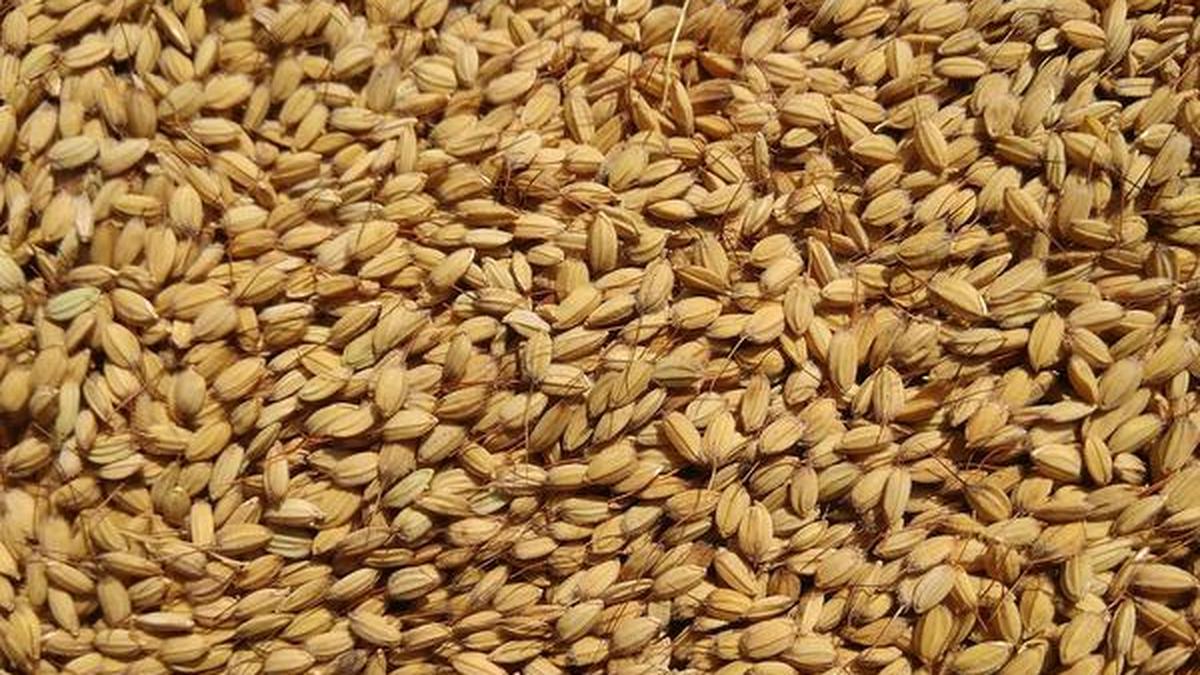
For many generations, Kashmir’s farmers have cultivated traditional varieties of rice — and a new study by researchers at the Sher-e-Kashmir University of Agricultural Sciences and Technology (SKUAST-Kashmir), Srinagar, has found that these varieties carry a unique genetic history.

According to the study, published in The Plant Genome, Kashmir’s traditional varieties carry cold-tolerance and other locally adapted genes that modern varieties have partly lost, making them potentially valuable as climate change increases stress on crops.

The genetic analysis also indicated the varieties are more closely related to those from the Korean Peninsula and Northeast China.

3K rice panel

The SKUAST-Kashmir team began by placing Kashmir’s rice on a larger genetic map.

In a 2018 study, Chinese researchers had collected rice germplasm — genetic material from seeds — from around the world and created the so-called 3K rice panel. Their 3,010 samples represented cultivated rice diversity from different parts of the world, including the Oryza sativa cultivated in Asia.

However, SKUAST-Kashmir genetics and plant breeding professor Asif Bashir Shikari said the 3K panel didn’t include germplasm from Kashmir’s traditional varieties.

“That was the primary reason we sequenced 142 rice germplasm accessions from Kashmir region and compared them with the 3K panel in our study,” he said.

The team also looked beyond the overall genome. According to Dr. Shikari, rice has roughly 30,000 to 40,000 genes but not all of them are directly related to traits important for agriculture. So the team focused on 21 traits that were relevant and relatively easy to observe, including grain characteristics, starch content, aroma, and those related to adaptation.

They compared the Kashmir germplasm with that from other parts of the world — including China, India and Bangladesh — in the 3K panel on these traits. Thus they found that the Kashmir germplasm showed greater genetic affinity with rice from Korea and Northeast China.

“This was particularly interesting in the case of genes HAN1 and CTB4a, associated with cold tolerance, because Kashmir’s traditional rice is distinct from the rest of the country as it is cultivated under relatively cold conditions,” Dr. Shikari said.

“If such traits were introduced through gene flow or the movement of germplasm, it could also provide clues about the historical movement of rice and help us investigate the possible routes through which these genetic characteristics reached Kashmir,” he added.

Tracing the journey

According to Gaurav Zinta, principal scientist in the biotechnology division at the CSIR-Institute of Himalayan Bioresource Technology, Palampur, the distinction “suggests Kashmir’s traditional rice likely descends from temperate East Asian rice, similar to that grown in Korea and Japan, and was later shaped by the valley’s short, cool growing season”.

Dr. Zinta added that, on the other hand, modern varieties grown in the region tell a different story.

“Many were bred using lowland Indian rice to improve yield and grain type, and in the process, they lost much of the cold tolerance,” he said. “So the landraces are more than a piece of history. They are a reservoir of useful genes that modern breeding has partly left behind, and they deserve active conservation.”

That said, the landraces are not purely East Asian: “Some of their genes, such as those affecting starch and cooking quality, resemble those of tropical rice, suggesting they also mixed with other rice types over time,” Dr. Zinta explained. “Their history is best seen as layered rather than a single straight line.”

“Shared genes show that Kashmir rice and East Asian rice are related, [but] not the path the rice took,” he continued. “It could have crossed the Himalaya directly or come through Central Asia along early trade routes that later formed part of the Silk Road. The paper mentions both possibilities without clearly separating them.”

To confirm the route, he suggested that researchers compare Kashmir rice with rice from regions along the way, including from Nepal and Tibet. “Ancient rice grains found in Kashmir should also be dated and, where possible, their DNA analysed. This would show when rice reached Kashmir and where it originated.”

He also said the study has some limitations, including studying a “fairly small” number of local landraces and the team not testing the varieties for cold tolerance, aroma or grain quality. As a result, “the link between genes and traits is predicted rather than demonstrated,” Dr. Zinta added.

He said the effort nonetheless provided a strong foundation for future work.

Archaeology of rice

The research team also considered the fact that wheat, barley, and some millets were among the region’s earliest cultivated crops.

Anil Pokharia, scientist at Birbal Sahni Institute of Palaeosciences, Lucknow, said there is no clear archaeological evidence of rice being cultivated in the Neolithic period, around 3,000 years ago.

“Wheat and barley appear to have been the dominant crops, with wheat cultivated as a long-duration crop, sown around October and harvested the following July or August. Rice appears to have been introduced later, possibly around 1000-1500 BC, during the megalithic period, although the exact timing remains uncertain,” he said.

“With the introduction of rice as a summer crop, shorter-duration forms of wheat and other crops would also have been needed to fit the changing agricultural cycle.”

That said, he added that the archaeological record at Burzahom and Gufkral are limited by the fact that rice grains could not be directly radiocarbon dated, increasing the uncertainty as to their precise age.

According to Dr. Shikari, the genomic evidence provides another line of evidence — and that genetic patterns in present-day Kashmir rice are consistent with the possibility that the region has a distinct history of rice cultivation.

The authors discuss in their paper that the evolutionary history of japonica rice appears to have been closely associated with climate changes during the mid-to-late Holocene, in a period characterised by cooling and unstable weather.

“The onset of cooler environmental conditions may have imposed strong selection pressure on rice populations, favouring genetic variants associated with cold tolerance,” Dr. Shikari said.

Dr. Pokharia suggested Kashmir could be an important region for future archaeological research because of its position as a potential junction between influences from East and West Asia.

“The excavations carried out with a broader research perspective, combined with multidisciplinary approaches involving archaeology, genetics and other fields, could help researchers better understand the movement of crops, people and cultural influences into the region,” he said.

Hirra Azmat is a Kashmir-based journalist who writes on science, health, and environment.



Source link

Science

Post navigation

Previous Post: Why Poland wants a stronger relationship with India | The Hindu Editorial
Next Post: Nedumbassery luxury car crash: Audio clip of an accused describing incident emerges as possible key evidence

Related Posts

  • Intermittent fasting inhibits hair regeneration in mice: study
    Intermittent fasting inhibits hair regeneration in mice: study Science
  • Experts clash over HALEU-Th fuel for Indian nuclear reactors
    Experts clash over HALEU-Th fuel for Indian nuclear reactors Science
  • Beyond cost: how to know if a medical technology actually adds value
    Beyond cost: how to know if a medical technology actually adds value Science
  • The dopamine overdose: how modern lifestyles are rewiring our brains
    The dopamine overdose: how modern lifestyles are rewiring our brains Science
  • Dinosaur collagen used to create one-of-a-kind handbag
    Dinosaur collagen used to create one-of-a-kind handbag Science
  • What is a ‘random forest’?
    What is a ‘random forest’? Science

More Related Articles

Scientists find how the same ear senses murmurs and listens to screaming music Scientists find how the same ear senses murmurs and listens to screaming music Science
2025 ICTP Prize awarded to Titas Chanda, Sthitadhi Roy 2025 ICTP Prize awarded to Titas Chanda, Sthitadhi Roy Science
When welfare met demographic concerns When welfare met demographic concerns Science
Britain’s climate change plan challenged in landmark court case Britain’s climate change plan challenged in landmark court case Science
How an Indian can go to space for just .50 How an Indian can go to space for just $2.50 Science
Data on animal movements help Hungarian researchers create a swarm of autonomous drones Data on animal movements help Hungarian researchers create a swarm of autonomous drones Science
SiteLock

Archives

  • October 2026
  • September 2026
  • August 2026
  • July 2026
  • June 2026
  • May 2026
  • April 2026
  • March 2026
  • February 2026
  • January 2026
  • December 2025
  • November 2025
  • October 2025
  • September 2025
  • August 2025
  • July 2025
  • June 2025
  • May 2025
  • April 2025
  • March 2025
  • February 2025
  • January 2025
  • December 2024
  • November 2024
  • October 2024
  • September 2024
  • August 2024
  • July 2024
  • June 2024
  • May 2024
  • April 2024
  • March 2024
  • February 2024
  • January 2024
  • December 2023
  • November 2023
  • October 2023
  • September 2023
  • August 2023
  • July 2023
  • June 2023
  • May 2023
  • April 2023
  • March 2023
  • February 2023
  • January 2023
  • December 2022
  • November 2022
  • October 2022
  • September 2022
  • August 2022
  • July 2022
  • June 2022
  • May 2022

Categories

  • Business
  • Nation
  • Science
  • Sports
  • World

Recent Posts

  • Five-year-old girl of Anganwadi centre in Khammam dies after suspected insect bite
  • ‘Cruel’ jail conditions caused dozens of Nigerian miners to suffocate: probe
  • India must make its defence chips end-to-end, say scientists
  • Guntur Collector directs officials to safeguard election materials
  • Nobel committee says Venezuela needs democratic change despite Maria Machado’s return

Recent Comments

  1. JamesHon on UP Teacher Who Asked Students To Slap Muslim Classmate
  2. ArnoldCit on UP Teacher Who Asked Students To Slap Muslim Classmate
  3. DonaldFow on UP Teacher Who Asked Students To Slap Muslim Classmate
  4. RubenDER on UP Teacher Who Asked Students To Slap Muslim Classmate
  5. RubenDER on UP Teacher Who Asked Students To Slap Muslim Classmate
  • Access Denied Business
  • Access Denied World
  • Odisha Teen Dies After Consuming Poison, Family Alleges Harassment By School
    Odisha Teen Dies After Consuming Poison, Family Alleges Harassment By School Nation
  • Access Denied Sports
  • Amitav Ghosh On Climate Crisis
    Amitav Ghosh On Climate Crisis World
  • Ashleigh Gardner Shines Again As Gujarat Giants Register Six-Wicket Win Over UP Warriorz In WPL 2025
    Ashleigh Gardner Shines Again As Gujarat Giants Register Six-Wicket Win Over UP Warriorz In WPL 2025 Sports
  • Sensex, Nifty settle higher on buying in blue-chips
    Sensex, Nifty settle higher on buying in blue-chips Business
  • Access Denied World

Editor-in-Chief:
Mohammad Ariff,
MSW, MAJMC, BSW, DTL, CTS, CNM, CCR, CAL, RSL, ASOC.
editor@artifex.news

Associate Editors:
1. Zenellis R. Tuba,
zenelis@artifex.news
2. Haris Daniyel
daniyel@artifex.news

Photograher:
Rohan Das
rohan@artifex.news

Associate Journalists
1. Subrata Paul - AN/2020/01
2. Quamruz Zaman - AN/2021/22
3. Ahmed Sha - AN/2021/035
4. Ajay Kumar Shaw - AN/2021/39
5. Tahqiqul Hoda - AN/2021/21

Artifex.News offers Online Paid Internships to college students from India and Abroad. Interns will get a PRESS CARD and other online offers.
Send your CV (Subjectline: Paid Internship) to internship@artifex.news

Links:
Associate Journalism
About Us
Privacy Policy

News Links:
Breaking News
World
Nation
Sports
Business
Entertainment
Lifestyle

Registered Office:
72/A, Elliot Road, Kolkata - 700016
Tel: 033-22277777, 033-22172217
Email: office@artifex.news

Editorial Office / News Desk:
No. 13, Mezzanine Floor, Esplanade Metro Rail Station,
12 J. L. Nehru Road, Kolkata - 700069.
(Entry from Gate No. 5)
Tel: 033-46011099, 033-46046046
Email: editor@artifex.news

Copyright © 2023 Artifex.News Newsportal designed by Artifex Infotech.