
Skip to content
  • Facebook
  • X
  • Linkedin
  • WhatsApp
  • YouTube
  • Associate Journalism
  • About Us
  • Privacy Policy
  • 033-46046046
  • editor@artifex.news
Artifex.News

Artifex.News

Stay Connected. Stay Informed.

  • Breaking News
  • World
  • Nation
  • Sports
  • Business
  • Science
  • Entertainment
  • Lifestyle
  • Toggle search form
  • Police break up pro-Palestinian student protest in Berlin as demonstrations spread across Europe
    Police break up pro-Palestinian student protest in Berlin as demonstrations spread across Europe World
  • Indonesian rescuers find body while searching for Spanish soccer coach, three children
    Indonesian rescuers find body while searching for Spanish soccer coach, three children World
  • Russian and Ukrainian attacks kill 5 people a day after deadly shopping mall drone strike by Moscow
    Russian and Ukrainian attacks kill 5 people a day after deadly shopping mall drone strike by Moscow World
  • Congress Chief Mallikarjun Kharge Ahead Of Polls
    Congress Chief Mallikarjun Kharge Ahead Of Polls Nation
  • Trump pardons Rudy Giuliani and others who backed efforts to overturn 2020 election, official says
    Trump pardons Rudy Giuliani and others who backed efforts to overturn 2020 election, official says World
  • Rupee Falls 10 Paise To Close At All-Time Low Of 83.14 Against US Dollar
    Rupee Falls 10 Paise To Close At All-Time Low Of 83.14 Against US Dollar Business
  • Access Denied Sports
  • Forty drown in France as people seek relief from heatwave
    Forty drown in France as people seek relief from heatwave World
India’s vast canal network offers a land-free path to solar power

India’s vast canal network offers a land-free path to solar power

Posted on September 22, 2026 By admin


As India expands its clean energy capacity, finding land for solar projects is becoming a challenge. This is driving interest in innovative solar solutions that can generate power without needing more land.

The recently approved PM Surya Sarovar Yojana (PM-SSY) is a step in this direction, aiming to develop 5,000 MW of floating solar capacity on reservoirs and other inland water bodies across the country.

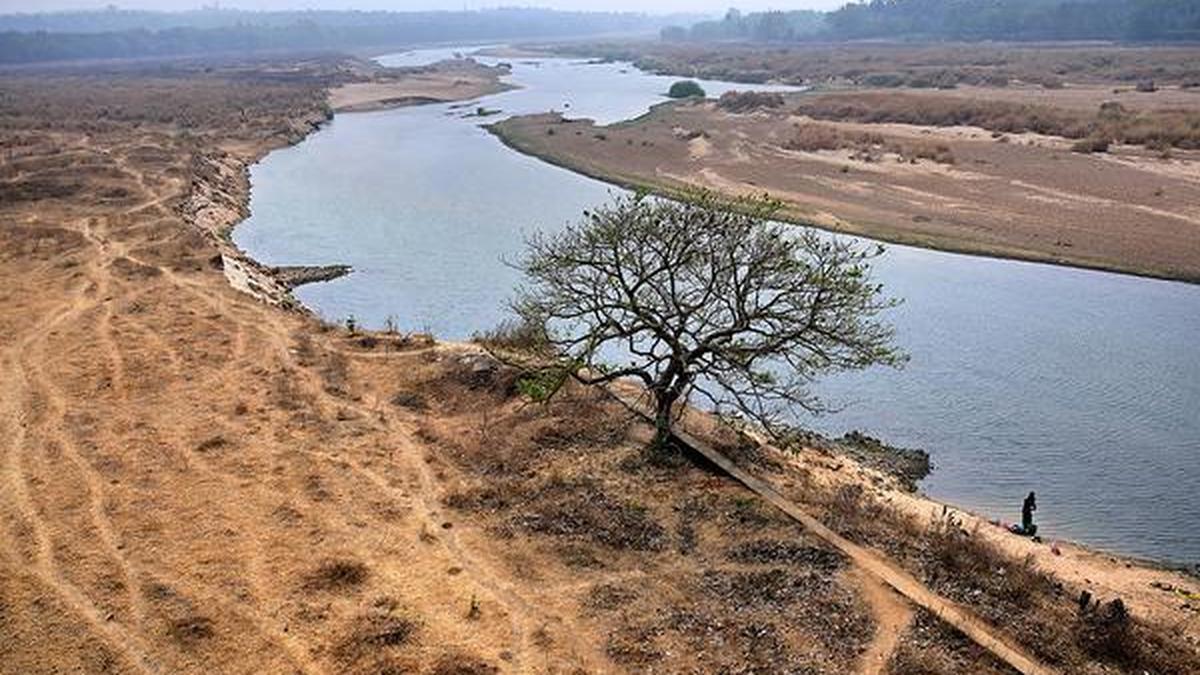
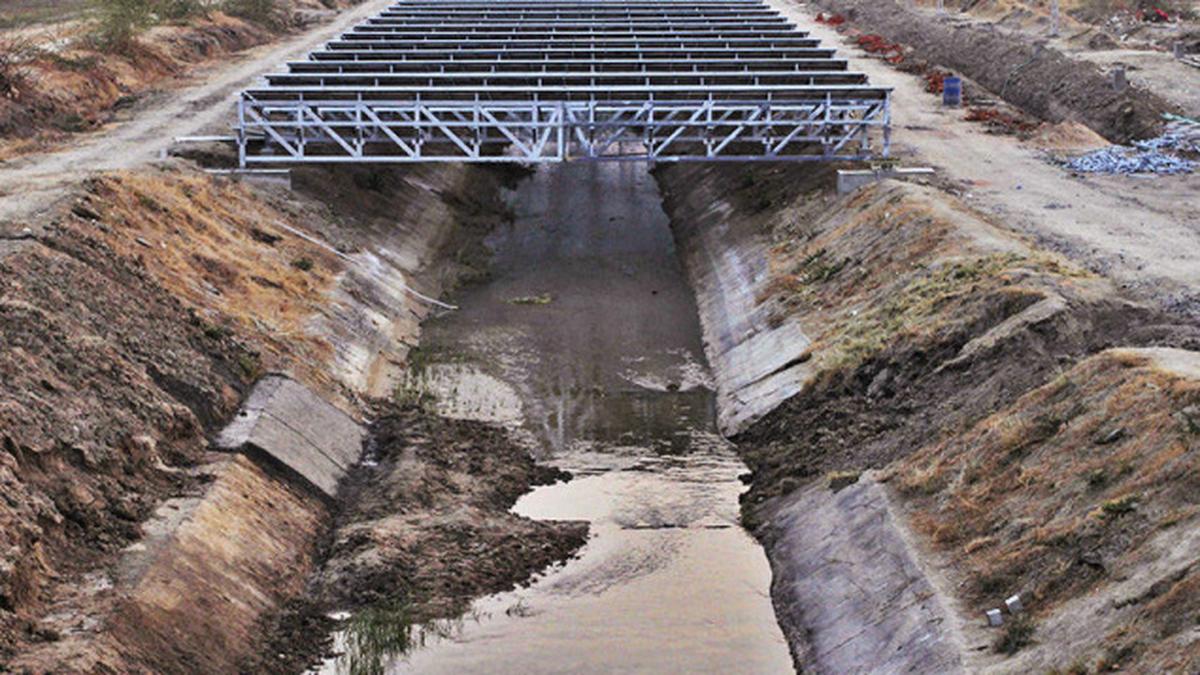
However, India’s water infrastructure has more to offer: the country’s vast canal network — one of the largest in the world — is another under-explored avenue to generate solar power. Built over existing irrigation and water-supply canals, canal-top photovoltaics (CTPV) provides a unique approach to turn them into clean energy assets.

In CTPV, solar panels are mounted on specialised structures built over canal stretches. Unlike floating solar systems, where panels are installed on floating platforms on water bodies, CTPV systems use elevated structures above the canals.

Systems can be built based on the canal’s width, design, and orientation. The elevated structures may span the canal or can be installed along the canal banks. In all cases, the design must allow unobstructed water flow.

Advantages of CTPV

Similar to floating solar, the biggest advantage of CTPV is that it requires virtually no additional land. With land acquisition for large-scale solar becoming increasingly challenging and expensive, CTPV offers a promising way by using India’s canal infrastructure. For instance, in Punjab, the installation of 20 MW of CTPV systems is estimated to have saved nearly 100 acres of land.

CTPV offers another advantage. With solar panels covering canal stretches, the amount of water lost to evaporation can be reduced. This can be particularly useful in India’s water-stressed regions. The cooling effect of the water beneath the panels could improve panel performance in hot weather. A 1-MW CTPV system over the Narmada Canal in Mehsana, Gujarat, commissioned in 2012, reportedly saves close to 9 million litres of water every year while generating 1.6 million units of electricity annually.

While CTPV remains largely a niche application, India has been an early adopter, with its first installation in Mehsana in 2012. Between 2014 and 2017, two 10-MW CTPV systems were commissioned in Vadodara, Gujarat, and 20 MW of CTPV systems were commissioned in Punjab between 2017 and 2018.

In September 2025, the Punjab Energy Development Agency invited ‘expressions of interest’ for 40-MW CTPV projects across Punjab’s canal network, spanning over 10,000 km. Haryana has also initiated efforts to explore CTPV systems over six of its irrigation canals.

CTPV also received policy support in 2014, when the Ministry of New and Renewable Energy (MNRE) launched a pilot-cum-demonstration scheme for grid-connected CTPV and canal bank projects with a target of 50 MW each for CTPV and canal-bank projects. The scheme also included financial assistance of Rs 3 crore and Rs 1.5 crore per MW or 30% of project cost, whichever was lower, for CTPV and canal bank systems, respectively.

An assessment in 2024 (co-authored by CSTEP, where the author works) estimated India’s CTPV and canal bank potential at around 131 GW (for canals up to 30 m wide and vertical bifacial installations for canals over 30 m wide). Considerations such as solar irradiation, canal characteristics, distance from substations, and protected areas were included in the assessment to identify the best-suited canal stretches across India. The five States with the highest potential were Uttar Pradesh, Bihar, Karnataka, Andhra Pradesh, and Punjab.

Potential roadblocks

Despite India’s early progress, deployment has remained limited for more than a decade after the first installation.

High system cost is the primary bottleneck. CTPV systems are more expensive than ground-mounted ones as they require elevated structures to span canal stretches. These structures need to be designed to not disrupt canal operations and be sturdy enough to withstand winds. They also need additional structural steel, foundations, and access provisions for operations and maintenance, all of which add to the overall costs.

Maintenance tasks, including cleaning panels and replacement and repair work, can also prove difficult when the structures are elevated above a working canal.

The linear nature of CTPV systems, which run along the course of canals, can also pose challenges when canals follow irregular paths or change direction. This can increase the cost of producing electricity, especially when electrical substations or transformers are not strategically located.

Renewed policy approach

PM-SSY is expected to revitalise the floating solar segment and drive its adoption across India, signalling growing policy interest in exploring land-neutral solar applications. This focus could extend to other solutions like CTPV, potentially giving the technology greater policy attention and momentum. 

However, to overcome the aforementioned structural challenges and scale CTPV deployment, identifying and prioritising suitable canal stretches will be critical. Factors such as land scarcity, nearby electricity demand and grid connectivity, and canal orientation and geometry should be considered while selecting sites to maximise the economic viability of CTPV systems.

CTPV also requires accessible and tailored financing mechanisms, including viability gap funding and low-cost debt, to make it an attractive option for developers. This will help support early projects, allowing developers to build experience and eventually reducing costs through scale and standardisation.

However, the 2014 MNRE scheme on CTPV shows that financial support alone may not suffice to convert pilots into large-scale deployment. A renewed policy approach that includes financial assistance and standardised specifications and guidelines, capacity building of state nodal agencies, irrigation departments, and other concerned agencies, and streamlined process flows is required.

While CTPV may not fully substitute ground-mounted or rooftop solar, they offer an untapped opportunity for India’s renewable energy expansion. Even if a fraction of CTPV’s technical potential is realised, it could significantly boost India’s renewable energy capacity without adding to the pressure on land resources.

Shantanu Roy is the Sector Coordinator for Renewables and Energy Conservation at the Center for Study of Science, Technology and Policy (CSTEP), a research-based think tank.

Published – September 23, 2026 09:00 am IST


Source link

Science

Post navigation

Previous Post: Puducherry government draws up action plan to curb plastic pollution in Thengaithittu backwaters
Next Post: AI experts warn against ‘apocalyptic’ rhetoric on risks

Related Posts

  • What is Siberian High? – The Hindu
    What is Siberian High? – The Hindu Science
  • HIV strains in India resist some top broadly neutralising antibodies
    HIV strains in India resist some top broadly neutralising antibodies Science
  • T. K. Radha: from Kerala to Oppenheimer
    T. K. Radha: from Kerala to Oppenheimer Science
  • Nobel Prize in Chemistry 2024 awarded to David Baker, along with Demis Hassabis and John M. Jumper
    Nobel Prize in Chemistry 2024 awarded to David Baker, along with Demis Hassabis and John M. Jumper Science
  • Understanding albinism – The Hindu
    Understanding albinism – The Hindu Science
  • What is the Minor Planet Centre?
    What is the Minor Planet Centre? Science

More Related Articles

Hiccups explained: Small sounds, big answers Hiccups explained: Small sounds, big answers Science
India’s economic growth depends on protecting its fragile environment India’s economic growth depends on protecting its fragile environment Science
Failure of atomic clock cripples ISRO’s NavIC system Failure of atomic clock cripples ISRO’s NavIC system Science
Rubies and emeralds get their colours from a common metal Rubies and emeralds get their colours from a common metal Science
Dutch airport Schiphol capped at 478,000 flights per year to reduce noise Dutch airport Schiphol capped at 478,000 flights per year to reduce noise Science
NASA IMAP to show how solar particles are energised and shield us NASA IMAP to show how solar particles are energised and shield us Science
SiteLock

Archives

  • September 2026
  • August 2026
  • July 2026
  • June 2026
  • May 2026
  • April 2026
  • March 2026
  • February 2026
  • January 2026
  • December 2025
  • November 2025
  • October 2025
  • September 2025
  • August 2025
  • July 2025
  • June 2025
  • May 2025
  • April 2025
  • March 2025
  • February 2025
  • January 2025
  • December 2024
  • November 2024
  • October 2024
  • September 2024
  • August 2024
  • July 2024
  • June 2024
  • May 2024
  • April 2024
  • March 2024
  • February 2024
  • January 2024
  • December 2023
  • November 2023
  • October 2023
  • September 2023
  • August 2023
  • July 2023
  • June 2023
  • May 2023
  • April 2023
  • March 2023
  • February 2023
  • January 2023
  • December 2022
  • November 2022
  • October 2022
  • September 2022
  • August 2022
  • July 2022
  • June 2022
  • May 2022

Categories

  • Business
  • Nation
  • Science
  • Sports
  • World

Recent Posts

  • P.P. Umer Musliyar Koyyode chosen Samastha general secretary
  • Pakistan shoots down eight drones ‘launched from Afghanistan’ amid fresh border clashes
  • Indian national killed in attack on MV Cape Dao, says Embassy in Oman
  • Indian plantation sector urged to become global suppliers
  • Anupama cueing up for glory in Commonwealth championship

Recent Comments

  1. Jamesget on UP Teacher Who Asked Students To Slap Muslim Classmate
  2. Jamesget on UP Teacher Who Asked Students To Slap Muslim Classmate
  3. JoshuaGak on UP Teacher Who Asked Students To Slap Muslim Classmate
  4. Brucespelo on UP Teacher Who Asked Students To Slap Muslim Classmate
  5. Russellram on UP Teacher Who Asked Students To Slap Muslim Classmate
  • Access Denied Sports
  • Iran submits new proposal, says U.S. open to sanctions relief
    Iran submits new proposal, says U.S. open to sanctions relief World
  • What It Means For Adani Group
    What It Means For Adani Group Nation
  • Amid Opposition Protests On Vinesh Phogat, Jagdeep Dhankhar Walks Out
    Amid Opposition Protests On Vinesh Phogat, Jagdeep Dhankhar Walks Out Nation
  • Origins of COVID still unclear, but climate is driving new viral threats, says top scientist Soumya Swaminathan
    Origins of COVID still unclear, but climate is driving new viral threats, says top scientist Soumya Swaminathan Science
  • Court Allows Jailed Sanjay Singh To Get Nutritious Diet, Bottled Water
    Court Allows Jailed Sanjay Singh To Get Nutritious Diet, Bottled Water Nation
  • Access Denied Business
  • Windfall tax on crude oil, diesel hiked
    Windfall tax on crude oil, diesel hiked Business

Editor-in-Chief:
Mohammad Ariff,
MSW, MAJMC, BSW, DTL, CTS, CNM, CCR, CAL, RSL, ASOC.
editor@artifex.news

Associate Editors:
1. Zenellis R. Tuba,
zenelis@artifex.news
2. Haris Daniyel
daniyel@artifex.news

Photograher:
Rohan Das
rohan@artifex.news

Artifex.News offers Online Paid Internships to college students from India and Abroad. Interns will get a PRESS CARD and other online offers.
Send your CV (Subjectline: Paid Internship) to internship@artifex.news

Links:
Associate Journalism
About Us
Privacy Policy

News Links:
Breaking News
World
Nation
Sports
Business
Entertainment
Lifestyle

Registered Office:
72/A, Elliot Road, Kolkata - 700016
Tel: 033-22277777, 033-22172217
Email: office@artifex.news

Editorial Office / News Desk:
No. 13, Mezzanine Floor, Esplanade Metro Rail Station,
12 J. L. Nehru Road, Kolkata - 700069.
(Entry from Gate No. 5)
Tel: 033-46011099, 033-46046046
Email: editor@artifex.news

Copyright © 2023 Artifex.News Newsportal designed by Artifex Infotech.