



Skip to content
  • Facebook
  • X
  • Linkedin
  • WhatsApp
  • YouTube
  • Associate Journalism
  • About Us
  • Privacy Policy
  • 033-46046046
  • editor@artifex.news
Artifex.News

Artifex.News

Stay Connected. Stay Informed.

  • Breaking News
  • World
  • Nation
  • Sports
  • Business
  • Science
  • Entertainment
  • Lifestyle
  • Toggle search form
  • There will be expectations, but I am focusing on my work
    There will be expectations, but I am focusing on my work Sports
  • India should extradite Sheikh Hasina to Bangladesh: BNP General Secretary Mirza Fakhrul Islam Alamgir
    India should extradite Sheikh Hasina to Bangladesh: BNP General Secretary Mirza Fakhrul Islam Alamgir World
  • West Asia war LIVE: Missile alerts sound in Bahrain and Qatar after U.S. launches new round of airstrikes against Iran
    West Asia war LIVE: Missile alerts sound in Bahrain and Qatar after U.S. launches new round of airstrikes against Iran World
  • Russia, North Korea open first road link across shared border
    Russia, North Korea open first road link across shared border World
  • Access Denied Sports
  • Europe heatwave is ‘price to pay for fossil fuel pollution’: UN climate chief
    Europe heatwave is ‘price to pay for fossil fuel pollution’: UN climate chief World
  • Congress To Protest Against Centre’s Neglect Of Wayanad
    Congress To Protest Against Centre’s Neglect Of Wayanad Nation
  • Access Denied
    Access Denied Nation
Bamboo mass flowering and die-off can trigger ecological crisis and wildlife conflict, study warns

Bamboo mass flowering and die-off can trigger ecological crisis and wildlife conflict, study warns

Posted on September 10, 2026 By admin


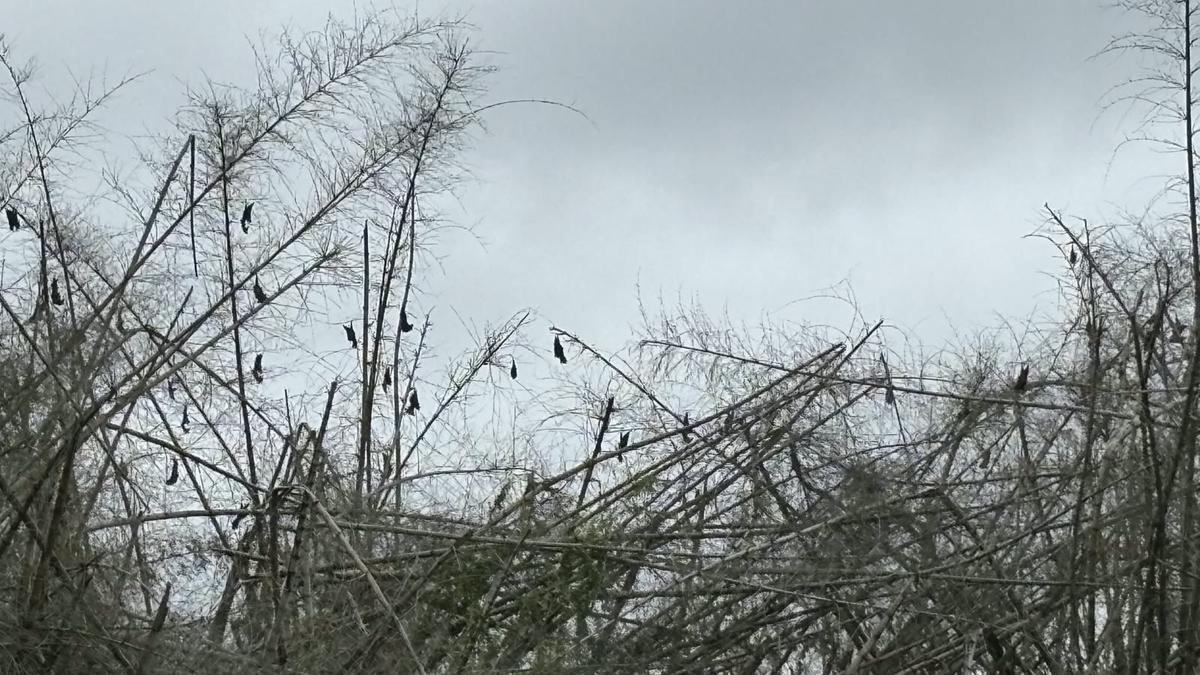
The synchronous mass flowering and subsequent die-off of bamboo across forest landscapes can trigger a chain of ecological shocks — from invasive weed outbreaks and intense wildfires to rodent population explosions and spikes in human-elephant conflict, a study by Dr. T.V. Sajeev of the Kerala Forest Research Institute (KFRI), Peechi, Thrissur, Keralam, has warned.

Published in Frontiers in Ecology and Evolution, the study calls for forest departments to move from reactive crisis management to anticipatory, landscape-level planning, particularly in fragmented ecosystems such as the Western Ghats.

“Woody bamboos are vital to tropical forests, helping regulate microclimates and carbon cycles. But their monocarpic life cycle ends in a dramatic event. After flowering at intervals ranging from 40 to more than 120 years, entire bamboo cohorts flower, senesce and die together, sometimes across hundreds or thousands of square kilometres.,” points out Dr. Sajeev

When the canopy collapses

The first shock comes with the sudden disappearance of the bamboo canopy.

Dense bamboo stands normally intercept most incoming solar energy, allowing only 2% to 5% of photosynthetically active radiation to reach the understory. When an entire cohort dies, the canopy collapses, exposing large areas of the forest floor.

These extensive light gaps raise topsoil temperatures, speed up moisture loss and trigger rapid nutrient mineralisation. The openings then become prime sites for opportunistic invasive plants. Instead of native climax tree species regenerating, invasive weeds such as Senna spectabilis, Mikania micrantha and Lantana camara can quickly take over, he notes.

The study highlights Senna spectabilis, an invasive tree that heavily infests protected reserves in southern India. Its fallen foliage releases toxic secondary metabolites, mainly phenolics, fatty acids and terpenoids, into moist soil.

Under the “novel weapons hypothesis”, these phytochemicals can suppress antioxidant enzyme activity and cause lipid peroxidation in the roots of native plants. This gives Senna an advantage, suppressing the natural seed bank and preventing bamboo seedlings from establishing.

“The result can be a permanent shift from open forest gaps to degraded, invasive-dominated thickets, as seen in the Wayanad landscape,” says Dr Sajeev.

Elephants pushed towards farms

The loss of bamboo also creates a major food crisis for primary consumers, particularly Asian elephants (Elephas maximus).

Bamboo is an important high-volume food source for elephants, especially during lean dry seasons. When vast stands die and the understory becomes dominated by dense, unpalatable and physically impenetrable Senna and Lantana thickets, elephants face severe forage shortages.

“Driven by the need to find food, herds can expand their ranges and travel greater distances. This can push them beyond protected-area boundaries and into agricultural fringes. The result is a sharp rise in human-elephant conflict, including crop losses, property damage and threats to human life. Repeated losses can also erode the goodwill of communities living around forests towards wildlife conservation,” the study points out.

Seeds trigger rodent surges

Bamboo masting brings another unexpected consequence: a massive food bonanza for rodents.

Dr. Sajeev notes that gregarious flowering can carpet the forest floor with carbohydrate-rich bamboo seeds, sometimes producing thousands of kilograms of seed biomass per hectare. The abundance of food can cause explosive population growth among granivorous rodents such as Rattus and Melomys species.

Once the forest seed supply is exhausted or decays, the enlarged rodent populations can move into neighbouring croplands and grain stores.

Drawing parallels with historical Mautam famines in northeast India, the study warns that such rodent irruptions can cause extensive agricultural losses and increase the risk of zoonotic infections, including scrub typhus and hantaviruses, among rural communities, he warns.

Dead bamboo creates fire danger

The mass death of bamboo also transforms the forest into a potential tinderbox.

Millions of metric tonnes of dead, hollow culms can accumulate on the forest floor. During dry seasons, this continuous layer of dry biomass creates a huge fuel load capable of supporting high-intensity wildfires.

“Such fires can destroy vulnerable bamboo seedlings, burn soil organic matter and volatilise topsoil nutrients. This can create a self-reinforcing degradation cycle in which fire-adapted invasive weeds gain ground while native forest recovery suffers,” the study points out.

Prepare before the crisis

The study urges wildlife and forest authorities to anticipate these cascading impacts rather than respond after the crisis begins.

It recommends maintaining bamboo stands of multiple lineages so that large tracts do not flower and collapse simultaneously.

It also calls for targeted, pre-emptive clearing of dead bamboo culms along vulnerable stretches before the dry season, reducing fuel continuity and wildfire risk.

In newly formed canopy gaps, authorities should immediately undertake manual or targeted eradication of alien invasive species before their allelopathic compounds become established in the rhizosphere and further suppress native regeneration.

For elephants, the study recommends landscape-scale planning to identify and strictly protect temporary compensatory foraging and movement corridors. These alternative pathways can provide displaced herds with adequate forage and help steer them away from vulnerable farming belts during the multi-year transition following a masting event.

The study warns that bamboo mass flowering should not be dismissed as merely a periodic botanical spectacle. When an entire bamboo landscape flowers and dies together, the ecological consequences can ripple far beyond the forest — reaching farms, wildlife and human communities.

Published – September 10, 2026 02:51 pm IST



Source link

Science Tags:Kerala Forest Research Institute

Post navigation

Previous Post: England vs Pakistan 3rd Test: Host bowls out new-look Pakistan for 133 on Day 1
Next Post: Telangana Govt to construct new Haj House near Shamshabad international airport

Related Posts

  • Fetus in fetu – The Hindu
    Fetus in fetu – The Hindu Science
  • China to double size of space station, touts alternative to NASA-led ISS
    China to double size of space station, touts alternative to NASA-led ISS Science
  • Kufos succeeds in captive breeding of threatened Indian ornamental fish
    Kufos succeeds in captive breeding of threatened Indian ornamental fish Science
  • If solar irrigation is over-drawing groundwater, you’re doing it wrong
    If solar irrigation is over-drawing groundwater, you’re doing it wrong Science
  • Daily Quiz: On firebombings of World War II
    Daily Quiz: On firebombings of World War II Science
  • Helping children aim for the stars | National Science Day
    Helping children aim for the stars | National Science Day Science

More Related Articles

10,000 human genomes database launched 10,000 human genomes database launched Science
Indigenous clocks delay ISRO’s plans to replace defunct Navic satellites Indigenous clocks delay ISRO’s plans to replace defunct Navic satellites Science
How does air pollution affect the brain? How does air pollution affect the brain? Science
In the running: On the Artemis II launch In the running: On the Artemis II launch Science
U.S.-Russian space crew lands safely in Kazakhstan after an 8-month stint on the ISS U.S.-Russian space crew lands safely in Kazakhstan after an 8-month stint on the ISS Science
Sci five | The Hindu Science Quiz: on bones Sci five | The Hindu Science Quiz: on bones Science
SiteLock

Archives

  • September 2026
  • August 2026
  • July 2026
  • June 2026
  • May 2026
  • April 2026
  • March 2026
  • February 2026
  • January 2026
  • December 2025
  • November 2025
  • October 2025
  • September 2025
  • August 2025
  • July 2025
  • June 2025
  • May 2025
  • April 2025
  • March 2025
  • February 2025
  • January 2025
  • December 2024
  • November 2024
  • October 2024
  • September 2024
  • August 2024
  • July 2024
  • June 2024
  • May 2024
  • April 2024
  • March 2024
  • February 2024
  • January 2024
  • December 2023
  • November 2023
  • October 2023
  • September 2023
  • August 2023
  • July 2023
  • June 2023
  • May 2023
  • April 2023
  • March 2023
  • February 2023
  • January 2023
  • December 2022
  • November 2022
  • October 2022
  • September 2022
  • August 2022
  • July 2022
  • June 2022
  • May 2022

Categories

  • Business
  • Nation
  • Science
  • Sports
  • World

Recent Posts

  • Wayanad township houses on schedule, to be completed by Oct 31: Keralam Minister Siddique
  • Xi’s India visit to help diplomatic thaw, but business ties bound by suspicion | Analysis
  • Telangana Govt to construct new Haj House near Shamshabad international airport
  • Bamboo mass flowering and die-off can trigger ecological crisis and wildlife conflict, study warns
  • England vs Pakistan 3rd Test: Host bowls out new-look Pakistan for 133 on Day 1

Recent Comments

  1. Davidorend on UP Teacher Who Asked Students To Slap Muslim Classmate
  2. Davidorend on UP Teacher Who Asked Students To Slap Muslim Classmate
  3. MichaelThamb on UP Teacher Who Asked Students To Slap Muslim Classmate
  4. Kennethaidek on UP Teacher Who Asked Students To Slap Muslim Classmate
  5. Richardlek on UP Teacher Who Asked Students To Slap Muslim Classmate
  • Venezuelan situation to have negligible impact on India’s energy security, data shows
    Venezuelan situation to have negligible impact on India’s energy security, data shows Business
  • Sam Pitroda After Congress Reappointment
    Sam Pitroda After Congress Reappointment Nation
  • Netanyahu meets with Biden, Harris to narrow gaps on Gaza war ceasefire deal
    Netanyahu meets with Biden, Harris to narrow gaps on Gaza war ceasefire deal World
  • Access Denied Sports
  • India ‘concerned’ by Israeli attack on Iranian embassy in Syria
    India ‘concerned’ by Israeli attack on Iranian embassy in Syria World
  • Access Denied Sports
  • Govt. sponsoring attacks on rival parties’ leaders, offices: BRS
    Govt. sponsoring attacks on rival parties’ leaders, offices: BRS Nation
  • ICICI Bank Q4 net profit up 9% at ₹14,755 crore, provisions decline sharply
    ICICI Bank Q4 net profit up 9% at ₹14,755 crore, provisions decline sharply Business

Editor-in-Chief:
Mohammad Ariff,
MSW, MAJMC, BSW, DTL, CTS, CNM, CCR, CAL, RSL, ASOC.
editor@artifex.news

Associate Editors:
1. Zenellis R. Tuba,
zenelis@artifex.news
2. Haris Daniyel
daniyel@artifex.news

Photograher:
Rohan Das
rohan@artifex.news

Artifex.News offers Online Paid Internships to college students from India and Abroad. Interns will get a PRESS CARD and other online offers.
Send your CV (Subjectline: Paid Internship) to internship@artifex.news

Links:
Associate Journalism
About Us
Privacy Policy

News Links:
Breaking News
World
Nation
Sports
Business
Entertainment
Lifestyle

Registered Office:
72/A, Elliot Road, Kolkata - 700016
Tel: 033-22277777, 033-22172217
Email: office@artifex.news

Editorial Office / News Desk:
No. 13, Mezzanine Floor, Esplanade Metro Rail Station,
12 J. L. Nehru Road, Kolkata - 700069.
(Entry from Gate No. 5)
Tel: 033-46011099, 033-46046046
Email: editor@artifex.news

Copyright © 2023 Artifex.News Newsportal designed by Artifex Infotech.