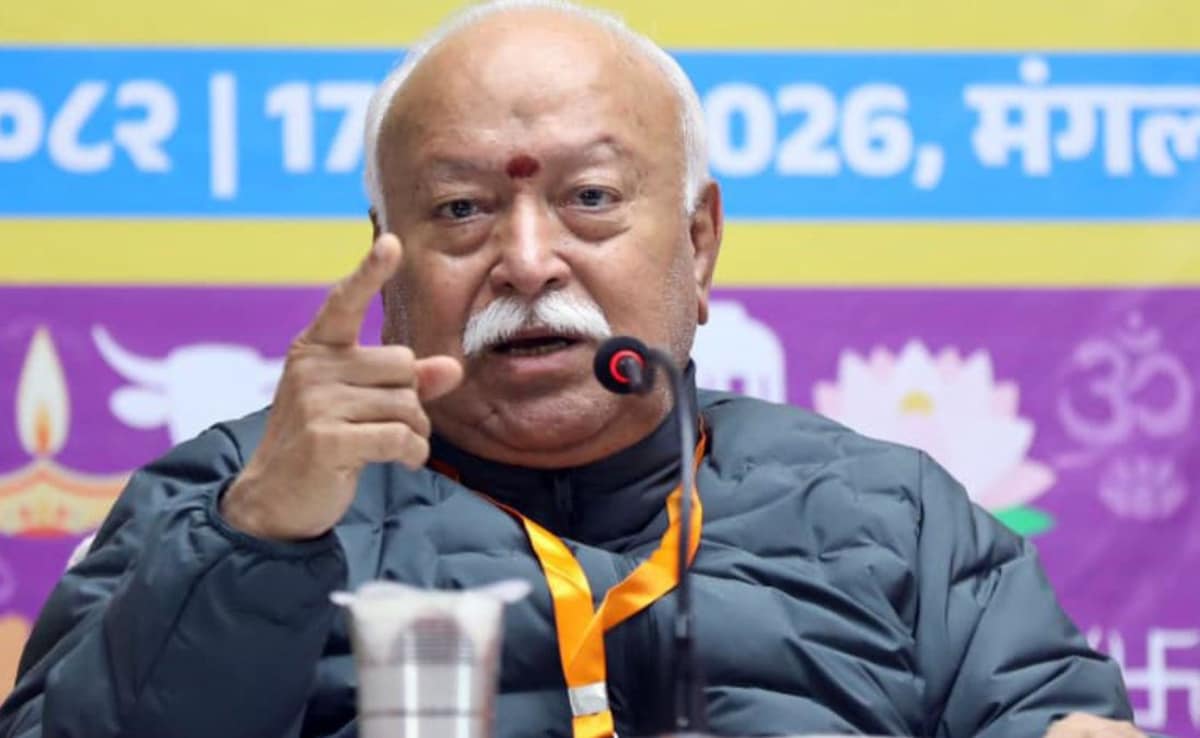




Novelist and senior scientist K.N. Ganeshaiah speaking at a programme organised by Rostrum, the Speakers’ Club, at Alva’s College, Moodbidri on Tuesday.
| Photo Credit: SPECIAL ARRANGEMENT
Emeritus professor and scientist at University of Agricultural Sciences, Bengaluru and novelist K.N. Ganeshaiah on Tuesday, said Kolar should develop strategies to conserve and manage water that falls within its landscape rather than depend on water diverted from elsewhere.
Diverting water to address the scarcity in Kolar could have ecological consequences that may not be immediately visible, said Mr. Ganeshaiah who taught forestry and environment sciences at the UAS. He was speaking on “Invisible Threads of Nature: The Reins of the Ecosystem“ at a programme organised by Rostrum, the Speakers’ Club at the Alva’s College, Moobidri.
Hailing from Kolar district, Mr. Ganeshaiah said, “I do not see this as a controversy. I have been saying for a long time that the people of the region should not depend on water brought from elsewhere. Presiding a literary programme in 2014 at Kolar, I had told my own people that they should learn to conserve and manage water that falls within their region. The water that falls on our head is our own resource. Develop strategies to harvest, conserve and recharge it, and ensure that it remains fit for human use and survival.”
Mr. Ganeshaiah urged Kolar people to strengthen their local water resources through comprehensive rainwater harvesting and conservation measures. “Do not kill the invisible threads by diverting water,” he said. He said water systems were interconnected through several ecological processes, many of which remained invisible until they were disrupted. Engineering interventions that appeared to offer immediate solutions could, therefore, produce unintended consequences elsewhere, he cautioned.
Talakadu sand dunes
Explaining ‘invisible threads,’ Mr. Ganeshaiah cited the transformation of Talakadu into a landscape covered by sand. Though attributed traditionally to the curse of Alamelamma, scientific evidences suggested sand accumulation started around 1400 AD, two centuries before the alleged curse of 1610.
Construction of a dam across the Cauvery during the Vijayanagara period altered the river system and exposed sand along the riverbanks. Strong winds moving from the southwest towards the northeast subsequently carried fine sand towards Talakadu. This movement illustrated an invisible thread– a natural process whose consequences were not immediately apparent.
Sir M. Visvesvaraya later realised the problem and introduced a vegetation barrier around 1940, which helped halt further movement of sand, he added. Talakadu’s transformation – an ecological disaster was brought about by human intervention.
He urged the younger generation to understand and protect ecological linkages rather than attempt to restore them after they had been irreversibly damaged.

Novelist and senior scientist and professor emeritus at the University of Agricultural Sciences, Bengaluru, K.N. Ganeshaiah (second from left) being presented a memento at a programme organised by Rostrum, the Speakers Club, at Alvas Education Foundation, in Moodbidri on Tuesday.
| Photo Credit:
SPECIAL ARRANGEMENT
Foundation Managing Trustee M. Vivek Alva, Rostrum president Deepa Kotari, programme director Ruchika Roshan and UAS retired professor K.V. Shankar, were present.
Published – August 25, 2026 08:17 pm IST