


The story so far: Thailand’s Peaceful Society Promotion Act, an amnesty initiative passed by lawmakers in July, came into effect on Monday (August 24, 2026), as the government under Prime Minister Anutin Charnvirakul seeks reconciliation with a large share of the population still leaning towards populist former leader Thaksin Shinawatra, a key figure at the centre of the country’s political turmoil.
The Act covers offences committed between 2005 and 2025, and would favour thousands who were prosecuted in the aftermath of the 2006 coup that led to the ouster and exile of Mr. Shinawatra.
However, the Act also seeks to protect the elected government from provoking royalists and the country’s coup-prone military by allowing citizens charged under the controversial Article 112, lese majeste, which criminalises insult to the monarchy.
What are the provisions of the new Act?
The Act seeks to grant amnesty to those convicted over protests or for “expressions motivated by political conflicts” from January 1, 2005, to July 16, 2025, except for offences involving corruption, lese majeste violations, murder or causing serious injuries, and those against private entities on a case-by-case basis.
The Act has listed more than 40 categories of offences eligible for amnesty, including severe charges such as sedition, rebellion, cybercrimes and emergency violations.
Pro-democracy activists flash three-fingered salutes during a demonstration at Kaset intersection, suburbs of Bangkok, Thailand in 2020
| Photo Credit:
AP
The Act calls for the setting up of a committee, the “peaceful society promotion committee”, led by the Prime Minister or his deputy within a month to determine who qualifies for amnesty. The panel will have representatives from Parliament, human rights experts, and civil society organisation members.
In addition to granting release for current prisoners, the committee can also close investigations and prosecutions, dismiss pending court cases, and clear criminal records of those eligible for the amnesty. Government officials have said that the panel will review all political cases recorded between 2005 and 2025 under the Act.
Who would benefit from the new Act?
The Thai Lawyers for Human Rights says that more than 5,000 individuals have been prosecuted for political conflicts since the 2006 coup, with a third of these happening after 2020, with around 300 of those involved being under the age of 18.
It said that, as of July this year, around 54 people remained in prison over political activities, but only around 10 of them would be eligible for amnesty since the others have Article 112 charges against them.
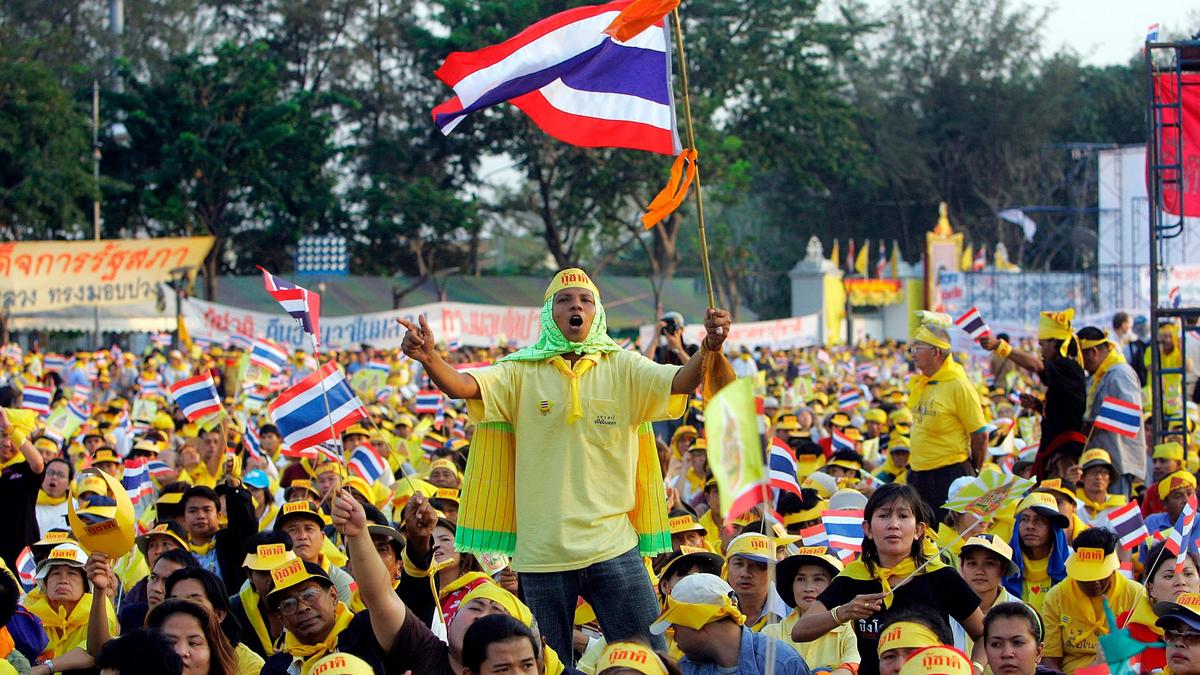
Other than those in prison, the Act would also clear the records of thousands with charges. This includes members of pro-Shinawatra bodies and anti-monarchy outfits as well as the royalists who took part in the ‘yellow shirt’ protests in 2006 that led to the coup and subsequent ouster of Mr. Shinawatra and years of instability.
The current Bhumjaithai Party-led government, which came to power after a snap election following a short term as a minority government, is on thin ice, having to manage strong voices from multiple political alignments in the country, and the sweeping amnesty provisions, which can be interpreted for the pro-democracy outfits as well as the royalists simultaneously, is a strategic move to secure support.
What are the shortcomings of the amnesty push?
While the new Act will erase politically motivated criminal records for thousands of people, several organisations have questioned the exclusion of lese majeste provisions from its ambit. The draconian Article 112, critics say, has been used to silence dissent by governments, including the royalists and the populists, with even juveniles being charged and awaiting trial for defaming the King and senior officials of the royalty.
While the Act has listed sedition and rebellion as charges eligible for amnesty consideration, Section 112 remained non-negotiable during lawmakers’ deliberation. A minority faction of independent Senators had moved during the drafting period of the legislation to introduce a clause to grant amnesty for Section 112 convicts under 18 years of age at the time of the offense, but this was set aside in a 126 to 15 vote.
Critics say that the new Act also has a provision explicitly stipulating that even the existing special rehabilitation and judicial diversion plans for minors cannot be applied to any youth facing a Section 112 charge. This ensures that the law serves as a “blunt instrument of absolute exclusion, stripping young pro-democracy activists of the legal protections normally afforded to children under both domestic and international human rights frameworks”, said 112watch, a Thai organisation campaigning against the lese majeste provisions, when the legislation was passed.
The legislation shows that political reconciliation in Thailand is “selective, conditional, and reserved only for favoured factions”, the organisation said in a statement condemning its clearance. “Excluding Article 112 — a provision historically used as a political weapon to suppress dissent — does not foster national harmony; it deepens societal wounds and institutionalises state impunity”, it said.
The group has also flagged the insertion of offences related to election fraud into the scope of amnesty under the Act, which could potentially clear individuals involved in collusion during senatorial elections, which is not related to the political expression that the government seeks to look beyond.
Published – August 25, 2026 11:58 am IST