Skip to content
  • Facebook
  • X
  • Linkedin
  • WhatsApp
  • YouTube
  • Associate Journalism
  • About Us
  • Privacy Policy
  • 033-46046046
  • editor@artifex.news
Artifex.News

Artifex.News

Stay Connected. Stay Informed.

  • Breaking News
  • World
  • Nation
  • Sports
  • Business
  • Science
  • Entertainment
  • Lifestyle
  • Toggle search form
  • Access Denied Sports
  • Access Denied Sports
  • Sri Lanka’s Kamindu Mendis Surpasses Sunil Gavaskar To Equal Pakistan Star Shaud Shakeel’s World Record
    Sri Lanka’s Kamindu Mendis Surpasses Sunil Gavaskar To Equal Pakistan Star Shaud Shakeel’s World Record Sports
  • Access Denied Sports
  • Access Denied World
  • “An Age-Old Problem”: Shahid Afridi Lashes Out At Pakistan Management After Asia Cup Elimination
    “An Age-Old Problem”: Shahid Afridi Lashes Out At Pakistan Management After Asia Cup Elimination Sports
  • Access Denied
    Access Denied Nation
  • Access Denied World
RBI gives Urban Cooperative Banks new lease of life | Explained

RBI gives Urban Cooperative Banks new lease of life | Explained

Posted on August 7, 2026 By admin


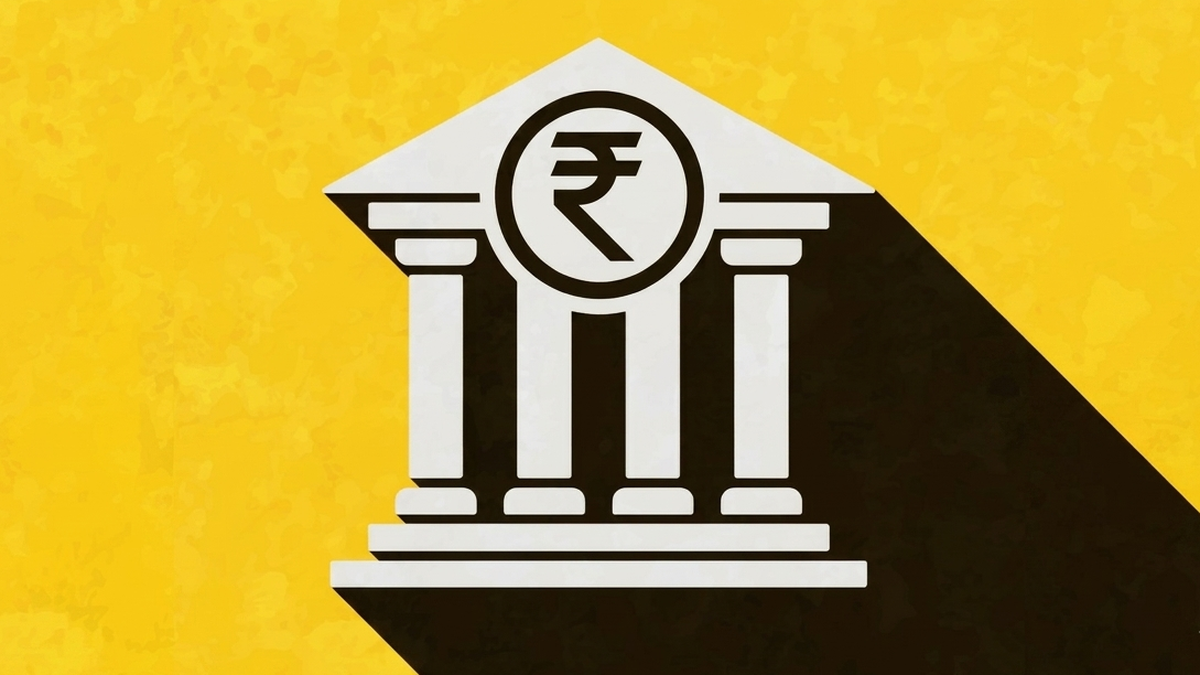
When urban cooperative banks (UCBs) — built on community trust — enter the public discourse, unfortunately, the first image to surface is that of Madhavpura Mercantile Cooperative Bank (MMCB) and Punjab and Maharashtra Cooperative (PMC) Bank.

Poor governance, political interference, dual regulation, concentrated lending, weak capital structure and technology deficiency sum up for the failure of several UCBs, forcing the Reserve Bank of India (RBI) to cancel licenses and also stop issuing fresh ones from 2004.

Lessons learned from the past, together with its belief that expansion without sound governance could multiply risks, led the banking regulator to rethink UCBs, and the RBI recently decided to resume issuing licenses to them after more than two decades.

The RBI’s renewed licensing policy gives a new lease of life to the UCBs, which were set up with the specific purpose of acting as a bridge between informal community finance and formal banking, with the guiding principle of localisation reducing information asymmetry.

In the early 1990s, there were as many as 1,100 UCBs, growing with a cautious approach, but after economic liberalisation, the RBI adopted a more liberal approach following recommendations of the Marathe Committee.

As of March 31, 2003, there were 2,104 UCBs of which 56 were scheduled banks. About 79% of these are in five States — Andhra Pradesh, Gujarat, Karnataka, Maharashtra and Tamil Nadu.

After which, it shrank to around 1,500 due to cancellations, mergers, voluntary conversions or liquidations as governance foibles translated in to systemic risks for the failed entities .

Birth of UCBs

Conceived as entities of financial democracy, akin to Self Help Groups in modern parlance, UCBs were established on the cooperative principle of mutual assistance by mobilising savings from members and extending affordable credit to those overlooked by mainstream banks, a classic example of financial inclusion.

Owing its origins to the 1904 Cooperative Credit Societies Act, the UCBs played an important role in financing neighbourhood commerce, retail trade, housing, education and small businesses, especially after independence.

Interestingly, the first urban cooperative credit society was registered in Kanjivaram in Madras province in October, 1904.

Misgovernance

As the cooperative banking ecosystem began to grow exponentially, making the hot seats mighty, the structural vulnerabilities began to emerge, but addressing them was difficult due to regulatory duality. The RBI supervised banking functions, while the management and governance remained under the jurisdiction of State Registrars of Cooperative Societies.

Governance failures became endemic as weak internal controls, connected lending, inadequate risk management and politicised board elections led to institutional breakdown, finally making many fall apart due to the weight of crony capitalism.

The UCBs experienced a severe capital crunch as the cooperative board structure “one member, one vote”, irrespective of shareholding, reduced incentives for capital infusion, denting public confidence and leaving depositors in lurch.

Failure bandwagon

One of India’s earliest major UCB failures was MMCB, which had excessive exposure to stock market operator Ketan Parekh-linked entities; another prominent one was PMC, which concealed large stressed loans, particularly exposure to HDIL, through fraudulent accounting practices.

Kapol Cooperative Bank suffered from high non-performing assets (NPAs), inadequate capital and weak governance; CKP Cooperative Bank had negative net worth, huge NPAs, insufficient capital and poor recovery prospects; Lucknow Urban Cooperative Urban Bank’s license was cancelled on inadequate capital, poor earning prospects and failure to comply with banking regulations; United Cooperative Bank, which failed to meet statutory requirements under the Banking Regulation Act; The City Cooperative Bank’s license was cancelled due to inadequate capital, lack of earning prospects, regulatory violations and inability to safeguard depositors’ interests; and Benares Mercantile Cooperative Bank for inadequate capital, poor financial position and failure to comply with regulatory requirements.

Reignition

India’s banking industry is increasingly centred around large universal banks with a larger capital base and technological infrastructure, majorly catering to the formal sector.

So, reigniting the cooperative banking sector, which went through a painful course correction and once had as much as a 4% share in total banking credit and now less than 2%, is a logical step to deepen financial inclusion as micro, medium and small enterprises continue to face credit gaps despite digital lenders’ growth.

With the regulatory architecture undergoing significant strengthening through amendments to enhance supervisory powers over cooperative banks, the RBI, which came out with a four-tier regulatory structure for UCBs in 2022, has now mooted an on-tap framework with significantly higher entry thresholds, including substantial minimum capital and business scale needs.

The banking regulator’s confidence in resuming licensing comes from its framework that has put technology readiness at the forefront, although cybersecurity remains one of the weakest links for many smaller UCBs.

The message is loud and clear that the objective is not to arbitrarily increase the number of UCBs but to establish a smaller number of stronger and well-governed entities, as seen from the RBI stipulation of a minimum capital of ₹300 crore, a capital adequacy ratio of at least 12%, and a net NPA ratio of not more than 3% at the time a licence is granted. It has also proposed that applicants should ideally have been operational for at least 10 years, with a sound financial track record for a minimum of five years.

However, the UCBs’ success in the Indian banking industry depends on how best they avoid the historical follies and adopt modern practices to become an important third pillar, alongside new generation commercial lenders and small finance banks.

Going by the RBI’s proposed yardstick, possible entrants could likely be large urban cooperative credit societies, multi-state cooperative credit societies and large cooperative federations, but none has publicly expressed an intention to seek a new UCB licence.



Source link

Business

Post navigation

Previous Post: POCSO cases in Kerala rising, says State Commission for Protection of Child Rights report
Next Post: Parliament Monsoon Session Day 15 LIVE updates: Lok Sabha to take up MSME Development (Amendment) Bill

Related Posts

  • Investors chose Gold ETFs over Equities in December 2025
    Investors chose Gold ETFs over Equities in December 2025 Business
  • PM Gadgil Jewellers lists at a 75% premium in stock market debut
    PM Gadgil Jewellers lists at a 75% premium in stock market debut Business
  • Access Denied Business
  • Access Denied Business
  • Post-liberalisation analysis shows southern States as leading performers, while Uttar Pradesh and Bihar regressed economically.
    Post-liberalisation analysis shows southern States as leading performers, while Uttar Pradesh and Bihar regressed economically. Business
  • Daily working hours allowed to go up from 9 to 10 hours in Maharashtra’s private sector as State cabinet plans to amend laws
    Daily working hours allowed to go up from 9 to 10 hours in Maharashtra’s private sector as State cabinet plans to amend laws Business

More Related Articles

Revised income tax slab rates, Budget 2024: Salaried individuals stand to save up to ₹17,500, standard deductions hiked Revised income tax slab rates, Budget 2024: Salaried individuals stand to save up to ₹17,500, standard deductions hiked Business
‘Afghanistan economy shows modest signs of growth but recovery remains fragile,’ says World Bank ‘Afghanistan economy shows modest signs of growth but recovery remains fragile,’ says World Bank Business
Access Denied Business
Budget focusses on investment as tool for growth; deficit target outlines government’s priority, says Sitharaman Budget focusses on investment as tool for growth; deficit target outlines government’s priority, says Sitharaman Business
Sensex, Nifty hit fresh lifetime highs Sensex, Nifty hit fresh lifetime highs Business
Watch | The troubles behind Vistara’s massive flight cancellations Watch | The troubles behind Vistara’s massive flight cancellations Business
SiteLock

Archives

  • August 2026
  • July 2026
  • June 2026
  • May 2026
  • April 2026
  • March 2026
  • February 2026
  • January 2026
  • December 2025
  • November 2025
  • October 2025
  • September 2025
  • August 2025
  • July 2025
  • June 2025
  • May 2025
  • April 2025
  • March 2025
  • February 2025
  • January 2025
  • December 2024
  • November 2024
  • October 2024
  • September 2024
  • August 2024
  • July 2024
  • June 2024
  • May 2024
  • April 2024
  • March 2024
  • February 2024
  • January 2024
  • December 2023
  • November 2023
  • October 2023
  • September 2023
  • August 2023
  • July 2023
  • June 2023
  • May 2023
  • April 2023
  • March 2023
  • February 2023
  • January 2023
  • December 2022
  • November 2022
  • October 2022
  • September 2022
  • August 2022
  • July 2022
  • June 2022
  • May 2022

Categories

  • Business
  • Nation
  • Science
  • Sports
  • World

Recent Posts

  • From World champions to a side in panic mode
  • Rupee falls 6 paise to 95.28 against U.S. dollar in early trade
  • At least eight detained near Rahul Gandhi’s residence during protest
  • What a water-wise city would look like – and how India can get there
  • Parliament Monsoon Session Day 15 LIVE updates: Lok Sabha to take up MSME Development (Amendment) Bill

Recent Comments

  1. RichardJouch on UP Teacher Who Asked Students To Slap Muslim Classmate
  2. Stephenloupt on UP Teacher Who Asked Students To Slap Muslim Classmate
  3. Michaeltek on UP Teacher Who Asked Students To Slap Muslim Classmate
  4. Armandomip on UP Teacher Who Asked Students To Slap Muslim Classmate
  5. Stevenzoots on UP Teacher Who Asked Students To Slap Muslim Classmate
  • Cheetah Strays Out Of Kuno National Park, Rescued
    Cheetah Strays Out Of Kuno National Park, Rescued Nation
  • Iran’s President criticises new hijab law
    Iran’s President criticises new hijab law World
  • PM Narendra Modi To Visit Russia On July 8, Say Sources
    PM Narendra Modi To Visit Russia On July 8, Say Sources Nation
  • UN Security Council demands Iran halt attacks on Gulf nations
    UN Security Council demands Iran halt attacks on Gulf nations World
  • Access Denied Sports
  • Access Denied
    Access Denied Nation
  • Interim government chief Muhammad Yunus accuses Sheikh Hasina of destroying every institution of Bangladesh
    Interim government chief Muhammad Yunus accuses Sheikh Hasina of destroying every institution of Bangladesh World
  • Access Denied
    Access Denied Nation

Editor-in-Chief:
Mohammad Ariff,
MSW, MAJMC, BSW, DTL, CTS, CNM, CCR, CAL, RSL, ASOC.
editor@artifex.news

Associate Editors:
1. Zenellis R. Tuba,
zenelis@artifex.news
2. Haris Daniyel
daniyel@artifex.news

Photograher:
Rohan Das
rohan@artifex.news

Artifex.News offers Online Paid Internships to college students from India and Abroad. Interns will get a PRESS CARD and other online offers.
Send your CV (Subjectline: Paid Internship) to internship@artifex.news

Links:
Associate Journalism
About Us
Privacy Policy

News Links:
Breaking News
World
Nation
Sports
Business
Entertainment
Lifestyle

Registered Office:
72/A, Elliot Road, Kolkata - 700016
Tel: 033-22277777, 033-22172217
Email: office@artifex.news

Editorial Office / News Desk:
No. 13, Mezzanine Floor, Esplanade Metro Rail Station,
12 J. L. Nehru Road, Kolkata - 700069.
(Entry from Gate No. 5)
Tel: 033-46011099, 033-46046046
Email: editor@artifex.news

Copyright © 2023 Artifex.News Newsportal designed by Artifex Infotech.