

Skip to content
  • Facebook
  • X
  • Linkedin
  • WhatsApp
  • YouTube
  • Associate Journalism
  • About Us
  • Privacy Policy
  • 033-46046046
  • editor@artifex.news
Artifex.News

Artifex.News

Stay Connected. Stay Informed.

  • Breaking News
  • World
  • Nation
  • Sports
  • Business
  • Science
  • Entertainment
  • Lifestyle
  • Toggle search form
  • BJP Hits Back As Trinamool Alleges Its “Alliance” With Central Agency NIA
    BJP Hits Back As Trinamool Alleges Its “Alliance” With Central Agency NIA Nation
  • Access Denied
    Access Denied Nation
  • What grade of coal does India produce? | Explained
    What grade of coal does India produce? | Explained Business
  • Pakistan Coach Blames ‘Foreign Conditions’ In India For Cricket World Cup Debacle
    Pakistan Coach Blames ‘Foreign Conditions’ In India For Cricket World Cup Debacle Sports
  • PM Narendra Modi Congratulates Wrestler Aman Sehrawat
    PM Narendra Modi Congratulates Wrestler Aman Sehrawat Nation
  • Raghuvanshi proves his mettle on return
    Raghuvanshi proves his mettle on return Sports
  • Parliament Winter Session From Nov 25 To Dec 20
    Parliament Winter Session From Nov 25 To Dec 20 Nation
  • Unseen Video Of Virat Kohli-Rohit Sharma Moment At Start Of T20 World Cup Final Is Viral
    Unseen Video Of Virat Kohli-Rohit Sharma Moment At Start Of T20 World Cup Final Is Viral Sports
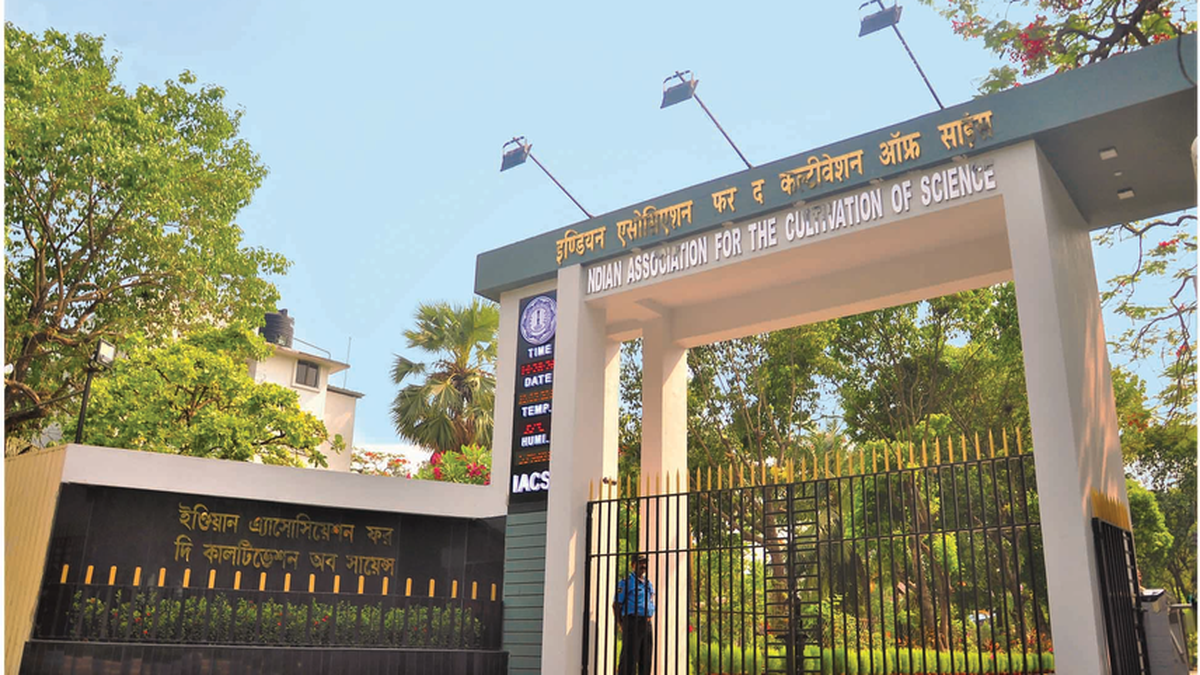
150 years of the Indian Association for the Cultivation of Science

150 years of the Indian Association for the Cultivation of Science

Posted on July 29, 2026 By admin


The late 18th and 19th centuries marked a period of profound intellectual and cultural awakening across India, with Bengal emerging as its prominent centre. Although similar currents of intellectual, social, and cultural reform were taking shape in several other parts of the country, the scale, diversity, and enduring influence of this awakening found their fullest expression in Bengal.

What is now widely known as the Bengal Renaissance not only transformed Bengal but also profoundly influenced the intellectual, social, and cultural evolution of modern India. The movement fostered remarkable advances across a broad spectrum of disciplines, ranging from philosophy, spirituality, literature, and the arts to education, social reform, and the natural sciences. It produced an extraordinary generation of philosophers, reformers, educators, scientists, writers, and artists whose collective vision and achievements laid many of the intellectual and institutional foundations of modern India.

One of the most influential figures of this remarkable period was Mahendralal Sircar (1833-1904). Deeply concerned that the colonial administration had failed to provide adequate opportunities for Indians to pursue education and research in the natural sciences, Sircar articulated a bold vision for scientific self-reliance.

In 1869, in an article published in the Calcutta Journal of Medicine, he proposed the establishment of the Indian Association for the Cultivation of Science (IACS), arguing that scientific education was indispensable for India’s intellectual and societal progress. As he wrote: “The best method, and under the present circumstances, the only method, that we can conceive of, by which the people of India can be essentially improved, by which the Hindu mind can/ be developed to its full proportions, is as we have seen above, by the cultivation of the Physical Sciences”. 

Three years later, while addressing a meeting of the Bethune Society at the Medical College Theatre in Calcutta in 1872, Sircar lamented the lack of institutional support for scientific research in India under colonial rule: “I must say, though I say with deep regret, that our Government has hitherto afforded no opportunity, nor offered any encouragement to the pursuit of science by the native of this country”.

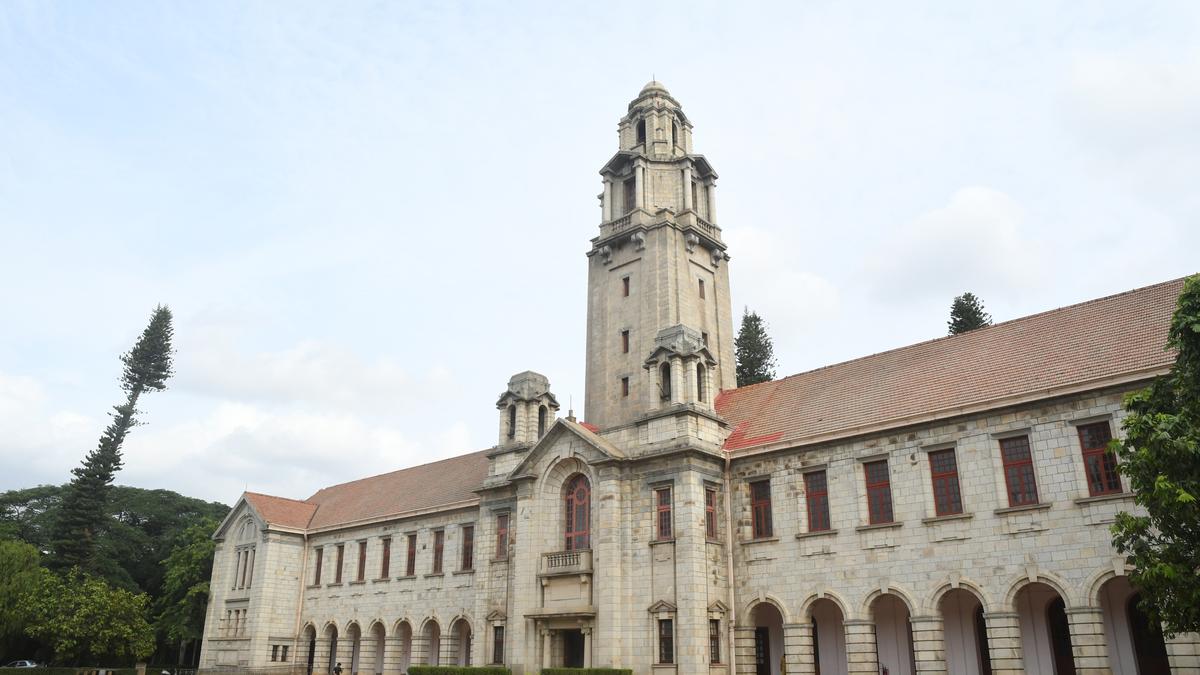
These statements reveal Sircar’s remarkable foresight. At a time when scientific research in India received little official encouragement, he envisioned an institution that would enable Indians to pursue scientific inquiry and contribute to the advancement of knowledge. That vision culminated in the establishment of the IACS on July 29, 1876, as the country’s first national institution dedicated to scientific research by Indians. Today, as we celebrate its 150th anniversary, we honour not merely the founding of an institution but the birth of a scientific movement that transformed the landscape of Indian science.

Among the most celebrated scientists associated with the IACS was C.V. Raman, whose pioneering work transformed modern physics. Shortly after joining the Accountant General’s Office in Calcutta in 1907, Raman noticed a “strange-looking board” bearing the name ‘Indian Association for the Cultivation of Science’. Intrigued, he made enquiries about the institution and was introduced to Amrit Lal Sircar, the son of the Association’s founder. Recognising Raman’s enthusiasm for scientific research, Amrit extended an open invitation to use the Association’s laboratories for Raman’s experiments outside office hours.

For nearly a decade, Raman followed a remarkable routine. He spent the early mornings and evenings at the IACS laboratory while discharging his responsibilities as a government officer during the day. This extraordinary dedication continued until 1917, when he resigned from the Finance Department to accept the Palit Professorship of Physics at the University of Calcutta. Even thereafter, IACS remained the principal venue for his experimental investigations.

It was in the laboratories of IACS that Raman made his most celebrated discovery, the Raman effect, which he announced to the world on February 28, 1928. This landmark discovery earned him the Nobel Prize in physics in 1930, making him the first Asian scientist to win this prize in the sciences. In many ways, Raman’s achievement represented the fulfilment of Mahendralal Sircar’s vision: that an institution founded and nurtured by Indians for the cultivation of science could produce discoveries of the highest international significance.

The founding of the IACS also marked a defining moment in the renaissance of science in India. More than the establishment of a scientific institution, it embodied the aspiration that Indians should not merely learn science but actively create it. Over the past century and a half, IACS has nurtured generations of exceptional scientists, provided a vibrant institutional framework for the pursuit of scientific inquiry, and made contributions of enduring significance to the advancement of science worldwide.

As we commemorate this historic milestone, we pay our deepest tribute to the vision and foresight of Mahendralal Sircar, whose unwavering belief in the transformative power of science made this institution possible. We also celebrate the extraordinary legacy of the IACS itself, a legacy of intellectual curiosity, scientific excellence, and national service that continues to inspire generations of researchers. May that spirit continue to guide the Institute advancing the frontiers of knowledge and contributing to the scientific and technological progress of India and the world.

Shekhar C. Mande is president, Indian National Science Academy, and national president, Vijnana Bharati.

Published – July 29, 2026 09:00 am IST


Source link

Science

Post navigation

Previous Post: 150 years of the Indian Association for the Cultivation of Science
Next Post: Pillion rider cannot be denied compensation citing vehicle rider’s negligence: Kerala High Court

Related Posts

  • Understanding of Earth’s flowering plants blossoms in genome study
    Understanding of Earth’s flowering plants blossoms in genome study Science
  • Joel Mokyr’s story of how science becomes technology is incomplete
    Joel Mokyr’s story of how science becomes technology is incomplete Science
  • Lab-grown human ‘embryo’ created without eggs or sperm
    Lab-grown human ‘embryo’ created without eggs or sperm Science
  • AI accessibility? Blind gamer puts ChatGPT to the test
    AI accessibility? Blind gamer puts ChatGPT to the test Science
  • When a ‘fellow traveller’ went to space
    When a ‘fellow traveller’ went to space Science
  • How is India planning to protect its satellites in space?
    How is India planning to protect its satellites in space? Science

More Related Articles

Microplastics finally found in human brains, but that’s not the full picture Microplastics finally found in human brains, but that’s not the full picture Science
Is bursting firecrackers in rainy weather worse? Is bursting firecrackers in rainy weather worse? Science
Science Quiz: On unusual properties of light Science Quiz: On unusual properties of light Science
Daily Quiz: On NASA’s Artemis II mission Daily Quiz: On NASA’s Artemis II mission Science
Why spacesuits need a major upgrade for the next phase of exploration Why spacesuits need a major upgrade for the next phase of exploration Science
Japan provides up to  million subsidy to moonshot startup ispace Japan provides up to $80 million subsidy to moonshot startup ispace Science
SiteLock

Archives

  • July 2026
  • June 2026
  • May 2026
  • April 2026
  • March 2026
  • February 2026
  • January 2026
  • December 2025
  • November 2025
  • October 2025
  • September 2025
  • August 2025
  • July 2025
  • June 2025
  • May 2025
  • April 2025
  • March 2025
  • February 2025
  • January 2025
  • December 2024
  • November 2024
  • October 2024
  • September 2024
  • August 2024
  • July 2024
  • June 2024
  • May 2024
  • April 2024
  • March 2024
  • February 2024
  • January 2024
  • December 2023
  • November 2023
  • October 2023
  • September 2023
  • August 2023
  • July 2023
  • June 2023
  • May 2023
  • April 2023
  • March 2023
  • February 2023
  • January 2023
  • December 2022
  • November 2022
  • October 2022
  • September 2022
  • August 2022
  • July 2022
  • June 2022
  • May 2022

Categories

  • Business
  • Nation
  • Science
  • Sports
  • World

Recent Posts

  • Neyyar water sharing: From cooperation to friction between Tamil Nadu and Kerala
  • Pillion rider cannot be denied compensation citing vehicle rider’s negligence: Kerala High Court
  • 150 years of the Indian Association for the Cultivation of Science
  • 150 years of the Indian Association for the Cultivation of Science
  • In UNSC, India strongly condemns recent attacks on maritime vessels in Strait of Hormuz

Recent Comments

  1. Jamesdix on UP Teacher Who Asked Students To Slap Muslim Classmate
  2. AlbertBloft on UP Teacher Who Asked Students To Slap Muslim Classmate
  3. Dennisimabe on UP Teacher Who Asked Students To Slap Muslim Classmate
  4. Kennethnew on UP Teacher Who Asked Students To Slap Muslim Classmate
  5. Thomasrar on UP Teacher Who Asked Students To Slap Muslim Classmate
  • Access Denied Business
  • Access Denied World
  • Access Denied
    Access Denied Nation
  • Pakistan PM hails Trump’s ‘extraordinary efforts to pursue peace’ in West Asia
    Pakistan PM hails Trump’s ‘extraordinary efforts to pursue peace’ in West Asia World
  • Bangladesh crisis: court orders probe against former PM Sheikh Hasina
    Bangladesh crisis: court orders probe against former PM Sheikh Hasina World
  • Supreme Court Irked At Lawyer Over ‘Scurrilous’ Remark
    Supreme Court Irked At Lawyer Over ‘Scurrilous’ Remark Nation
  • Benjamin Bonzi fells Norrie in Metz for first ATP title
    Benjamin Bonzi fells Norrie in Metz for first ATP title World
  • LPG hike pushes up food prices across Kerala
    LPG hike pushes up food prices across Kerala Nation

Editor-in-Chief:
Mohammad Ariff,
MSW, MAJMC, BSW, DTL, CTS, CNM, CCR, CAL, RSL, ASOC.
editor@artifex.news

Associate Editors:
1. Zenellis R. Tuba,
zenelis@artifex.news
2. Haris Daniyel
daniyel@artifex.news

Photograher:
Rohan Das
rohan@artifex.news

Artifex.News offers Online Paid Internships to college students from India and Abroad. Interns will get a PRESS CARD and other online offers.
Send your CV (Subjectline: Paid Internship) to internship@artifex.news

Links:
Associate Journalism
About Us
Privacy Policy

News Links:
Breaking News
World
Nation
Sports
Business
Entertainment
Lifestyle

Registered Office:
72/A, Elliot Road, Kolkata - 700016
Tel: 033-22277777, 033-22172217
Email: office@artifex.news

Editorial Office / News Desk:
No. 13, Mezzanine Floor, Esplanade Metro Rail Station,
12 J. L. Nehru Road, Kolkata - 700069.
(Entry from Gate No. 5)
Tel: 033-46011099, 033-46046046
Email: editor@artifex.news

Copyright © 2023 Artifex.News Newsportal designed by Artifex Infotech.