Skip to content
  • Facebook
  • X
  • Linkedin
  • WhatsApp
  • YouTube
  • Associate Journalism
  • About Us
  • Privacy Policy
  • 033-46046046
  • editor@artifex.news
Artifex.News

Artifex.News

Stay Connected. Stay Informed.

  • Breaking News
  • World
  • Nation
  • Sports
  • Business
  • Science
  • Entertainment
  • Lifestyle
  • Toggle search form
  • U.N. declares famine in Gaza, first ever in Middle East
    U.N. declares famine in Gaza, first ever in Middle East World
  • On the student protests in Bangladesh | Explained
    On the student protests in Bangladesh | Explained World
  • All About The Cybersecurity Giant Behind Global IT Outage
    All About The Cybersecurity Giant Behind Global IT Outage World
  • Jailed Imran Khan Banned From Meeting Wife, Lawyers Over “Security Concerns”
    Jailed Imran Khan Banned From Meeting Wife, Lawyers Over “Security Concerns” World
  • Couple Light Fireplace To Beat Cold, Die Of Suffocation In Rajasthan
    Couple Light Fireplace To Beat Cold, Die Of Suffocation In Rajasthan Nation
  • Access Denied
    Access Denied Nation
  • NEET Case Accused Claims “Mistaken Identity” Led To CBI Arrest, Gets Bail
    NEET Case Accused Claims “Mistaken Identity” Led To CBI Arrest, Gets Bail Nation
  • Access Denied
    Access Denied Nation
A trade deal that tests India’s competitive confidence

A trade deal that tests India’s competitive confidence

Posted on July 17, 2026 By admin


‘The gains promised today will become real only if India’s exporters are ready, its procedures are clean, and its enterprises are informed and educated of the opportunities that trade agreements create’
| Photo Credit: The Hindu

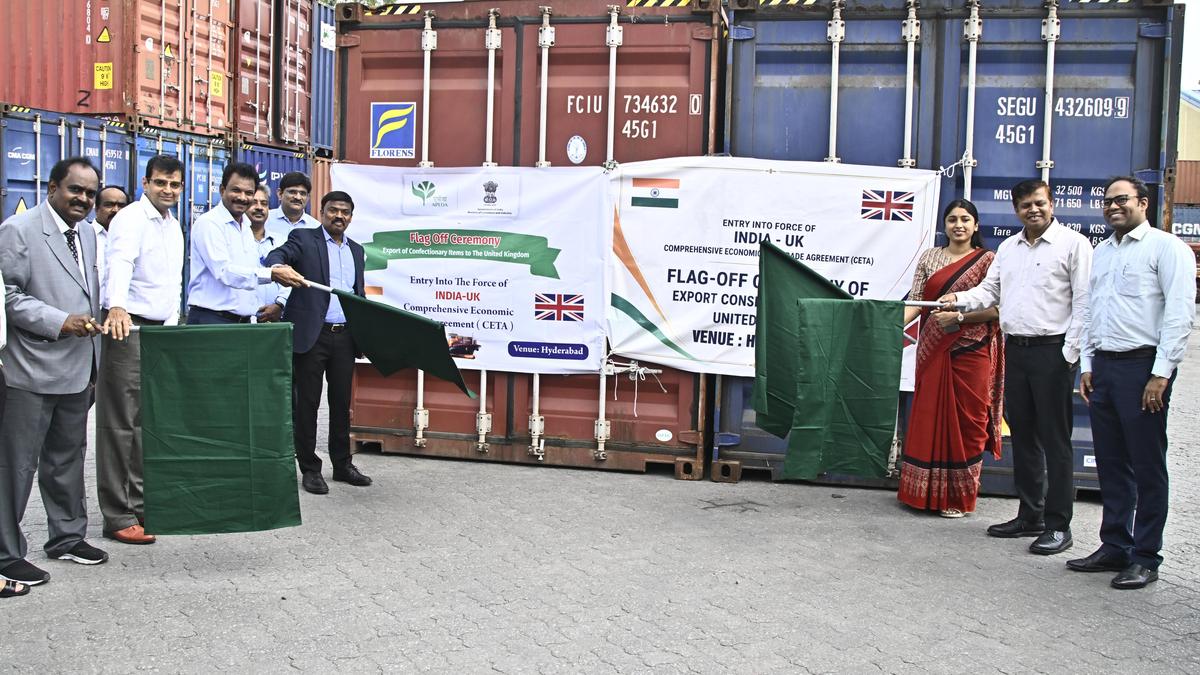
A trade agreement is usually sold on its potential for export facilitation. Its deeper worth often lies in what it obliges the country to import. The Comprehensive Economic and Trade Agreement between India and the United Kingdom, which came into force earlier this month, is a good agreement on the first count. It may prove an even better one on the second.

The first fruits lie here

Start with exports, because that is where the immediate gains lie and where they matter most. Effective July 15, nearly all of India’s exports — about 99% by value — will enter the U.K. free of duty. The tariffs that fall to zero are not on the goods that fill headlines but on the goods that matter to India’s workers: textiles and garments, leather and footwear, marine products, processed food, engineering items, and auto components. These are labour-intensive sectors. They employ precisely the workers India most needs to draw into productive, formal jobs. A garment unit in Tiruppur, Tamil Nadu, or a footwear cluster in Agra, Uttar Pradesh, competes on thin margins; a duty of 12% or 16% at the British border is often the difference between winning an order and losing it.

Hitherto, India has carried a handicap in this aspect. Bangladesh, Pakistan and Cambodia already shipped their garments into Britain duty-free while India’s exports paid the tax. That gap is now closed. This is the part of the agreement that deserves to be recognised, because it bears directly on employment. Trade policy is, in the end, about jobs.

A gain of a different character deserves mention. India is the world’s largest supplier of generic medicines, and Britain buys close to $30 billion of pharmaceuticals a year. Removing the duty lets Indian generics compete on price. This is not a labour story but a scale one — a mature Indian industry meeting one of its largest markets on equal terms.

Another aspect of the agreement too deserves special mention. It settles an old unfairness. An Indian professional posted to Britain for a few years has had to pay into the British social security system money he would almost never see again, while still contributing at home. The Double Contribution Convention that takes effect alongside the trade pact now exempts such workers, and their employers, from that double payment for up to five years. More than 75,000 workers and some 900 companies stand to save on the order of $600 million a year. It is money returned to Indians who go abroad to work, and the removal of a real grievance that had long irritated an otherwise warm relationship.

Opening markets, raising standards

Now to the imports — and to the part of the agreement that will make some people uncomfortable. India has agreed to bring its duty on cars built in Britain down from about 110% towards 10%, and to lower the tax on Scotch whisky from 150% towards 40% over a decade. The cuts are phased across years, capped by quotas, and drafted so that India’s own passenger vehicle industry has the time to enhance its competitiveness. They are, in short, cautious. But they point in the right direction, and the direction is the point.

This is a good place to record what protection does when it is never-ending. It does not build strong industries; it preserves weak ones. An industry that is never made to face a better product never has to make one. India’s own record proves this in both directions. Where its carmakers have had to compete — in small and mid-sized vehicles, at home and abroad — they have become genuinely good. Where they have sheltered behind very high walls, they have had little reason to improve. Letting a limited number of British cars in at a lower duty will not overwhelm anyone. It will do something more useful. It will remind India’s producers that the customer, not the tariff schedule, is the person they must satisfy. Exposure to competition is not a concession to a trading partner. It is a favour we Indians do ourselves. A domestic industry pushed to raise its game confers significant economic benefits over time.

Use the open door

In the end, trade agreements are living arrangements, not monuments. Signing an agreement and making it work are two different tasks, and the second is the harder and longer one. The gains promised today will become real only if India’s exporters are ready, its procedures are clean, and its enterprises are informed and educated of the opportunities that trade agreements create. There is considerable scope for improvement in the utilisation rate of free trade agreements in India. The government and premier industry bodies must actively and continuously engage with small industry and enterprise associations.

India and Britain now intend to double their trade, from about $56 billion, by the end of the decade. Whether they get there will depend less on the text signed last year than on the confidence with which India uses it. That, in the end, is what an agreement like this asks of a nation: to compete. Thiruvalluvar said it more economically than any government could. Those who strive without slackening, he wrote, will see even destiny retreat before them. An open door puts that conviction to the test. India should be glad of the test.

V. Anantha Nageswaran is the 18th Chief Economic Adviser to the Government of India. The views expressed are personal

Published – July 18, 2026 12:08 am IST



Source link

Business Tags:Comprehensive Economic and Trade Agreement between India and the United Kingdom, Double Contribution Convention, engineering items and auto components, goods that matter to India’s workers, India’s exports and free of duty, leather and footwear, marine products, money for British social security system, potential for export facilitation., processed food, supplier of generic medicines, textiles and garments, trade agreement

Post navigation

Previous Post: Dani Olmo — Spain’s orchestrator
Next Post: Malabar pied hornbills sighted in Kannur

Related Posts

  • Portfolio rebalancing benefits – The Hindu
    Portfolio rebalancing benefits – The Hindu Business
  • Access Denied Business
  • Markets rebound in early trade after five days of slump
    Markets rebound in early trade after five days of slump Business
  • Access Denied Business
  • Access Denied Business
  • Video-gaming firms write to PMO seeking distinction from real-money gaming industry
    Video-gaming firms write to PMO seeking distinction from real-money gaming industry Business

More Related Articles

Natco Pharma U.S. arm faces Fresenius complaint over diazepam injection prefilled syringe  Natco Pharma U.S. arm faces Fresenius complaint over diazepam injection prefilled syringe  Business
Rice production short of target in kharif season: Centre Rice production short of target in kharif season: Centre Business
Rupee rises 1 paisa to close at 82.96 against U.S. dollar Rupee rises 1 paisa to close at 82.96 against U.S. dollar Business
Rupee falls 11 paise to 87.29 against U.S. dollar in early trade Rupee falls 11 paise to 87.29 against U.S. dollar in early trade Business
Markets end lower amid profit-booking, mixed global cues Markets end lower amid profit-booking, mixed global cues Business
Access Denied Business
SiteLock

Archives

  • July 2026
  • June 2026
  • May 2026
  • April 2026
  • March 2026
  • February 2026
  • January 2026
  • December 2025
  • November 2025
  • October 2025
  • September 2025
  • August 2025
  • July 2025
  • June 2025
  • May 2025
  • April 2025
  • March 2025
  • February 2025
  • January 2025
  • December 2024
  • November 2024
  • October 2024
  • September 2024
  • August 2024
  • July 2024
  • June 2024
  • May 2024
  • April 2024
  • March 2024
  • February 2024
  • January 2024
  • December 2023
  • November 2023
  • October 2023
  • September 2023
  • August 2023
  • July 2023
  • June 2023
  • May 2023
  • April 2023
  • March 2023
  • February 2023
  • January 2023
  • December 2022
  • November 2022
  • October 2022
  • September 2022
  • August 2022
  • July 2022
  • June 2022
  • May 2022

Categories

  • Business
  • Nation
  • Science
  • Sports
  • World

Recent Posts

  • Bus driver rescues student who jumps into Periyar
  • Oceansat-3A likely to be launched by year-end, says NRSC Director
  • HC seeks Centre’s response on plea for CBI probe into ₹700-crore scam
  • Malabar pied hornbills sighted in Kannur
  • A trade deal that tests India’s competitive confidence

Recent Comments

  1. TimothyBlums on UP Teacher Who Asked Students To Slap Muslim Classmate
  2. Scottemove on UP Teacher Who Asked Students To Slap Muslim Classmate
  3. WilliamNer on UP Teacher Who Asked Students To Slap Muslim Classmate
  4. DavidQuera on UP Teacher Who Asked Students To Slap Muslim Classmate
  5. Traviswat on UP Teacher Who Asked Students To Slap Muslim Classmate
  • Access Denied Business
  • India’s Predicted XI vs Australia, Adelaide Pink-Ball Test: Who Will Make Way For Rohit Sharma And Shubman Gill?
    India’s Predicted XI vs Australia, Adelaide Pink-Ball Test: Who Will Make Way For Rohit Sharma And Shubman Gill? Sports
  • Pakistan Coach Grant Bradburn Backs Misfiring Top-order To Do Well In World Cup 2023
    Pakistan Coach Grant Bradburn Backs Misfiring Top-order To Do Well In World Cup 2023 Sports
  • Access Denied Business
  • Access Denied World
  • Newly-Elected Pak PM Thanks PM Modi For Felicitating Him On His Re-Election
    Newly-Elected Pak PM Thanks PM Modi For Felicitating Him On His Re-Election World
  • Bone Test Of Accused In Baba Siddique Murder Case Proves He Is Not Minor
    Bone Test Of Accused In Baba Siddique Murder Case Proves He Is Not Minor Nation
  • Paris Olympics 2024: Where India’s Medals Could Be Won Or Lost
    Paris Olympics 2024: Where India’s Medals Could Be Won Or Lost Sports

Editor-in-Chief:
Mohammad Ariff,
MSW, MAJMC, BSW, DTL, CTS, CNM, CCR, CAL, RSL, ASOC.
editor@artifex.news

Associate Editors:
1. Zenellis R. Tuba,
zenelis@artifex.news
2. Haris Daniyel
daniyel@artifex.news

Photograher:
Rohan Das
rohan@artifex.news

Artifex.News offers Online Paid Internships to college students from India and Abroad. Interns will get a PRESS CARD and other online offers.
Send your CV (Subjectline: Paid Internship) to internship@artifex.news

Links:
Associate Journalism
About Us
Privacy Policy

News Links:
Breaking News
World
Nation
Sports
Business
Entertainment
Lifestyle

Registered Office:
72/A, Elliot Road, Kolkata - 700016
Tel: 033-22277777, 033-22172217
Email: office@artifex.news

Editorial Office / News Desk:
No. 13, Mezzanine Floor, Esplanade Metro Rail Station,
12 J. L. Nehru Road, Kolkata - 700069.
(Entry from Gate No. 5)
Tel: 033-46011099, 033-46046046
Email: editor@artifex.news

Copyright © 2023 Artifex.News Newsportal designed by Artifex Infotech.