
The story so far:
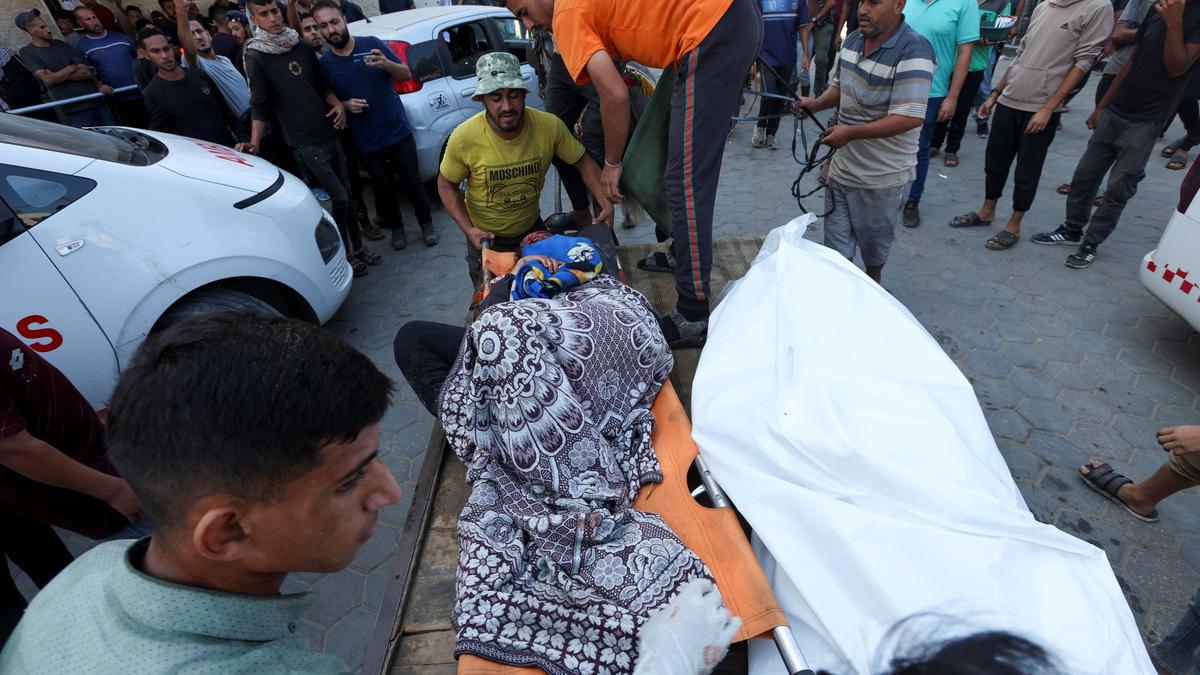
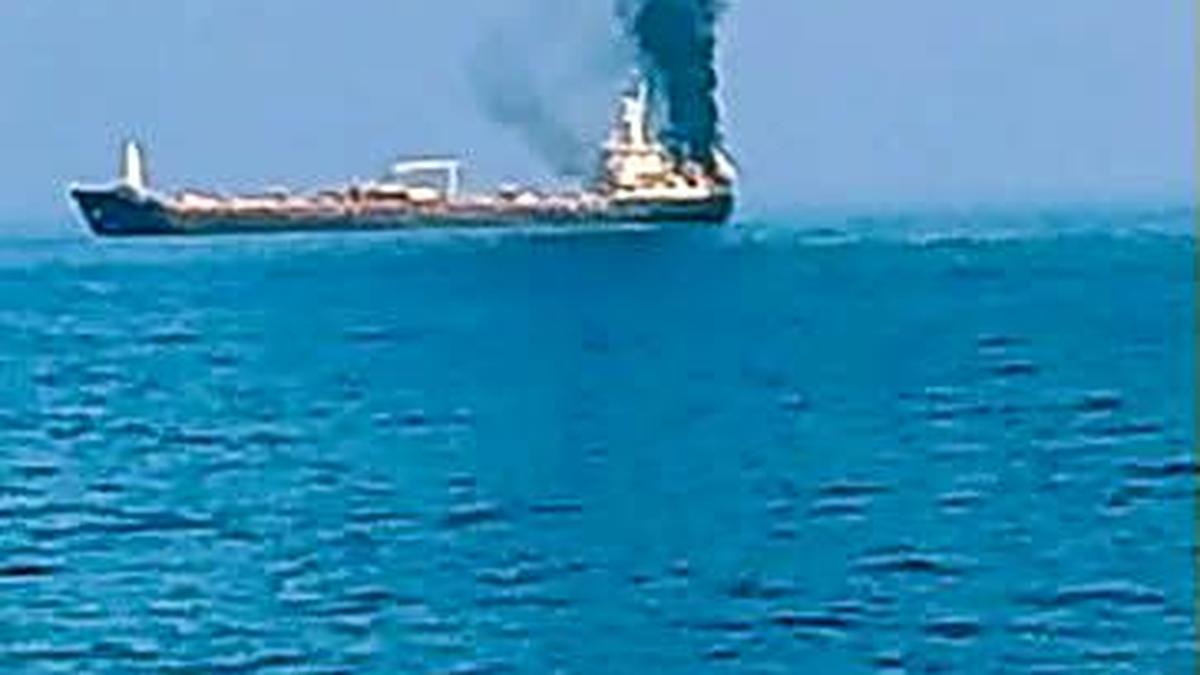
Recently, the U.S. Navy carried out Hellfire missile strikes against three merchant tankers — Marivex, Settebello and Jalveer — all carrying Indian seafarers. While Marivex and Jalveer escaped without casualties, three Indians aboard Settebello — the chief engineer, an engine fitter, and a deck cadet — were killed. Although U.S. President Donald Trump and Iranian President Masoud Pezeshkian signed an MoU on June 17, intended to end the conflict and reopen the Strait of Hormuz, this fragile peace has already been breached by fresh confrontations between U.S. and Iranian forces. Beyond these shifting geopolitical tides, the fundamental legal questions surrounding the attacks on neutral shipping and the accountability for civilian lives lost in these combat zones remain unresolved.
What laws govern naval operations during armed conflict?
The two primary bodies of law governing naval operations during an international armed conflict are the (1) “law of naval warfare” — a branch of law of armed conflict or International Humanitarian Law (IHL) — and the (2) “law of the sea”. The former regulates the conduct of hostilities at sea, including which vessels may be attacked and when merchant ships may be visited and searched, captured, destroyed after capture, or attacked, as well as the declaration and enforcement of ‘naval blockades’. The latter provides the maritime legal framework within which the rights and obligations of belligerent (warring states) and neutral parties operate, thereby shaping the geography of naval operations.
The “law of the sea”, set out primarily in the United Nations Convention on the Law of the Sea (UNCLOS), often called the “Constitution of the Oceans”, defines maritime zones such as the territorial sea (up to 12 nautical miles), exclusive economic zones (EEZs) (up to 200 nautical miles), the high seas, and international straits. Although the U.S., Israel, Iran, and some neutral states are not parties to UNCLOS, its relevant provisions are widely regarded as customary international law binding on all states.
Are neutral merchant vessels and civilians protected?
The “law of naval warfare” does not confer unrestricted authority upon belligerents. Its operation is constrained by IHL, neutrality law, and the “law of the sea”. While ethical restraints on warfare have roots in ancient Greek, Roman, Indian, and Chinese civilisations, their modern legal expression lies in IHL, codified in the 1949 Geneva Conventions and supplemented by other treaties and customary international law. Designed to limit human suffering by regulating the ‘means’ and ‘methods’ of warfare, IHL protects the wounded, sick, prisoners of war, civilians and civilian objects, while restricting certain weapons and methods of combat. Unlike the UN Charter, which governs the legality of starting a war (jus ad bellum), IHL regulates the conduct of war (jus in bello) through the principles of ‘distinction’, ‘proportionality’, ‘military necessity’ and ‘precaution’.
In naval warfare, as on land, civilians and civilian objects are generally protected from attack. Accordingly, submarine cables, pipelines, container ships, and tankers carrying food, fertilizer, or oil may not be targeted. Likewise, the right of “transit passage” through international straits, codified in Part III, Section 2 (Articles 37–44) of UNCLOS and recognised under customary international law, also continues during armed conflict. Equally important is the law of maritime neutrality — a key component of the “law of naval warfare” — which regulates relations between belligerent and neutral states by protecting neutral territory, shipping and commerce from unnecessary interference while requiring neutrals not to provide military assistance to either side. In the Strait of Hormuz, which straddles the territorial seas of Iran and Oman and carries roughly one-fifth of global oil supplies, neutral merchant vessels therefore remain entitled to exercise “transit passage” despite the hostilities.
When do the neutrals lose their protected status?
Under IHL, during an armed conflict, attacks may be directed only against ‘military objectives’. At sea, some vessels (like enemy warships and naval auxiliaries) qualify as ‘military objectives’ by their nature, while others acquire that status because of their use or activities at the time of attack. Yet, the “law of naval warfare” permits attacks on merchant vessels in certain limited circumstances, although not in neutral waters. The San Remo Manual on International Law Applicable to Armed Conflicts at Sea (1994) — the most influential restatement of the “law of naval warfare” — provides that objects may be targeted when they make an effective contribution to military action and their total or partial destruction, capture, or neutralisation offers a definite military advantage (Paragraph 40 of the Manual).
Applying this principle to neutral shipping, Paragraph 67 of the Manual, which specifically addresses merchant vessels flying a neutral state’s flag, permits attacks on neutral merchant ships reasonably believed to be carrying “contraband” or breaching a “blockade”, and after prior warning they intentionally and clearly refuse to stop, or intentionally and clearly resist visit, search or capture, or where ships ‘otherwise make an effective contribution to enemy’s military action’. The International Law Association’s Helsinki Principles on the Law of Maritime Neutrality (1998) adopt a similar approach. By contrast with ‘neutral’ merchant vessels, which typically cannot be captured merely for trading with the enemy, ‘enemy’ merchant vessels are generally liable to “capture” outside neutral waters. However, even the ‘enemy’ merchant vessels may be attacked only when, and for as long as, they qualify as ‘military objectives’, for instance, by laying naval mines, performing functions normally undertaken by naval auxiliaries, or gathering and transmitting tactical intelligence.
Can oil tankers be attacked?
Significantly, the U.S. military has alleged that the Palau-flagged Settebello was illegally transporting Iranian oil. While disputed, the claim raises the question of whether oil carried aboard a ‘neutral’ merchant vessel can be treated as “contraband”. Given its military utility, oil may, in certain circumstances, qualify as “contraband”, but only if destined for enemy-controlled territory or otherwise supporting the enemy’s military effort — a concept particularly relevant to neutral merchant vessels, since enemy merchant ships are already generally liable to capture outside neutral waters.
More fundamentally, the legality of attacking oil tankers turns on whether they qualify as ‘military objectives’. Under the traditional view, commercial exports do not become military objectives merely because they generate revenue for a belligerent; the tanker and its cargo must make an effective contribution to military action, and their destruction must offer a definite military advantage. Ordinary export trade, including oil sold on the open market, is generally considered too remote from military operations to meet this test. In contrast, the U.S.-backed “war-sustaining” theory treats objects that finance or sustain an enemy’s war effort as military objectives, potentially rendering oil exports that generate revenue closely linked to military operations lawful targets.
What about naval blockades?
The U.S. justifies the strikes on the grounds that the vessels were violating an American blockade. Both the San Remo Manual and the Helsinki Principles recognise “blockade” enforcement as a legitimate belligerent right and permit force against neutral vessels reasonably believed to be breaching a lawful “blockade”. A blockade seeks to prevent vessels and aircraft of all nations from entering or leaving enemy-controlled ports, airports or coastal areas, thereby restricting both the import of supplies and the export of goods. Notably, it must be publicly declared, applied impartially to all vessels of all states, including neutrals, and be effective rather than a mere “paper blockade”.
However, compliance with the aforesaid “law of naval” warfare governing blockades is not, by itself, sufficient to justify attacks on neutral vessels. As many international law scholars argue, such actions must also comply with the UN Charter, adopted in 1945, following the devastation of World War II, to maintain international peace and security. Article 2(4) of the Charter prohibits states from using force against another State’s ‘territorial integrity’ or ‘political independence’, except pursuant to UN Security Council authorisation or in self-defence under Article 51, including, under the contested but widely invoked doctrine of ‘anticipatory’ self-defence, against an imminent threat.
Since the U.S. war against Iran arguably has neither Security Council authorisation nor a valid self-defence claim, many scholars view it as violating the UN Charter itself. Consequently, the “blockade” forms part of an unlawful use of force and is therefore unlawful as a matter of jus ad bellum, regardless of its compliance with the law of naval warfare (jus in bello). In other words, the “blockade” and measures taken to enforce it may satisfy the latter but not the former, since the exercise of belligerent rights to enforce a “blockade”, unlike self-defence or UN Security Council authorisation, is not recognised as an exception to Article 2(4)’s prohibition on the use of force.
Importantly, the UN Security Council may authorise forcible measures by member states, and Article 42 expressly identifies “blockade” as one such measure. However, outside a “blockade” authorised by the Security Council, there does not seem to be any jus ad bellum basis for using force against neutral merchant vessels to enforce a “blockade”. The exercise of belligerent rights through attacks on vessels flagged to “neutral” states, including the forcible enforcement of a “blockade” against neutral shipping, sits in direct tension with the UN Charter, irrespective of whether force may lawfully be used against the blockaded state itself. Even where a state possesses a valid jus ad bellum basis for using force to repel an armed attack, it may employ only such force as is necessary and proportionate; that right does not ordinarily extend to attacks on third states or their vessels absent an independent basis for self-defence.
What is next for India?
Beyond the serious doubts surrounding the legality of the U.S. strikes, key questions remain: what intelligence supported the attack; were less intrusive measures such as boarding, diversion or capture available; and were adequate warnings issued to allow civilians to protect themselves? For India, the incident is not merely a diplomatic issue but a legally cognisable injury to its nationals. Under the doctrine of “diplomatic protection”, India has standing to espouse claims arising from injuries to its citizens caused by an internationally wrongful act, demand explanations, seek accountability and compensation, and call for an independent investigation into the deaths of the three seafarers.
(Kartikey Singh, lawyer, and currently working as a Law Clerk-cum-Research Associate at the Supreme Court of India. The views expressed are personal)