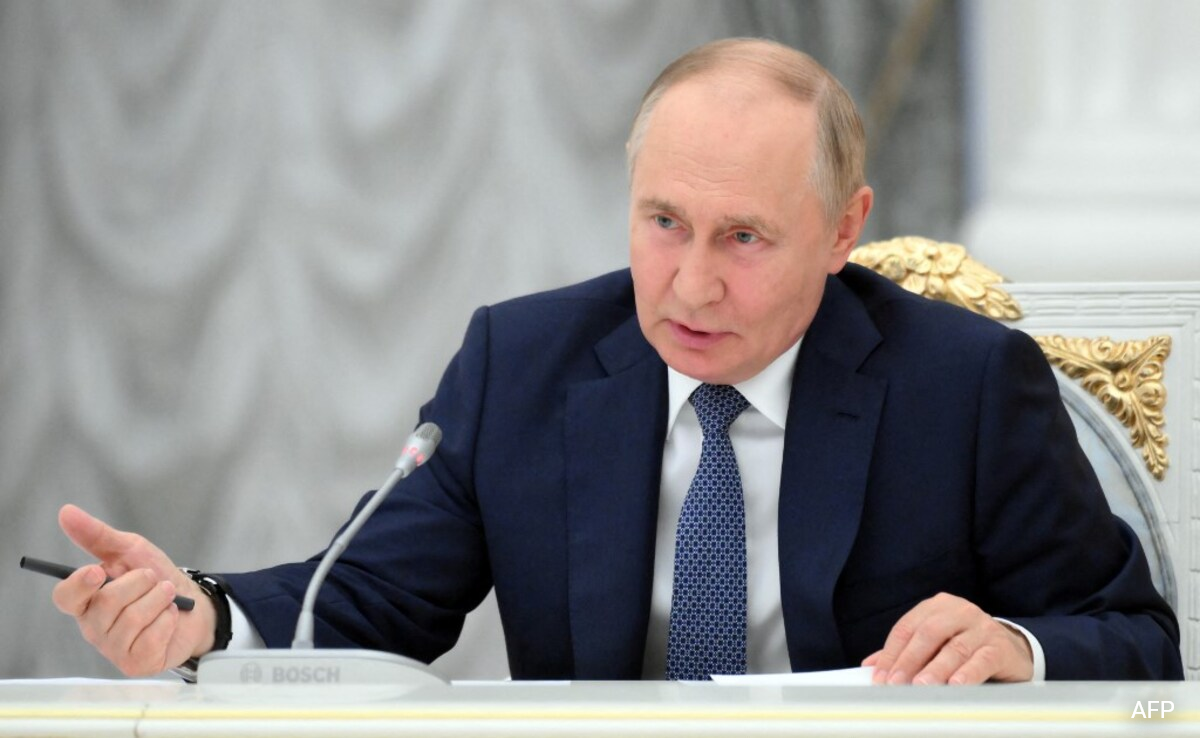




“When we are finished, take over your government. It will be yours to take. This will be probably your only chance for generations,” President Donald Trump told Iranians on February 28, after the U.S. and Israel launched an all-out war on their country. He asked the Islamic Revolutionary Guard Corps (IRGC), armed forces and police to “lay down” weapons. “You will be treated fairly with total immunity, or you will face certain death,” warned Mr. Trump.
The initial blow was devastating for Iran. More than 40 senior officials were killed, including Supreme Leader Ayatollah Ali Khamenei, IRGC commander Mohammad Pakpour and Defence Council chief Ali Shamkhani. Senior Israeli officials had likened the June 12, 2025 strike on Iran, which killed a host of military officers, to the ‘Red Wedding’, the infamous massacre of House Stark members in Game of Thrones. But that attack paled in comparison with the February 28 strikes. This was Iran’s true ‘Red Wedding’ moment.
The U.S. and Israel expected the decapitation strike to trigger the collapse of the Iranian state or plunge the country, already rocked by January’s violent protests, into chaos, paving the way for a more amenable leadership to emerge. Mr. Trump wanted a quick, Venezuela-like solution. This confidence was reflected in his conversation with allies during the early hours of the war. According to Israel’s Ynet News, Mr. Trump told British Prime Minister Keir Starmer that the war would be over “in three days”. When he urged Mr. Starmer to deploy aircraft carriers to West Asia, the British PM said he would first consult his team the following week. “But the war has already started. Next week, the war is going to be over… in three days,” said Mr. Trump.
But he was wrong.
Iran’s response rested on three pillars. One, preserving the state and preventing regime collapse; two, retaliating by regionalising the war; three, enhancing the global economic cost by wielding its most potent strategic lever — the Strait of Hormuz. The state recovered quickly from the initial shock. Ali Larijani, secretary of the National Security Council, was already in charge of critical decision-making. President Masoud Pezeshkian focused on managing the war-time economy and civil administration. Within days of the U.S. attack, Ahmad Vahidi, the ‘ghost general’ of the IRGC, took command of the war effort. (Larijani was later killed in an Israeli strike and was swiftly replaced by Mohammed Bagher Zolqadr, another IRGC commander).
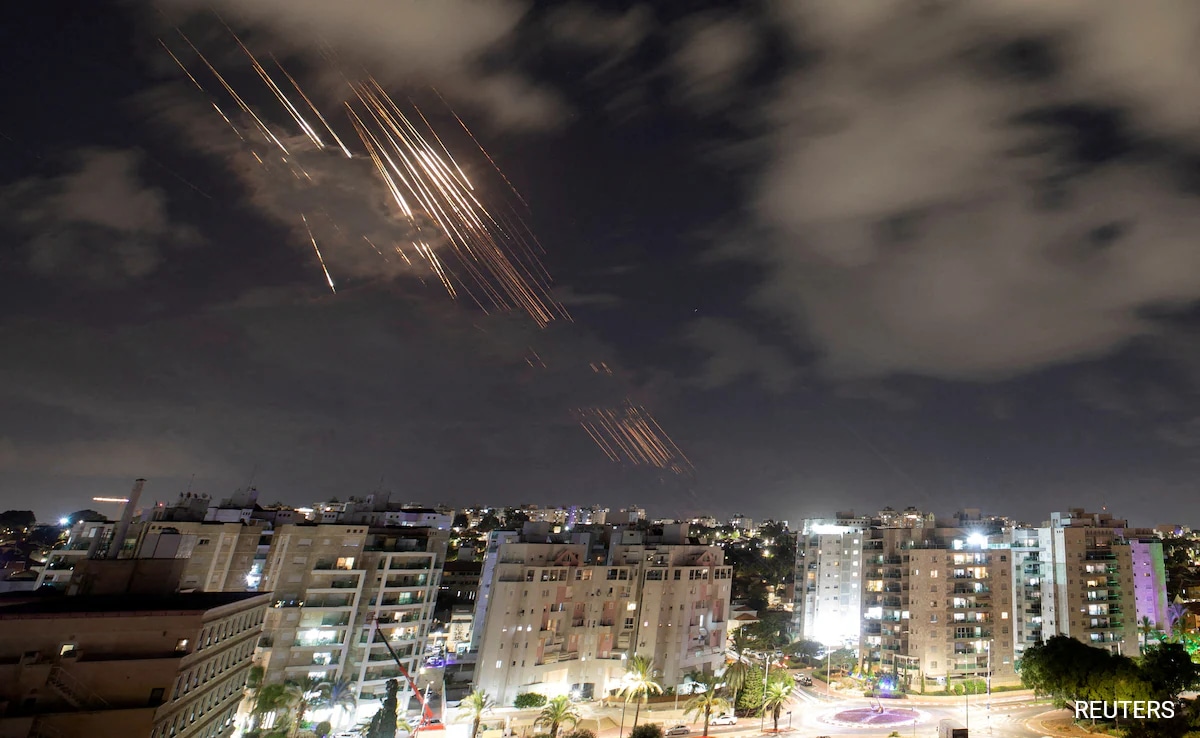
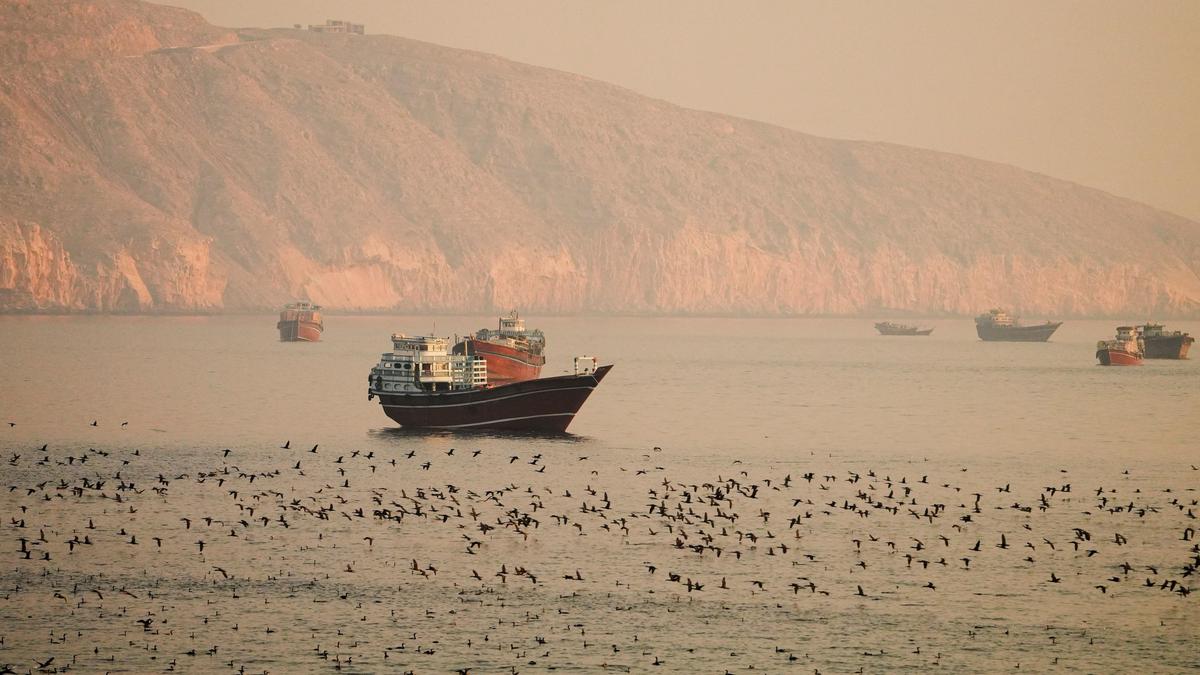
Iran also started striking U.S. bases in Persian Gulf countries and Jordan, besides directly attacking Israel. Among the six Gulf kingdoms, all but Oman have permanent U.S. military bases. Bases, missile defence batteries and sites of American economic presence were all targeted. Russia reportedly shared intelligence with Iran. On March 1, the second day of the war, the IRGC Navy announced that the Strait of Hormuz, through which one fifth of the world’s seaborne oil passed before the war, was closed to all traffic. Shipping companies halted transits, commercial traffic collapsed, insurance costs rocketed and the price of crude oil soared, pushing the global economy to a cliff.
Mr. Trump, having failed to meet his objectives quickly, doubled down on his rhetoric. On March 6, he demanded Iran’s “unconditional surrender” and ruled out any deal with Tehran. Two days later, Iran’s Assembly of Experts chose Mojtaba Khamenei, son of the former leader Ali Khamenei, as the new ‘Leader of the Revolution’. In his first message as the leader, Mojtaba termed the war an “existential struggle”, and said the fighting would continue and that the Strait of Hormuz would remain shut. He delivered a clear message: Iran, despite the punishing American, Israeli attacks, preferred war over surrender.
“Iran was trying to avoid this war from the very beginning. A political solution was available [before the war started]. But Trump and [Israeli Prime Minister Benjamin] Netanyahu were not interested in an agreement. They wanted to change Iran’s government and take over Iran’s oil, creating Israel’s hegemony in this part of the world,” Foad Izadi, professor of world studies at the University of Tehran, told The Hindu. “Of course, they have inflicted huge damage on Iran’s infrastructure and killed a lot of people. But they have failed [to meet their objectives]. And when they realised that they have failed, they entered negotiations,” he added.

Stubborn realities
In Mr. Trump’s view, the U.S. secured a decisive victory over Iran. He said Iran’s navy, air force, air defences and much of its attack capability had been destroyed, and that Tehran was begging for a deal. Yet, he faced a series of stubborn realities. The swift victory he had anticipated remained elusive; Iran’s state survived the bombing; there was no viable military option to reopen the Strait of Hormuz; and Iran’s nuclear programme remained unaddressed and unresolved. “The war has deeply scarred the entire region. Iran suffered heavy blows. Its Supreme Leader was killed, key military and nuclear sites were destroyed, yet it survived and proved it could strike back asymmetrically,” Mohammed Soliman, author of West Asia: A New American Grand Strategy in the Middle East, and a senior fellow at The Middle East Institute, told The Hindu.
Mr. Trump had two options: press ahead with the air campaign, further depleting America’s offensive and defensive stockpiles; or engage Iran diplomatically. If continuing the strikes did not produce a desirable outcome, prolonging the campaign would become futile. He chose the diplomatic alternative. It was at this point Pakistan, a nuclear power with good ties to both Washington and Tehran, stepped in to offer mediation. On April 8, just hours after threatening to erase Iran’s civilisation, Mr. Trump announced a “double-sided ceasefire”.
But the ceasefire did not mean an end to the conflict. Mr. Trump declared that the Strait of Hormuz would be open. Both Iran and Pakistan said the ceasefire covered Lebanon as well. Israel had seized parts of southern Lebanon after the war broke out. Israel continued its strikes, which strained the U.S.-Iran ceasefire. Tehran did not reopen the strait. After direct talks between the U.S. and Iran in Islamabad on April 11-12 failed to make any breakthrough, Mr. Trump announced a blockade of Iranian ports aimed at choking the country’s already broken economy further. He did not want to return to active war, but he wanted to make Iran concede on his critical demands. Iran’s closure of the strait and the American blockade led to repeated skirmishes between the two sides. But despite the tensions, they stayed engaged in talks, exchanging drafts through Pakistan. Iran took a phased approach towards the conflict. It wanted to negotiate a preliminary deal first to bring the war to an end and remove the bottlenecks for shipping in and out of the Persian Gulf, and then, in phase two, hold discussions on the nuclear question. The Trump administration, despite its public protests, accepted this line.
On June 15, the U.S. and Iran announced the memorandum of understanding, extending the ceasefire by 60 more days and paving the way for more substantive talks on critical issues such as Iran’s nuclear programme and western sanctions. The memorandum also said the ceasefire should come into force on all fronts, including Lebanon; the U.S. blockade would be lifted; Tehran would get access to its frozen funds and the U.S. would help create a development plan for Iran, involving $300 billion. On the other side, Iran promised never to make a nuclear bomb (Iran’s official position has always been that it is not seeking to build a bomb, a position which it put on record in the 2015 deal signed with the Obama administration). Iran also promised to ensure safe passage of ships through the Strait of Hormuz without any charge for 60 days.
Mr. Trump’s claims of victory do not align with the text of the MoU. The U.S., which started the war seeking regime change, ultimately offered substantial concessions to the same government, in exchange for commitments not to pursue a nuclear bomb, and to reopen the Strait of Hormuz, which had been open before the war. “It is both a strategic and a military defeat. No strategic or military goals were attained. The region will now have to recalibrate its relation to the U.S. and abandon unrealistic expectations about American power,” Bruno Macaes, a Portuguese political scientist and author, told The Hindu.

A new security order
Before the war began, West Asia looked like a different region. Israel, after regionalising its post-October 7 wars, looked confident of meeting its final objective — bring down the Islamic Republic and build a unipolar West Asia where it would act as the principal security player. The Abraham Accords, which saw the UAE, Bahrain and Morocco sign normalisation agreements with Israel, built the foundation for this ‘new Middle East’. Gulf countries were worried about Iran but felt protected by American military presence. America’s promise for security had been the bedrock of the U.S.-Gulf partnership for decades. As Jimmy Carter said in January 1980, “Let our position be absolutely clear: An attempt by any outside force to gain control of the Persian Gulf region will be regarded as an assault on the vital interests of the United States…” Iran upended not just the Carter doctrine but also the Trumpian effort to reshape West Asia around Israel as its core and Arab states as its pillars.

The U.S. could do little as Iran unleashed its drones and missiles at American bases across the region. Rather than providing security, the bases became magnets for Iranian projectiles. “The idea before the war was that the U.S. would provide security to the Gulf countries. But what happened was that the Gulf countries were burning through their defensive weapons to protect U.S. bases on their soil,” said an Emirati official, requesting anonymity.
At least 13 American bases in the Gulf, including the Al Udeid Air Base in Qatar, the Prince Sultan Air Base in Saudi Arabia, the Ali Al Salem Air Base in Kuwait, the U.S. Fifth Fleet headquarters in Bahrain and the Al Sader and Al Ruwais facilities in the UAE, were damaged. According to a Wall Street Journal visual investigation based on satellite imagery, Iranian attacks devastated the U.S. Navy’s base in Bahrain. The U.S. could do little when Qatar’s Ras Laffan Industrial City, the world’s largest LNG export complex, was hit on March 18. Gulf countries watched with pain and shock as Iran drilled holes into the U.S.-led security architectur.

“Stability will have to come from within since the U.S. proved incapable of providing it. As for U.S. policy, it will become almost entirely mercantile: focus on deals in energy, AI and, of course, weapons,” said Mr. Macaes. Mr. Soliman of the Middle East Institute agreed: “Gulf Arab states will now accelerate their security self-reliance, diversify their defence relationships in addition to the U.S., and seek more pragmatic ways to manage relations with Tehran.”
Gulf states have already begun moving in this direction. They seem to have recognised that the Islamic Republic is not going anywhere, and for their own security and for the safe passage of shipping through Hormuz, they will need to work with Tehran on the basis of peaceful co-existence. What they require is regional stability, and for that stability, as Mr. Macaes put it, they would have to bring “Iran back from the cold”.
“Part of what we are doing now, as regional countries, is to create this regional security framework between us and Iran,” Qatar’s Prime Minister Sheikh Mohammed Al Thani said recently in an interview. “That will hopefully have economic cooperation in the future between all of us,” he added. Saudi Arabia reportedly reached out to Iran to reach an understanding so that the kingdom would be spared if war resumed. U.S. Vice President J.D. Vance recently said the UAE, which has very close ties with Israel, “is having conversations with Iran that have never happened before, including with the IRGC, about economic incentives.” Oman has always kept the diplomatic channels open with Tehran despite the war.
The pre-October 7 push by the U.S. to bring Gulf monarchies and Israel, the two pillars of America’s West Asia policy, closer to build a joint front against Iran appears to have been shattered by this war. “The Abraham Accords and the effort to create a Sunni-Zionist alliance against Iran are dead,” Trita Parsi, executive vice president of Quincy Institute, told The Hindu. “The war proved that the containment of Iran only leads to war, instability, and the defeat of such an alliance. The Arab side sees Israel as a greater threat than needs to be contained, and Iran as a state that they — from a security standpoint — need to integrate with economically, because containment and war failed.”

Israel, left alone
One country that had long sought this war, and was among the most affected by it, was Israel. It was the principal architect of the campaign. Yet, as the conflict went against the initial expectations, Mr. Trump sidelined Israel and chose talks with Iran, ultimately reaching the MoU. With Iran now rewriting the regional security order and engaging in direct talks with the U.S., Mr. Netanyahu’s big push to remap West Asia appears to have backfired. “The end result (of the war) may be the decontainment of Iran and the recontainment of Israel — perhaps going back to the pre-1991 era in which Israel was the regional and international outcast,” said Mr. Parsi. “In this context, India’s investment in an alliance with Israel also appears as a losing bet,” he added, referring to New Delhi’s growing ties with Israel.
Israel stands increasingly isolated on the world stage. Without the U.S., its ability to shape security and geopolitical outcomes is limited. Many in Israel see the U.S.-Iran deal as a major strategic setback. “Israel is going to regret this war because nothing was achieved and Israel lost Trump,” Gideon Levy, Israeli journalist and author, told The Hindu. “Israel should learn now that not everything can be achieved by force, but unfortunately Israel will not draw this lesson.”

At this point, Mr. Netanyahu’s focus is on the trump card he possesses — Lebanon. On June 26, Israel and Lebanon, under U.S. mediation, agreed to a deal under which Israeli troops would stay in southern Lebanon. Iran and Hezbollah have demanded a complete Israeli withdrawal from Lebanon. The first article of the MoU calls for respecting Lebanon’s “territorial integrity and sovereignty” — an indirect call for Israeli troop withdrawal. If Israel doesn’t withdraw, clashes with Hezbollah will persist, meaning a ceasefire in Lebanon would remain out of reach. Tensions have already spilled over into the Strait of Hormuz, where Iran insists that ships should follow its designated route. It attacked a vessel transiting an “unauthorised” route last week, and the U.S. struck Iran on Saturday and Tehran retaliated by attacking U.S. bases in the region. But the U.S. strikes are unlikely to force Iran to give up its newly asserted control over the strait.
“We have to wait and see whether the U.S. and Israel are done with the war or this is just a pause,” said Mr. Izadi, the Iranian professor. “Iran wants these attacks to stop; to get its money back; sanctions to be lifted and its authority over Hormuz recognised. The strait is in Iran’s territory, in its contiguous waters. These are our red lines,” he said. “The U.S. can accept these reasonable demands or they can start the war again. It’s a decision they have to make.”