


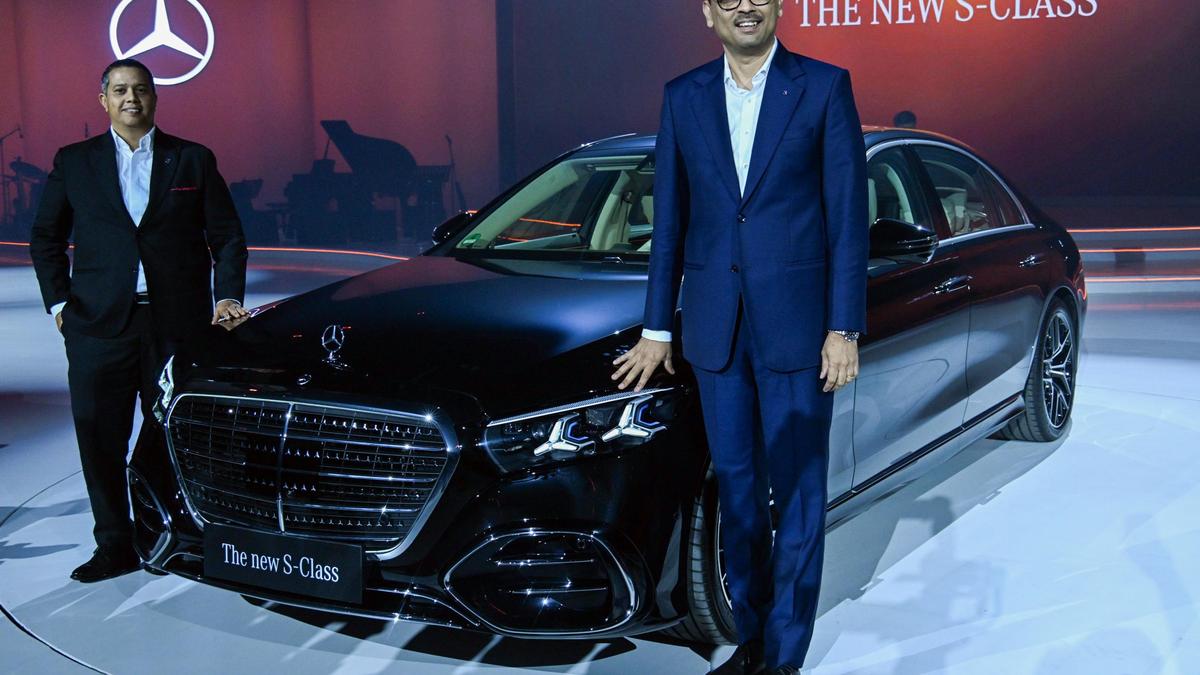
The company recently introduced a plug-in hybrid variant of the S-Class in India, offering nearly 100 km of electric-only driving range and catering to customers seeking electrification without fully transitioning to battery-electric vehicles. File.
| Photo Credit: ANI
Despite the series of shocks including the latest West Asia conflict and the resultant supply chain disruptions & rising crude oil prices, India’s luxury car market remains resilient, with demand continuing to outpace broader industry expectations
The ongoing crisis has had only a limited impact on the luxury vehicle segment, highlighting the sector’s ability to withstand external economic shocks said Santosh Iyer, Managing Director & CEO, Mercedes-Benz India in an interview.
He said consumer demand remained robust, with buyers continuing to purchase high-end vehicles despite global uncertainties. And having already increasing price twice this year, the company is gearing up for another price hike to offset rising cost pressure.
“These crises are now becoming a way of doing business. Ever since Covid, supply chain, semiconductor crisis and so on, we have been navigating through multiple topics. But overall growth is still there, we still see a momentum in the market, consumers are still buying cars, sentiment depends on weeks not months,” he said.
“Mercedes-Benz was the only luxury carmaker to post growth in the first quarter of the year,” he emphasised.
The company, by far the luxury car segment market leader, continues to maintain its forecast of single-digit growth for 2026 reflecting confidence in market momentum and customer sentiment.
While demand has remained unaffected, the crisis has created operational challenges, he stated.
“Rising logistics and supply chain costs, coupled with rupee depreciation, have increased input expenses. We have already implemented two price hikes this year—in January and April—and evaluating another increase to offset cost pressures,” he said.
On the changed business scenario he said, “We have to now manage our business on a monthly, weekly, quarterly basis now. Gone are the days where you can do a long term planning. May be this crisis [West Asia conflict] currently is over but there will be something else coming on the way.”
“So flexibility is the core, thankfully our production, our supply chain all are flexible on powertrain options. On the demand side we are able to adjust based on what the market needs,” he stated.
He said the company has successfully managed supply chain disruptions, ensuring steady vehicle and spare parts availability.
Some models, including the CLA, have already been sold out for the year, underlining strong customer interest, he said.
The luxury carmaker also remains optimistic about its top-end vehicle portfolio, led by the iconic S-Class.
“Top-end vehicles account for 27% of Mercedes-Benz India’s sales, while electric vehicles contribute around 20% of sales in this segment,” he added.
The company recently introduced a plug-in hybrid variant of the S-Class in India, offering nearly 100 km of electric-only driving range and catering to customers seeking electrification without fully transitioning to battery-electric vehicles.
Looking ahead, Mercedes-Benz expects both the luxury car industry and its own business to continue growing this year, despite ongoing geopolitical and economic headwinds.
Published – June 17, 2026 11:34 pm IST