




Skip to content
  • Facebook
  • X
  • Linkedin
  • WhatsApp
  • YouTube
  • Associate Journalism
  • About Us
  • Privacy Policy
  • 033-46046046
  • editor@artifex.news
Artifex.News

Artifex.News

Stay Connected. Stay Informed.

  • Breaking News
  • World
  • Nation
  • Sports
  • Business
  • Science
  • Entertainment
  • Lifestyle
  • Toggle search form
  • Typhoon Kajiki drenches southern China’s Hainan island, heads toward Vietnam
    Typhoon Kajiki drenches southern China’s Hainan island, heads toward Vietnam World
  • Access Denied Business
  • Who Is Jasveen Sangha, “Ketamine Queen” Charged For Matthew Perry’s Death
    Who Is Jasveen Sangha, “Ketamine Queen” Charged For Matthew Perry’s Death World
  • Losing the way: On ISRO and issues with its NavIC constellation
    Losing the way: On ISRO and issues with its NavIC constellation Science
  • Arvind Kejriwal Sent To 14-Day Judicial Custody In Delhi Liquor Policy Case
    Arvind Kejriwal Sent To 14-Day Judicial Custody In Delhi Liquor Policy Case Nation
  • Access Denied Business
  • Kuwait accuses Iran of sending armed Revolutionary Guard team to attack an island in nation
    Kuwait accuses Iran of sending armed Revolutionary Guard team to attack an island in nation World
  • CK Birla Group to sell Orient Cement to Adani Group at ₹8100 crore equity value
    CK Birla Group to sell Orient Cement to Adani Group at ₹8100 crore equity value Business
Not binary: India can save its forests by winning the war on poverty

Not binary: India can save its forests by winning the war on poverty

Posted on June 14, 2026 By admin


Traditionally, many conservationists and policymakers have seen biodiversity conservation as a choice between protecting nature and meeting human needs. Forests were often seen as places that had to be protected from people, while alleviating poverty and economic development were treated as separate concerns.

A new international study has concluded that this is a harmful view.

In a paper in the journal Nature Sustainability, researchers from the University of Notre Dame, the University of Michigan, Yale University, the University of Colorado Boulder (U.S.), the Swedish University of Agricultural Sciences, the University of Manchester (U.K.), the University of Victoria (Canada), and the Indian School of Business analysed data from community-managed forests in the tropics.

The data came from the International Forestry Resources and Institutions network, and spanned 322 community-managed tropical forests in 15 countries from 1993 to 2017.

The dataset’s size allowed the researchers to understand both current patterns in forest biodiversity and how they had changed over time. Principally, they found a significant link between people’s livelihoods and forest biodiversity.

Forests, people, livelihoods

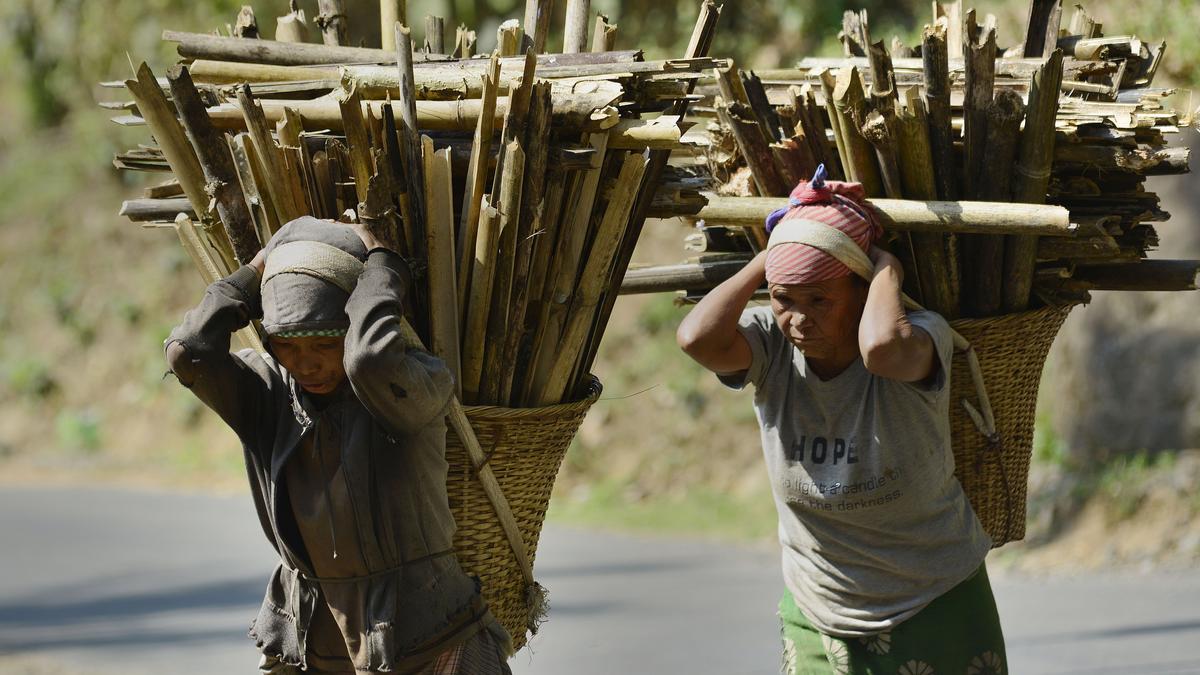
Forests with more poor households and communities that depended more on fuelwood were also found to have less diverse tree species. The team also found similar patterns in forests in densely populated areas with higher levels of poverty.

On the other hand, forests where communities had access to alternative livelihoods, such as farming, had more diverse trees.

Tree species diversity refers to the number of tree species in a forest; it is an important measure of biodiversity. Forests with more species tend to support more wildlife, are ecologically more stable, and are often more resilient to environmental change.

Overall, the analysis found that a greater dependence on forest resources was associated with lower tree species diversity.

However, the researchers emphasised that poverty is not responsible for biodiversity loss. They pointed out that when people have fewer livelihood options and depend heavily on forests to survive, the pressure on forest resources automatically increases. The way out is to improve economic opportunities.

The fortress model

The study also focused on human-dominated landscapes, which are common in India. Most forests in the country are owned and managed by State Forest Departments. And for decades, this apparatus has followed the fortress model — where protected areas are managed by minimising human activities and restricting access to resources. While this model has allowed the Departments to recover several iconic species and strengthen protection, it has some severe limitations.

Today, many protected areas are increasingly becoming isolated islands surrounded by human-dominated landscapes.

“The forests in these landscapes are smaller in size and bear a heavy burden of extraction,” Ashwini Chhatre, associate professor of Public Policy at the Indian School of Business and one of the study’s authors, said.

Around 275 million people depend on these forests to varying degrees for their livelihoods and daily needs.

“But these forests are ecologically important and provide significant ecosystem services,” Dr. Chhatre said.

According to him, the new findings can be used to support conservation by prioritising wildlife corridors — patches of forests that form a loose link between protected areas.

“These corridors are used by large mammals to move between protected areas. The improvement of species richness in these corridors will increase forest resilience and support conservation directly,” he said.

Helping conservation

To reduce pressure on forests, State Forest Departments across India have introduced initiatives like distributing subsidised LPG connections and efficient cooking stoves and heaters around many tiger reserves and national parks. The measures reduce people’s need for fuelwood and to enter forests.

Extending similar support to private landholdings and community forests along wildlife corridors could help conservation.

However, Imran Siddiqui, senior field conservationist at the Centre for Wildlife Studies, who has worked extensively in protected areas and with forest communities in Andhra Pradesh and Telangana, said that while such initiatives are well-intentioned and that communities often welcome them, they face implementation challenges.

“Funding can be inconsistent, participation from local communities may vary, and long-term support is not always guaranteed,” he said.

Conservation partners

Today, there is growing recognition among wildlife conservationists and forest managers that conservation can’t succeed without the support of local communities.

In addition to fuel alternatives and subsidies, many State Forest Departments also give local community members jobs in tourism, forest protection, and seasonal conservation work.

The late ecologist Madhav Gadgil was a strong advocate of an inclusive approach, believing conservation efforts would be more effective if local communities had rights, incentives, and a meaningful role in managing natural resources. He also emphasised the value of traditional ecological knowledge, and argued people who had lived alongside forests for generations possessed insights that could complement scientific approaches to conservation.

In Ladakh, the Snow Leopard Conservancy has mitigated economic losses of human-wildlife conflict with community-run homestays and livestock insurance programmes. In Maharashtra’s Sindhudurg district, village-based Mangrove Co-Management Committees help protect mangrove ecosystems while supporting fisheries, ecotourism, and sustainable aquaculture.

In Arunachal Pradesh, hornbill nest adoption programmes run by the Nature Conservation Foundation have encouraged local communities to protect nesting sites, with former Nyishi tribe hunters now serving as nest protectors and forest patrollers.

There is also tremendous scope to expand these initiatives and to further support community welfare.

As Mr. Siddiqui said, wildlife tourism is a growing multi-million-dollar industry, yet only a small fraction of its revenue reaches the communities living alongside forests and protected areas. He added that a greater share of these benefits should be directed to local communities, creating stronger incentives for conservation.

The findings of the new study highlight the close links between alleviating poverty and conserving biodiversity, and show how socio-economic conditions and conservation goals need not be in conflict with each other. By recognising these connections, both conservationists and policymakers can design more inclusive frameworks to benefit both people and nature.

Ipsita Herlekar is an independent science writer.


Source link

Science

Post navigation

Previous Post: Minor among four apprehended for alleged role in Govindpuri fire that killed three
Next Post: CJP protest in Bengaluru LIVE: Prakash Raj, Sonam Wangchuk, among others to participate

Related Posts

  • The U.S. govt. policy is to systematically cut off any source of income to Cuba: Mitchell Valdes-Sosa
    The U.S. govt. policy is to systematically cut off any source of income to Cuba: Mitchell Valdes-Sosa Science
  • Boeing’s first astronaut flight called off at the last minute in latest setback
    Boeing’s first astronaut flight called off at the last minute in latest setback Science
  • Scientists find ‘hidden’ hormone keeping mice mothers’ bones healthy
    Scientists find ‘hidden’ hormone keeping mice mothers’ bones healthy Science
  • Google’s Willow quantum processor — how it works, why it matters
    Google’s Willow quantum processor — how it works, why it matters Science
  • Daily Quiz | On World Bee Day – May 20, 2024
    Daily Quiz | On World Bee Day – May 20, 2024 Science
  • ISRO’s PSLV-C60 Mission: 10 payload from non-government entities successfully deployed on POEM-4 
    ISRO’s PSLV-C60 Mission: 10 payload from non-government entities successfully deployed on POEM-4  Science

More Related Articles

NASA Artemis II launch: Astronauts reach orbit on historic mission to moon and back NASA Artemis II launch: Astronauts reach orbit on historic mission to moon and back Science
Coastal flooding harms different tree species differently: study Coastal flooding harms different tree species differently: study Science
Why are school buses yellow Why are school buses yellow Science
The impact of India-EU FTA on AI and semiconductor tech The impact of India-EU FTA on AI and semiconductor tech Science
Indian scientists build breakthrough gene-editor, aim for patent Indian scientists build breakthrough gene-editor, aim for patent Science
Only the second animal to find its way by polarised moonlight found Only the second animal to find its way by polarised moonlight found Science
SiteLock

Archives

  • June 2026
  • May 2026
  • April 2026
  • March 2026
  • February 2026
  • January 2026
  • December 2025
  • November 2025
  • October 2025
  • September 2025
  • August 2025
  • July 2025
  • June 2025
  • May 2025
  • April 2025
  • March 2025
  • February 2025
  • January 2025
  • December 2024
  • November 2024
  • October 2024
  • September 2024
  • August 2024
  • July 2024
  • June 2024
  • May 2024
  • April 2024
  • March 2024
  • February 2024
  • January 2024
  • December 2023
  • November 2023
  • October 2023
  • September 2023
  • August 2023
  • July 2023
  • June 2023
  • May 2023
  • April 2023
  • March 2023
  • February 2023
  • January 2023
  • December 2022
  • November 2022
  • October 2022
  • September 2022
  • August 2022
  • July 2022
  • June 2022
  • May 2022

Categories

  • Business
  • Nation
  • Science
  • Sports
  • World

Recent Posts

  • What is a mid-year Margazhi? Chennai-based Aavaranaa tell you the answer
  • What the 14-point MoU between Iran and the U.S. means for shipping
  • TVK government’s White Paper puts Tamil Nadu’s debt at ₹13.18 lakh crore
  • Bengaluru murder: Woman strangled to death by live-in partner in Malleswaram
  • OECD oil stocks fall to lowest level since 1990: IEA

Recent Comments

  1. BernardTek on UP Teacher Who Asked Students To Slap Muslim Classmate
  2. MichaelTwerb on UP Teacher Who Asked Students To Slap Muslim Classmate
  3. WilliamNah on UP Teacher Who Asked Students To Slap Muslim Classmate
  4. Danielcet on UP Teacher Who Asked Students To Slap Muslim Classmate
  5. Jesseuncef on UP Teacher Who Asked Students To Slap Muslim Classmate
  • Erling Haaland Doubles Up In Manchester City Stroll As Spurs Fume
    Erling Haaland Doubles Up In Manchester City Stroll As Spurs Fume Sports
  • India Squad For Champions Trophy: Out Of Favour Ishan Kishan, Axed From BCCI Contracts, Makes Surprise Entry In Spot Race
    India Squad For Champions Trophy: Out Of Favour Ishan Kishan, Axed From BCCI Contracts, Makes Surprise Entry In Spot Race Sports
  • Trade, energy, discussions on global conflicts to top agenda for Modi’s Nordic visit
    Trade, energy, discussions on global conflicts to top agenda for Modi’s Nordic visit World
  • Women biotech scientists await funds for research
    Women biotech scientists await funds for research Science
  • Access Denied World
  • Adani Enterprises Says No Disclosure Required On US Regulator Report Business
  • Petition In Supreme Court To Restrain Centre From Appointing Poll Officers
    Petition In Supreme Court To Restrain Centre From Appointing Poll Officers Nation
  • Hundreds of S African miners remain underground in union dispute
    Hundreds of S African miners remain underground in union dispute World

Editor-in-Chief:
Mohammad Ariff,
MSW, MAJMC, BSW, DTL, CTS, CNM, CCR, CAL, RSL, ASOC.
editor@artifex.news

Associate Editors:
1. Zenellis R. Tuba,
zenelis@artifex.news
2. Haris Daniyel
daniyel@artifex.news

Photograher:
Rohan Das
rohan@artifex.news

Artifex.News offers Online Paid Internships to college students from India and Abroad. Interns will get a PRESS CARD and other online offers.
Send your CV (Subjectline: Paid Internship) to internship@artifex.news

Links:
Associate Journalism
About Us
Privacy Policy

News Links:
Breaking News
World
Nation
Sports
Business
Entertainment
Lifestyle

Registered Office:
72/A, Elliot Road, Kolkata - 700016
Tel: 033-22277777, 033-22172217
Email: office@artifex.news

Editorial Office / News Desk:
No. 13, Mezzanine Floor, Esplanade Metro Rail Station,
12 J. L. Nehru Road, Kolkata - 700069.
(Entry from Gate No. 5)
Tel: 033-46011099, 033-46046046
Email: editor@artifex.news

Copyright © 2023 Artifex.News Newsportal designed by Artifex Infotech.