
The history of Iran is replete with paradoxes and exceptions. It is a land of great contrasts both in climate and geography and is inhabited by, in the words of an ancient historian, “a poor people with a proud spirit.” Given its location, the Iranian people and its rulers have interacted with its neighbouring states throughout history both as their oppressors and as victims.
Over the past two centuries, Iran has oscillated between extremes as the country searched for a viable response to the multiple challenges of Western style modernity. Under the Qajar and Pahlavi dynasties, it sought for an emulation of all things Western until the Islamic Revolution of 1979 reversed the trend and brought forth a new prototype.
The decline of the Shah
The discovery of oil in the country in 1901 had led to the formation of the Anglo-Iranian Oil Company (AIOC) with the British government holding almost half its shares. However, post World War II, its nationalisation in 1953 resulted in tensions with Western powers, which led to the active involvement of the CIA (Central Intelligence Agency) in overthrowing the then Mosaddeq government. The U.S. then became the deciding factor in resolving the Anglo-Iranian nationalisation dispute.
Developments in the global oil market saw Iranian oil revenues increase from $2 billion to $20 billion in 1974. This resulted in poorly conceived and badly implemented programmes of socio-economic and military modernisation by the Shah; his so-called White Revolution (a series of reforms to modernise Iran) and ‘Great Civilisation’ projects (highlighted by the 2,500th anniversary of the Iranian monarchy) were not successful and were widely resented within Iran. The major sources of opposition were political organisations from both the left and the right; pro-democracy reformists; merchants and bazaaris; and the ulema (recognised scholars of Islam).
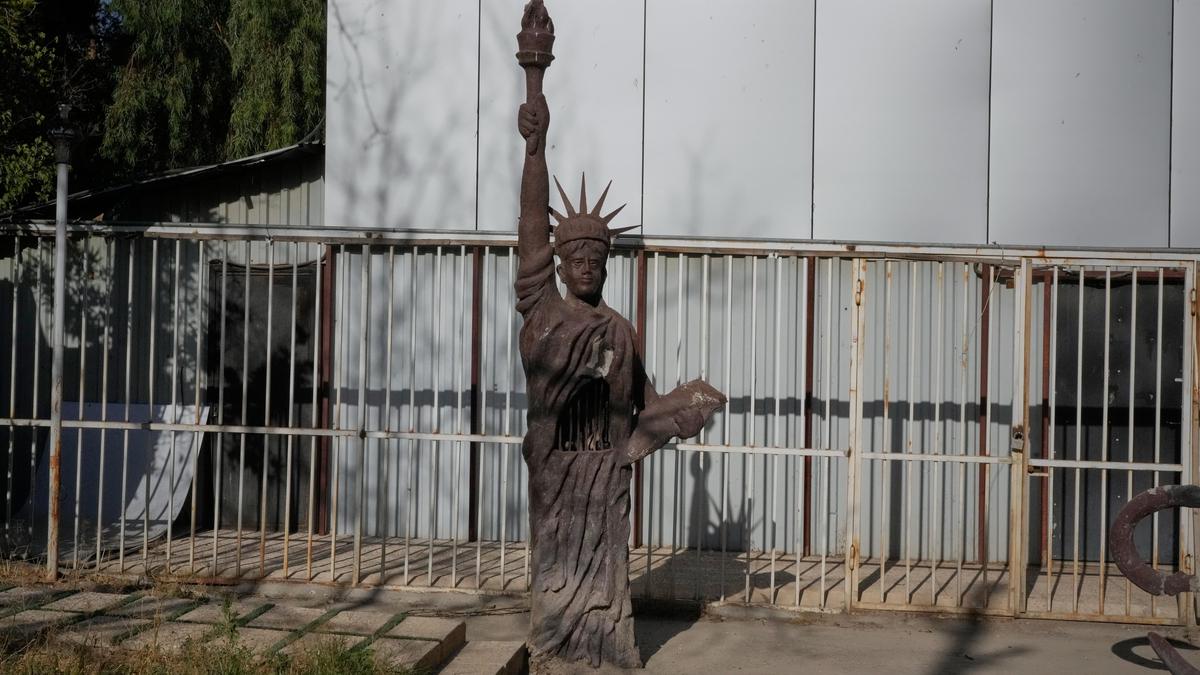
In addition, and despite “parallelism of interests” between the two countries, the presence of Americans everywhere was resented by the Iranian public. As James Bill put it in his book The Eagle and the Lion, “the very best and very worst of America were on display in the cities of Iran.” In the 1970s, according to a contemporary observer, “the political culture of the Shah’s regime both became more repressive and hardened on the one hand, and more remote and attenuated on the other.” The subsequent ‘progress’ in U.S.-Iran relations emanated from wrong policies, misunderstandings and cultural misperceptions. These together contributed to the U.S. becoming in the eyes of Iran, the ‘Great Satan’.
Also in the 1970s, the U.S. encouraged Iran to develop nuclear power arguing that the country would eventually run out of oil. The Shah also periodically hinted that he wanted Iran to build nuclear weapons and, in response to official denials, said Iran “has no intention of acquiring [them] but if small states began building them, then Iran might to reconsider its policy.” U.S. documents of that period suggest that it was in the U.S.’s national interest, both with respect to the economy and security, to have Iran acquire nuclear power.
However, by the end of 1977, the Shah had alienated the ulema, estranged the merchants, and created a poor and deracinated working class in Tehran. He had also alienated many of the educated middle-class through his oppressive policies and human rights abuses. As alternatives, radical intellectuals such as Ali Shariati propagated the ideology of ‘Red Shiism’ (a reinterpretation of Shi’a Islam as an active, classless movement for social justice). The Marxists were also active as the Tudeh party before being suppressed. But separately, and with greater impact and influence, Ayatollah Khomeini was advocating for the Vilayat-e-Faqih (Regency of the Islamic Jurist).
The revolution of 1979 was not primarily a religious event though it drew strength from its Shia form. It was sustained by middle-class disillusionment with corruption and economic stagnation. The process of Islamisation of the state and society commenced with a national referendum in March 1979 and gradually enveloped the institutions and practices of the state.
Post the revolution
In November 1979, prompted by news that the former Shah was being given asylum in the U.S., students broke into the U.S. embassy in Tehran and took the diplomats hostage. A laudatory account of that episode, which had far-reaching consequences, was written by one of its women student leaders Massoumeh Ebtekar. In an interview to a U.S. scholar about the hostages, Ms. Ebtekar said “it is very difficult to compare the suffering that the Iranian nation felt during fifty years of foreign domination and comparing that to the suffering or pain that may have faced during these 444 days.”
This sudden and sharp decline in U.S.-Iran relations changed the global picture as seen from Washington. Regional tranquillity was further shattered when Iraq disowned the 1975 Algiers Treaty and invaded Iran in 1980 at different points of their common border. The seven-year war, from 1980 to 1987, unleashed by Iraq became for Iran a defence of its national territory. It transformed from a border war on Iran’s western borders in the first two years to becoming a full-fledged war extending into the interior cities. It became an inescapable fact of life in Iran and merged into the consciousness of the public.
Iraq was assisted in the war by most Arab countries as well as by the U.S. Each had its own reasons to be apprehensive of Iran’s revolutionary agenda emphasised in Khomeini’s pronouncement that “there is only one way to save this revolution and that is to rapidly export the revolution, mobilise the world’s Muslims and, later on all oppressed masses against the oppressors and governments related to them”.
The role of Israel
Israel covertly assisted Iran, viewing Iraqi President Saddam Hussein as the more severe, existential threat. This pragmatism overrode the ideological hostility against the newly established Islamic Republic and resulted in a crucial, multi-faceted role for Israel. The country became one of Iran’s primary sources of military equipment, covertly providing desperately needed spare parts, ammunition, and heavy weapons. In 1980, it secretly supplied Iran with hundreds of spare tires to keep its grounded American-made F-4 Phantom fighter jets operational. In exchange for covert arms sales, Israel received Iranian crude oil. This helped Israel bypass the severe energy shortages caused by the 1979 oil crisis, while allowing Iran to sustain its war effort. It also provided Israel’s domestic defence industry with valuable combat-testing data for its weapons.
Israeli policymakers believed that a strong and well-supplied Iran would successfully bog down Saddam Hussein’s military, preventing Iraq from posing a threat to its neighbours or Israel itself. By ensuring that the two most hostile regional powers spent eight years depleting each other’s military, economic, and human resources, the conflict provided Israel with a highly valuable “strategic breather”. It also, at times, helped facilitate the safe and unhindered emigration of the Persian Jewish community out of Iran.
The war gave the revolutionary authorities of Iran an opportunity to weaken the Iranian national army of the Shah’s period and to create instead the ‘Sepahe-e-Pasdaran’ or the Islamic Revolutionary Guard Corps. It went from strength to strength during the war, numbering around 1 million while the regular armed forces numbered around 3,55,000.
Iran’s determination
Iran showed considerable ingenuity in meeting the challenge of Iraq-Iran war. It reduced the import of non-essentials and managed to keep its oil flowing despite periodic air attacks. It diversified sources of arms supply and capitalised on the support of the masses for the war while squeezing the well to do and the bazaaris. The war to all intents and purposes became the sole criterion for judging the Islamic Republic.
There was some public opposition to the conduct of the war such as from the Islamic Liberation Movement, co-founded by former Prime Minister Mehdi Bazargan, which labelled the continuation of the war as ‘un-Islamic’. Separately, reports indicative of ‘chronic disorder of governance’ have appeared in publications close to the establishment, suggesting ‘prolonged ambiguity’ in decision-making.
The Iranian tenacity during the Iraq war, and in the ongoing U.S.-Israel conflict, is evidence enough of its capacity and determination to endure and overcome adversity. Iran has asserted its place in the region and is not oblivious of it in the world of tomorrow.
Hamid Ansari is Former Vice-President of India.
Published – June 17, 2026 12:39 am IST