

Skip to content
  • Facebook
  • X
  • Linkedin
  • WhatsApp
  • YouTube
  • Associate Journalism
  • About Us
  • Privacy Policy
  • 033-46046046
  • editor@artifex.news
Artifex.News

Artifex.News

Stay Connected. Stay Informed.

  • Breaking News
  • World
  • Nation
  • Sports
  • Business
  • Science
  • Entertainment
  • Lifestyle
  • Toggle search form
  • Cochin Minerals and Rutile pay-off case: ED questions company CFO
    Cochin Minerals and Rutile pay-off case: ED questions company CFO Nation
  • Access Denied World
  • ACME Group plans to invest ₹5,000 crore to produce green steel 
    ACME Group plans to invest ₹5,000 crore to produce green steel  Business
  • Shinzo Abe assassination case: Trial begins in Japan for man accused of using homemade firearm World
  • 6 Killed, Dozens Wounded In Shooting Near Mosque In Oman
    6 Killed, Dozens Wounded In Shooting Near Mosque In Oman World
  • India tour of Australia: India vs Australia fifth Test day 3 border gavaskar trophy head coach gautam gambhir press conference
    India tour of Australia: India vs Australia fifth Test day 3 border gavaskar trophy head coach gautam gambhir press conference Sports
  • Nifty Bulls Eye 25,500 Breakout For Further Upside Business
  • Access Denied Sports
How resilient is our grid system?

How resilient is our grid system?

Posted on May 24, 2026 By admin


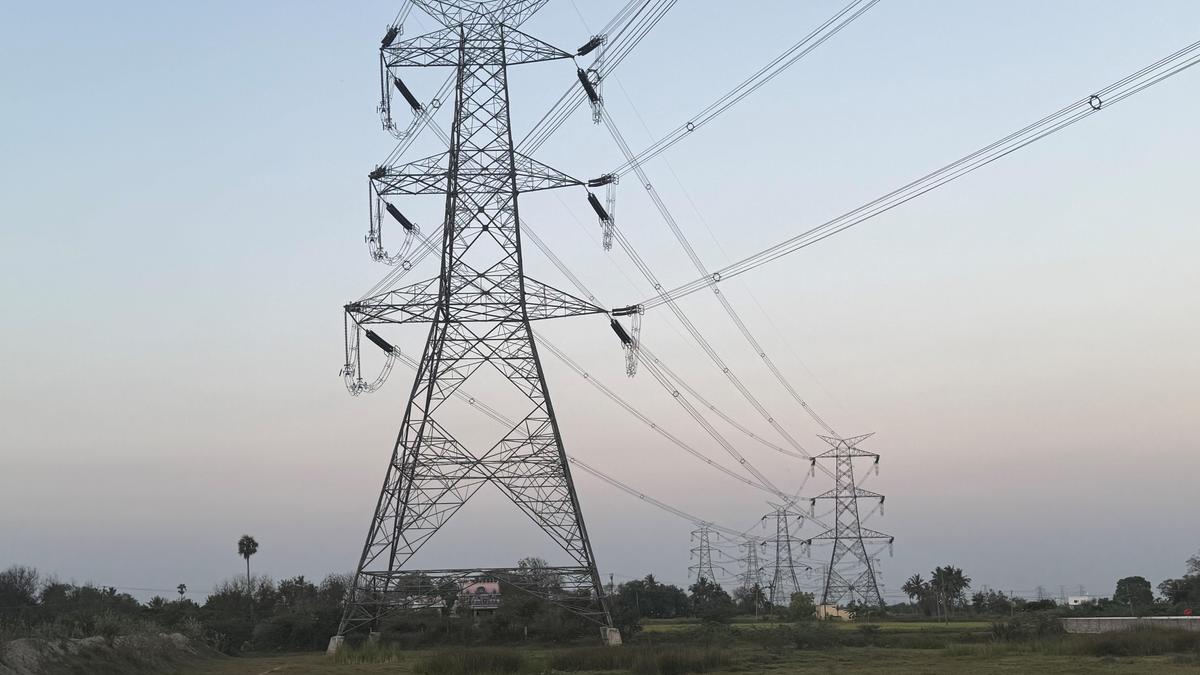
On Friday (May 22, 2026), the Ministry of Power said electricity demand had broken all previous records, with peak demand rising to nearly 271 GW on Thursday (May 21, 2026). The government has highlighted that such record demands are being met, presenting it as evidence of the strength of India’s electricity system. Yet reports of power cuts from many parts of the country continue to surface. Even while stressing preparedness, the Ministry also urged consumers to use electricity judiciously.

India’s peak power deficit as reported on Friday (May 22, 2026) stood at about 1.7 GW, according to Grid-India. This would have translated into load shedding and blackouts in some areas.

However, the actual deficit is likely higher and largely unreported, say some experts. Modern Supervisory Control and Data Acquisition (SCADA) systems monitor demand and help dispatch centres route electricity to maintain grid stability and prevent widespread blackouts. Vishnu Rao, team leader for electricity governance at Citizen consumer and civic Action Group, Chennai, says dispatch centres work at the macro level and local outages and curtailed demand are often excluded from official figures.

Areas may be deliberately disconnected by distribution companies operating independently of state load dispatch centres and in separate silos, meaning such suppressed demand is never recorded, he says. “These local disruptions can be extensive yet remain outside the public domain,” adds Mr. Vishnu Rao.

Deepak Krishnan, Deputy Director (Energy Program), WRI India, is however skeptical if power distributors are continuing to suppress demand in a significant way and points to error margins being reported by Grid-India as an indication of unprecedented heat stresses affecting electricity demand. These error percentages express the deviation between the demand forecast and the actual demand. On a recent day, these errors were 4% for previous day forecast and a little above 1% for real time (short term) forecast. India’s total peak demand is roughly equal to the installed capacity of its thermal and hydroelectric plants capable of supplying stable power. On paper, this suggests sufficient generation capacity. The situation is not very different from that in the U.S., where peak demand is also close to thermal, hydro and nuclear capacity. Yet power cuts there are extremely rare.

Some experts point to distribution issues. K. Ashok Rao, patron of India’s Power Engineers Association, argues that distribution infrastructure has failed to keep pace with rapidly rising demand. He says privatisation of profitable distribution segments has weakened State-owned discoms, which already struggle financially because a large share of consumers cannot afford higher tariffs, leaving the companies with little money for boosting infrastructure.

Meanwhile, power cuts across Uttar Pradesh have generated much consternation among people there. Bengaluru has experienced frequent power cuts and prolonged outages in recent weeks. While the State distributor has blamed maintenance work, transformer tripping and weather-related faults, residents in areas such as HRBR Layout, Chandapura and Whitefield say outages lasting several hours have become routine. In some places, scheduled feeder maintenance shutdowns have stretched from 10 a.m. to 6 p.m., while unscheduled cuts and voltage fluctuations have added to consumer frustration.

Kerala faced difficulties in April, when power cuts of under 30 minutes were imposed during peak hours. This month, stronger summer rainfall has eased the situation by reducing demand. The State generates only about 30% of its electricity, largely from hydropower, and depends on purchases to meet evening peak demand.

In Tamil Nadu, peak demand was higher in April than in May and was met partly through short-term power purchases. Although official load shedding figures remain at zero, a senior State electricity department official acknowledged that local supply disruptions have affected parts of Chennai.

Mr. Krishnan says there are several other factors too behind localized power cuts. He says that although all of India is one grid on paper, transmission bottlenecks could prevent power flow from surplus to deficit areas; in addition, local grid constraints/infrastructure weakness could also be an issue.

Mr. Ashok Rao also points to the challenge of fluctuating renewable energy. Renewable generators, he says, have no responsibility toward grid stability, leaving the burden on grid managers. “A sudden cloud cover can throw a large chunk of solar power out of the grid and this is not sustainable,” he says. Currently, renewables account for 17% of India’s electricity generation, compared with 72% from thermal power, 9% from hydro and 2% from nuclear energy.

Others argue that advanced forecasting technologies are available to help integrate renewable power more effectively into the grid. These technologies have been successfully deployed in nations such as Germany with high renewable penetration.

Mr. Krishnan of WRI points out that peak demands are happening when solar energy has wound down, while power cuts happening in the evenings cannot be blamed for nstabilities due to solar power.

(With inputs from Tiki Rajwi, Rishita Khanna and R. Srikanth)

Published – May 24, 2026 08:42 am IST


Source link

Business Tags:Electricity demand, Electricity demand in India, Electricity grid India, Ministry of Power

Post navigation

Previous Post: 19 feared trapped after collapse at Philippines construction site
Next Post: Goings-on around a wall in Mandaveli: residents want CM Vijay to take note of their plight

Related Posts

  • PM Modi at CII Post-Budget Conference: Global investors looking at India, don’t miss this ‘golden chance’
    PM Modi at CII Post-Budget Conference: Global investors looking at India, don’t miss this ‘golden chance’ Business
  • Adani Group completes full takeover of IANS news agency
    Adani Group completes full takeover of IANS news agency Business
  • Lupin gets U.S FDA nod for Pitolisant tablets
    Lupin gets U.S FDA nod for Pitolisant tablets Business
  • Date, Earnings Call Details, Share Price History And More Business
  • Cabin crew strike: Air India Express issues termination letters to 25 members; asks others to join work
    Cabin crew strike: Air India Express issues termination letters to 25 members; asks others to join work Business
  • Govt. notifies February 1 as the end of GST compensation cess, start of new tobacco tax regime
    Govt. notifies February 1 as the end of GST compensation cess, start of new tobacco tax regime Business

More Related Articles

PFC to raise upto ₹5000 crore debt yielding upto 7.3% PFC to raise upto ₹5000 crore debt yielding upto 7.3% Business
Foreign Direct Investments rise 18% to .18 billion in April-September; inflows from U.S. double Foreign Direct Investments rise 18% to $35.18 billion in April-September; inflows from U.S. double Business
Access Denied Business
48% of NSE firms have no women as key managers; women losing out on higher paid jobs: study 48% of NSE firms have no women as key managers; women losing out on higher paid jobs: study Business
SEBI asks MCX to put launch of new platform on hold SEBI asks MCX to put launch of new platform on hold Business
SiteLock

Archives

  • September 2026
  • August 2026
  • July 2026
  • June 2026
  • May 2026
  • April 2026
  • March 2026
  • February 2026
  • January 2026
  • December 2025
  • November 2025
  • October 2025
  • September 2025
  • August 2025
  • July 2025
  • June 2025
  • May 2025
  • April 2025
  • March 2025
  • February 2025
  • January 2025
  • December 2024
  • November 2024
  • October 2024
  • September 2024
  • August 2024
  • July 2024
  • June 2024
  • May 2024
  • April 2024
  • March 2024
  • February 2024
  • January 2024
  • December 2023
  • November 2023
  • October 2023
  • September 2023
  • August 2023
  • July 2023
  • June 2023
  • May 2023
  • April 2023
  • March 2023
  • February 2023
  • January 2023
  • December 2022
  • November 2022
  • October 2022
  • September 2022
  • August 2022
  • July 2022
  • June 2022
  • May 2022

Categories

  • Business
  • Nation
  • Science
  • Sports
  • World

Recent Posts

  • Calicut FC footballer Rijohn Jose dies in road accident in Kozhikode
  • U.S. issues Iran travel warning, urges Americans to leave country amid rising West Asia tensions
  • New cat species identified in Bolivia, first in over a century
  • Three killed in Pakistani airstrikes on Afghanistan, officials say
  • Keralam rains: Rivers in Kottayam swell as heavy rain lashes high ranges

Recent Comments

  1. LarryKef on UP Teacher Who Asked Students To Slap Muslim Classmate
  2. Josephjab on UP Teacher Who Asked Students To Slap Muslim Classmate
  3. LarryKef on UP Teacher Who Asked Students To Slap Muslim Classmate
  4. Jasonnekly on UP Teacher Who Asked Students To Slap Muslim Classmate
  5. Jasonnekly on UP Teacher Who Asked Students To Slap Muslim Classmate
  • Access Denied
    Access Denied Nation
  • Two killed and 16 injured in attempted channel crossing from France to U.K.
    Two killed and 16 injured in attempted channel crossing from France to U.K. World
  • Can compete with Govt’s CNAP mandate, Truecaller CEO says
    Can compete with Govt’s CNAP mandate, Truecaller CEO says Science
  • DDCA – The Hindu
    DDCA – The Hindu Sports
  • Access Denied Business
  • The Greyhounds’ last leap
    The Greyhounds’ last leap Nation
  • Railway minister dismisses reports of delay in Vande Bharat sleeper trains over design
    Railway minister dismisses reports of delay in Vande Bharat sleeper trains over design Nation
  • Access Denied World

Editor-in-Chief:
Mohammad Ariff,
MSW, MAJMC, BSW, DTL, CTS, CNM, CCR, CAL, RSL, ASOC.
editor@artifex.news

Associate Editors:
1. Zenellis R. Tuba,
zenelis@artifex.news
2. Haris Daniyel
daniyel@artifex.news

Photograher:
Rohan Das
rohan@artifex.news

Artifex.News offers Online Paid Internships to college students from India and Abroad. Interns will get a PRESS CARD and other online offers.
Send your CV (Subjectline: Paid Internship) to internship@artifex.news

Links:
Associate Journalism
About Us
Privacy Policy

News Links:
Breaking News
World
Nation
Sports
Business
Entertainment
Lifestyle

Registered Office:
72/A, Elliot Road, Kolkata - 700016
Tel: 033-22277777, 033-22172217
Email: office@artifex.news

Editorial Office / News Desk:
No. 13, Mezzanine Floor, Esplanade Metro Rail Station,
12 J. L. Nehru Road, Kolkata - 700069.
(Entry from Gate No. 5)
Tel: 033-46011099, 033-46046046
Email: editor@artifex.news

Copyright © 2023 Artifex.News Newsportal designed by Artifex Infotech.