





Skip to content
  • Facebook
  • X
  • Linkedin
  • WhatsApp
  • YouTube
  • Associate Journalism
  • About Us
  • Privacy Policy
  • 033-46046046
  • editor@artifex.news
Artifex.News

Artifex.News

Stay Connected. Stay Informed.

  • Breaking News
  • World
  • Nation
  • Sports
  • Business
  • Science
  • Entertainment
  • Lifestyle
  • Toggle search form
  • Family, Friends’ Special Surprise For Rohit Sharma As India Captain Returns Home. Watch
    Family, Friends’ Special Surprise For Rohit Sharma As India Captain Returns Home. Watch Sports
  • Rahul Gandhi Files Nomination From Raebareli, Accompanied By Sonia Gandhi, Priyanka
    Rahul Gandhi Files Nomination From Raebareli, Accompanied By Sonia Gandhi, Priyanka Nation
  • ASSOCHAM Secretary General Deepak Sood steps down
    ASSOCHAM Secretary General Deepak Sood steps down Business
  • UAE looking to expand scope of trade under CEPA with India: official
    UAE looking to expand scope of trade under CEPA with India: official Business
  • IPL-17 | Good time for me to get a mental, physical break, says Maxwell
    IPL-17 | Good time for me to get a mental, physical break, says Maxwell Sports
  • Access Denied Sports
  • 8 Occasions When ‘Greater Noida’ Case Happened In Test Cricket
    8 Occasions When ‘Greater Noida’ Case Happened In Test Cricket Sports
  • Jaishankar discusses cases of human trafficking, bilateral cooperation with Laos PM Sonexay Siphandone
    Jaishankar discusses cases of human trafficking, bilateral cooperation with Laos PM Sonexay Siphandone World
Revealed: how humans evolved in the last 10,000 years alone

Revealed: how humans evolved in the last 10,000 years alone

Posted on May 16, 2026 By admin


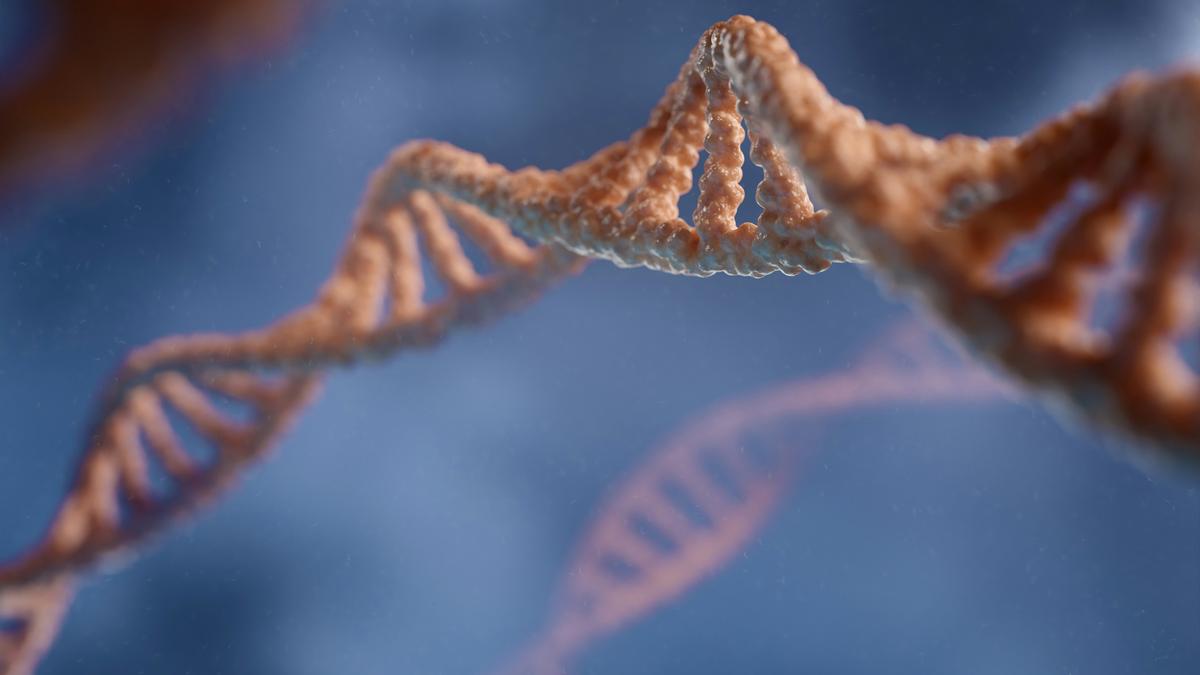
People who lived and died thousands of years ago have left behind their skeletal remains as a legacy. In recent years, scientists have isolated and sequenced the DNA from more and more of these remains.

A team of researchers led by scientists at the Harvard Medical School in the U.S. has compared 15,836 ancient DNA sequences from across Western Eurasia with the sequences of 6,438 modern people from the same countries. (Western Eurasia includes Europe, Russia, Central Asia, the Middle East and Iran.)

The comparison revealed evidence that for many genes for which two sequence variants have been known, one variant had undergone a sustained increase or decrease in frequency relative to the other over the past eight to 10 millennia.

Using new statistical methods coupled with computer simulations, the team found that these changes in frequency can be attributed in many cases to natural selection rather than to processes like genetic drift and population migration. The findings were reported on April 15 in Nature. 

The oldest remains examined were dated to 18,000 years ago — yet the scientists were able to obtain enough genetic material to meaningfully calculate gene frequencies for the last 10 millennia alone. The study is in fact the largest survey of ancient human genomes to date.

Carbon dating

Scientists figure out how ancient a skeleton is by measuring the relative amount of carbon-14, a.k.a. radioactive carbon, in its bones and teeth. Carbon-14 is a carbon isotope generated when cosmic rays collide with nitrogen atoms in the earth’s upper atmosphere.  Its chemical properties are identical to that of the non-radioactive isotopes carbon-12 and carbon-13.

When an individual is alive, the fraction of carbon-14 in the body is the same as that in the carbon dioxide in the atmosphere, and in the plants and animals consumed as food. This level begins to drop after death. Radioactive decay turns carbon-14 back into nitrogen and there is no way to replenish its level.

Carbon-14 decays with a half-life of 5,730 years. That is, the fraction of radioactive carbon relative to non-radioactive carbon halves every 5,730 years. So after 50,000 years, the fraction of radioactive carbon 14 remaining in the bones and teeth is only two-thousandth that at the time of death.

An instrument called a mass spectrometer is used to measure the relative amounts of each carbon isotope, then estimate the age of its source in this way.

Blood types, gluten, colours

The human body has two copies of a gene called ABO. Each copy comes in three variants, called A, B, and O. Which combination of variants we have determines our blood type. These blood types appeared very early in evolution and we share them with other great apes.

The researchers found that over the last 6,000 years, the B variant has been occurring more commonly among the West Eurasians, with a concomitant decrease in the A variant. The A and B variants are associated with opposite effects with respect to many traits. Therefore, it may be that a population benefits by maintaining an optimal balance to respond to changing pathogenic exposures.

Similarly, a variant of the HLA-DQB1 gene makes people susceptible to coeliac disease. In individuals with two copies of this variant, the gluten in wheat, barley, and rye triggers the immune system to attack the small intestine, leading to diarrhoea, vomiting, and abdominal pain.

In the last 4,000 years, the frequency of occurrence of the disease-causing variant has increased from 0% to 20%. Since agriculture also began 10,000 years ago, the researchers have clarified that the increase was “not a phenomenon only or largely of the rise of agriculture” even as they admit what could have driven the increase remains unknown.

Also around 8,000 years ago, humans began to select for gene variants in several genes that produce lighter skin tones and pigmented hair. The researchers have suggested this was an adaptation in response to having to synthesise more vitamin D in regions with low sunlight, especially among farmers whose diets supplied little of it.

Ancient genes, modern traits

Possessing two copies of the ∆32 variant of the CCR5 gene makes an individual completely resistant to HIV-1 infection. The frequency of this variant among Western Eurasians increased from 2% to about 8% between 6,000 and 2,000 years ago. This predated the origin of HIV, however, which happened only in the early 20th century. Put another way, other unknown ancient pathogens must have driven this increase, as scientists have previously hypothesised.

But perhaps the most interesting signals of ancient selection were found in the gene combinations today associated with ‘modern’ traits such as performance on intelligence tests, household income, years of schooling, and healthy lifestyle (e.g. faster walking pace).

Smoking was unknown to Eurasia until Christopher Columbus introduced tobacco from the Americas less than 600 years ago. The study found that the gene variants associated today with smoking were selected against even in those ancient times. However, it is not clear what traits governed the selection in that time.

As the researchers wrote: “it will be of interest to apply similar approaches to ancient DNA time series over longer times and to other world regions. This would allow more generalizable insights by identifying which patterns of selection are shared and which are distinctive to Holocene West Eurasia.”

South Asians have genetic contributions from ancestors from Iranian Neolithic Farmers and western steppe herders; from indigenous Eastern Eurasian ancestors, including ancient ancestral South Indians; and East and Southeast Asian and Australasian ancestors. A comparable ancient DNA study of our ancestors is likely to be just as fascinating. But we need to first start assembling our own legacy: the remains of our ancestors from thousands of years ago.

D.P. Kasbekar is a retired scientist.

Published – May 20, 2026 07:30 am IST


Source link

Science

Post navigation

Previous Post: How scientists are using ‘DNA maps’ to expose pangolin trafficking hubs
Next Post: A reality check on govt.’s claim of 45 days of LPG ‘rolling stock’

Related Posts

  • What is the technology behind manufacturing a semiconductor chip? | Explained
    What is the technology behind manufacturing a semiconductor chip? | Explained Science
  • ISRO’s 100th launch from Sriharikota scheduled for January-end
    ISRO’s 100th launch from Sriharikota scheduled for January-end Science
  • Genomic clues suggest humans’ ancestors nearly went extinct 9L years ago
    Genomic clues suggest humans’ ancestors nearly went extinct 9L years ago Science
  • Google Meet outage hits users in India
    Google Meet outage hits users in India Science
  • IISc study shows that small chemical change can boost bioavailability of drug molecules
    IISc study shows that small chemical change can boost bioavailability of drug molecules Science
  • GST 2.0 could undermine dietary health
    GST 2.0 could undermine dietary health Science

More Related Articles

ISRO successfully carries out vacuum ignition trial of cryogenic engine ISRO successfully carries out vacuum ignition trial of cryogenic engine Science
In search of skin lightening creams, kidneys take a hit In search of skin lightening creams, kidneys take a hit Science
Airy has an air about him Airy has an air about him Science
How the deadliest virus in human history paved the way for new cures How the deadliest virus in human history paved the way for new cures Science
Physicist who claimed room-temperature superconductor discovery faked data, probe finds Physicist who claimed room-temperature superconductor discovery faked data, probe finds Science
If antibiotics are becoming less effective, why not combine them? If antibiotics are becoming less effective, why not combine them? Science
SiteLock

Archives

  • May 2026
  • April 2026
  • March 2026
  • February 2026
  • January 2026
  • December 2025
  • November 2025
  • October 2025
  • September 2025
  • August 2025
  • July 2025
  • June 2025
  • May 2025
  • April 2025
  • March 2025
  • February 2025
  • January 2025
  • December 2024
  • November 2024
  • October 2024
  • September 2024
  • August 2024
  • July 2024
  • June 2024
  • May 2024
  • April 2024
  • March 2024
  • February 2024
  • January 2024
  • December 2023
  • November 2023
  • October 2023
  • September 2023
  • August 2023
  • July 2023
  • June 2023
  • May 2023
  • April 2023
  • March 2023
  • February 2023
  • January 2023
  • December 2022
  • November 2022
  • October 2022
  • September 2022
  • August 2022
  • July 2022
  • June 2022
  • May 2022

Categories

  • Business
  • Nation
  • Science
  • Sports
  • World

Recent Posts

  • U.K. cancels a planned rise in motor fuel tax
  • Hormuz crisis: Australian LNG to India will surge, says Australian High Commissioner
  • Thripunithura firecracker blast: ₹10 lakh each relief to families of victims
  • Hormuz crisis: Australian LNG to India will surge, says Australian High Commissioner
  • PM Modi holds talks with Italian counterpart Meloni | Live

Recent Comments

  1. DonaldGow on UP Teacher Who Asked Students To Slap Muslim Classmate
  2. RobertBub on UP Teacher Who Asked Students To Slap Muslim Classmate
  3. DonaldGow on UP Teacher Who Asked Students To Slap Muslim Classmate
  4. Sidneygug on UP Teacher Who Asked Students To Slap Muslim Classmate
  5. DavidWrize on UP Teacher Who Asked Students To Slap Muslim Classmate
  • Access Denied Sports
  • Ten migrants die in Mediterranean shipwreck, German charity says
    Ten migrants die in Mediterranean shipwreck, German charity says World
  • Access Denied
    Access Denied Nation
  • Travellers Face The Heat After India Suspends Visa Services In Canada
    Travellers Face The Heat After India Suspends Visa Services In Canada Nation
  • Access Denied Business
  • Access Denied World
  • 3 Die Near Chennai After Drinking Sewage-Laced Water, 23 In Hospital
    3 Die Near Chennai After Drinking Sewage-Laced Water, 23 In Hospital Nation
  • Hurricane Milton May Be “Worst Storm” To Hit Florida In Decades: Joe Biden
    Hurricane Milton May Be “Worst Storm” To Hit Florida In Decades: Joe Biden World

Editor-in-Chief:
Mohammad Ariff,
MSW, MAJMC, BSW, DTL, CTS, CNM, CCR, CAL, RSL, ASOC.
editor@artifex.news

Associate Editors:
1. Zenellis R. Tuba,
zenelis@artifex.news
2. Haris Daniyel
daniyel@artifex.news

Photograher:
Rohan Das
rohan@artifex.news

Artifex.News offers Online Paid Internships to college students from India and Abroad. Interns will get a PRESS CARD and other online offers.
Send your CV (Subjectline: Paid Internship) to internship@artifex.news

Links:
Associate Journalism
About Us
Privacy Policy

News Links:
Breaking News
World
Nation
Sports
Business
Entertainment
Lifestyle

Registered Office:
72/A, Elliot Road, Kolkata - 700016
Tel: 033-22277777, 033-22172217
Email: office@artifex.news

Editorial Office / News Desk:
No. 13, Mezzanine Floor, Esplanade Metro Rail Station,
12 J. L. Nehru Road, Kolkata - 700069.
(Entry from Gate No. 5)
Tel: 033-46011099, 033-46046046
Email: editor@artifex.news

Copyright © 2023 Artifex.News Newsportal designed by Artifex Infotech.