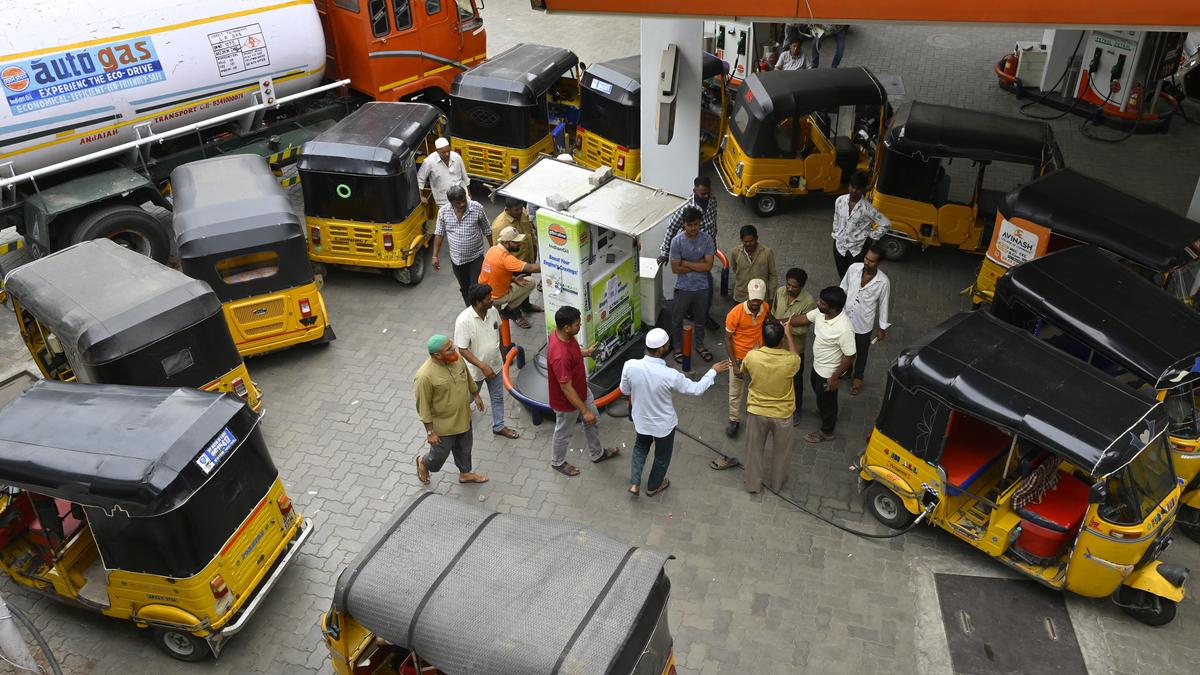





Last week, the Centre hiked retail petroleum product prices after a gap of four years. This was expected, since the government had been warning about high crude prices, and how public sector oil marketing companies (OMCs) had been bleeding heavily due to under-recoveries. It was also expected that this would happen after the results of the five Assembly elections. But the Prime Minister’s appeal for austerity due to the drain on foreign exchange, the sharp depreciation of the rupee in recent months and the April’s inflation prints point to a much deeper problem that India could have addressed decades earlier — the country’s inadequate strategic petroleum and gas reserves. India did build out a strategic petroleum reserve (SPR) of about 36.7 million-39 million barrels, a programme conceived following the post-1991 vulnerability and formalised in the early 2000s. But today, this covers about seven days of consumption demand at 5.5 million barrels per day (mbpd). Combined with inventories of OMCs and import cover, this amounts to more than 70 days of stock. But over the years, India has emerged as the world’s third-largest automobile market after the U.S. and China, and a comparison with those nations reveals the scale of India’s vulnerability.
While the U.S. built its SPRs in the aftermath of the 1973 oil shock — which, at 714 million barrels, is 18 times larger than India’s — China’s roughly 900 million barrels is even larger. The U.S. has about 400 million barrels currently in its reserve system, providing it with roughly 20 days of consumption. The country has emerged as the world’s largest oil producer in the past 10 years with an output of about 13 mbpd and a commercial system wide inventory, pushing it above the 90 day-mark recommended by the International Energy Agency for reserves. The same applies to China, which is comparable with India as a more oil import-dependent nation. These numbers become even starker when compared with reserves for liquefied petroleum gas (LPG) and liquefied natural gas (LNG), where India is most exposed. India has about 1.4 lakh tonnes of LPG storage, while its daily consumption is about 80,000 tonnes — more than half its reserve capacity. As for LNG, India largely relies on stocks at regasification facilities of Petronet LNG and BPCL, without any underground storage for a fuel vital to produce fertilizers. Both the U.S. and China have heavily invested in underground LNG storage. The EU was quick to adapt following the Russia-Ukraine war as it drew down its dependence on Russian gas. These reserves have enabled advanced economies to hedge against supply disruptions by relying on long-term contracts at times of supply disruptions, cushioning them from spot market spikes. As for China, its defiance of American sanctions against Russian oil has paid off handsomely. India would have benefited too, had it maintained greater strategic autonomy.
Published – May 19, 2026 12:20 am IST