




As is widely understood, the annual Budget is a political document responding to short to medium-term economic challenges. Formally, it is an annual revenue and expenditure statement outlining the government’s priorities. As with any financial statement, the fine print matters the most, not obvious from the media headlines. Yet, it is useful to read the Budget closely to glean the broad direction of economic policy, especially as there are no other long-term policy documents or explicit economic targets in the public domain to locate the annual Budget.
Setting to the Budget
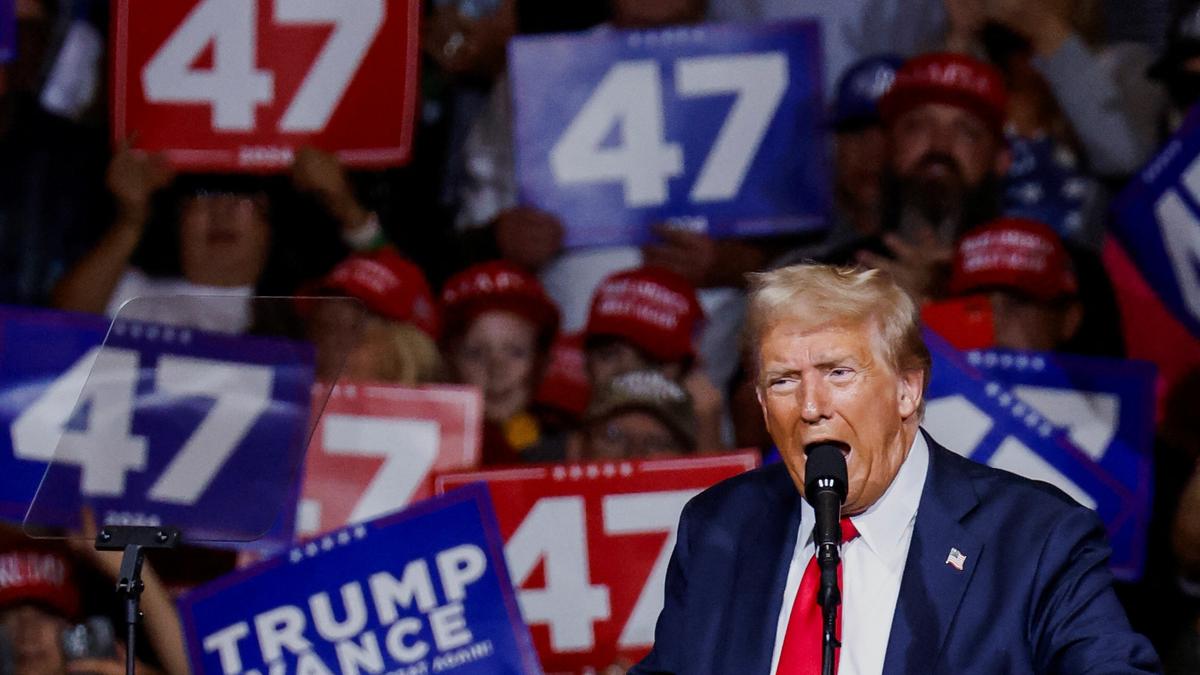
The proximate context of the Budget is the recent eruption of geopolitical turmoil triggered during the second term of the Donald Trump presidency in the United States. Many political and economic arrangements — or, the rules and norms of international relations that have been in place since the fall of the Berlin Wall — are now upended. India’s long-term economic and security arrangements with Russia are under threat. Mr. Trump’s steep tariffs on India’s labour-intensive goods have dashed hopes of a closer economic relationship with the U.S. In response, India is seeking closer ties with the European Union in the form of “mother of all” free trade agreement (FTA), though its details are still unclear. India’s import dependence on China continues despite the policy efforts taken, since 2020, to correct this. Diplomatic relations remain strained. For instance, China has imposed restrictions on the exports of critical minerals, tunnel boring machines and the services of skilled workers for the electric vehicle (EV) industry.
Editorial | Credible and creditable: On Union Budget 2026-27
Budget 2026-27 needs to be read in this context. Unlike previously, this Budget highlights the urgency of strengthening domestic manufacturing. It also aims to streamline import duties and procedures in order to reduce imports and achieve self-reliance, and to speed up exports.
Factually speaking, the Indian manufacturing sector has not performed satisfactorily for a while now, despite headline GDP growth of 6.5% to 7% annually in real terms (net of inflation). India has deindustrialised prematurely; the share of manufacturing in GDP has declined or, at best, has remained constant. Manufacturing employment in total employment has also declined. The official GDP numbers for manufacturing seem overstated due to infirmities in estimation. Alternative figures, based on the more reliable Annual Survey of Industries (ASI), based on time-tested production accounts of factories, show distinctly slower output growth rates. With very modest growth in fixed investment (or gross fixed capital formation), industrial capacity has eroded during the last decade.
Rising import dependence for most capital and intermediate goods is a reason for modest industrial performance. An inverted duty structure wherein intermediate goods face higher tariffs than final goods seems to be responsible for the poor industrial investments. Policy initiatives such as ‘Make in India’ (2014), Aatma Nirbhar Bharat (or Self-Reliant India Movement) in 2020 and Production Linked Incentives (2021) seem to have largely failed to dent India’s rising import dependence in manufactured goods despite some widely applauded successes in mobile phone assembly (with high import content, best exemplified by Apple iPhone exports).
Hence, the Budget aims to tackle domestic vulnerabilities.
The tariff modifications seem to correct for the inverted duty structures (IDS) by reducing basic customs duties on capital and intermediate goods in order to encourage domestic value addition. Likewise, rationalising procedures at points of entry of goods would perhaps reduce delays, thus improving ease of production and exports.
Focus on electronics, the China factor
The Budget makes substantial provision for augmenting the production of electronics parts and sub-assemblies, which form the single largest product-group of dependence on China. The same holds for rare earth materials (used in the production of EVs and electronic goods) — a choke point as the Economic Survey recently and rightly highlighted. To tackle it, the Budget proposes to create a dedicated rare earths corridor running through “mineral-rich States of Odisha, Kerala, Andhra Pradesh and Tamil Nadu … to promote mining, processing, research and manufacturing”. Similar to encouraging the production of lithium-ion cells for battery storage, the Budget proposes to extend the tax exemption on capital goods to produce these items.
Policymakers perceive India’s trade integration has to begin with labour-intensive goods. Now, with the Trump tariffs on India’s exports, there is an acute need to enhance the productivity of such goods to overcome these tariffs and ensure diversification away from the U.S. In line with this view, the Budget has laid emphasis on promoting new Micro, Small, and Medium Enterprises (MSME) clusters, modernising the old or “legacy” clusters (about 120 of them), and providing financial assistance to MSMEs to tap the capital market. In principle, these measures are welcome.
However, the Budget seems to fall short in efforts to boost fixed investment. To augment industrial capabilities, India needs to encourage investments in high-tech industries. Such technologies are mostly proprietary items of multinational corporations that often come bundled with foreign direct investment (FDI). In recent years, net FDI, as a ratio of GDP, has become practically zero. The Budget seems to make little effort to correct for the decline in foreign high-tech investments. Geopolitical uncertainties perhaps make it difficult to attract such technology-intensive investments, at least for now.
While the government is committed to promoting exports, the Budget has permitted firms located in special economic zones (SEZs) to sell a part of their output in domestic territory. This seems regressive. The government should tackle their hurdles to augment exports, rather than choose the softer option of allowing sales in the domestic market.
A silence on Centre-State fiscal issues
The Budget, which has been presented in a difficult global context, seems well-intentioned to tackle import dependence in domestic manufacturing to attain greater self-reliance. However, considering the uncertainties, the Budget seems silent on many difficult issues. Centre-State fiscal issues have also been overlooked, considering the impending implementation of the recommendations of the Sixteenth Finance Commission. Whether the proposed measures would yield desired results to reverse India’s industrial decline and import dependence (especially on China, a strategic threat) would depend on the specifics of the proposals (which we have not seen) and how they are implemented.
R. Nagaraj was with the Indira Gandhi Institute of Development Research (IGIDR), Mumbai
Published – February 02, 2026 12:16 am IST