



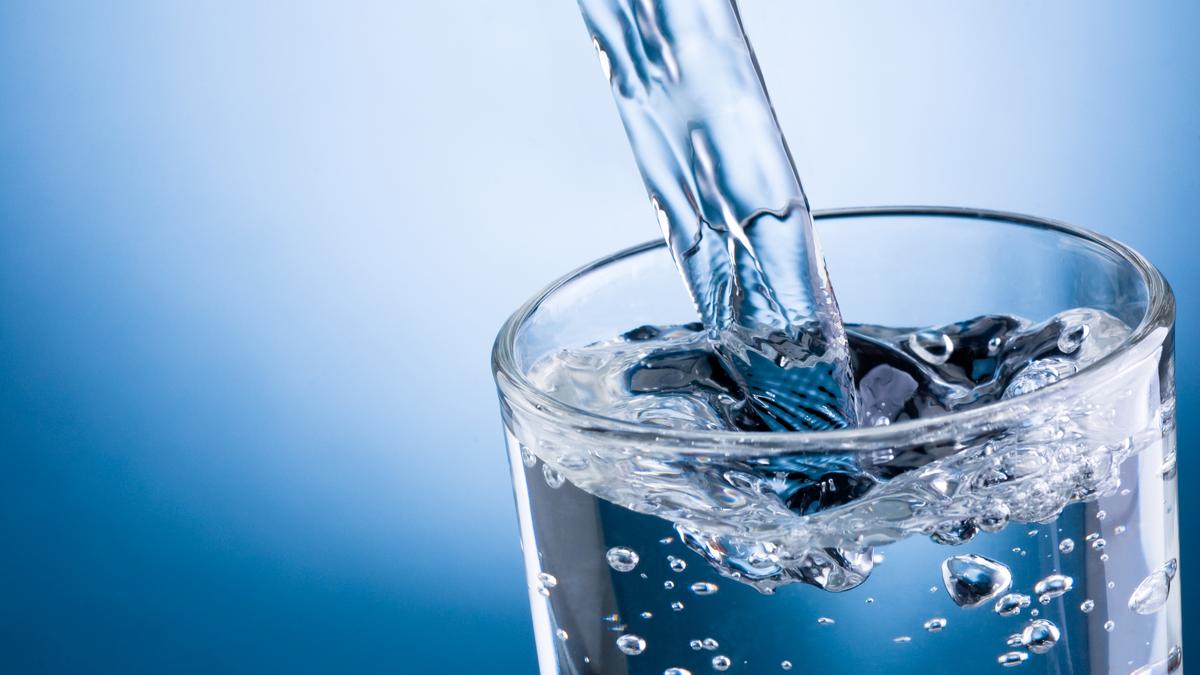
Millions of people around the world drink mineral water every day because their tap water is unsafe or because they prefer the taste. It’s packed with naturally occurring minerals that support bone and muscle health and governments and health organisations promote it as a clean, reliable source of hydration.
What is mineral water?
Mineral water is water that naturally contains dissolved minerals and trace elements. It comes from a protected underground reservoir, like a spring or aquifer, and has a specific composition of minerals. Unlike ordinary tap water, which treatment plants produce by filtering and purifying water drawn from rivers or groundwater, mineral water retains the natural minerals it has acquired from geological processes it has been a part of over years, decades or even centuries.
Also Read | Packaged water turns costly as raw material prices rise due to West Asia conflict
As rainwater and snowmelt slowly percolate through layers of limestone, granite, sandstone or volcanic basalt, the minerals from the surrounding rocks dissolve in the water, and the differences in pressure underground push this enriched water back towards the surface, where it emerges as a spring or collects in a subterranean reservoir. Producers then drill wells or tap natural springs and flow the water into containers, using pumps if required.
How is mineral water regulated?
The U.S. Food and Drug Administration (FDA) and the European Parliament and the Council both have regulations that stipulate that mineral water must come from a geologically stable source, which producers must undertake to protect; that separate batches of the same water must have the same profile of minerals; and that producers must not chemically treat it to alter its mineral composition.
In India, the Food Safety and Standards Authority of India (FSSAI) and the Bureau of Indian Standards (BIS) stipulate that natural mineral water must come from underground sources such as natural springs and borewells, must be protected by various formations that ensure the water is free from pollution, and should ideally be collected in conditions that guarantee the original bacteriological and chemical composition.
As in the U.S. and the EU, the BIS standard IS 13428 requires the water’s TDS and the relative proportions of various minerals to be stable over time and across producers’ batches. Producers are also prohibited from treating the water to change its mineral composition, and instead are only allowed to filter or decant it, aerate it, and sterilise it. Chemical decontamination, such as by adding chlorine, is also disallowed.
Finally, unlike many food products in India, mineral water requires mandatory certification: to sell mineral water, producers must have both an FSSAI license and a BIS certificate and every bottle must carry the ISI mark (according to IS 13428). The FSSAI also requires the bottle to be labelled with the location and name of the source and the levels of various minerals, and disallows the packager from claiming the water has any medicinal or healing properties.
How is mineral water packaged?
To meet these strict criteria, producers usually bottle the water directly at or near the source. Once they extract the water, they filter it to remove particulate matter and elements such as iron to ensure the liquid is clear. Producers may also pass it through ultraviolet light for disinfection and adjust the level of dissolved carbon dioxide to produce still or sparkling variants.
Finally, the producers store the water in tanks and package it in glass bottles, PET bottles or aluminium cans at or near the source to avoid contamination or changes in composition. That said, the storage materials come with tradeoffs of their own. For instance, glass is chemically inert and doesn’t react with the water but it must be handled with care; PET is light but can leach small amounts of plastic over time, especially when it’s hot; and aluminium cans are most recyclable but require an internal plastic lining to prevent the metal from reacting with the water, which reintroduces concerns about chemical leaching and increases costs.
Packaged drinking water is not always the same as natural mineral water. Producers may start with tap or groundwater, purify it through reverse osmosis, then add back small amounts of minerals to improve taste. Similarly, spring water comes from a natural underground source but doesn’t need to meet the same strict standards for mineral consistency.
That said, under ‘bottled water’, the U.S. FDA encompasses Artesian water, mineral water, sparkling bottled water, spring water, and purified water (including distilled, deionised, and/or demineralised water or water that has undergone reverse osmosis). Artesian water is groundwater being pushed to the surface due to pressure created underground by impermeable rocks.
What effects do minerals have?
The minerals present in mineral water depend on its natural source. The most common minerals include calcium, magnesium, sodium, potassium, bicarbonates, sulphates, chlorides, silica, and sometimes fluorides or iron in trace amounts.
Calcium and magnesium make water ‘hard’ and give mineral water the mouthfeel people are familiar with and have come to expect, including a slight weight and body. Higher calcium levels render a smooth or slightly chalky sensation, while magnesium introduces a subtle bitterness. Similarly, bicarbonates neutralise acidity and give the water an almost sweet finish, sulphates — associated with magnesium-rich springs — add a slightly crisp taste, and sodium imparts a faint saline note.
Dissolved minerals also raise the water’s content of total dissolved solids (TDS) and change how it interacts with food, soap, pipes, and tissues, with different chemical and thermal environments (e.g. cooking), and with tissues in the human body. You may know from common experience that harder water deposits ‘scales’ in kettles and washing machines and doesn’t lather well with soap. Its inherent chemical properties also mean hard water supports bone density and aids muscle function, although the contribution of drinking water to these outcomes is generally much smaller compared to nutrition. Bicarbonates may improve digestion.
What are other forms of water?
When water is distilled, it means it is boiled into steam and condensed back to liquid, in the process leaving all dissolved solids, including minerals as well as contaminants, behind in the vessel. As a result the condensed water is nearly pure H2O, and tastes very different, almost hollow. It does not form scales on metal surfaces and behaves in the sort of predictable way that research laboratories and diagnostic labs prize.
However, while it is safe to drink, distilled water is not advised for regular human consumption because, aside from being devoid of minerals, it can also draw minerals out of surfaces it comes in contact with, including food and, potentially to a small degree, biological tissue.
Industries also treat water according to their needs. They may soften it to remove calcium and magnesium, deionise it to strip it of almost all dissolved ions or alter its chemistry to use in boilers or cooling systems. They could also demineralise it to prevent scaling and/or add compounds like sodium phosphate to lower its corrosion potential. Industrial water is neither safe nor suitable for human consumption.
To prepare municipal tap water, finally, treatment plants draw water from natural sources like rivers and groundwater, remove pathogens and chemical pollutants by filtering and chlorinating it, and add disinfectants such as chlorine. Unless a local authority specifically softens it, tap water retains its dissolved minerals. Its mineral content varies enormously by region: London’s tap water is noticeably hard because it comes from chalk aquifers while many Scandinavian cities supply naturally soft water low in minerals.
How is tap water ‘made’ in India?
The main source of water that eventually becomes tap water in India is rivers and deep borewells.
Because the pathogen loads are higher in tropical areas, municipalities subsequently disinfect it more aggressively than in temperate or cold regions like North America or Scandinavia. Among other steps, they add alum to make dirt clump together so that it filters out more easily, and add residual chlorine, meaning more chlorine than what is required to disinfect the water, so that water disinfected at first becomes reinfected later if, say, a leaky pipe exposes it to sewage.
In fact, such ‘mixing’ is so common that most Indian municipalities don’t guarantee potable tap water. Among the few exceptions are Puri in Odisha and parts of Coimbatore in Tamil Nadu.
Tap water is a State responsibility while the Union government sets the standards. The IS 10500:2012 standard prescribes limits for the quantity of minerals in potable water but also has room for variations. For instance, while the TDS limit is 500 mg/l, it can go up to 2,000 mg/l if no alternative source is available.
Rajasthan, Gujarat, and parts of Delhi/NCR have very high mineral content, including calcium and magnesium, because their groundwater lies in aquifers rich in minerals, whereas cities and States drawing water from Himalayan rivers or areas with high rainfall, such as Mumbai and parts of Kerala, have much softer water with lower mineral levels.