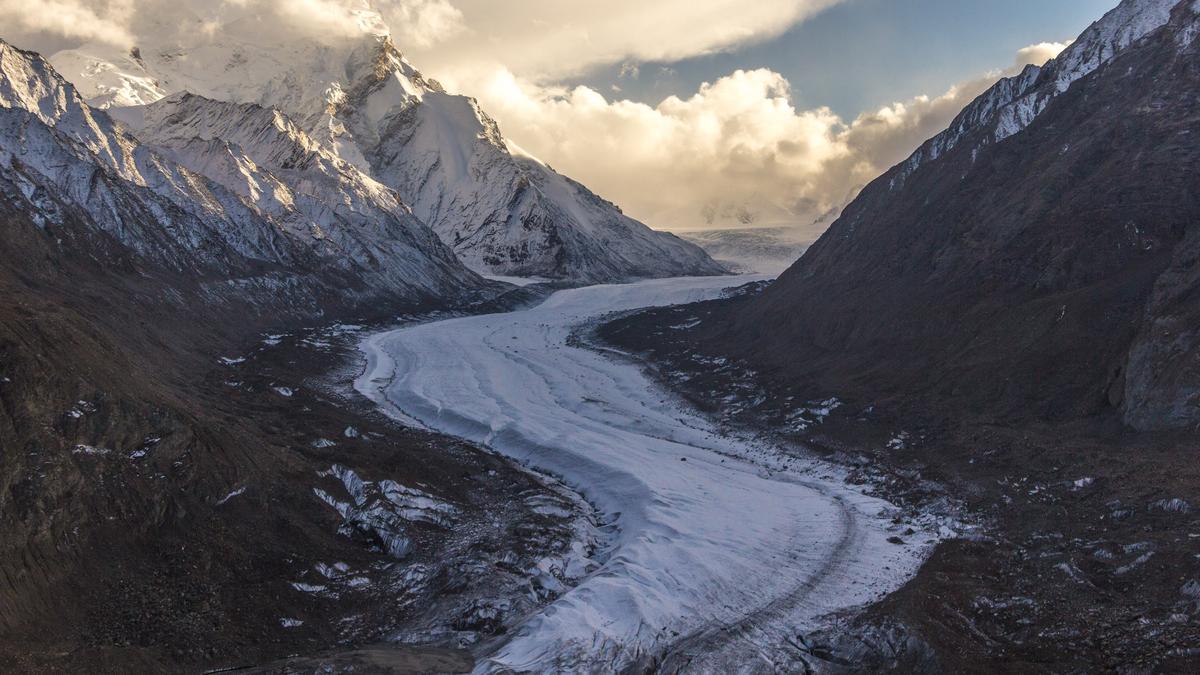






In a breakthrough that could reshape winter heating in India’s cold desert regions, such as snow-covered Leh, researchers at the Indian Institute of Technology Bombay (IIT Bombay) have developed a solar-powered thermal battery that can store summer heat for use in the harsh Himalayan winters. This heat storage system could offer a cleaner, long-term alternative to diesel heaters, which are carbon-heavy machines powered by costly fuel that must be trucked over perilous winter roads.
In a recent study, the team of researchers: Ankush Shankar Pujari, Rudrodip Majumdar, Chandramouli Subramaniam and Sandip K. Saha have proposed using strontium bromide in a thermochemical storage system that aims to provide a clean and sustainable alternative to diesel heaters in high-altitude regions like Leh, where winter temperatures remain below freezing for months and households rely heavily on diesel heaters, an expensive and polluting option.
“Energy poverty shouldn’t exist in the 21st century,” said Dr. Rudrodip Majumdar, a co-author of the study who worked on this project as a postdoctoral fellow at IIT Bombay and currently at the National Institute of Advanced Studies (NIAS). “We’ve seen people walk kilometers to collect firewood. Diesel becomes the only backup, but it’s costly and harmful.”
How it works
Strontium bromide has been the subject of many studies examining thermochemical storage. Much like a battery stores electricity, thermochemical storage stores heat in the form of chemical energy. Strontium bromide is chosen for its high energy density, chemical stability, non-toxicity, non-explosiveness, and environmental safety.
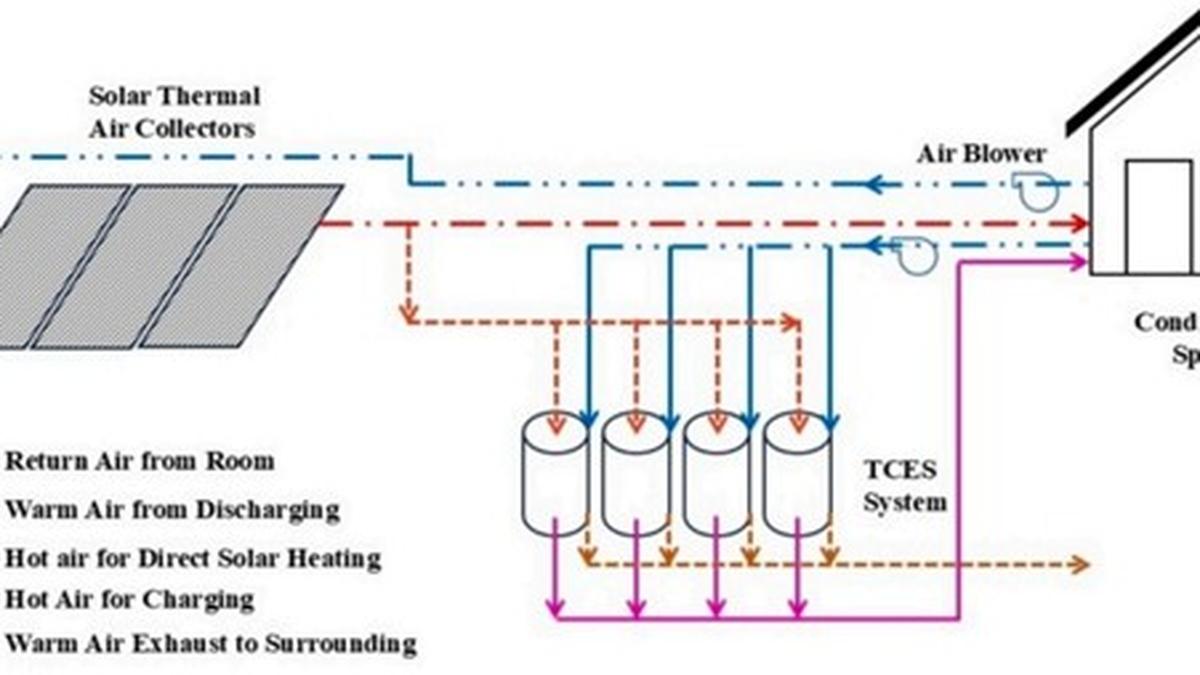
The researchers developed a prototype that first uses solar thermal air collectors which harness sunlight to heat air in the summer. Next, this hot air is used to warm up a form of hydrated strontium bromide (hexahydrate). In this form, the strontium bromide crystals contain water molecules within their structure. During this heating process, the material undergoes an endothermic dehydration reaction, in which heat energy is absorbed, causing the expulsion of water molecules from its crystal structure. This reaction stores the absorbed solar energy as chemical potential in the resulting monohydrate salt. In winter, moist air passes through the charged salt, triggering a reverse reaction or rehydration. The process reintroduces the water molecules into the structure in an exothermic reaction, releasing the stored heat.
Mr. Majumdar said that the technology is a sustainable solution in Himalayan regions, which face long, frigid winters. The population has limited access to sustainable heating options and usually depends on diesel or firewood. Therefore, what makes thermochemical storage particularly suited to these regions is its ability to retain energy over several months.
Sharing his personal experience that led to the research, he said, “I went to the Chopta-Tungnath-Chandrashila trek and stayed in camps. The starry nights in the Himalayas are beautiful, but the night stay can turn very hostile. I’ve seen people struggling, walking ten kilometers just to collect firewood. Diesel becomes the only backup, but it’s a heavy polluter.”
Cost-efficient and carbon saving
To help the communities, a module capable of storing about 500 kilowatt-hours of energy was designed, enough energy to heat a small Himalayan home for up to four months, the team said.
The whole setup consists of a simple, modular unit designed to be easy to transport and operate. It includes solar thermal collectors that heat air during summer, a reactor chamber filled with strontium bromide salt, and a small air circulation system to trigger dehydration and rehydration cycles. The reactor components are housed in a compact, weatherproof unit designed for Himalayan conditions and are insulated using glass wool.
“Solar collectors are well-proven. Steel tanks have been made for years. The only new contribution is stabilising the thermochemical material and packaging it for daily life. This kind of long-term seasonal storage is made possible because the energy stored in the material is very stable. It does not degrade over time,” added Dr. Majumdar.
The modest module doesn’t take up the entire room, either. According to Sandip Kumar Saha from IIT Bombay, who led the study, “Each storage module is roughly the size of two LPG cylinders and designed to be portable. They can be recharged in the summer at solar stations—possibly even in sunnier regions like Gujarat or Rajasthan—and trucked up to Himalayan towns just before winter.”
“Once you deploy this material, you don’t need to change it. If you maintain the reactor with basic precautions, the operation and maintenance costs will come down. These are very sturdy reactors,” added Dr. Majumdar.
The team said they have already tested the material through six full charging and discharging cycles in the lab, with no performance degradation. Thermochemical salts like strontium bromide are theoretically capable of 500 to 600 cycles, that means each unit could last years.
While the upfront investment may be higher than diesel heaters, the study finds that thermochemical systems are more economical over time—especially in remote regions where diesel prices are inflated due to transportation costs and where the environmental impact, or potential penalties from carbon emissions, adds to the overall burden.
“If we want to produce electricity from diesel today, it will cost us ₹50 per unit (kWh). If we add a carbon penalty, it could go up to ₹78 per unit. Then the thermochemical solution will be half the price,” Mr. Majumdar said.
The study calculated the thermochemical systems’ Levelized Cost of Heating (LCOH), the average cost of producing usable heat over the lifetime of a heating system, to be between ₹33–₹51 per kWh in different Himalayan cities. This cost makes it competitive with or cheaper than diesel heating for daily use, especially when factoring in fuel transport and environmental costs. In Leh specifically, LCOH dropped to ₹31/kWh, the lowest among all locations (Darjeeling, Shillong, Dehradun, Shimla, Jammu, Srinagar, Manali, and Leh) studied.
Dr. Chandramouli Subramaniam from IIT Bombay explained, “Such solar-thermal energy solutions for space-heating have been successfully tested in harsh climatic conditions for the Indian army at sub-zero temperatures. We are in the process of developing thermal storage solutions for round-the-year, smoke-free heating to camps for our Indian army stationed at such high altitudes.”
Internationally, thermochemical storage has only been piloted in places like Germany, with limited large-scale adoption. In India, practical deployment in homes is yet to be tested, and initial costs remain relatively high compared to diesel heaters. The system also relies on adequate summer sunlight to charge the salt and sufficient winter humidity to release the stored heat—factors that vary across Himalayan regions. Still, the researchers believe that with field trials, policy support, and local engagement, technology can become a crucial part of a more sustainable and inclusive energy future.