





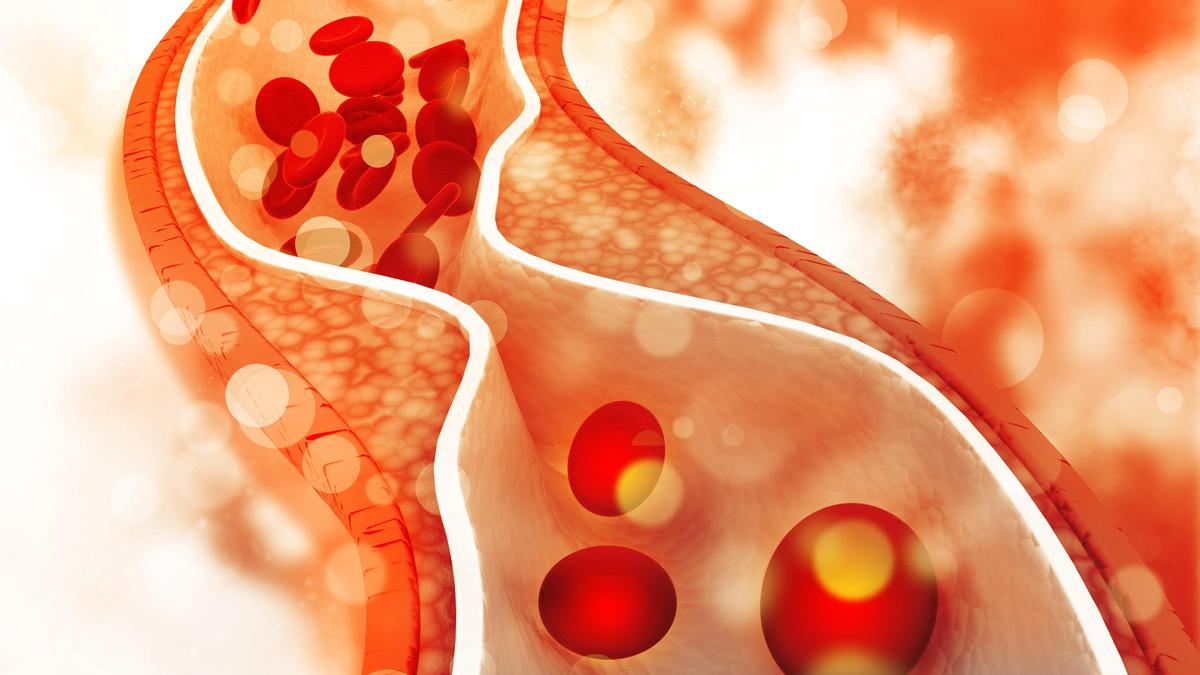
The call woke me from a dead sleep. The ER physician uttered the words STEMI, short for ST elevation myocardial infarction. She didn’t need to say more: I was out of bed as she narrated the rest. A STEMI occurs when a ruptured cholesterol plaque triggers a cascade of clot formations, sealing the artery shut. No blood flow. No oxygen. The heart is dying by the minute.
The team had rushed in and were already draping the 58-year-old man, who was writhing as I walked in and scrubbed. We threaded a wire across the occlusion, inflated a balloon to crush the plaque, and deployed a drug-eluting stent. The blood roared back into the starved heart muscle. His chest pain vanished. He stopped moaning and mustered a weak smile, blinking under the cath lab lights, asking when he could eat.
He survived. But he never should have been there in the first place.
Science vs. misinformation
I had seen him two years earlier in the clinic. His LDL cholesterol was 168 mg/dL, and his risk profile warranted statin therapy. I recommended it. He refused. He had read online that statins were poison, that cholesterol was a myth concocted by the pharmaceutical industry. He cited a podcast, a retired surgeon on social media—everything except the 70 years of clinical evidence I laid out between us.
Now, lying in the recovery bay with a fresh stent in his coronary artery along with the metallic taste of mortality still on his tongue, he looked at me and said, “Doc, I’ll take the statin.” A near-death experience cuts through disinformation.

New cholesterol guidelines
His conversion could not have come at a more fitting time. On March 13, 2026, the American College of Cardiology and the American Heart Association, joined by nine other medical societies, released the most sweeping cholesterol guideline update in nearly a decade. The 2026 Guideline on the Management of Dyslipidaemia restores clear, numerical LDL targets based on risk. For patients like mine with established disease at very high risk, the target is below 55 mg/dL. For high-risk patients, below 70. For primary prevention, below 100. These numbers are drawn from decades of randomised trial data showing that lower LDL levels, sustained over time, are associated with fewer heart attacks, fewer strokes, and fewer deaths.
LDL and heart disease
The story of LDL as a causal agent in atherosclerotic disease is among the most robust in medicine. It began in Framingham, Massachusetts, in 1948, when the National Heart Institute enrolled over 5,000 residents in a study that would define modern cardiology. Framingham established that elevated cholesterol, hypertension, smoking, and diabetes were independent predictors of heart disease. Mendelian randomisation analyses later confirmed that lifelong LDL exposure increases cardiovascular risk in a dose- and duration-dependent manner. Every 39 mg/dL reduction in LDL reduces major events by about 22%. The biology is merciless: LDL particles infiltrate the arterial intima, undergo oxidation, trigger inflammation, attract macrophages, and form the lipid-rich necrotic core that one day ruptures, exactly as it did in my patient’s artery at three in the morning.
Statins changed the game. Since the 1980s, these HMG-CoA reductase inhibitors have lowered LDL by 30 to 50%, but their benefits go beyond lipid lowering: they stabilise plaques, reduce vascular inflammation, and improve endothelial function. The 4S, WOSCOPS, and JUPITER trials cemented their role in prevention, and they remain among the most cost-effective interventions in medicine.

The guidelines
The rationale for these aggressive targets: lower LDL for longer equals less disease. The 2026 guidelines adopt the PREVENT equations as the preferred risk calculator, replacing the older Pooled Cohort Equations. PREVENT was derived from over 6.5 million diverse adults and estimates 10- and 30-year cardiovascular risk for individuals aged 30 to 79. It incorporates kidney function and haemoglobin A1c, acknowledging that diabetes and chronic kidney disease accelerate atherosclerosis. Most notably, PREVENT includes an optional Social Deprivation Index based on zip code, incorporating poverty, education, unemployment, and housing instability. Cardiovascular disease also is determined by the neighbourhoods people live in and the stresses they endure.
The guidelines also break new ground in biomarker testing. Universal screening for lipoprotein(a), or Lp(a): the bane of the South Asian population, is now recommended for all adults at least once. Lp(a) is a genetically determined particle that independently causes atherosclerotic disease and aortic valve stenosis, affecting millions. It is not altered by diet, exercise, or statins. The guidelines also recommend selective apolipoprotein B testing in patients with diabetes, elevated triglycerides, or metabolic syndrome. ApoB directly measures atherogenic particle number and may better predict residual risk than LDL alone.
On the therapeutic horizon, pelacarsen, an antisense oligonucleotide that silences apolipoprotein(a) mRNA in the liver, reduces Lp(a) levels by about 80% in phase 2 trials. The pivotal Lp(a)HORIZON trial, enrolling over 8,000 patients, is expected to report results in 2026. If positive, it would be the first proof that lowering Lp(a) reduces cardiovascular events, a landmark moment comparable to the early statin trials. Other agents in the pipeline, including olpasiran, lepodisiran, and muvalaplin, share the same goal: making Lp(a) a treatable risk factor rather than an ominous footnote on a lab report.

The age factor
And yet, for all our pharmacologic ingenuity, we must reckon with a soberingly humbling truth: we are all going to die. Cellular senescence, telomere attrition, and genetically programmed apoptosis ensure that ageing itself is the most powerful cardiovascular risk factor, one no statin or antisense oligonucleotide can eliminate. The arteries stiffen, the endothelium thins, and the cumulative burden of a lifetime’s lipid exposure eventually declares itself. Age is the independent variable we cannot modify.
What we can modify is how early we start fighting back. The 2026 guidelines make a bold statement: begin active screening and treatment from age 30. Not 40. Not 50. The writing committee cites growing evidence that atherosclerosis begins in adolescence and that long-term exposure to even modestly elevated LDL levels over decades compounds the problem.
Start now
Over 80% of cardiovascular disease is preventable, and the tools are neither exotic nor expensive: a heart-healthy diet, routine physical activity, proper sleep, avoiding tobacco, and stress management. When lifestyle alone is not enough, a cheap generic statin can close the gap.
So, start early. Eat your vegetables. Move your body. Manage your stress. Get your cholesterol checked. And if the numbers warrant it, take the medicine. In other words, listen to your mum and dad. They were right all along.
(Dr. Dinesh Arab is Director, Interventional and Structural Cardiology, AdventHealth Daytona Beach and Clinical Assistant Professor of Medicine, Florida State University dinarab@yahoo.com)
Published – March 19, 2026 04:17 pm IST