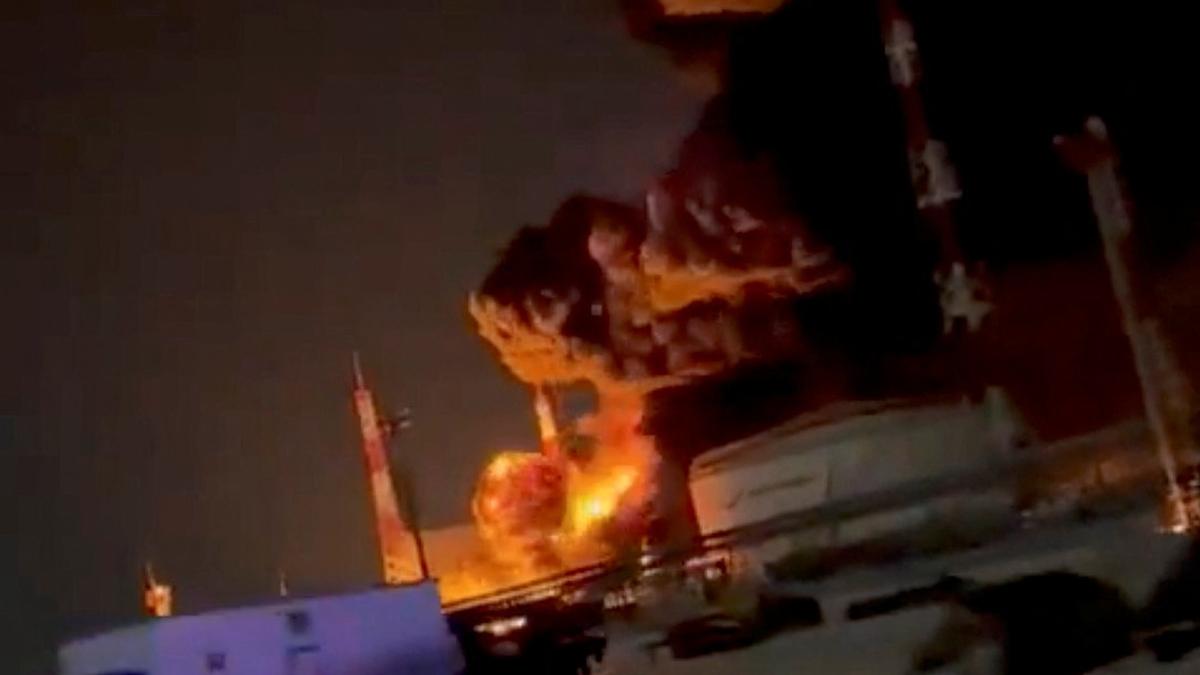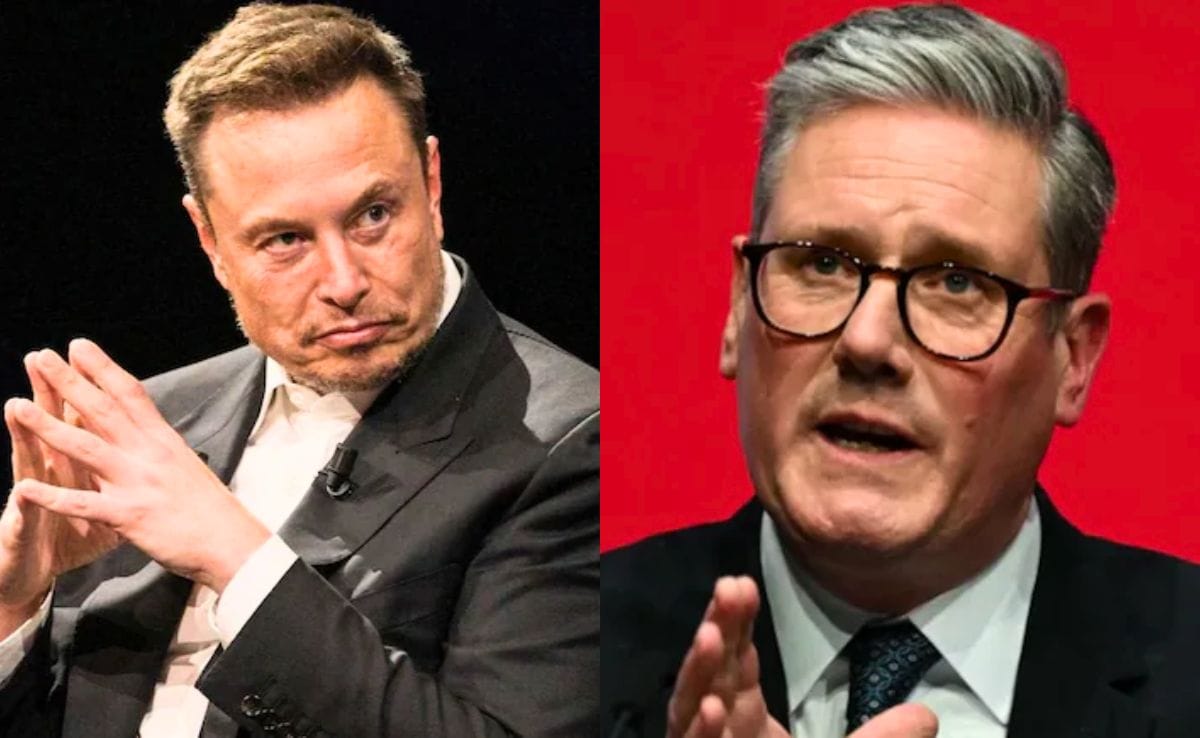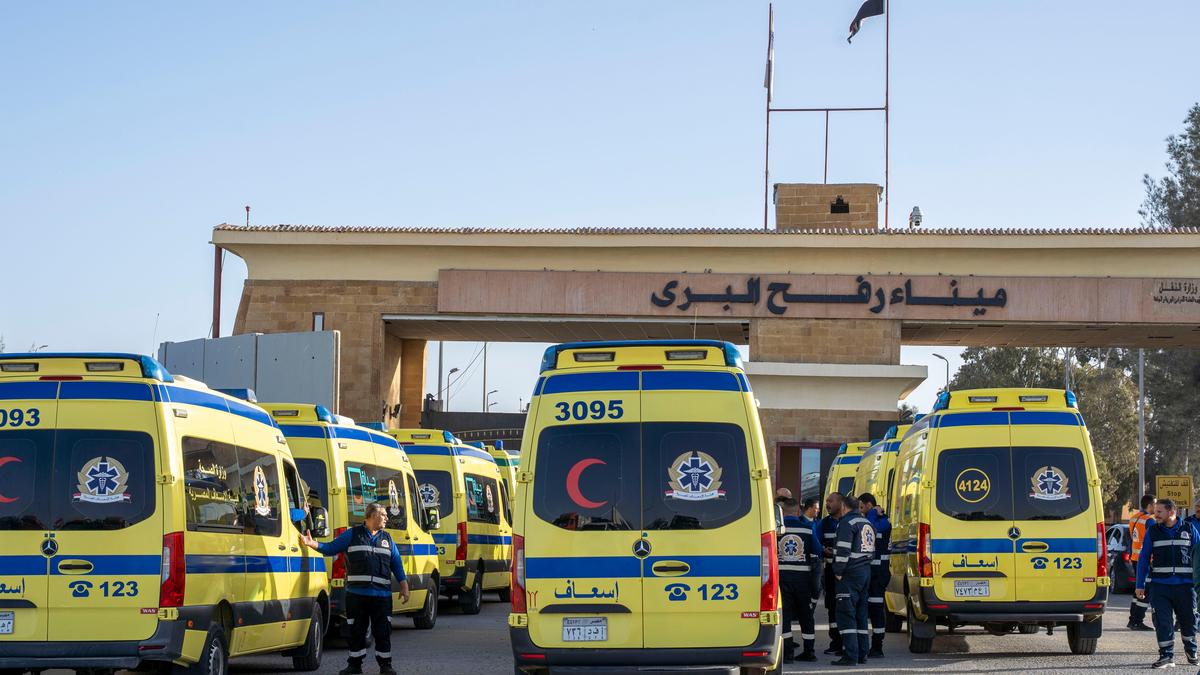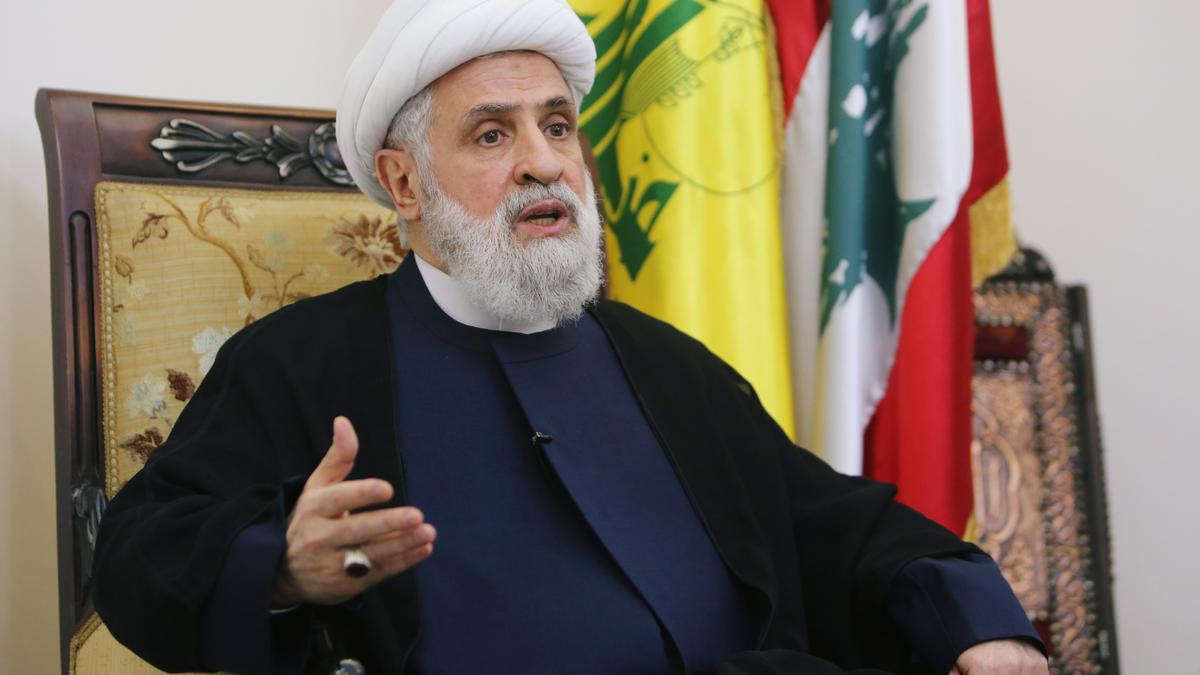



A major war has erupted in West Asia, with Israel, the U.S., and Iran locked in direct conflict. Indian Prime Minister Narendra Modi visited Israel just before the country, along with the U.S., attacked Iran. India has not condemned the killing of Ayatollah Ali Khamenei. Meanwhile, the war has resulted in rising energy prices, economic risks, and put at risk the safety of hundreds of thousands of Indian families in the region. Is India tailing the U.S. in its West Asia policy? Talmiz Ahmad, former Indian diplomat and Kabir Taneja, Executive Director of Observer Research Foundation Middle East, discuss this question in a conversation moderated by Smriti Sudesh. Edited excerpts:
How is India’s response to the Israel-U.S.-Iran war affecting its energy, economy, and citizens’ safety?
 Talmiz Ahmad: Given India’s long-term stakes in regional peace, energy security, trade, investment, connectivity projects, and the welfare of 10 million Indians in the region, the government’s approach has been surprisingly detached.
Editorial | Taking sides: On Prime Minister Narendra Modi’s visit to Israel
Developments over the past two years, including Hamas attacks on Israel, a two-year war killing 72,000 people, and Israeli and U.S. strikes on Iran, should have demanded urgent attention. India could have played a central role in urging restraint, but its response was half-hearted. Instead, we were limited to bilateral meetings. Our External Affairs Minister S. Jaishankar did have one meeting with the GCC Foreign Ministers and also one meeting in January with the Arab League Foreign Ministers. But the sense of urgency and the sense that we have a collective view with regard to regional security, none of that appears to have emerged.
Comment | The Iran war intensifies India’s strategic challenge
And, Mr. Modi’s visit to Israel just before the conflict sent signals of affiliation. In moments of significant strategic churn, we do not take sides. You should keep your options open.

Iranian drones and missiles have struck Gulf territories. They have actively intercepted these threats but have explicitly ruled out direct military participation in the war. How sustainable is this stance?
Kabir Taneja: Most Gulf countries are currently framing their actions as purely defensive. They seem to be very careful not to use terminology such as “war” or indicate any offensive position they want to take. They have made it very clear that they are only taking down projectiles that have been launched against them. However, cracks are emerging in their air defences.
Also read | India and Iran: Tied in tandem
If they shift to an offensive posture and strike targets in Iran, they would be seen as joining Israel and the U.S. against Iran. That is not something that is going to be palatable in the long term for the Gulf countries themselves. This leaves them caught between a rock and a hard place.
Data | How the U.S.-Israel conflict with Iran is exposing India’s LPG dependence
If this conflict prolongs in the manner in which it is continuing right now, it will become unsustainable for them to react in the way they are currently reacting. They could face shortages of air defences if such attacks persist for a continuous period.
Modi’s Israel visit occurred just before the joint Israeli-U.S. strikes, and India has not condemned the killing of Khamenei. Does this indicate that India is taking a side in the West Asia conflict?
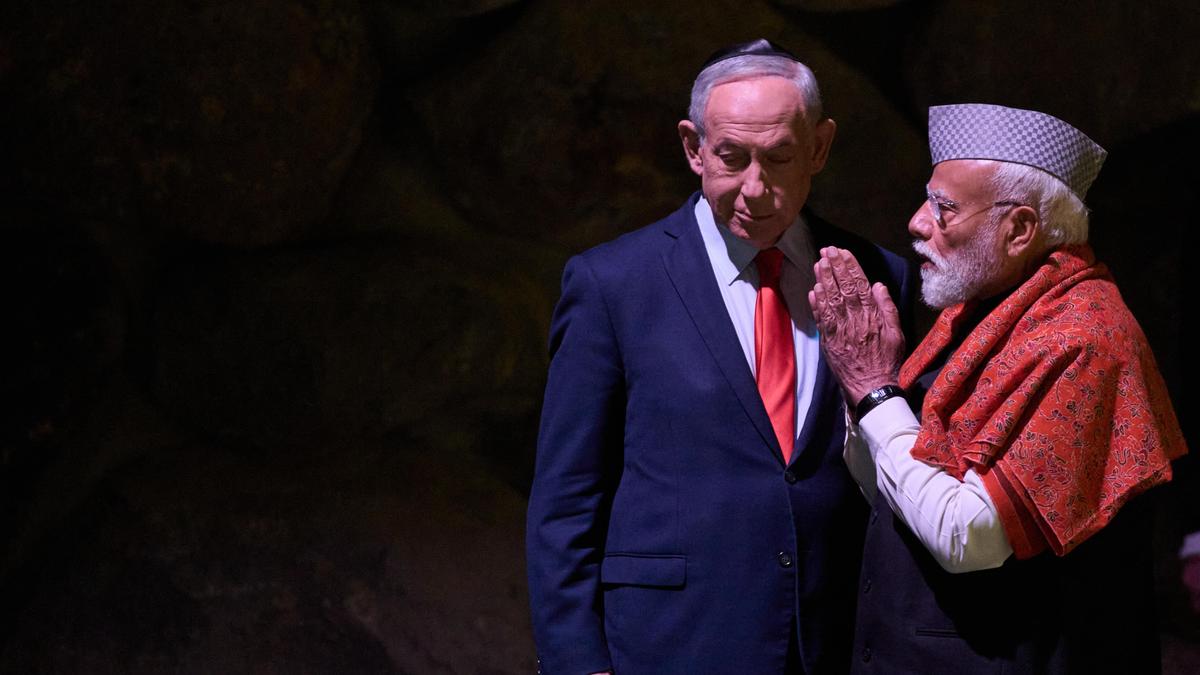
Talmiz Ahmad: Mr. Modi’s visit to Israel and his warm engagement with the Prime Minister of Israel, Benjamin Netanyahu, and his speech at the Knesset, indicate that Mr. Modi followed his heart. He believed that Israel needs India now. You could also argue that this emotional bonding with Israel could be justified on security and strategic grounds. Israel, at the end of the day, is a major supplier of security-related technology and defence equipment to us. Certain requirements for India have been identified during the conflict and Israel is there for us.
Also read | India must ask U.S. why it is targeting Iranian ships in Indian Ocean: Iran Minister Khatibzadeh
However, strategic ambiguity can sometimes serve national interests better than openly signalling a one-sided affiliation on the eve of conflict.
India’s relationship with Iran has historically been friendly. But as Tehran faces sustained air strikes, New Delhi has maintained silence. What does it say about the current state of India-Iran ties?
Kabir Taneja: Many believe India’s bilateral trade with Iran seems limited beyond oil and the Chabahar Port project, making it appear that economic ties are mainly transactional.
From an Indian point of view, our relationship with Iran is strategically very critical because of the work that we can do with them on issues such as Pakistan and Afghanistan, and now of course with connectivity to Central Asia and the South Caucasus. Given this strategic significance, it is somewhat perplexing that India has not been able to use certain terms such as “protection of sovereignty” and similar language when discussing what has taken place in Iran, including the assassination of Khamenei. There have been top-level conversations. Also, Mr. Jaishankar alluded to the fact that there have been difficulties in reaching President Masoud Pezeshkian as well. At present, it is very muddled. It is trying to please everyone and not really pleasing anyone.
To what extent does the U.S. influence India’s policy towards West Asia?
Talmiz Ahmad: Beyond the already complex state of global affairs, we now face a significant source of unpredictability and aggression in the persona of U.S. President Donald Trump. He has allowed himself to be manipulated by Mr. Netanyahu.
Also read | Khamenei killing: Five geopolitical factors behind India’s silence
It is in this background that we have to evaluate how India has dealt with the region and the U.S. President. Mr. Modi engaged with Mr. Trump in February, believing that he could pick up where he left off at the end of Mr. Trump’s first term. This was a signal error. He should have waited a little and evaluated the new term and the new personality that had emerged.
Several things went wrong. First, he imposed huge tariffs upon us. Then we had the issue of penal tariffs relating to Russian oil sales. Then we had to negotiate the FTA, which by most accounts turned out to be quite one-sided and harmful to India’s interests.
Mr. Trump also expected India to publicly credit him for ‘brokering’ the India-Pakistan ceasefire. I suspect in his heart of hearts, he believes that the Nobel Prize denied to him is largely on account of India not giving him the plaudits that he felt he deserved. And that has made him hostile to India and to Mr. Modi.
Also read | Modi government is betraying India’s values in its response to Iran war: Congress
When Mr. Modi told the Finnish President that “war does not solve anything”, that message should have been conveyed in Washington and Tel Aviv as well. Besides the murder of large numbers of civilians, which has now become an Israeli habit, they have created a very serious crisis: energy crisis, economic crisis and threats to the life and livelihood of millions of our people.
What is the current outlook for the India-Middle East-Europe Economic Corridor (IMEC)?
Kabir Taneja: It has not really moved forward since it was announced. The October 7 Hamas terror attack against Israel was a fundamental institutional blow to IMEC. Prior to that, there was some positivity about at least beginning discussions on how it could be constructed as a trade corridor. But since the Gaza crisis, it has been almost completely absent from government agendas. It continues to be discussed in Track-Two dialogues and research circles, but at the government level, there is no one particularly keen on pushing that project forward right now. With the current crisis taking place, it has been pushed even further to the back of everyone’s mind. It would be very strange to try to revive it at this moment.
Also read | The future of the IMEC
From an academic point of view, it is easy to draw lines across countries and say a corridor can run through here or there. But if capital and business are not interested in using it, there is no point. Right now, we are seeing a level of instability in the Gulf that we have not witnessed in a long time.
Also read | IMEC a ‘political project’ aimed at excluding stakeholders, Iranian official says
As far as IMEC is concerned, it is definitely on the back burner at this point of time.
What is your overall assessment of the trajectory of this war? Are President Trump and Prime Minister Netanyahu achieving their objectives, or has Iran managed to deny them a clear victory?
Talmiz Ahmad: Talking about the regional scenario after the war is difficult at this stage. My hope is that they are able to bring a ceasefire into play very soon.
In conflicts like this, the Americans may need to intervene to end the fighting. Unlike post-9/11 U.S. interventions, there is no immediate crisis now, and Iran’s weapons programme shows no evidence of revival. Then what is this war about?
Mr. Trump had encouraged a dialogue with the Iranians. They had three rounds of dialogue. They met in Oman and then in Geneva. His two trusted aides were involved with the discussions, Steve Witkoff and Javed Kushner. There is every evidence that Iran’s approach was extraordinarily constructive. But despite this, Mr. Trump said he was not happy and went to war.
Editorial | Strategic blunder: On the U.S., the Iran war
It is very easy to start a war. It is very difficult to end one. It is especially difficult when you do not have a clear war aim. A few days ago he said war is going to come to an end anytime. Somebody else says it will go on for as long as possible. All his officers are speaking with different voices. There is obviously no coordination amongst them. In this background, what are we looking at in the region? In this chaotic context, an early ceasefire is crucial.
Despite the difficult circumstances, Türkiye, Saudi Arabia, the UAE and Qatar should lobby the American President. Because we are not just worried about prices. What about damage to the sources of energy?
Comment | How the war in Iran threatens to spill over
The future of Israel is uncertain because it is connected with the fortunes of Mr. Netanyahu. He has always put his personal fortunes ahead of the national interest. It remains to be seen what the attitude of the Israeli people is, whether they are in a forgiving mood and uphold him as ‘Mr. Security’ once again.
West Asia lacks a platform for serious security discussions. Track-two dialogues should pave the way for 1.5-level engagement, eventually leading to government-to-government talks. India, China, Russia, Indonesia, Malaysia, and Vietnam can play a significant role if they assume responsibility for facilitating constructive dialogue.
Listen to the conversation
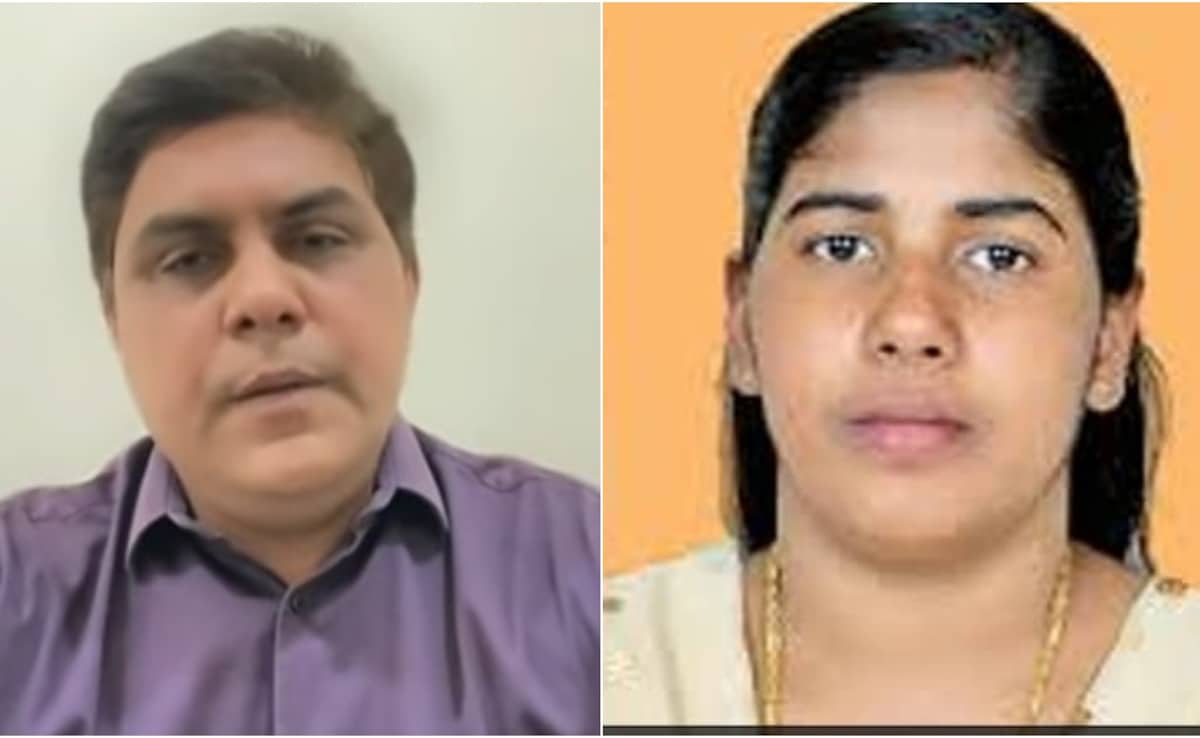
Amb. Talmiz Ahmad is a former Indian diplomat. He served as Ambassador to Saudi Arabia, Oman, and the UAE; Kabir Taneja is the Executive Director of Observer Research Foundation Middle East