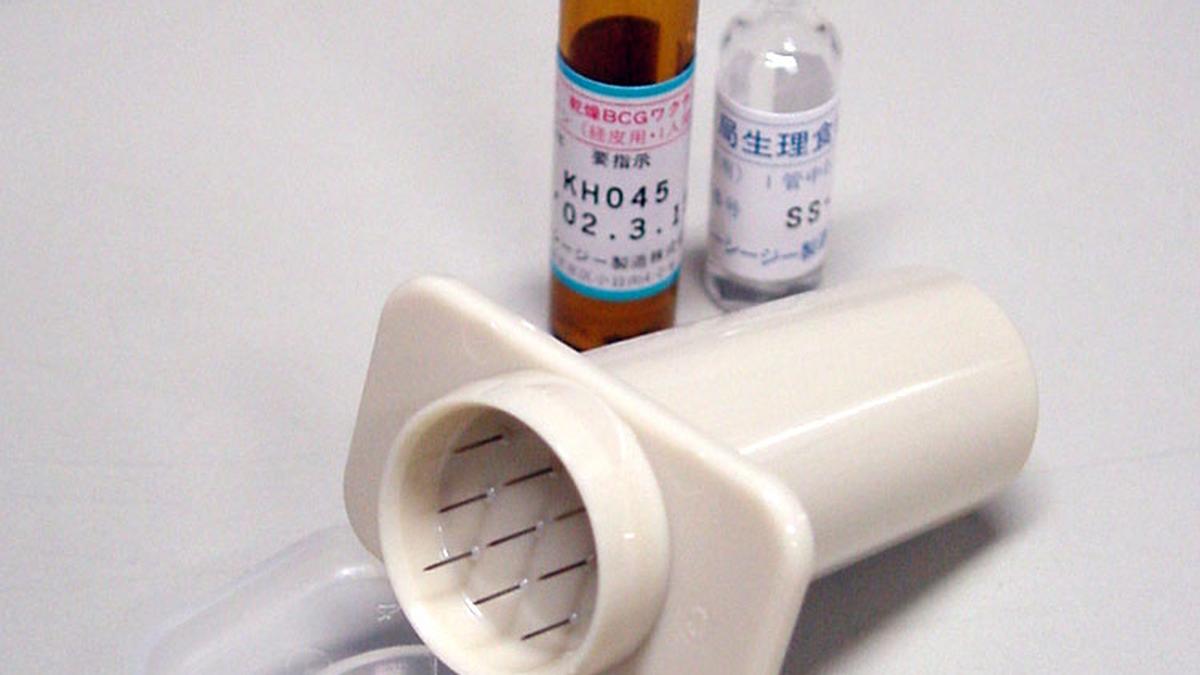

A relaxation by the World Health Organization (WHO) in the prescribed dosage for the Human Papilloma Virus (HPV) vaccine and ‘free’ doses may have pushed back the inclusion of an India-made vaccine into the national programme to inoculate children against HPV.
This, despite the Health Ministry in 2023 committing to preparing the India-made vaccine for inclusion in the Universal Immunisation Programme (UIP), publicly available documents suggest.
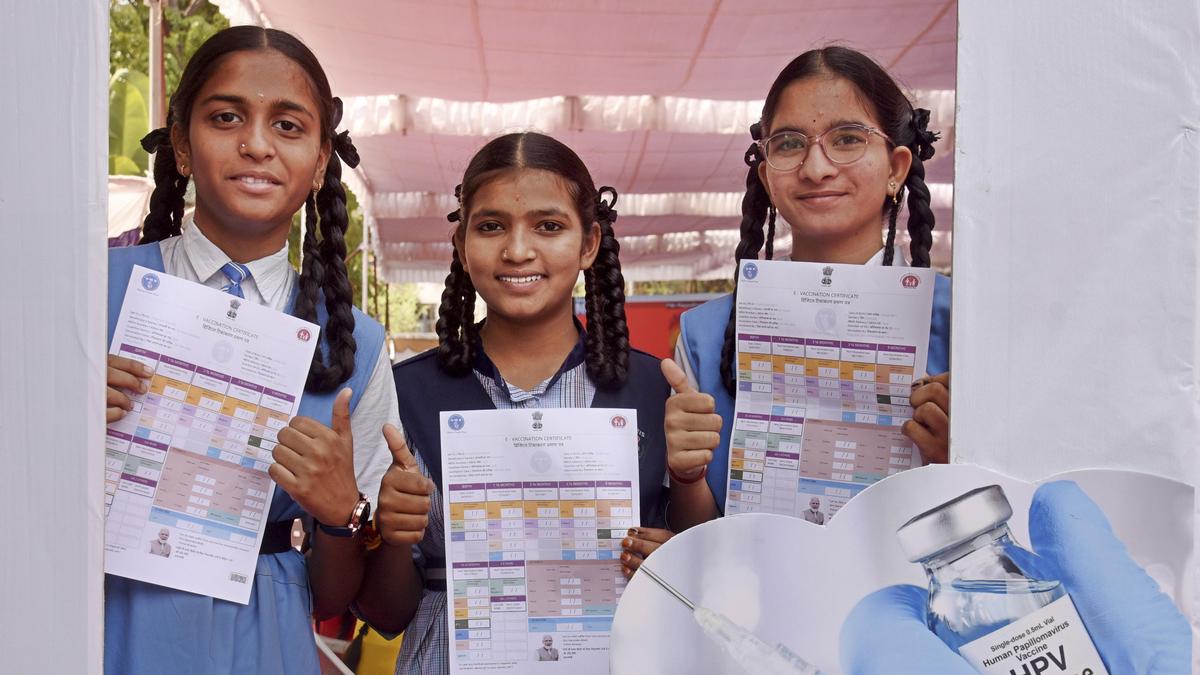
Prime Minister Narendra Modi, on February 28, launched a campaign in Ajmer, Rajasthan, to vaccinate 1.15 crore, 14-year-old girls with Gardasil-4, developed by Merck and available in India since 2009. It is one of the most well-tested HPV vaccines and part of the immunisation programmes in several countries. In 2023, India got a US$250 million grant from the Global Alliance for Vaccines and Immunization (GAVI) to India to support, among other things, the introduction of the HPV vaccine and the Typhoid Conjugate Vaccine (TCV), as well as to strengthen routine immunisation systems. This would include, sources from the Health Ministry told The Hindu, up to 2 crore HPV vaccines for “free,” that India could then use in its immunisation programme.
The inclusion of Gardasil-4 however pushed back Cervavac, an indigenously developed quadrivalent HPV vaccine, that resulted from Grand Challenges India (GCI), a partnership of the Department of Biotechnology (DBT), BIRAC (Biotechnology Industry Research Assistance Council, a DBT public enterprise), the Bill & Melinda Gates Foundation (BMGF), and vaccine maker Serum Institute of India (SII). Following Phase ⅔ trials of the vaccine that showed it was “non inferior” to Gardasil, it was officially launched in September 2022 where science minister, Jitendra Singh, lauded it as an example of the private sector and the government coming together to create an affordable product. Adar Poonawalla, the CEO of the SII, had said then that the vaccine could be available for as little as ₹200-400 a dose, a tenth of retail costs, if part of a government procurement process.
What the government first said
Reports in January 2023 had said that the Health Ministry was planning to float a global tender for 16.02 crore doses of HPV vaccine in April towards the immunisation programme rollout in 2026.
The minutes of a meeting of the National Technical Advisory Group on Immunisation (NTAGI)– India’s apex advisory body on vaccination – in July 2023 note that “…indigenously developed qHPV vaccine (Cervavac) may be considered for introduction in the UIP as a two-dose regimen.”
In the same meeting, the Ministry of Health and Family Welfare (MoHFW) had also stated “..The introduction of the vaccine has been approved, and MOHFW is currently working on its implementation in the UIP.” However no such tender came.
The absence of Cervavac from India’s current universal immunisation programme is due to an ongoing study led by the Indian Council of Medical Research (ICMR), which is testing whether a single dose of Cervavac generates enough protective antibodies and generates a stable immune response compared to a single dose Gardasil vaccine. This would be a key step to officially recommend the vaccine as a single dose regimen. The results of this study are only expected in 2027, N.K. Arora, a member of the NTAGI told The Hindu.
Two dose vs. single dose
Until early 2022, the WHO recommended a two-dose schedule for administering HPV vaccines for girls in the 9-15 age group for maximum generation of antibodies. Sikkim, the first State in India, in 2018, to begin administering HPV vaccine as part of a state-wide programme inoculated about 25,000 girls in the 9-14 year age group with 2 doses of vaccine 6 months apart.
However faced with “…stagnating pace of introductions, the low HPV vaccine coverage in many countries and the gap with the 2030 target of 90% coverage needed for elimination..” a Strategic Advisory Group of Experts (SAGE) of Immunisation of the World Health Organisation (WHO) — after parsing through the efficacy and clinical data on HPV vaccines globally — recommended in March 2022 that national immunisation programmes had an option of using either a two-dose or a single-dose vaccination schedule.
A major factor was the limited global availability of HPV vaccines and that more girls (and subsequently boys) could get at least one dose of the vaccine to provide greater coverage and improve odds of herd immunity.
Expert members of the NTAGI were aware of the relaxed dosage schedule of HPV vaccines when they met in June 2022, records show and endorsed the decision to go ahead with a 2-dose schedule of Cervavac, alongside collecting of data on immunogenicity, persistence of adequate antibody levels and protection from infection after two years of a single dose. “In the UIP, a mechanism may be developed to follow-up girls who may have received only one dose in the program and do not come back to receive a second dose as recommended. Their samples may be collected after two years and real-world immunogenicity and effectiveness data of single dose may be generated,” the note added.
However at an NTAGI meeting in July 2023, co-chairperson of the NTAGI, Rajiv Bahl, Director-General, Indian Council of Medical Research, said that the SII as well as a Subject Expert Committee (SEC) of the Central Drugs Standards Control Organisation (CDSCO) – the apex regulatory body for permitting the release of drugs and vaccines in India – had questioned the “relevance and necessity of these studies.” Suggestions for a phase-3 efficacy trial of single dose of the vaccine were mooted but dropped as this would take “substantial time” given the age groups of the potential vaccine recipients. Dr Bahl, records show, stated that “..the ICMR is willing to initiate the single dose antibody persistence study to avoid further delays..” Experts, including Dr. Arora pointed out that there would be an “inherent conflict of interest on the part of the vaccine manufacturer in conducting a single dose trial of a vaccine that has been developed as a 2-dose series. He also mentioned that none of the approved/licensed HPV vaccines globally are recommended as single dose schedule on-label, and the one-dose recommendation by WHO is strictly off-label and meant for public health programmes. When contacted by The Hindu, Dr. Arora said that following the results of the ICMR study it “could be possible” to use Cervavac. “The logistics of using a single dose vaccine is preferable given that these are adolescent girls and may not always show up for a second dose,” he said.
Limited, free doses
Another expert, who was part of the NTAGI meeting but who requested anonymity said that the supply of vaccines from SII wasn’t yet assured, funding from GAVI being available for a limited period and therefore the government had taken a “pragmatic” call on using Gardasil-4 until the Cervavac results were available. “It all depends whether two doses of Cervavac would be more economical than a single dose of Gardasil, because the current lot of vaccines may not be available in the future at the current pricing.”
In a policy statement available on its website, GAVI said that it would not be making available vaccines for free after 2027. In her 2024 Interim Budget Speech, Finance Minister, Nirmala Sitharaman had committed to providing HPV vaccines to all girls 9-14 in India. “That’s about 4-5 times the number of vaccines that GAVI has made available to India. The government has not released a procurement tender for vaccines in all these years which determines the number of vaccines a company will manufacture,” a person connected with the HPV vaccine industry told The Hindu, declining to be identified. “The difference is that Gardasil has a WHO-prequalification for a single dose but Cervavac doesn’t. A single dose of Gardasil is about ₹4,000 and Cervavac around ₹1800-2000. THe vaccines are the same in all respects otherwise.” There is also a version of the Gardasil vaccine that protects against 9 strains of the HPV though for programmatic purposes it is the strains called 16 and 18 that are linked to the most serious infections.
SII declined an official response to The Hindu’s queries.
The burden in India
According to estimates from India’s National Family Health Survey (NFHS)- that conducts periodic health surveys and is a proxy to India’s population numbers – there are likely 8-10 crore girls in the 9-15 age group (the recommended target group for the HPV vaccine). This is an extrapolation from the 2011 Census numbers.
Cervical cancer is the second most common cancer among women in India with about 80,000 new cases every year, and over 42,000 women dying annually. India accounts for about one-fifth of the global cervical cancer burden.
Published – March 05, 2026 03:42 pm IST