



Skip to content
  • Facebook
  • X
  • Linkedin
  • WhatsApp
  • Associate Journalism
  • About Us
  • Privacy Policy
  • 033-46046046
  • editor@artifex.news
Artifex.News

Artifex.News

Stay Connected. Stay Informed.

  • Breaking News
  • World
  • Nation
  • Sports
  • Business
  • Science
  • Entertainment
  • Lifestyle
  • Toggle search form
  • South Korean man convicted for deliberately gaining weight to evade military service
    South Korean man convicted for deliberately gaining weight to evade military service World
  • Serial Rapist-Killer Gets Life Sentence For Strangling Girl In 2017 In Gurugram: Cops
    Serial Rapist-Killer Gets Life Sentence For Strangling Girl In 2017 In Gurugram: Cops Nation
  • Access Denied
    Access Denied Nation
  • Era When Few Powers Shaped The Global Order Now Behind Us: S Jaishankar
    Era When Few Powers Shaped The Global Order Now Behind Us: S Jaishankar Nation
  • Access Denied Sports
  • Trump appoints Indian American entrepreneur Sriram Krishnan as senior policy advisor on Artificial Intelligence
    Trump appoints Indian American entrepreneur Sriram Krishnan as senior policy advisor on Artificial Intelligence World
  • WPL Opening Ceremony Live: SRK, Others Bollywood Stars Set To Steal Show
    WPL Opening Ceremony Live: SRK, Others Bollywood Stars Set To Steal Show Sports
  • Access Denied
    Access Denied Nation
Can a common hospital gas help fight drug-resistant pneumonia?

Can a common hospital gas help fight drug-resistant pneumonia?

Posted on February 8, 2026 By admin


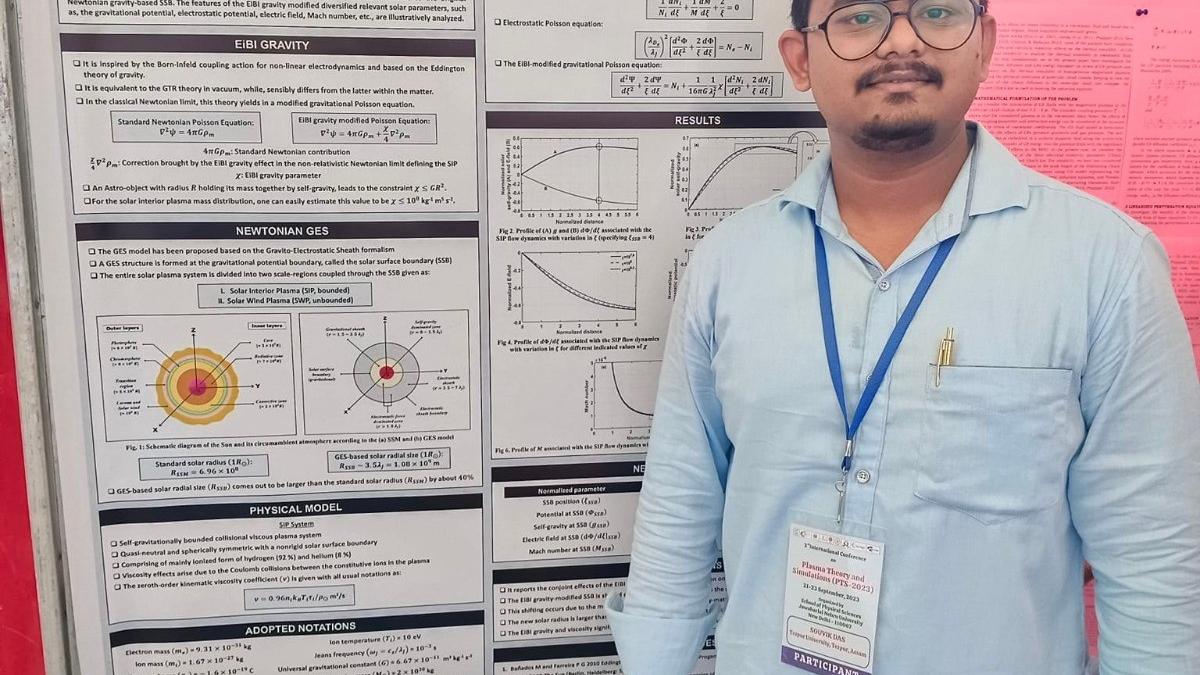
Drug-resistant pneumonia remains a serious complication in intensive care units, where treatment options are limited. Pseudomonas aeruginosa in particular causes about one in five hospital pneumonias and often resists multiple drugs.

A research team at the Massachusetts General Hospital, Boston, affiliated with Harvard Medical School, has reported that a gas already used in neonatal care may have a role in addressing such infections. In a study published in Science Translational Medicine, researchers found that a high dose of inhaled nitric oxide reduced drug-resistant Pseudomonas in a large-animal ICU model.

Antimicrobial agent

The human body naturally produces nitric oxide; doctors also use it at low doses, typically 20-80 ppm, to widen blood vessels in the lungs of patients with acute respiratory failure.

Lorenzo Berra, associate professor of anaesthesia at Harvard Medical School and a senior author of the study, said the decision to test much higher concentrations was guided by earlier findings.

“At the low doses commonly used in clinical practice, nitric oxide mainly acts as a selective pulmonary vasodilator,” he said. In 2021, a mouse study by his colleagues “provided the biological rationale for selecting 300 ppm as the threshold likely required for antimicrobial activity.”

To test the approach in a setting mirroring a human ICU, the researchers studied 16 ventilated pigs with pneumonia caused by multidrug-resistant P. aeruginosa. They introduced the bacteria directly into the lungs and afforded the animals intensive care for three days.

One half received short, repeated bursts of inhaled nitric oxide at 300 ppm and the other half received standard supportive care alone, sans antibiotics. The team continuously tracked oxygen levels, lung stiffness, blood pressure, and infection markers, and compared how the two groups changed over time.

The study found that treated animals had 99% lower lung bacterial counts along with better oxygenation and lung function. The authors suggested the gas may help restore chemical signalling in the lung disrupted by severe infection, allowing it to transfer oxygen more efficiently and reducing the need for drugs to maintain blood pressure.

Prof. Berra said the findings suggest the approach could be relevant to critically ill patients, though further testing is required.

Promise and limits

Paul H. Edelstein, professor of pathology and laboratory medicine at University of Pennsylvania, supported the possibility of this treatment but said the results should be interpreted cautiously.

“The animals initially improved, but later their lungs grew stiffer and less able to oxygenate the blood while they were still on the gas,” he said, adding that the harm could have resulted from the toxic effects of nitric oxide, either through elevated methemoglobin, which blocks oxygen delivery, or through direct lung injury.

He also questioned the durability of the antimicrobial effects. “While 99% sounds high, leaving even 1% means millions of organisms remain, making a rapid rebound likely once treatment stops.”

Although some bacteria remained, the treated animals had far lower levels of the immune chemicals that cause the lungs to swell and fill with fluid, a chain reaction that cuts off oxygen. This effect persisted over the first two days, when severe pneumonia typically worsens and begins to damage other organs.

To assess whether the doses could be delivered safely, the researchers conducted a small phase 1 study in 10 healthy human volunteers. Participants inhaled nitric oxide at 300 ppm for 30 minutes, thrice a day for five days. Methemoglobin levels rose briefly, peaking at 4.5%, well below the 10% safety threshold. The team reported no serious adverse effects.

The group also delivered the high-dose gas to two critically ill ICU patients to test feasibility. The study didn’t report whether the patients improved; instead, it showed that the treatment could be administered without immediate serious complications.

“Proving that this treatment improves patient outcomes requires a dedicated clinical efficacy trial,” Prof. Berra said. He emphasised that the gas would be used alongside standard ICU care, not as a replacement.

Even if future trials confirm clinical benefits, practical barriers remain. Most hospitals are not equipped to deliver nitric oxide at high concentrations and the process requires specialised machinery and trained staff.

“The biggest obstacle would be technical, operational, and monitoring, not biological,” he said. Standard systems are capped at 80 ppm and higher doses require continuous monitoring to prevent nitrogen dioxide formation and methemoglobin accumulation, which the researchers kept below safety limits in the study.

For Prof. Edelstein, the work represents an important starting point, but “until researchers can show the gas works at non-toxic exposures and delivers lasting benefit, the excitement is premature.”

Anirban Mukhopadhyay is a geneticist by training and science communicator from New Delhi.

Published – February 11, 2026 07:00 am IST


Source link

Science

Post navigation

Previous Post: Access Denied
Next Post: Access Denied

Related Posts

  • ISRO carries out assessment of space situation around L1 to ensure safety of Aditya-L1 spacecraft
    ISRO carries out assessment of space situation around L1 to ensure safety of Aditya-L1 spacecraft Science
  • A wild orangutan used a medicinal plant to treat a wound, scientists say
    A wild orangutan used a medicinal plant to treat a wound, scientists say Science
  • The bacteria that write new genes to cope with infections
    The bacteria that write new genes to cope with infections Science
  • Why participatory science is crucial to tackling coconut root wilt disease
    Why participatory science is crucial to tackling coconut root wilt disease Science
  • How curiosity-driven research in a worm won four Nobel Prizes
    How curiosity-driven research in a worm won four Nobel Prizes Science
  • Bogus scientific papers slowing lifesaving medical research
    Bogus scientific papers slowing lifesaving medical research Science

More Related Articles

A trial to test a new path for preventing Alzheimer’s A trial to test a new path for preventing Alzheimer’s Science
Sci-Five | The Hindu Science Quiz: On Soil Sci-Five | The Hindu Science Quiz: On Soil Science
CMFRI decodes genetic blueprint of Indian squid CMFRI decodes genetic blueprint of Indian squid Science
Daily Quiz: On life and work of Isaac Newton Daily Quiz: On life and work of Isaac Newton Science
Sci-Five | The Hindu Science Quiz: on semi-conductors Sci-Five | The Hindu Science Quiz: on semi-conductors Science
The many firsts of the near-Mir mission The many firsts of the near-Mir mission Science
SiteLock

Archives

  • February 2026
  • January 2026
  • December 2025
  • November 2025
  • October 2025
  • September 2025
  • August 2025
  • July 2025
  • June 2025
  • May 2025
  • April 2025
  • March 2025
  • February 2025
  • January 2025
  • December 2024
  • November 2024
  • October 2024
  • September 2024
  • August 2024
  • July 2024
  • June 2024
  • May 2024
  • April 2024
  • March 2024
  • February 2024
  • January 2024
  • December 2023
  • November 2023
  • October 2023
  • September 2023
  • August 2023
  • July 2023
  • June 2023
  • May 2023
  • April 2023
  • March 2023
  • February 2023
  • January 2023
  • December 2022
  • November 2022
  • October 2022
  • September 2022
  • August 2022
  • July 2022
  • June 2022
  • May 2022

Categories

  • Business
  • Nation
  • Science
  • Sports
  • World

Recent Posts

  • Nvidia CEO Jensen Huang won’t attend AI Impact Summit in India, company says
  • Access Denied
  • Access Denied
  • Access Denied
  • Drone strikes kill two in Ukraine and Russia ahead of U.S.-brokered peace talks in Geneva

Recent Comments

  1. MichaelWroms on UP Teacher Who Asked Students To Slap Muslim Classmate
  2. MichaelWroms on UP Teacher Who Asked Students To Slap Muslim Classmate
  3. Robertboogs on UP Teacher Who Asked Students To Slap Muslim Classmate
  4. Robertboogs on UP Teacher Who Asked Students To Slap Muslim Classmate
  5. RandallRoF on UP Teacher Who Asked Students To Slap Muslim Classmate
  • Iceland’s ‘Mammoth’ raises potential for carbon capture
    Iceland’s ‘Mammoth’ raises potential for carbon capture Science
  • Personal loans disbursed via digital apps have the highest share of overdue accounts: Data
    Personal loans disbursed via digital apps have the highest share of overdue accounts: Data Business
  • Morning Digest | India is non-Western, not anti-Western, says Jaishankar in Washington; New York flooded by heavy rains, subway partly paralysed, and more
    Morning Digest | India is non-Western, not anti-Western, says Jaishankar in Washington; New York flooded by heavy rains, subway partly paralysed, and more World
  • Navi Mumbai Resident Conned Of Rs 15 Crore, Man With ‘Cambodia Links’ Arrested
    Navi Mumbai Resident Conned Of Rs 15 Crore, Man With ‘Cambodia Links’ Arrested Nation
  • Bangladesh’s interim government warns media against publishing statements of ‘fugitive’ Sheikh Hasina
    Bangladesh’s interim government warns media against publishing statements of ‘fugitive’ Sheikh Hasina World
  • Nepal protests LIVE: Nepal eases visa, exit rules for stranded foreign nationals
    Nepal protests LIVE: Nepal eases visa, exit rules for stranded foreign nationals World
  • Joe Biden “Knows How To Come Back” After Poor Debate With Donald Trump: Spokeswoman
    Joe Biden “Knows How To Come Back” After Poor Debate With Donald Trump: Spokeswoman World
  • IndusInd Bank posts sequential decline in loans for fourth straight quarter
    IndusInd Bank posts sequential decline in loans for fourth straight quarter Business

Editor-in-Chief:
Mohammad Ariff,
MSW, MAJMC, BSW, DTL, CTS, CNM, CCR, CAL, RSL, ASOC.
editor@artifex.news

Associate Editors:
1. Zenellis R. Tuba,
zenelis@artifex.news
2. Haris Daniyel
daniyel@artifex.news

Photograher:
Rohan Das
rohan@artifex.news

Artifex.News offers Online Paid Internships to college students from India and Abroad. Interns will get a PRESS CARD and other online offers.
Send your CV (Subjectline: Paid Internship) to internship@artifex.news

Links:
Associate Journalism
About Us
Privacy Policy

News Links:
Breaking News
World
Nation
Sports
Business
Entertainment
Lifestyle

Registered Office:
72/A, Elliot Road, Kolkata - 700016
Tel: 033-22277777, 033-22172217
Email: office@artifex.news

Editorial Office / News Desk:
No. 13, Mezzanine Floor, Esplanade Metro Rail Station,
12 J. L. Nehru Road, Kolkata - 700069.
(Entry from Gate No. 5)
Tel: 033-46011099, 033-46046046
Email: editor@artifex.news

Copyright © 2023 Artifex.News Newsportal designed by Artifex Infotech.